

There is a specific kind of frustration that only shows up about forty minutes into a walk: your heel lifts a little with every step, the ball of your foot slides forward until your toes press the front bumper, and by the time you get home you have a hot spot on the outside of your pinky toe. The shoe was the right length. It was even comfortable in the store. It just was not narrow enough, and nobody at the checkout counter told you that length is only half of the fit equation.
Narrow feet are common and almost never accommodated by mainstream sizing, which is why so many people end up cinching laces so tight that the upper wrinkles across the instep. The good news is that walking shoes are one of the few categories where width is still treated as a real variable rather than an afterthought. You can find genuine narrow fits, and you can also make a standard-width pair behave like one with a few adjustments that cost nothing. What follows is the practical version — how to read width labels, how to measure at home, which materials hold a slim foot, and what to test in the store before you commit. The narrow walking shoes women actually keep for years tend to share three traits: a real width option rather than a cinched upper, a firm heel counter, and an outsole that tapers with the last instead of flaring out under the arch.
Where the Fit Actually Goes Wrong
Most narrow walking shoes women buy and then quietly abandon fail for one of four reasons, and none of them is mysterious once you know what to look at. Most people assume a loose shoe is too big, so they size down. That is the single most common mistake with narrow feet, and it creates a cascade of problems: the shoe gets shorter, the toes jam into the front, and the heel still slips because the volume around the midfoot is unchanged. Sizing down fixes length, not width. If your current pair feels sloppy side to side but cramped at the toes, you are almost certainly in the wrong width, not the wrong length.
The second failure point is volume, which is different from width. Width is measured across the ball of the foot; volume is the total interior space from sole to instep. A shoe can be narrow at the ball and still be far too deep over the top of the foot, which is why some women find themselves pulling the laces so tight that the tongue bunches into a hard ridge. Look at a pair you already own: if the eyelet tabs nearly touch when tied, the shoe is carrying more volume than your foot needs.
Heel slippage is the third symptom, and it gets misdiagnosed constantly. A heel that lifts does not always mean the shoe is too long — it often means the heel counter is too wide or too soft to cup the back of your foot. A firm, well-shaped heel counter plus a narrower last will hold a slim heel in place far better than a shorter shoe will. That distinction matters because chasing heel slip by sizing down is how people end up with bruised toenails and a pair they quietly stop wearing.
Finally, there is the sliding-forward problem. In a shoe that is too wide, the foot migrates toward the front with each step, and the arch support ends up sitting somewhere under the middle of your foot instead of under the arch. That is not a cushioning issue and no insole will fully cure it. The foot needs to be held laterally, which is exactly what a proper narrow fit does.
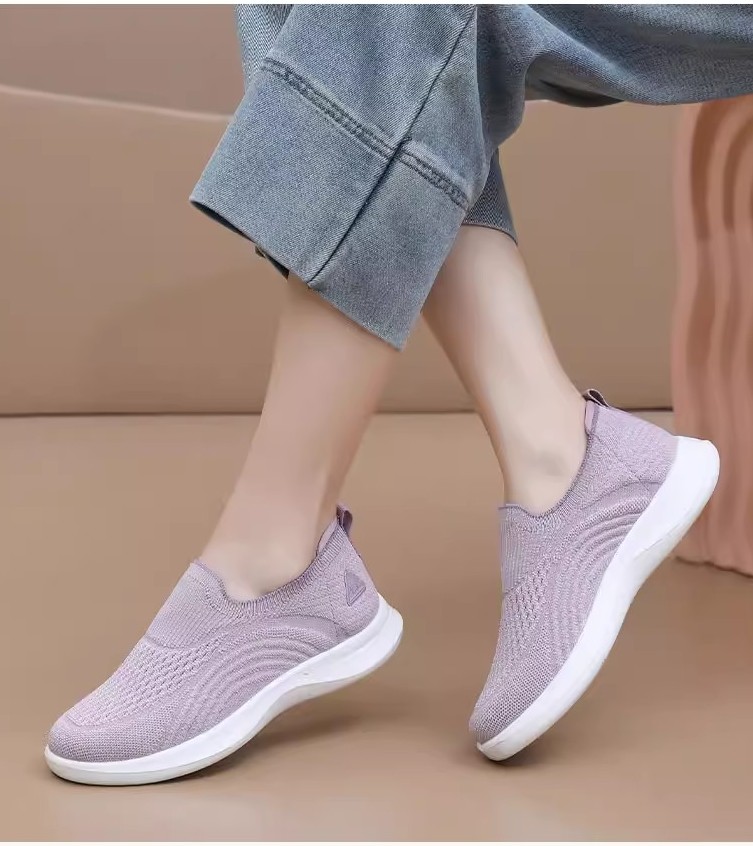
Width Labels Are Not a Standard, So Learn the Last
Here is the uncomfortable truth about shoe sizing: there is no binding international standard for width. The letters you see — AA, A, B, D, E — come from the Brannock system, a measuring device developed in the 1920s that is still the reference point for most American footwear. In that scheme, women’s medium is conventionally a B, narrow is AA or A, and wide starts at D. But a “B” from one brand can measure meaningfully wider than a “B” from another, because each company builds its own last, the wooden or plastic form the shoe is shaped around.
What this means in practice is that you should treat width letters as relative, not absolute. If you know a specific brand’s narrow fit works for you, that is far more useful information than the letter itself. Brands that publish actual millimeter measurements across the ball are giving you something you can compare; brands that only offer “narrow, medium, wide” are asking you to guess. For background on how these systems evolved and why they diverge, the history of shoe sizing is a genuinely useful read, and it explains why your size is not portable between countries, let alone between companies.
Walking shoes have an advantage here over dress shoes. Performance and comfort brands tend to offer width as a first-class option because their customers walk for hours and complain loudly when a fit fails. That is why the narrow walking shoes women can actually buy in a true AA are usually found in the technical and athleisure segment rather than in fashion footwear, where a single medium width is often the only choice.
One more thing worth knowing: some brands achieve a narrow fit by simply tightening the upper over a standard last, which produces a shoe that is snug across the top but still wide at the sole. You can spot this by looking at the sole from underneath. If the footprint of the outsole is broad and the upper looks pinched inward at the midfoot, the shoe was not designed narrow — it was cinched. A genuine narrow last has a sole that tapers with the upper.
Measuring Your Foot at Home Without a Brannock Device
You do not need a specialist device to get useful numbers. You need a sheet of paper, a pencil, a ruler, and the right time of day. Feet swell over the course of a day, so measure in the late afternoon or evening, and measure both feet — most people are asymmetric, and you should fit the larger one.
Stand on the paper with your weight on that foot, sock on if you plan to wear socks with the shoes. Trace the outline, then measure the straight-line distance from the back of the heel to the tip of your longest toe. That is your length. For width, measure across the widest part of the ball of the foot, from the joint behind the big toe to the joint behind the little toe, and note the number in millimeters rather than inches so you can compare it against published specs.
Now the important part: compare that ball width to the shoe’s stated internal width if the brand publishes it, or to the measured outsole width if you are looking at a pair in person. A difference of five millimeters is enough to change how a walking shoe feels over ten kilometers. This is also where the Brannock device earns its reputation — it captures heel-to-ball length as well as total length, and heel-to-ball is arguably the more important measurement for arch placement. The Brannock device remains the standard in most shoe shops for exactly this reason, and if a store has one, use it.
Write the numbers down somewhere you will find them again. Once you know your length in millimeters and your ball width, shopping gets dramatically faster, and you stop relying on the trial-and-error that fills closets with pairs worn twice. Do the measurement twice on different days if the first result surprises you — a single sloppy trace can be off by half a centimeter, which is more than enough to send you into the wrong width.
Uppers, Closures, and Materials That Hold a Narrower Foot
Material choice does more for a narrow fit than most shoppers expect. Knit uppers are comfortable and breathe well, but they stretch in the direction of least resistance, which for a slim foot means they gradually conform to nothing in particular and the shoe gets looser over months. If you love knit, look for a reinforced midfoot cage or a knit with a denser, less elastic weave across the arch.
Leather and suede behave differently. They start firmer and mold to your foot rather than away from it, which is why a leather walking shoe in the correct width tends to hold a narrow foot better over a full season. The trade-off is break-in time and a little more weight. If you want the leather look with a slimmer profile, our piece on black leather walking shoes for women goes deeper into construction and care.
Closure systems matter just as much. A traditional lace-up gives you the most control, provided the lacing runs far enough down the instep to snug the midfoot. Straps are quicker but usually offer only one or two points of adjustment, so they either fit or they do not. Boa dials and similar cable systems are excellent for narrow feet because they distribute tension evenly and can be micro-adjusted on the move, but they add cost and are harder to repair.
Look at the tongue, too. A padded, gusseted tongue takes up volume, which helps a narrow foot but can crowd a shallow one. A thin tongue leaves more room but offers less protection from the lace pressure. And check the heel counter — a rigid, well-shaped counter is the single most effective anti-slip feature in any walking shoe, more so than any heel-lock lacing trick. Press it with your thumb. If it folds easily, it will not hold a slim heel.
Finally, consider the insole that comes with the shoe. Many walking shoes ship with a thick, soft footbed that compresses quickly. If the fit feels perfect in the store and loose two weeks later, the insole is usually the culprit, not the upper.
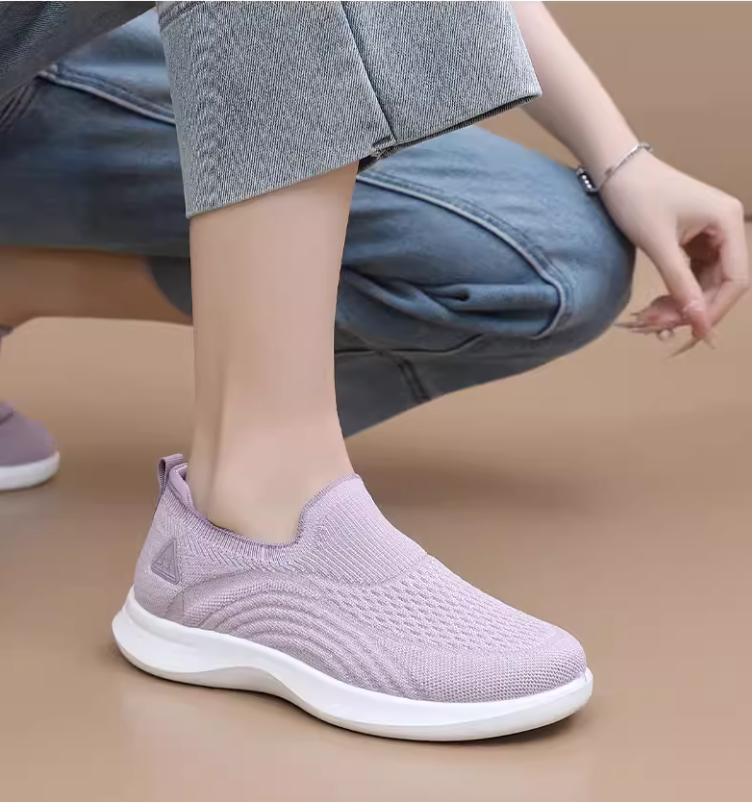
Lacing and Insole Tweaks That Cost Nothing
Before you buy anything, try fixing what you own. The single most effective adjustment for a narrow foot is the heel-lock lacing pattern, sometimes called a runner’s loop. You lace normally up to the second-to-last eyelet, then instead of crossing to the opposite eyelet, you feed each lace end back into the same-side eyelet to create a small loop, cross the ends, thread them through the opposite loops, and pull. This pulls the heel back and down into the counter without over-tightening the forefoot. It takes two minutes and solves heel slip in most shoes that are otherwise the right size.
Second trick: skip an eyelet. If the shoe is tight across the top of the foot but loose at the ankle, leave the eyelet at the bend of your instep unlaced and use the extra length for a tighter heel lock. This is a standard fix among long-distance walkers and costs nothing.
Third: change the insole. A thin, dense insole — not a soft gel pad — reduces interior volume by a couple of millimeters and can transform a shoe that felt a half-width too generous. Look for something with a defined heel cup rather than a flat foam insert; the heel cup adds lateral control precisely where a narrow foot needs it. Avoid stacking two insoles, which raises your heel and shortens the effective length.
Fourth: tongue pads. A small adhesive foam pad behind the tongue pushes the foot back into the heel counter and takes up volume over the instep. They are cheap, removable, and dramatically effective in loafers and slip-on walking shoes where lacing is not an option. If you have ever had a shoe that felt fine but clomped, a tongue pad is often the entire fix.
These four fixes cover most of the gap between a standard width and a genuinely narrow foot, and they are worth trying on the narrow walking shoes women already own before spending anything on a replacement pair.
What does not work, despite the internet’s enthusiasm: stuffing the toe, wearing two pairs of socks, or buying shoes a full size down. All three redistribute pressure rather than solving it, and the sock trick in particular creates heat and friction that cause blisters on long walks.
The Ten-Minute Walking Test Before You Commit
Store carpet hides everything. Before you decide, do this: put the shoes on with the socks you actually walk in, lace them with the heel-lock pattern, and walk on a hard surface for a full ten minutes. Most shops will allow it, and if they will not, that tells you something about their return policy.
During those ten minutes, pay attention to four specific things. First, heel lift: with each step, does your heel stay seated? A millimeter of movement is fine; a visible gap is not. Second, forward slide: after two minutes, are your toes touching the front? If they started with space and now do not, the shoe is too wide and your foot is migrating. Third, lateral shift: walk a few steps and deliberately turn. If your foot rolls inside the shoe rather than the shoe rolling with your foot, the width is wrong. Fourth, pressure points: any hot spot that appears within ten minutes will be a blister within sixty.
If the shop has a slight incline or a ramp, use it. Walking downhill is the fastest way to expose heel slip, and walking uphill reveals whether the shoe flexes where your foot flexes. A shoe that creases across the toes rather than at the ball is too long or has a flex point in the wrong place — and no amount of lacing will fix that.
Buy in the afternoon if you can, and if you are between two widths, take the narrower one only if the toe box still has room. Narrow should mean held, not pinched. Cramping across the ball of the foot is a sign to go up half a width, not to hope for stretch. And if you have a bunion, hammer toe, or a history of plantar fasciitis, get proper advice before choosing a width — the clinical guidance on bunions is a reasonable starting point, and a podiatrist will save you more money than any return policy.
Building a Rotation of Narrow Walking Shoes Women Keep Wearing
The pairs that survive in a closet are rarely the most exciting ones. They are the ones that fit so predictably that you stop thinking about them. That argues for a small, deliberate rotation rather than one heroic pair: two or three shoes with different uppers and different cushioning, rotated daily, so the foam in each recovers between outings. Midsole foam loses roughly a third of its bounce over several hundred kilometers, and rotating pairs genuinely extends usable life.
A practical rotation looks like this. One leather or suede pair in a true narrow width for everyday wear and anything that requires looking put-together. One knit or mesh pair for hot weather and longer distances, ideally with a reinforced midfoot. And optionally one lighter, lower-profile pair for travel, since narrow feet often swell on flights and a shoe with adjustable lacing gives you room to work with. If you are curious how heel-to-toe drop affects the way a walk feels, our guide to zero drop walking shoes covers the mechanics without the hype.
Track what works, and treat the rotation as an experiment rather than a collection. The narrow walking shoes women recommend to friends are almost always the boring pair that survived two winters of daily errands, not the one that looked best in the box.
Track what works. Keep a note on your phone with the brand, model, width letter, and size of any pair that fits well, plus the millimeter measurements of your own foot. That note is worth more than any sizing chart, because it is calibrated to you. When a model is discontinued — and good walking shoes are discontinued constantly — you will at least know which numbers to look for in the replacement.
Replace on wear, not on looks. Check the outsole at the lateral heel edge and under the ball of the foot; once the tread pattern is gone in those two zones, the shoe has stopped doing its job regardless of how intact the upper appears. A pair that has lost its outsole grip on wet pavement is a fall risk, and narrow feet already have less margin for lateral instability.
None of this requires spending more. It requires knowing your numbers, insisting on a real width rather than a cinched medium, and testing on a hard floor for ten minutes instead of trusting a carpet and a mirror. Narrow walking shoes women can wear for eight hours exist in numbers — they just are not the ones that get the display space. Look for the brands that publish width in millimeters, start with the heel-lock lace pattern, and let the ten-minute walk make the decision for you.
