

A few years ago the phrase “zero drop” barely existed outside of a small corner of the running world. Today it shows up on shelf talkers in every mall, usually next to a photo of someone striding along a coastal path with perfectly neutral posture. That marketing image does a lot of heavy lifting, and it hides a fairly simple mechanical fact: zero drop describes one measurement only — the height of the heel and the height of the forefoot are the same, so the shoe sits flat from back to front. Everything else people say about it, from faster turnover to stronger calves to fewer aches after a long day on your feet, is a consequence of that single design choice meeting your particular body.
That distinction matters more for walking than it does for running. Walking is a heel-strike-dominant activity by nature. You land, you roll, you push off, and the whole cycle repeats somewhere between 100 and 130 times a minute for an average adult on flat ground. Put a wedge of foam under the heel and you have softened the landing; take that wedge away and you have changed the angle your ankle, calf, and Achilles tendon work through on every single step. Over a two-mile errand that is a few thousand small adjustments. Over a month of daily wear it is a training load, whether you intended to train or not. This is why zero drop walking shoes for women generate such polarized reviews — the shoe is not better or worse in the abstract, it is a different distribution of work across your lower leg.
What follows is a practical look at that redistribution: what the measurement actually means, how the transition usually feels, which foot shapes and gait patterns adapt quickly, and how to shop without turning your first pair into an expensive lesson. If you have been eyeing the flat-soled styles in our walking shoes section and wondering whether the switch is worth it, the honest answer depends on details most product pages never mention.
What the Zero Drop Number Actually Measures
Heel-to-toe drop, sometimes called offset or differential, is the difference in stack height between the heel and the forefoot, measured in millimeters. A conventional walking shoe typically runs 8mm to 12mm. A stability trainer might sit at 10mm with a firm medial post. Zero drop means that number is 0mm: the midsole is level, so your foot is in the same relationship to the ground at the heel as it is at the ball. The minimalist shoe category defines the term the same way, and it is worth reading that definition carefully because drop and cushioning are two separate variables that get conflated constantly.
You can have a zero drop shoe with a 25mm stack of soft foam under the whole foot. You can also have a zero drop shoe with 6mm of firm rubber and almost nothing else. Both are zero drop. The first feels plush and forgiving but still puts your ankle through a flat-footed range of motion. The second adds ground feel and demands more from the small muscles around the arch. Neither is inherently the “real” version, and a salesperson who tells you otherwise is describing a preference, not a specification.
The second thing the number does not tell you is heel geometry. Some flat shoes have a rounded, beveled heel that lets you land slightly forward of the rearmost point. Others have a squared-off heel counter that catches the ground earlier and nudges you toward a flatter, more midfoot-ish contact. Two shoes both labeled 0mm can therefore feel quite different in the first ten steps, which is exactly why trying them on indoors for thirty seconds tells you almost nothing.
Finally, drop is static. It is measured with the shoe on a bench, unloaded. Once you put 60 kilos of body weight into it, foam compresses unevenly, and a shoe with a soft heel and a firmer forefoot can effectively gain a millimeter or two of drop under load. That is not a scandal, it is just material behavior — but it explains why a pair that feels flat in the store can feel subtly heel-high after an hour of walking.
Why Walking Changes the Math Compared With Running
Running gets most of the zero drop attention because the loads are bigger and the consequences more dramatic. Walking is the more interesting case in some ways, because the volume is so much higher. Someone training for a half marathon might run five hours a week. Someone who walks to work, walks at lunch, and walks the dog might spend twelve to fifteen hours a week in the same pair of shoes. Low-grade mechanical stress applied for fifteen hours is a different animal from high-grade stress applied for five.
The gait cycle itself is the reason. In walking, there is always at least one foot on the ground, and the heel typically contacts first. Your ankle then moves from a slightly dorsiflexed position at contact into plantarflexion through push-off, a range of roughly 20 to 30 degrees in normal walking. A raised heel prepositions your ankle in plantarflexion, which shortens the effective range you travel through and reduces the stretch placed on the calf and Achilles. Flatten the shoe and you restore that full range. Nothing is “activated” or “awakened” in the mystical sense — you are simply asking a tendon to work through more of its available length, thousands of times per outing.
There is also the matter of how much walking most people do without thinking of it as exercise. The World Health Organization recommends adults get 150 to 300 minutes of moderate-intensity aerobic activity per week, and brisk walking is the most common way people anywhere in the world hit that number. When a shoe change touches the activity you do most, it touches everything.
One more difference: walking involves a longer stance phase and a slower roll from lateral to medial. That slow roll is where a lot of women notice flat shoes first — not in the calf, but under the arch, especially if they have a flexible midfoot that pronates under load. A conventional shoe’s heel wedge and firmer midsole mask some of that. A level, softer platform can expose it. Knowing which of the two you are likely to feel is more useful than any general recommendation.
The Calf and Achilles Adjustment Window
Here is the part that gets skipped in most buying guides: the first two to four weeks are a transition, and the transition has a shape. When you move from a 10mm drop to a 0mm drop, your calf complex and Achilles tendon are being asked to lengthen under load more than they are accustomed to. Tendons adapt slowly — considerably more slowly than muscle. That mismatch is why the classic failure mode is not soreness on day one but stiffness on day eight, after you have quietly doubled your daily mileage because the shoes felt fine.
In practice, the adjustment shows up in a predictable order. Days one to three: calves feel worked, sometimes mildly tight the morning after a longer walk. Days four to ten: either it settles, or the Achilles starts to feel “present” — not painful, just noticeable in a way it was not before. Weeks two to four: adaptation either completes, or you get the sharper, localized sensation at the back of the heel that says you are progressing faster than the tissue wants.
What actually helps is boring and effective. Cut your walking volume by roughly a third for the first week in the new shoes and add it back over two to three weeks. Alternate pairs rather than switching cold — wear the flat shoes for errands and keep the cushioned pair for the long weekend walk. Add a straight-knee calf stretch and a bent-knee soleus stretch after walks, holding each around 30 seconds. If you already know your Achilles is a sensitive spot, or you have had plantar fascia trouble, treat the switch as a six-week project rather than a weekend upgrade.
What does not help: orthotics stacked into a zero drop shoe to recreate the old angle, which defeats the purpose and usually creates a fit problem at the heel; or “pushing through” a morning stiffness that lasts more than twenty minutes. That second one is the single most common way people turn a manageable transition into a month off their feet. There is no prize for finishing the adaptation on schedule.
Who Adapts Quickly and Who Should Take It Slow
Response to a flatter shoe is fairly individual, but a few patterns repeat often enough to be useful when you are deciding whether to bother. Women who already spend most of their time in flat shoes — ballet flats, flat boots, low-profile sneakers, sandals with a level footbed — usually notice very little. Their calves are already working through a full range most days. For them a zero drop walking shoe is closer to a lateral move than a change, and the main variable becomes cushioning and fit rather than drop.
The people who notice the most are those coming off years of 10mm-plus trainers, dress shoes with a concealed wedge, or any shoe with a pronounced heel. Also in that group: anyone who spends long days standing on hard floors, because the accumulated time in the new geometry adds up fast. A nurse working twelves, a teacher on her feet from eight to four, a retail manager doing laps of a shop floor — all of them are effectively doing a training block whether or not they call it that.
Foot shape plays a role too, and it is underrated. A high, rigid arch generally tolerates a flatter platform well, since the midfoot does not need much support to hold its shape. A low arch or a flexible flat foot often wants some structure under the midsole even if the drop is zero — a wider platform, a slightly firmer medial area, a shoe that does not let the foot roll inward unchecked. Meanwhile a very wide forefoot benefits enormously from zero drop shoes, because flat-soled designs tend to have straighter lasts and roomier toe boxes than heel-lifted ones, where the geometry of the wedge often squeezes the front of the shoe.
Age is a factor only in the sense that tendon elasticity declines gradually and adaptation windows lengthen. A 55-year-old switching to flat shoes is not doing anything risky, she just needs a longer runway than a 25-year-old. And if you have diabetes with reduced sensation, peripheral neuropathy, or a history of stress fractures in the foot, get a clinician’s view before changing the shoe you walk in every day. That is not caution for its own sake — it is the difference between a considered change and an experiment on the only pair of feet you get.
Matching Flat-Soled Shoes to Real Feet and Real Days
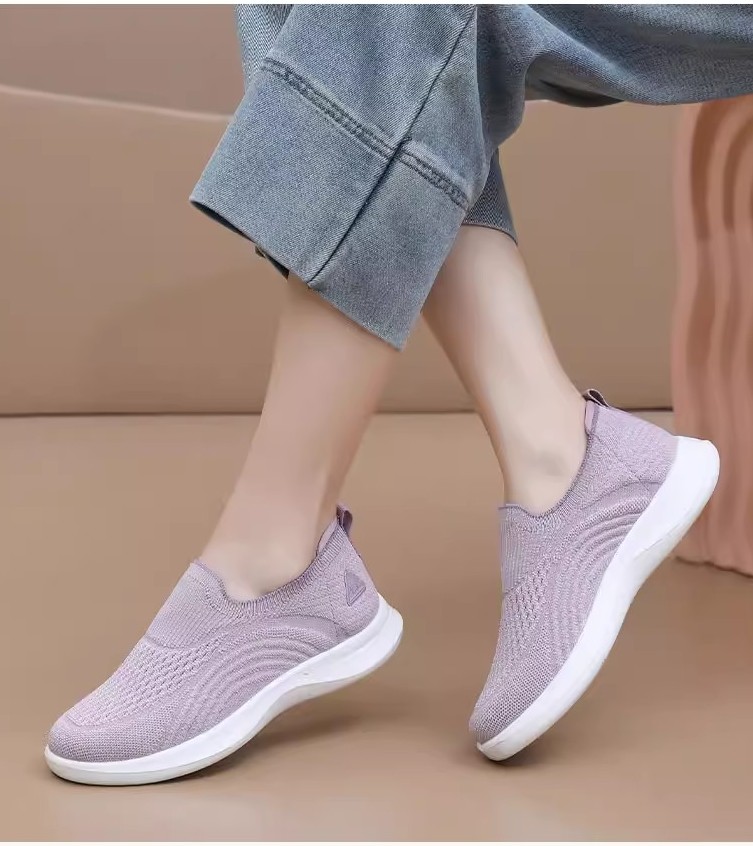
Shopping for zero drop walking shoes for women is mostly a filtering exercise, and the filters that matter are not the ones on the marketing page. Start with stack height in millimeters, not with the drop claim. For all-day urban walking, 12mm to 20mm of total stack in a level shoe gives you ground protection without turning the platform mushy. For treadmill sessions or gym walking, something in the 8mm to 12mm range feels quicker. For trail and gravel, you want more stack and a rock plate, because the whole point of flat shoes on uneven ground is letting your foot read the surface without bruising.
Then check the last width against your own foot. Flat shoes tend to be built on straighter, more anatomical lasts, but “wide” is not standardized across brands — a 2E from one maker is a D from another. Measure your foot late in the day when it is at its largest, standing, and compare against the brand’s own size chart rather than assuming your usual number carries over. Half a size up with a thin sock is a better bet than your exact running-shoe size, since walking shoes are usually worn with thinner socks and need less volume.
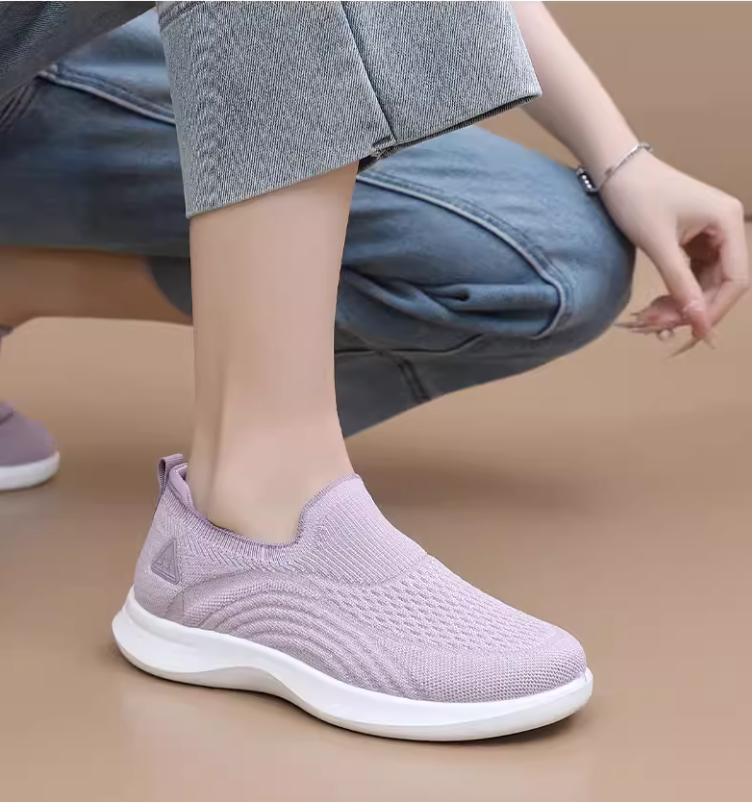
Upper construction decides whether the shoe survives a summer. Engineered mesh with reinforced overlays breathes and holds shape; cheap single-layer knit stretches out and starts sliding at the heel after a few weeks. Look for a heel counter that is firm at the base and soft at the collar — that combination locks the rearfoot without sawing at your Achilles, which matters a lot in a shoe with no drop to keep you settled back. A removable insole is worth having: it lets you swap in a thin orthotic or a cushioned insert without wrecking the fit, and it makes the shoe easier to dry out.
Outsole compound is the last piece most people skip. Walking wears the lateral heel edge and the ball of the foot, in that order. Blown rubber is light and grippy but disappears quickly on pavement; carbon rubber lasts longer and grips less on wet tile. If you walk on city sidewalks and polished floors, prioritize a rubber that is actually rated for wet surfaces, and check the wear pattern on your current pair before you buy — it will tell you exactly where the new ones are going to fail first. For style range beyond the technical look, the women’s walking shoe styles we stock include low-profile leather and knit options that read as everyday footwear rather than gym gear.
Building a Two-Week Ramp That Actually Sticks
The transition plan is where most people either succeed quietly or abandon the whole idea and go back to a 10mm trainer. The version that works is unglamorous and specific. Week one: wear the new shoes for short errands only, twenty to thirty minutes, and keep your usual pair for anything over an hour. Do this four or five times. The goal is not mileage, it is letting your calves register the new angle in small doses. Stretch after each outing, both straight-knee and bent-knee.
Week two: extend to forty-five minutes to an hour, still alternating. If the morning after feels normal — no stiffness that lingers past the first few steps — add a longer walk at the weekend. If it does not, hold at week-one volume for another seven days. That is not a setback, it is the tendon doing what tendons do. Around day twelve to fourteen, most people find the flat shoes have become the default and the old pair feels oddly tipped forward.
Two practical details make a difference. First, change your socks at the same time you change your shoes — thinner, seam-free socks reduce friction at the heel, and friction is what turns a mild adaptation ache into a blister. Second, rotate rather than replace. Keeping one cushioned pair alive for long days protects you from the failure mode where a single shoe has to be everything, and it extends the life of the flat pair, whose midsole will compress just like any other.
Retire on wear pattern, not on a calendar. Walking shoes typically give up somewhere between 500 and 800 kilometers depending on your weight, surface, and how much of that distance is on abrasive concrete. When the lateral heel edge is visibly rounded and the midsole creases feel permanent rather than springy, the shoe is done — and a worn-out flat shoe is worse for your calves than a fresh one with a small drop, because the collapsed platform changes the geometry you spent weeks adapting to.
What to Check Before You Commit
Before you pay, do three things in the store that no product page can do for you. Walk on a hard surface, not carpet, for at least five minutes — tile or concrete will tell you whether the platform is genuinely level or has a subtle ramp you did not expect. Then stand still and shift your weight forward and back; a good flat shoe lets you feel the whole footbed without a pressure point under the ball or a hot spot at the heel. Finally, walk downhill if there is a ramp anywhere nearby. Downhill is where a zero drop shoe either holds your foot or lets it slide forward into the toe box, and it is the fastest test of whether the heel counter is doing its job.
Be honest about why you want the switch. If the goal is a stronger, more grounded stride and you are willing to give it a month, zero drop walking shoes for women are a reasonable and often rewarding choice. If the goal is immediate relief from heel pain, a flatter shoe is not a treatment — it changes load distribution, and for some conditions it changes it in the wrong direction. If the goal is simply a lighter, less clunky walking shoe that does not look like a medical device, flat-soled designs remain one of the better options on the shelf, and you can enjoy that benefit without pretending the biomechanics are the main event.
Our advice, after watching this category grow from niche to mainstream, is to buy one pair, wear it for a fortnight on short outings, and let your calves vote. The feedback arrives quickly and it is unusually clear. Women who adapt well tend to describe it as “I forgot I was wearing them,” which is exactly the outcome a shoe should aim for. Women who do not adapt well describe tightness that shows up in the morning and fades by lunch — a signal to slow down, not a verdict on the shoe. Either way you will know more in two weeks than any amount of reading, including this, can tell you.
