

Every black leather sneaker wall looks the same at first glance: same low profile, same white cupsole, same three rows of lacing. Wear one pair for six weeks and the differences surface fast — a crease that cuts across the toe box, a heel counter that eats through the lining, a sole edge that turns grey the first time you walk through wet pavement. What shops file under leather black sneakers women’s is not a single product category so much as a dozen different bets on how you will use them, and most of those bets are wrong for most buyers.
I have spent an unreasonable amount of time in the last year watching people break in black leather sneakers and then either live in them or quietly retire them to the back of the closet. The pattern is consistent, and it has almost nothing to do with price. It comes down to four things: what kind of leather is on the upper, whether the last matches your foot, how the sole is attached, and whether you are willing to spend ten minutes a month on care. Get those four right and a $130 pair will outlast a $400 one that fails on any single point. What follows is the version of that checklist I wish someone had handed me before I bought my first pair.
What the Leather Label Is Really Telling You
The word “leather” on a shoebox covers four materials that behave nothing alike. Full-grain leather keeps the outer surface of the hide intact, grain and all, and it is the only grade that develops a genuine patina instead of simply wearing down; it also creases in soft folds rather than sharp lines. Top-grain has been sanded lightly to remove imperfections, which makes it more uniform and slightly less breathable. Corrected-grain leather is sanded hard and then stamped with an artificial grain pattern, and while it takes a mirror shine beautifully, it cracks along flex points once the finish gives up. Bonded leather is not leather in any structural sense — it is scraps ground up and glued into a sheet, and it will delaminate at the toe within a season. None of this appears on the label, so you have to read the product copy and, better, look at the material in person: full-grain has visible pores and an irregular surface, corrected-grain looks eerily perfect and feels slick.
The upper is only half the story. The lining touches your foot for eight hours a day, and a chrome-tanned pigskin or calf lining will outlast any synthetic mesh by years while keeping the inside from turning into a swamp. Where that leather comes from matters too — the Leather Working Group audits tanneries on water use, chemical management and traceability, and its gold-rated facilities are a reasonable proxy for a supply chain that is not dumping chromium into a river. For leather black sneakers women’s buyers, the practical test is blunt: squeeze the upper near the laces. Good leather wrinkles and springs back. Bad leather stays creased, or feels like cardboard under a thin plastic film. One more check worth doing in the shop: press a thumbnail into the surface and watch whether the mark fades. On a tight, well-tanned hide it lifts out within a minute; on a heavily finished corrected grain it lingers, because the finish is doing all the work and the hide underneath is what will eventually fail.
Fit Problems That Send Pairs Back to the Box
Black leather sneakers fail on fit more often than on materials, and the failures are predictable. The first is toe box depth. Leather does not stretch lengthwise, only across the width and only slightly, so a pair that presses on your toes when new will still press on them in three months. You want roughly a thumb’s width — about a centimetre — between your longest toe and the front edge, measured standing up, because your foot lengthens under load. The second is heel slip, which is often a symptom of a last that is too wide in the waist rather than too long; if your heel lifts more than a few millimetres when you walk, the shoe will rub the lining raw no matter how thick your socks are. The third is volume: a low-volume foot in a high-volume shoe ends up lacing so tightly that the quarters overlap and the tongue folds, which creates a pressure point across the instep that shows up around hour five.
Two habits fix most of this before you pay. Shop in the late afternoon, when your feet are at their largest, and bring the socks you actually plan to wear — a pair of thin no-shows and a pair of medium crew socks can be a half size apart. Then walk on a hard floor for a full two minutes, not the carpeted strip by the mirror, because carpet hides the heel slip and the flex point that a tiled floor exposes immediately. If you are between sizes and the shoe runs narrow, size up and add a leather insole rather than squeezing into the smaller pair; that also gives you a replaceable wear layer, which extends the life of the shoe by a year or more.
Why Black Leather Reads Dressier Than Canvas
There is a mechanical reason black leather sneakers look more formal than a white canvas pair, and it is not just colour psychology. Black absorbs light instead of bouncing it back, so the shoe reads as a solid mass rather than a bright accent, which keeps the eye moving up toward your face and clothing instead of stopping at your feet. Leather’s surface has a low, soft sheen that catches light along curves, mimicking the way a polished dress shoe behaves. And a black upper hides the scuffs, creases and rain spots that turn a white sneaker grey within weeks, which means the shoe still looks intentional after a hundred wears instead of merely tired. That durability of appearance is why the category keeps absorbing occasions that used to belong to loafers and low heels.
The scale is not trivial. Statista’s sneaker market tracking shows the global category running into the hundreds of billions of dollars in retail value, and the growth has been concentrated in exactly the segment that sits between sport and dress rather than in performance running. The styling consequence is that a black leather low-top now passes in offices where a running shoe would not, provided the sole is thin and clean and the upper has no visible logos. The rule I use: the flatter and more monochrome the shoe, the dressier it reads. A black upper on a black sole with tonal laces is the most formal end of the sneaker spectrum; a black upper on a bright white sole is casual but tidy. Both are useful, but they are not interchangeable, and buying the wrong one for your wardrobe is the single most common reason a pair goes unworn. Worth noting too: the leather black sneakers women’s assortments in most stores skew toward the white-sole version, simply because it photographs well, so the all-black pair often has to be hunted down online.
Sole, Stitch and Hardware: What Survives Daily Wear
Sneaker soles come in two constructions and the difference decides how long the shoe lasts. A cupsole is moulded as one piece and glued to the upper, often with a stitched sidewall for reinforcement; it is heavier, more stable, and much easier to resole because a cobbler can separate it cleanly. A vulcanised sole is heat-bonded to the upper with a rubber foxing tape wrapped around the joint, which gives that classic low-profile look and more flexibility, but the bond is a single failure point — once water gets in at the foxing, the shoe is finished. For everyday leather black sneakers women’s wear, a stitched cupsole with a rubber outsole is the safer bet, especially in cities where you cover three to five kilometres a day on pavement.
Then look at the small parts, because that is where cheap pairs hide their savings. Stitching along the sidewall should be tight and even, with no gaps where the thread skips. Eyelets should be metal and set flush; painted eyelets flake and then rust, staining the lace and the surrounding leather. The tongue should be gusseted at least halfway up so grit cannot work its way inside. Laces should be flat cotton rather than a polyester cord that glides loose every twenty minutes. And the insole deserves a squeeze: a removable, leather-covered footbed can be replaced for a few dollars, while a glued foam insole collapses under the heel within a year and takes the whole shoe with it. Weight matters too — anything much over 400 grams per shoe in a women’s size 38 starts to feel like a commitment by the end of a long day. None of this requires expertise, just five minutes of handling the shoe in the shop instead of trusting the photograph, which is lit and retouched to hide exactly these details.
Building a Three-Pair Rotation Around One Black Pair
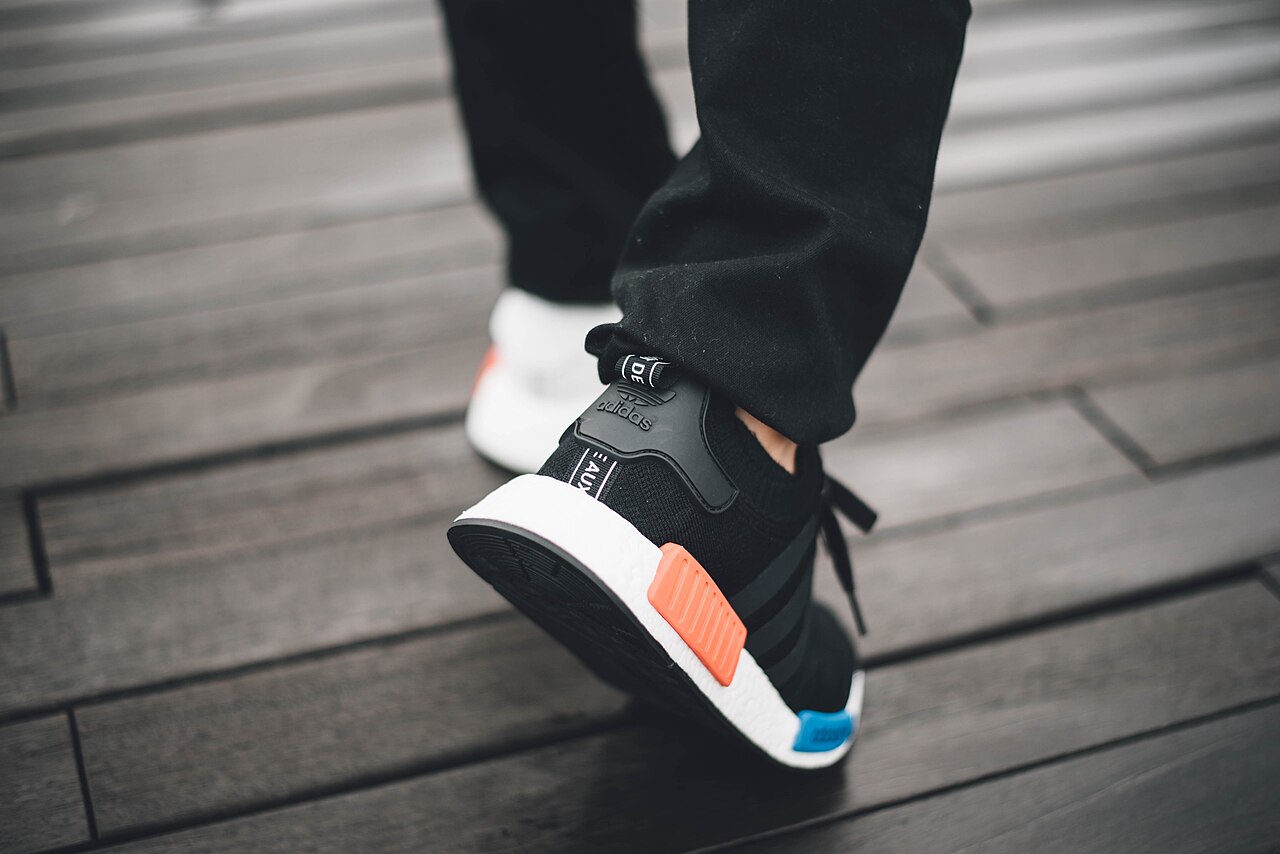
One pair of black leather sneakers worn daily will be dead in eighteen months, and no amount of care changes that, because leather needs time to dry out between wears. Sweat and body heat push moisture into the lining, and if the shoe goes back on damp the fibres break down from the inside. Three pairs in rotation — one black leather, one lighter neutral, one that can take weather — turns that eighteen months into five years, because each pair gets two rest days a week to dry. The rotation does not need to be expensive; it needs to be deliberate. I would put the black leather pair on office and evening duty, a canvas or knit pair on errands, and something with a rubberised or treated upper for rain, since water is what kills leather fastest.
Rotation also solves a styling problem. If your only pair of sneakers is black leather, you end up wearing black leather with everything, including the summer outfits where it looks heavy. A second pair in bone, sand or grey gives you the lighter option without giving up the tidy silhouette, and it keeps the black pair looking newer for longer. Store them where air moves — not in a sealed box under the bed — and rotate the laces as well, because laces wear out faster than uppers and a fresh set makes an old pair look maintained. If you only buy one pair this year, buy the black leather one and treat it as the formal end of your casual wardrobe; if you buy two, make the second one light. One practical note on drying: stuff the shoes the moment you take them off, not the next morning. The first hour is when most of the moisture moves, and a pair left collapsed on its side overnight dries in a crease that never fully lifts.
Care That Keeps Black Leather From Turning Grey
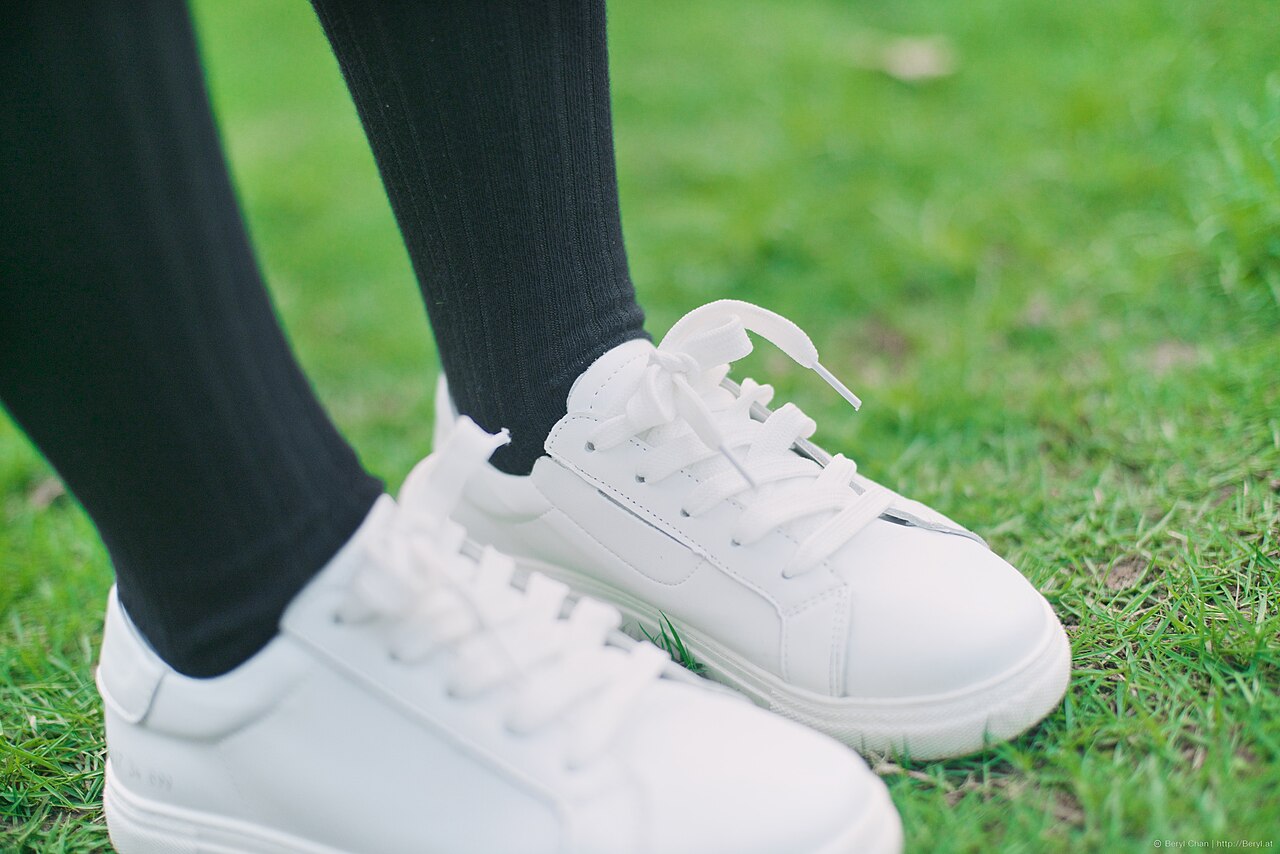
Black leather does not fade so much as it dulls, and the dullness is almost always dust plus dried salt plus oxidised polish. A ten-minute routine once a month keeps a pair looking new. Start dry: brush the upper with a horsehair brush and work the welt and the sole edge with a stiff brush, because grinding dust into leather with a wet cloth is how you create the grey haze in the first place. Then clean with a damp cloth and a small amount of pH-neutral leather soap, working in circles and wiping off the residue rather than letting it dry on the surface. Let the shoe air-dry away from heat — never on a radiator, which cooks the fats out of the leather and leaves it brittle — and stuff it with newspaper or cedar trees while it dries so the shape holds.
Once dry, condition. A thin coat of cream conditioner, buffed after ten minutes, replaces the oils that cleaning strips out and keeps the leather supple at the flex point where cracks begin. Use a black cream polish rather than a wax if you want to restore depth of colour without a mirror shine; wax builds up in the stitching and turns white in the creases. The sole edge is worth attention too — a touch of edge dressing on a rubber or leather midsole makes a two-year-old pair look a year old. Cedar shoe trees are the single best accessory you can buy, because they absorb moisture overnight and hold the toe box shape so the creases stay soft. And keep a spare set of laces: a black pair going slightly grey at the eyelets is usually just dirty laces, not worn leather. Do this four times a year rather than weekly and the uppers will still look black at the third resole.
What to Spend, and What to Skip
Price tiers in leather sneakers track materials far more honestly than in most of fashion. Under about $60 you are almost always buying corrected-grain or bonded leather on a glued sole with a foam insole; these can look fine for a season and are effectively disposable, which is a poor deal if you wear them three times a week. Between roughly $100 and $200 you reach full-grain or good top-grain uppers, a stitched cupsole, a leather lining and a replaceable insole — this is where the value sits, and where most people should buy. Above $250 you are paying for last refinement, hand-finishing, and often a resoleable construction with a name behind it; worth it if you will actually resole the shoe in year three rather than replacing it.
What to skip regardless of budget: heavily branded uppers, because a logo dates a shoe faster than any shape; soles so thick they read as athletic, unless you are genuinely wearing them to walk long distances; “waterproof” claims on unlined leather, which usually mean a coating that will peel; and anything with a synthetic lining described as “breathable” in a shoe you plan to wear without socks. A fifth category deserves a mention: pairs sold with a spare insole included, which is usually a quiet admission that the original will collapse. Several brands now publish resole pricing on their own sites, and that single number tells you more about the build than any marketing copy about craftsmanship. Sale timing helps — end of season and post-holiday windows discount black colourways less than seasonal ones, but the basics do get marked down, and a $180 pair at 30% off is a better purchase than a $90 pair at full price. The test I use before buying: would I pay to resole this shoe? If the answer is no, it is a disposable purchase, and it should be priced like one.
Dressing Them Up Without Looking Like You Tried
The reason black leather sneakers work with tailoring is contrast of texture, not contrast of formality. A wool trouser with a soft break over a slim black leather low-top reads deliberate; the same trouser over a chunky athletic sole reads like a commute. Keep the hem close to the shoe — a straight or slightly tapered leg that ends just at the collar — and let the sock disappear, either with a no-show or with a fine black crew that continues the line of the trouser. With denim, the opposite logic applies: a wider, cropped leg and a visible sock is the more current proportion, and it keeps the black shoe from looking like an afterthought. Skirts and dresses are where most people hesitate, and they should not. A midi skirt with a black leather sneaker is one of the few combinations that works in both a casual office and a weekend, provided the shoe is clean and the sole is thin.
For evenings when a sneaker is too casual but a strappy sandal is too much, the answer is usually a low, covered shoe rather than a taller heel — something like these black satin high heels in a modest height, which keep the same dark, quiet palette as your sneakers while shifting the register. That is the actual value of building around black: everything in the wardrobe talks to everything else. If you want to see how the casual end of that palette is put together, the site’s sneakers collection is a reasonable place to start comparing silhouettes before you commit. The broader history of the form, from rubber-soled canvas to the current leather low-top, is covered on Wikipedia’s sneaker entry if you want context for why the shape has stayed so stable for a century.
Two closing notes from the fitting bench. First, leather black sneakers women’s sizing is not standardised across brands, and the same number can differ by half a size or more between two makers, so treat your size as a starting point rather than a fact. Second, expect a break-in period of about a week — not the painful kind, just enough for the leather to soften over the instep and the footbed to take your imprint. If a pair still hurts at day ten, it is the wrong pair, and no amount of stretching will fix a last that does not match your foot. Buy for the foot you have, in the colour you will actually wear, from a maker whose construction you can name. That is the whole method.
