

Boot season has a way of splitting a closet in two. On one side sit the flat, sensible pairs you reach for without thinking. On the other, the heeled boots you bought because they looked incredible in the store and then wore exactly twice. The gap between those two piles is where most shopping regret lives, and it has almost nothing to do with taste. It comes down to a handful of construction details that nobody explains at the checkout counter.
Good high heels boots for women are not a fantasy reserved for people with tolerant feet. They exist, they are widely available, and the difference between a pair you wear weekly and a pair that collects dust is measurable. Shaft height, heel placement, sole thickness, leather temper, and the shape of the toe box all interact. Change one and the whole shoe changes. This guide walks through those variables in the order they actually matter, using what shoemakers and footwear researchers already know rather than what a product page wants you to believe.
What High Heels Boots for Women Actually Means in 2026
The category is broader than the name suggests. A stiletto ankle boot, a block-heel knee-high, a slouchy suede mid-calf pair, and a heeled Chelsea all fall under the same umbrella, yet they behave like completely different objects on the foot. Heeled footwear itself has a long and slightly unexpected history. As Wikipedia’s entry on high-heeled shoes records, elevated heels appear first in Persian riding footwear, where a raised heel locked the rider’s foot into the stirrup, before migrating into European court dress and eventually into women’s fashion. The heel was a piece of equipment before it was a style statement. Knowing that helps explain why the most comfortable heeled boots on the market still borrow from riding boot architecture: a stacked heel, a defined heel counter, and a shaft that holds the ankle rather than sliding around it.
What has changed recently is not the heel itself but the audience. Footwear retail data has shifted toward lower, wider heels and toward boots that can be worn across seasons. Circana, the consumer research firm formed from the merger of NPD Group and IRI, tracks US footwear sell-through and has consistently reported that comfort-adjacent categories outperform pure dress footwear. You can see the same pressure in product design: heeled boots now ship with cushioned footbeds, rubber-injected outsoles, and elastic gussets that would have looked out of place on a dress boot fifteen years ago.
So when a search for high heels boots for women turns up forty pages of results, the honest answer is that most of them are not the same product wearing different names. Some are fashion objects built for photographs. Others are working shoes that happen to have a heel. Learning to tell them apart before you pay is the entire skill, and it takes about ten minutes of looking at the right parts of the boot.
The Four Measurements That Decide Whether a Heeled Boot Works
Forget the size number for a moment. Four measurements determine fit in a heeled boot far more than the length of your foot does, and three of them are rarely printed on a product page.
The first is shaft height, measured from the floor to the top edge of the boot. This single number explains most of the “these cut into my calf” complaints. A shaft that ends mid-calf on a shorter leg will hit at the widest part of the calf and create pressure with every step; the same boot on a taller wearer ends below that bulge and feels fine. Measure from the floor to the point on your leg where you want the boot to stop, then compare. Anything within two centimeters of that number is workable. Anything more than four centimeters off will annoy you.
The second is calf circumference at the top opening. Boots with a fixed shaft have a hard limit, and it is usually stated as a range. If your calf measurement plus a centimeter for trousers falls outside that range, no amount of stretching will fix it. Look for pairs with a rear elastic panel, a lace-up back, or a buckled strap, all of which buy you two to three centimeters of adjustment.
The third is heel-to-toe drop, which is simply heel height minus platform thickness. A 90 mm heel sitting on a 30 mm platform behaves like a 60 mm heel under your ankle and calf, which is why platform boots feel dramatically more manageable than their listed height suggests. Two boots can both read “9 cm heel” and feel nothing alike.
The fourth is the width across the ball of the foot, and it is the measurement shoppers ignore most often. A pointed toe box that tapers hard will pinch the moment your foot warms up and spreads, which happens within twenty minutes of walking. If you know your feet run wide, a square or almond toe in the same size will often fit better than sizing up in a pointed one. Sizing up to fix width creates heel slip, and heel slip in a boot with a 70 mm heel is how blisters start.
Write those four numbers down before you shop. Most returns on heeled boots trace back to one of them, not to the size printed on the box.
Heel Heights and Shapes That Survive a Full Workday
Heel shape matters more than heel height, and the marketing around both is misleading. A thin 60 mm stiletto concentrates load on a very small surface and forces your ankle to stabilize constantly. A 60 mm block heel spreads that same load across several square centimeters and lets you stand still without micro-adjusting. If the goal is a boot you can wear from a morning commute through an evening dinner, block, Cuban, and stacked heels do the work that thin heels cannot.
The 50 to 65 mm range is the practical sweet spot for all-day wear. It is high enough to change your posture and lengthen the leg line under a midi skirt, low enough that the calf does not stay contracted for hours. Above 80 mm, the geometry changes: your weight shifts forward onto the ball of the foot, and the toes take load they were never designed to carry for long stretches. Podiatrists have documented this repeatedly, and it is the reason heeled boots above 90 mm tend to be worn in short bursts rather than full days.
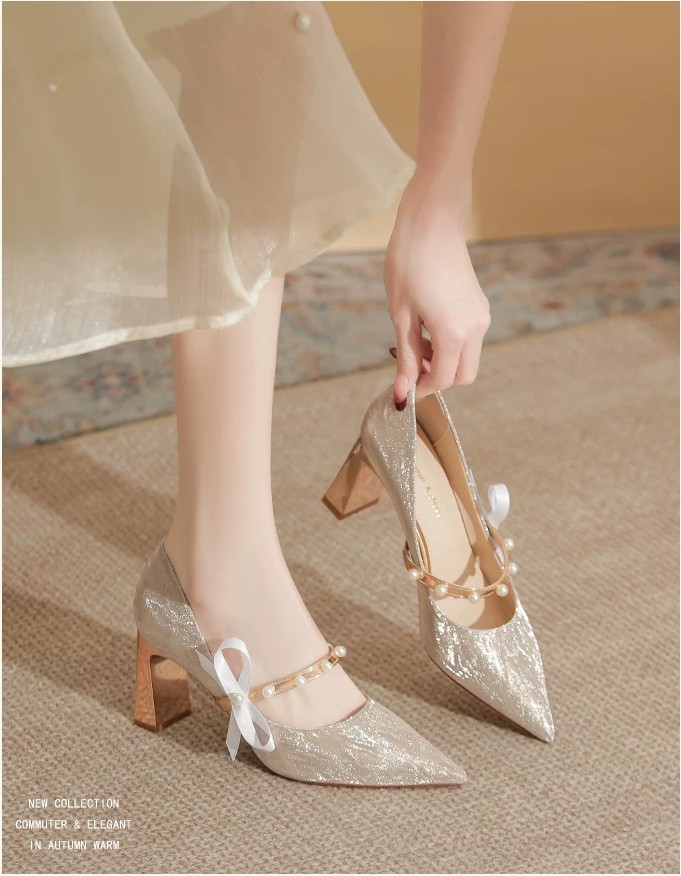
Placement is the other half of the story. A heel set slightly forward under the arch, rather than right at the back edge of the boot, keeps your center of gravity closer to the ball of the foot and makes the boot feel shorter than it is. Some makers call this a “forward-set” or “centered” heel. It is not a marketing gimmick; it changes how much work your ankle does with each step. When you try boots on, stand still and notice whether you feel like you are tipping backward. If you do, the heel is too far back or the sole is too stiff to flex.
Finally, look at the heel tip. A rubber or TPU top piece gives grip on polished floors and damp pavement and can be replaced for a few dollars when it wears down. Bare plastic tips are loud, slick, and usually the first thing to fail. On a boot you plan to wear through winter, that little cap matters more than the finish on the upper.
One more thing worth saying plainly: if you have never worn heeled boots for long periods, start at 45 to 55 mm. The difference between 50 mm and 70 mm over an eight-hour day is enormous, and building tolerance gradually works better than buying the height you wish you could wear.
Leather, Suede, and the Materials Worth Paying For
Upper material decides how a boot ages, how it breathes, and whether it will mold to your foot or fight it for a month. Full-grain leather is the benchmark: it holds shape, creases without cracking, and takes polish. It also starts firm. A full-grain boot needs a week or two of break-in, and during that period you should expect some stiffness across the vamp. That is normal, not a defect.
Suede is softer from the first wear and molds quickly, which makes it a good choice for slouchy shafts and for anyone who hates break-in. The trade-off is weather. Suede stains with road salt and water, and once it does, the mark is difficult to remove without altering the nap. Treat new suede with a fluoropolymer protector before the first wear and it becomes far more practical than its reputation suggests.
Patent and coated leathers look sharp but do not breathe, and they crease sharply rather than softly. On a boot with a stiff shaft, that combination gets uncomfortable in heated interiors. If you want a glossy finish, look for a patent only on a lower-cut style where the foot can still move.
Plant-based alternatives have improved noticeably. Materials made from cactus, apple waste, and mushroom mycelium now appear in mid-priced boots, and several brands blend them with recycled polyester for durability. They are not identical to leather in longevity, but for a trend-driven pair you plan to wear for two or three seasons, they are a reasonable trade. Ask what percentage of the upper is bio-based; anything under 40 percent is mostly conventional synthetic with a story attached.
The lining deserves as much attention as the upper. A leather lining wicks moisture and reduces odor. A synthetic lining traps heat and gets slippery. On a heeled boot worn without thick socks, lining quality is the difference between a shoe that feels dry at 6 p.m. and one you want off by 3.
Sizing and Fit Rules Most Shoppers Learn Too Late
Heeled boots almost always fit differently from sneakers, and the mistake is assuming your sneaker size transfers. Most dress and fashion boots run on a narrower last, and many European brands size up slightly compared to US athletic sizing. Read the size chart, but read the reviews that mention fit more carefully, especially from people who describe their foot width.
Try boots on late in the day. Feet swell over the course of a day, and a boot that fits at 9 a.m. can be genuinely painful by evening. If you shop online, order during a period when you will be home to try them on after a full day of walking around, not first thing in the morning.
Wear the socks or tights you actually plan to pair with the boot. A boot fitted over bare feet will feel loose and sloppy with wool tights; a boot fitted over wool tights will strangle you in June. This is the single most common reason people end up with two pairs of the same boot in different sizes.
Check heel slip deliberately. Some slip is expected in a new leather boot because the heel counter needs to mold. Slide occurs at the heel, not the ankle. If your whole foot slides forward when you walk, the boot is too long or the instep is too roomy, and no insole will fully correct it. If the heel lifts a centimeter and then settles, that will resolve with break-in.
Give the toe box a press test. Push down with your thumb across the widest part of the toe box. You want a little give, not a lot. A toe box with zero give will hurt; one that collapses entirely will not hold shape and will show creases within weeks.
If you are between sizes and the boot has a rounded or almond toe, size down. If it has a sharply pointed toe, stay true to size or go up half and add a thin insole to take up length. Pointed boots simply do not have room for error at the tip.
Three Outfits That Show Off High Heels Boots for Women
Heeled boots are more versatile than the fashion calendar suggests, and a few combinations cover most of what a normal week asks for.
For work, pair a 55 mm block-heel ankle boot in black leather with straight-leg trousers that break just above the boot’s top edge. The trouser length is the detail that matters. If the hem falls over the boot shaft, you lose the leg line the heel was supposed to create. Cuff or hem the trouser to end a centimeter above the boot opening.

For weekends, a slouchy suede mid-calf boot looks best with a midi skirt or a slip dress and an oversized knit. Suede’s matte surface keeps the outfit from looking too polished, which is what you want when the rest of the look is deliberately loose. Keep the color within a shade or two of the skirt so the boot reads as one continuous line rather than a separate object.
For evenings, a pointed knee-high in a deep tone is the most efficient silhouette in the closet. Worn with a mini skirt or a short dress and opaque tights, it covers the leg without covering the outfit, and it works in weather that rules out strappy sandals. Choose a heel at 70 mm or below if you plan to be standing. Style notes aside, a knee-high boot with a heel is what a lot of people picture when they think of high heels boots for women, and it earns that association because it does more than one job.
Color is worth a short detour. Black and dark brown remain the safest, but a deep burgundy, forest green, or slate grey boot often pairs with more of an existing wardrobe than expected and reads as intentional rather than default. If you already own black boots, the second pair is where you can afford to be slightly less practical.
Care and Repair That Doubles the Life of a Heeled Boot
A heeled boot that is cared for properly will outlast a neglected one by years, and the routine takes about ten minutes a month. Start with prevention: apply a protector spray to new leather and suede before the first wear, and reapply every few weeks during wet months. This matters most on the shaft, where road spray hits first.
Clean leather with a damp cloth and a mild saddle soap, then condition while the leather is still slightly damp so the product absorbs. Skip heavy conditioners on the shaft of a structured boot; they soften the material and the shaft starts to slump. Condition the vamp and the flex points, where creasing happens.
For suede, brush with a suede brush when dry, always in one direction. Water marks come out with a dedicated suede eraser and a light steam, not with soap. Do not store suede boots in plastic; they need airflow or they mildew.
Rotate your boots. Wearing the same pair daily does not give the lining time to dry, and trapped moisture breaks down both leather and adhesive. Two pairs worn alternately will each last longer than one pair worn twice as often. If you only own one pair, at least let them air for a full day between wears and pull the insoles out overnight so the footbed can dry from both sides.
Salt stains deserve their own note. Winter road salt leaves a white tide line on leather that hardens if left alone. Mix a tablespoon of white vinegar into a cup of water, dab it on with a cloth, and wipe immediately rather than scrubbing. Treat the whole boot rather than just the stained patch, or you will end up with a clean spot surrounded by a dull ring.
Check the heel tip every few months. Most high heels boots for women fail at exactly this point rather than at the upper, and a worn top piece exposes the plastic or wood underneath, which wears fast and changes how you walk. Replacing tips costs very little at a cobbler and prevents the more expensive repair of rebuilding the heel stack.
Store boots with shaft support. Rolled magazines or boot shapers keep the shaft upright and stop the ankle from creasing in storage. Keep them out of direct sunlight; UV fades dye and dries leather.
A Ten-Minute Checklist Before You Pay
Before committing to a pair, run through the specifics that predict whether you will still be wearing them next winter. These are the questions that separate a good purchase from a hopeful one.
Heel construction: Is the heel attached with screws or molded on? Screwed heels can be tightened and repaired; molded heels that separate usually mean the boot is finished.
Sole attachment: Look at the welt or the bond line. Stitched soles cost more and last longer. Glued soles are fine on fashion boots but will not survive repeated resoling, so treat them as a shorter-term purchase.
Zipper quality: A full-length metal zipper with a locking pull is worth more than a decorative one. Check whether the zipper sits on the inside or outside of the leg; an inside zipper can rub against the opposite ankle when you cross your legs.
Insole and arch support: Press the insole. If it compresses to nothing, budget for an insert. A removable insole is a plus because it lets you swap in support without changing the fit much.
Return policy: Confirm whether returns cover worn-on-carpet trials. Boots need a real try-on, and policies that require unworn condition make it hard to judge fit honestly.
If you want a starting point, a pair like these pointed high heels for women shows the profile that works with both tailoring and denim, and browsing our full heels collection will give you a sense of which silhouettes repeat across the season. Footwear News also tracks which silhouettes buyers are actually responding to each season, which is a useful reality check against runway coverage.
None of this requires becoming a footwear expert. It requires looking at four measurements, two materials, and one heel tip before you spend money. Do that, and the pile of unworn boots in your closet stops growing. The pairs you keep will be the ones that fit the life you actually lead, which is a better outcome than fitting a photograph.
