

Most shoe guides treat height as the only variable worth discussing, which is why so many people end up with a closet full of near-identical pairs that all hurt in the same place. Height is actually the least interesting thing about a heel. What changes how a shoe feels, how it walks, and how it looks with a hemline is the geometry underneath: where the weight lands, how wide the base is, whether the back of the foot is held or exposed. Once you understand that, the whole landscape of heels stops looking like an endless wall of similar silhouettes and starts looking like a set of tools with distinct jobs.
The history is worth a sentence, because it explains why the category is so messy. Heels were not invented as a beauty device. According to the historical record compiled on Wikipedia, raised heels appear first in Persian riding boots, where a stacked heel kept the rider’s foot from sliding through the stirrup. They arrived in European court dress in the sixteenth century and were worn by men for roughly two hundred years before they became coded as feminine. That long, tangled origin is why the same word, heels, covers everything from a two-inch wedding shoe to a six-inch stage stiletto.
What follows is a working taxonomy, written for someone who wants to buy fewer pairs and wear them harder. There are nine families worth knowing, and each one fails or succeeds for a specific reason.
Start With the Heel Itself: Stiletto, Block, Kitten, and Cone
The stiletto is the shape most people picture: a long, tapered heel that narrows to a point roughly the width of a pencil. Named after an Italian dagger, it became a mass-market object in the mid-1950s, when the steel shank inside the shoe made that thinness structurally possible; the designer Roger Vivier is usually credited with the modern version made for Christian Dior. The stiletto’s advantage is visual, not mechanical. It lifts the arch and lengthens the line of the leg, which is why it survives decade after decade in evening wear. Its disadvantage is equally clear: the contact patch at the ground is tiny, so every step requires the ankle to stabilize more, and hard pavement transmits shock straight up the leg.
The block heel spreads that same height over a much wider base, and the difference in walking effort is not subtle. A three-inch block heel is genuinely comfortable for a full workday in a way a three-inch stiletto is not, because the foot can land flat instead of balancing on a point. Block heels also tolerate cobblestones, grass, and train platforms, which is why they dominate wedding-guest footwear and officewear. The trade-off is a heavier, chunkier look, though modern versions with a tapered or curved block have closed much of that gap.
The kitten heel sits between one and two inches and was, by most accounts, a 1950s compromise designed for women who wanted lift without the posture of a stiletto. It is the most underrated option in this list. A kitten heel keeps the foot closer to the ground, reduces ankle torque, and reads as deliberate rather than dowdy when the toe shape is sharp. The cone heel, wider at the top and narrowing toward the floor, and the Cuban heel, a straight stacked block common in menswear and now in women’s boots, round out the structural options. For anyone building a first serious pair, the block heel and the kitten heel are the two shapes that earn their space fastest.
Pumps, Court Shoes, and the Pointed-Toe Question
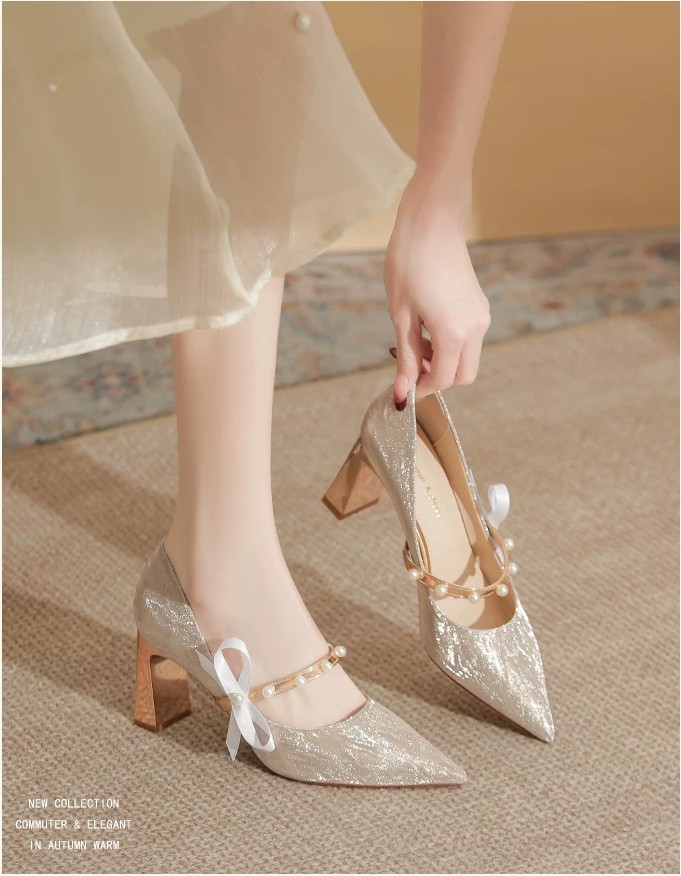
A pump, or court shoe in British usage, is a closed-back, closed-toe shoe with no fastening — the foot slides in and stays by friction and fit alone. It is the most formal everyday shape in the category, and the one most often bought badly, because people size up to accommodate a toe box that was never going to work. The single biggest variable inside the pump family is the toe.
The pointed toe creates an unbroken line from instep to floor and is the reason the shape reads as sharp rather than plain. But a point does not have to mean a pinch. Well-made pointed pumps extend the toe box forward of the ball of the foot, so the point is empty space rather than compressed toes. Cheap versions let the point begin right at the metatarsals, and that is where the familiar burning sensation comes from. When trying a pointed pair, press a thumb into the tip: there should be a few millimetres of give and no contact with the longest toe.
Round toes allow more room and look softer, which suits square or wide feet and reads as either retro or modern depending on the heel. Almond toes are the middle path and, in practice, the safest choice for a first pair, since they leave room without looking orthopedic. Square toes come in and out of fashion on a roughly fifteen-year cycle and, when they are in, offer the most width of any closed shape.
There is also the question of vamp depth — how far back the top edge of the shoe cuts across the foot. A low vamp shows more toes and can make a wide foot look broader; a high vamp holds the foot in place and flatters almost everyone but can rub the instep. If a pump keeps slipping off at the heel, the problem is usually vamp depth or heel width, not length, and going down half a size will not fix it. Look for a pair with a slightly higher vamp or an internal elasticated topline before you start altering sizes.
Slingbacks, Mules, and Other Open-Back Styles
The slingback replaces the closed heel counter with a strap that runs around the back of the ankle. Structurally, this is a gift to anyone whose heels slip in pumps, because the strap holds the shoe to the foot rather than relying on friction. It also solves a fit problem that sizing cannot: if your heel is narrow relative to your forefoot, a slingback will stay on where a pump will not. The strap itself should sit snug but not tight, and adjustable buckles are worth paying for.
Mules are backless and toeless or closed-toe, held on by the front of the foot alone. They are the easiest heel to put on and the hardest to walk in quickly, because nothing anchors the heel and the foot has to grip with every step. That grip is what makes cheap mules flap and good mules feel surprisingly secure: a well-shaped footbed with a slight cupped heel does most of the work. Heeled mules have become a default warm-weather alternative to sandals, and a low block mule is one of the few styles that works equally well with tailored trousers and a summer dress.
The d’Orsay cut removes the sides of the shoe, leaving only the toe and heel connected by a sole and often a thin strap. It is the most flattering of the open styles on a narrow foot and the least forgiving on a wide one, since the sides no longer hold anything in. Two-strap and ankle-strap sandals belong in this family too. An ankle strap that sits exactly at the narrowest part of the ankle makes the leg look longer; one that cuts across the widest part does the opposite. If you are short-waisted or petite, a strap set slightly lower, closer to the top of the foot, usually reads better than one sitting high on the ankle.
Open-back shapes also change how a shoe ages. Straps stretch, and a slingback that was perfect in March can be loose by August. Buying a pair with a buckle rather than a fixed elastic strap is the difference between a two-season shoe and a five-season one. It is a small detail that separates the styles people keep from the ones they quietly stop wearing.
Wedges, Platforms, and the Comfort Math
A wedge fills the space between heel and sole with a continuous piece of material, so the foot rests on a single inclined plane rather than balancing on a post. This is why a four-inch wedge is often easier to walk in than a two-inch stiletto: the ankle does not have to stabilize a narrow column, and the whole sole shares the load. The catch is weight and stiffness. Dense foam and cork wedges flex a little; solid wood and hard rubber do not, and a rigid wedge forces the foot to roll from a flat platform, which is tiring over distances.
Platforms raise the entire sole, which means the heel-to-toe drop can stay modest while the shoe still adds height. A two-inch platform with a three-inch heel is a one-inch pitch, functionally. That is the trick behind most stage and event footwear, and it is worth understanding when shopping: what tires you out is not absolute height but the angle of the foot. Anyone who wants height without the pitch should look at a platform with a chunky heel rather than a thin one.
Both shapes have practical limits. Wedges are the most stable heel on soft ground, grass, and gravel, which is why they dominate outdoor weddings and resort wear. Platforms need a rounded toe spring to roll properly; a flat, stiff platform that ends abruptly at the toe makes every step a small stumble. Neither is a good choice for driving, and neither should be worn for the first time on a day that involves stairs you have not seen.
Material matters more here than anywhere else in this guide. Cork and EVA absorb shock and stay light; leather-covered wedges look more refined and break in beautifully; woven espadrille soles are comfortable but degrade quickly in rain. For a wedge you intend to wear weekly through summer, a leather or suede upper on a mid-density sole outlasts the cheaper alternatives by several seasons, and the sole can usually be repaired rather than replaced.
Booties, Ankle Boots, and Heeled Sandals for Cooler Months
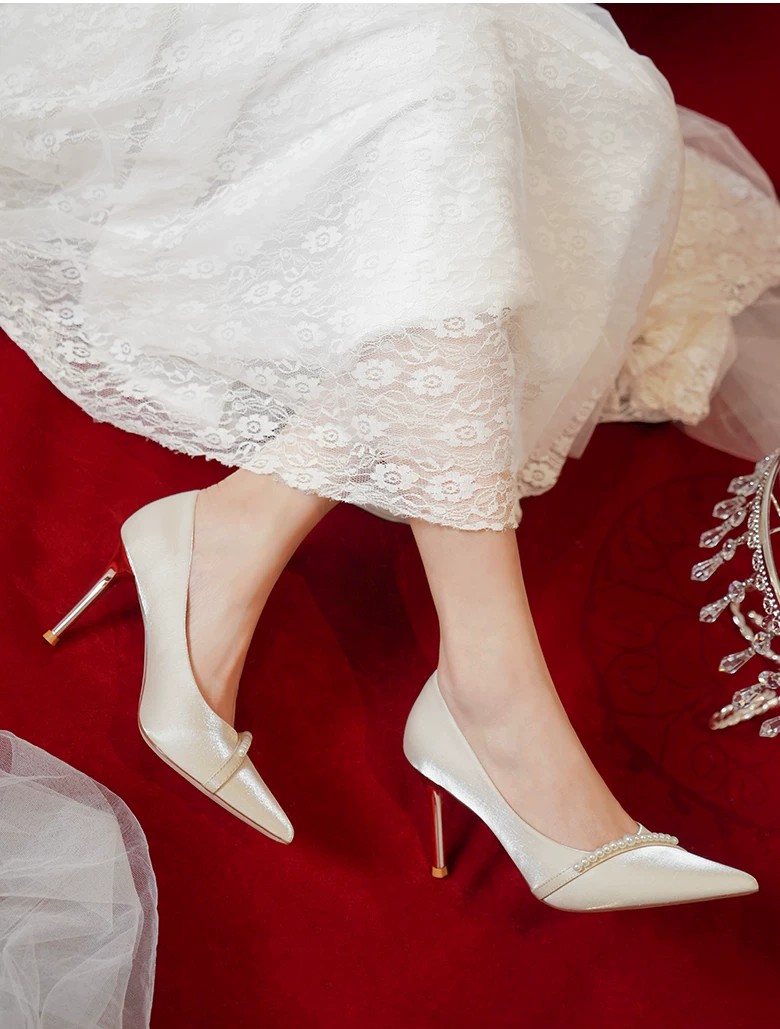
A bootie is a heeled ankle boot, and it is the shape that made heels wearable in winter. Because the upper wraps the ankle, the foot is supported on all sides, which means a three- or four-inch heeled bootie can be genuinely comfortable in a way a pump of the same height is not. The critical measurement is shaft height relative to your ankle bone: a shaft that ends right at the ankle bone creates a hard edge that rubs, while one that sits above or below it does not.
Heeled sandals invert the logic of the bootie — minimal upper, maximum exposure — and rely almost entirely on strap placement for security. A sandal with a strap across the toes, one across the instep, and one at the ankle distributes pressure across three points and is far more stable than a single wide band. Thin straps look delicate but concentrate pressure; a two-inch-wide strap over the instep will be more comfortable over an evening than four thin ones, even though it looks like less shoe.
Seasonal materials change the rules too. Suede stretches and molds but marks in wet weather. Smooth leather holds shape and takes polish. Patent is stiff and unforgiving until broken in, then performs well for years. Textured leather and nubuck hide scuffs, which matters for boots that get worn on commutes. If you live somewhere with real winters, a rubberized sole and a heel no narrower than a thumb are the two specifications that decide whether a bootie survives to February.
There is a useful rule for buying either shape: try them with the socks or tights you will actually wear. Ankle boots tried on bare feet in a warm shop frequently turn out to be half a size too small in December, and heeled sandals tried on at the end of the day fit differently from those tried on at ten in the morning. Feet swell, and the difference is enough to matter.
Toe Shapes, Straps, and the Details That Change the Fit
Two shoes can share a heel height, a heel type, and a colour and still fit completely differently, because the details do the work. Anyone comparing the different types of heels for women side by side in a shop will notice this within ten minutes: the differences that decide comfort are rarely the ones printed on the box. The toe box is the first: a peep toe relieves pressure on the longest toe but can pinch the smaller ones if the opening is narrow, and it exposes polish and pedicure in a way that closed toes do not. A closed pointed toe with a soft leather lining will almost always be kinder than an open one with a stiff edge.
Straps are the second. Ankle straps add security and subtract leg length, which is a trade most people make knowingly. Instep straps anchor the foot and are the reason mary jane styles stay on narrow heels. T-straps visually divide the foot and suit a high instep. The rule that holds across all of them is that a strap should sit over bone or muscle, never over a joint, and should be adjustable if the shoe is going to be worn for more than an hour.
Then there is the interior, which almost no one inspects in the shop. A padded footbed with a slight arch support changes a heel from an endurance test into something you can wear through a dinner. A leather lining wicks moisture; a synthetic one does not, and that is the difference between a shoe that smells after a month and one that does not. A steel or composite shank under the arch keeps the shoe from folding in the middle, which is the failure mode that makes cheap heels collapse after a season.
Heel tip material is the last detail and the cheapest to fix. A plastic tip on a narrow heel wears through in weeks and, once it does, the exposed nail damages both the shoe and the floor. Rubber or TPU tips cost little to replace and are the single best maintenance habit for anyone who wears thin heels regularly. Buying a pair with a replaceable tip, or having a cobbler fit one before the first wear, doubles the life of the shoe.
How to Choose Different Types of Heels for Women by Occasion
Sorting through the different types of heels for women is much easier when you start from the occasion rather than the shelf. Workwear with a lot of standing wants a block heel or a low kitten heel in a closed pump: stable, quiet on hard floors, and formal enough for a meeting. Anything with a pointed toe and a two-inch block heel will handle a nine-hour day that includes a commute, and it will not look out of place at dinner afterwards.
Weddings and formal events reward a different calculation. Ceremony floors are often uneven, gardens are soft, and the day runs long. A block-heeled sandal or a low wedge solves all three, and a stiletto is best kept for the parts of the day that happen indoors on flat stone. The practical move is to bring the beautiful pair and wear something stable for the arrival, which is also what most people who attend a lot of weddings end up doing anyway.
Evening and occasion dressing is where the stiletto and the d’Orsay genuinely earn their keep, because the goal is a line rather than mileage. That said, the different types of heels for women that get worn most often are rarely the most dramatic ones. A pointed pump, a slingback, a low mule, and a block-heeled bootie cover work, dinner, travel, and winter respectively, and that is a functional wardrobe on its own.
Travel is its own category. Airport floors, cobblestones, and long walks punish narrow heels and stiff soles. A wedge or a stacked block with a rubber outsole is the only heel type that reliably survives a trip, and a slingback packs flatter than a pump because the back collapses. If you only take one pair, take the one you have already walked two kilometres in.
Finally, consider what you actually reach for. Most people overestimate how often they will wear a five-inch shoe and underestimate how often they will wear a two-inch one. Counting the heels you wore last month is a more useful planning exercise than any style quiz, and it usually points toward the same answer: a small number of mid-height, well-shaped pairs used constantly.
Fit, Break-In, and Making Heels Wearable
Fit in heels is not the same as fit in flat shoes. The heel should be locked in place with no vertical lift when you walk; if it lifts, the shoe is either too long or too wide at the heel, and no amount of breaking in will change it. The ball of the foot should sit on the widest part of the sole, not forward of it. The toes should have room to spread slightly. And the arch should feel supported rather than hollow, which is a function of the shank and footbed rather than the size.
Shop late in the day, when feet are at their largest, and try both shoes rather than one, since most people have a slightly larger dominant foot. Walk on a hard surface, not carpet, because carpet hides a slipping heel and a stiff sole. If a shoe is tight across the instep in the shop, it will be tight forever; leather gives across the width of the foot, but the instep and the toe box barely move.
Breaking in should be gradual. Wear new heels for twenty minutes indoors, then an hour, then a short errand. Use a heel grip only after you have confirmed the slip is not caused by length. A thin gel pad under the ball of the foot reduces the pressure that causes most heel-related soreness, and it is a better fix than sizing up. Rotate pairs rather than wearing the same one daily, so the interior can dry out.
There is also a posture point that gets overlooked. Walking in heels is a technique: land heel first, keep the stride shorter than usual, and let the hips move rather than locking the knees. Most of the strain people attribute to height is actually strain from walking as though the shoe were flat.
Building a Small, Useful Collection
A workable collection of heels is smaller than the market suggests. Four pairs will cover nearly everything: a pointed pump in a neutral tone on a two- to three-inch block or kitten heel, an open-back stiletto heel for evenings, a low mule or slide for warm weather, and a heeled ankle boot for the cold half of the year. Add a wedge if you have outdoor events, and a statement pair if you enjoy them — but the first four do the actual work.
Colour should follow the same logic as the shapes. Nude tones that match your skin rather than a generic beige lengthen the leg most effectively; black is the most versatile for evening; a deep brown or burgundy covers the middle ground and photographs well in daylight. Metallic is more useful than most people expect, because it functions as a neutral at night. Patterns and bright colours are the pairs you wear least, which is fine as long as you know that going in.
Maintenance is what separates a collection that lasts from one that gets replaced. Heel tips replaced before they wear through, soles protected when new, suede brushed and sprayed, leather conditioned twice a year, and shoes stored with shape inside them rather than crushed at the bottom of a bag. None of it takes long, and all of it extends life by years.
What the different types of heels for women really offer is a set of trade-offs between line, stability, and stamina, and every good purchase is a decision about which of those you need on a given day. Learn the four or five structures properly, buy the version you will actually walk in, and the category stops being a source of regret. For a wider view of how heels sit within a full wardrobe, the site’s women’s shoes section is a reasonable place to see the rest of the picture, and the stiletto’s own history is worth half an hour if the engineering side interests you. Footwear trade coverage such as Footwear News is also a useful check on which shapes are actually selling rather than merely being photographed.
