

A pair of woven heels looks sturdy in the box. Then someone wears them for a month, and the shape has moved: the vamp sags where the weave loosened, the toe has lost its crisp edge, and the side that took the sun is a different shade from the side that didn’t. Nothing has torn. The shoe just isn’t the shoe it was.
That’s the specific behaviour of woven uppers, and it’s predictable once you know which direction the material gives. Woven leather, raffia and braided synthetic all flex along the weave, which means they stretch in one axis and barely at all in the other. Where those axes meet is where the shape fails first, and it’s almost always the vamp and the top line rather than the sole.
Six sections follow: what the materials actually are, where the give happens, what twenty wears does, how humidity changes the answer, what to check before buying, and the one care habit that shortens the life of a woven pair. The short version is that woven heels reward a buyer who looks at the weave direction and punishes one who buys on colour.
Woven leather, raffia and braided synthetic are three different materials
They photograph similarly and behave nothing alike.
Woven leather is strips of leather cut and interlaced over a backing, or whole leather cut in a lattice. It has real tensile strength along the strips because leather is strong in that direction, and it holds shape better than the other two. It also creases permanently where the strips fold, and those folds can’t be ironed out the way a smooth leather crease sometimes can. A good woven leather shoe lasts years, with visible character by the third.
Raffia is a plant fibre, usually from the raffia palm. It’s light, breathable and stiff when new, and it has no elastic recovery at all. Once a raffia weave stretches, it stays stretched. It also absorbs moisture and dries slowly, which is the single biggest failure mode in humid climates. Raffia is a wonderful summer material for structured shapes and a poor one for shoes that need to hold a precise fit.
Braided synthetic is the cheapest and the most variable. Some versions are polyurethane strips over a fabric backing and behave reasonably well. Others are a thin coating on a knit core, and those delaminate at the fold lines within a season. The tell is at the cut edge: if the strip looks like a single solid colour all the way through, it’s better quality than a strip with a visible layered edge.
The practical difference for fit: leather weave gives 2mm to 4mm over the first month, raffia gives more and doesn’t come back, synthetic depends entirely on the backing. A pair that’s snug in the shop will be comfortable in leather, loose in raffia, and unpredictable in synthetic.
Where a woven heel gives first, in order
Four places, and they fail in a fairly consistent sequence.
- The vamp across the top of the foot. This area flexes with every step, and the weave there opens slightly. Once the openings widen, the vamp sags and the shoe starts to look a size too big even though the length is unchanged.
- The top line, where the upper meets the ankle. Woven uppers have less structural support here than a solid leather one, so the edge softens and can curl outward.
- The heel counter, if it’s woven rather than lined. A woven counter that hasn’t been stiffened with a proper stiffener will let the heel slide within a month. This is the one failure that affects how the shoe walks rather than how it looks.
- The toe box edge. Last to go, and the most visible when it does. The weave at the very front takes scuffs from stairs and kerbs and the strips fray at the cut.
Order matters for a buyer. The vamp and top line are cosmetic and slow. The heel counter is structural and quick. So the inspection question isn’t “does the weave look even” but “is the counter lined and stiff”. Press the back of the shoe from both sides. If it holds firm and springs back, the woven upper is built on a real counter and the shoe will keep its fit.
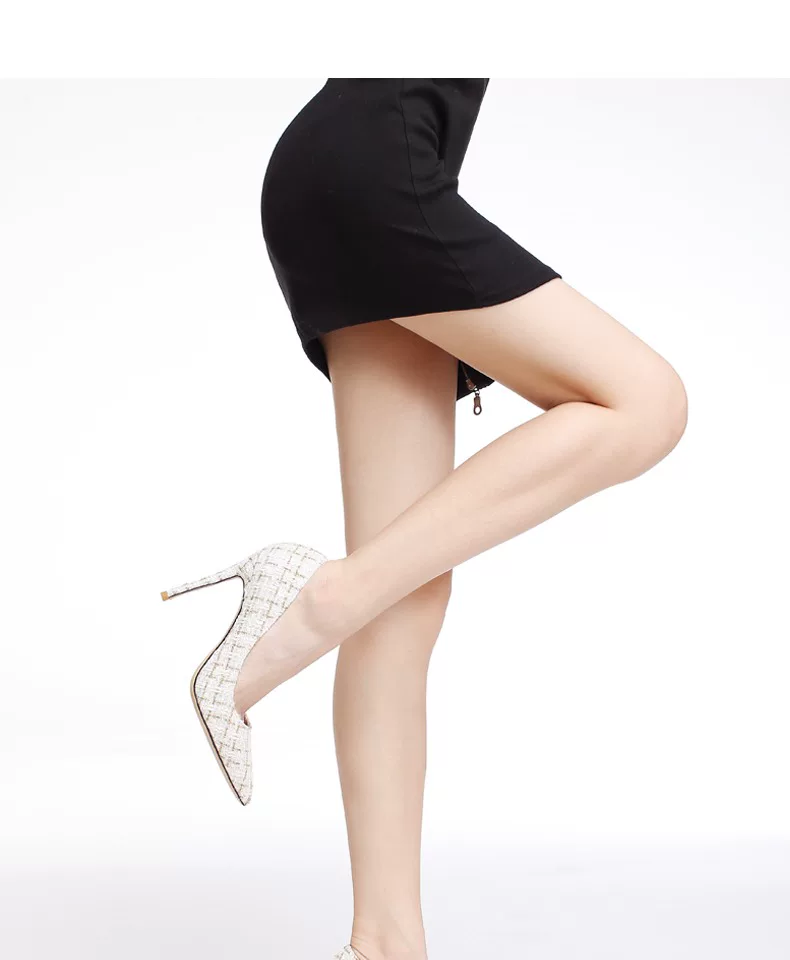
What twenty wears does to a woven pair
Twenty wears is roughly a month of commuting, or one holiday. It’s the point where the differences between good and poor woven construction become obvious, and where cheap pairs start to show their backing.
Expect the vamp to relax by about 2mm in a leather weave. That’s normal and it’s why a slightly snug woven heel is the right purchase. Expect the top line to soften but hold. Expect the insole to take an imprint under the ball of the foot, as with any shoe, and expect the woven surface to pick up a faint unevenness where the strips have settled against each other.
What shouldn’t happen: strips separating from the backing, a visible white line at the fold points, the heel counter going soft, or the weave at the toe starting to fray. Any of those in the first month is a construction problem, not wear.
There’s a number worth tracking. A woven pair worn five days a week will show its first real shape change around wear 25 to 30. Worn twice a week, the same change arrives around month four. Rotating two pairs therefore roughly doubles the calendar life of both, which is not true of solid leather to the same degree. Woven uppers need rest between wears more than smooth ones do, because the fibre needs time to return to shape.
Humidity is the variable nobody plans for
Raffia and unlined woven leather absorb moisture from the air. In a humid summer, a woven shoe can take on 3% to 5% of its weight in water vapour over a week, and that moisture loosens the weave from the inside. It dries out overnight in air conditioning and the cycle repeats.
The visible result is a shoe that fits differently on a wet week than a dry one. The structural result is that the weave gradually loses its tension, which is why a raffia pair bought in June can feel a half size larger by September without anyone wearing them more than usual.
Three habits help. Let your woven shoes dry completely between wears, at least 24 hours, out of a closed cupboard. Stuff them with unprinted newspaper or a cedar form so the shape is held while drying. And keep them out of the bathroom if that’s where the humidity lives, which sounds obvious until you notice where most people store their summer shoes.
Rain is a different problem. If you get caught out in a light shower, a leather weave is survivable provided you let the shoes dry slowly at room temperature. A soaked raffia shoe is usually finished, because the fibre softens and the shape it dries into is the shape it keeps. If the forecast is uncertain, that’s the day for a smooth leather pair.
Four checks before paying for a woven pair
These take two minutes and they separate the pairs that last from the ones that look tired by August. Do them in this order, because the first check can end the decision before you spend time on the rest.
- Look at the cut edge of a strip. Solid colour through the thickness means leather or a good solid synthetic. A layered or white core means a coated strip that will delaminate at the folds.
- Press the heel counter. Firm and springy is right. If yours gives way under a thumb, the woven upper is doing structural work it wasn’t built for.
- Check the lining. A woven upper over a leather lining holds shape far better than a woven upper with no lining or a thin fabric one. Turn the shoe over and look inside the vamp.
- Flex the forefoot and watch the weave. The strips should move as a unit. Individual strips sliding against each other, with gaps opening, means the tension was never right.
Then check the toe from directly above, in daylight. Woven uppers hide small damage well in shop lighting, and a frayed strip at the toe is nearly invisible under warm light but obvious outside. Take the shoe to the door and hold it up. You’ll see in ten seconds what the counter light was hiding.
A note on colour, since woven styles lean white and natural, and it’s the point where most buyers regret a choice. A white woven heel will pick up dye from dark trousers and dark tights, and the transfer settles into the weave where it can’t be wiped out. If the plan is to wear them with black, consider a natural or tan weave instead. Our woven white leather heels are the pair most people look at first, and they’re the pair that needs the most care with dark clothing.
The ninety-second test you can run in the shop
If you’re standing in a shop with a woven heel in your hand, this is the sequence worth following. It costs ninety seconds and it answers the question the listing won’t.
Start by holding the shoe at eye level against the window. Look along the vamp from the side. If the weave dips or ripples, the upper is already relaxed, and it will relax further. A new pair should look taut with a slight curve, not flat with waves in it.
Next, put your thumb inside the heel and press outward while holding the counter with your other hand. You’re checking whether the counter and the weave move together. If the weave stretches away from the counter, the two aren’t bonded, and that gap widens with wear.
Then flex the shoe. Hold the heel in one hand and press the toe up with the other, gently. Watch the strips at the ball of the foot. They should open slightly and close cleanly. If any strip stays open, the weave has lost tension at exactly the point where your foot loads it.
Finally, ask for a second pair in the same size. Compare the two side by side. If the vamps sit differently, the production is inconsistent, and you’re buying a pair whose fit you can’t predict from the sample.
That last step is the one most people skip, and it’s the most useful. Woven uppers are assembled by hand at the tension point, and two pairs from the same run can differ by 3mm across the vamp. Comparing them tells you if the product is controlled or lucky.
Care that helps, and the one habit that ruins a weave
Woven uppers need less product than smooth leather and more patience.
Brush, don’t scrub. A soft brush in the direction of the strips lifts dust out of the gaps without pulling the weave. Brush across the weave and you’ll catch the edges and fray them over time.
Condition sparingly. Leather weave takes a thin conditioner twice a year, applied with a cloth rather than a brush so it doesn’t pool in the gaps. Raffia takes none. Synthetic takes none, and conditioner on a coated strip will sit on the surface and go cloudy.
Store with the shape held. A shoe tree or rolled newspaper inside the vamp does more for a woven pair than any product, because it stops the weave relaxing into a collapsed shape while your shoes sit in a cupboard for three months.
The habit that ruins a weave fastest is heat. A radiator, a hair dryer, a hot car: all of them dry the fibre too quickly and set the weave in whatever shape it was in when it got hot. Drying a damp woven shoe on a radiator will leave it permanently distorted, and there’s no fix. Room temperature and moving air, every time.
If the pair is white and the weave has greyed, a paste of bicarbonate of soda and water applied with a soft brush, left for ten minutes, then rinsed and air dried, lifts most of it. It won’t fix dye transfer that’s already set.
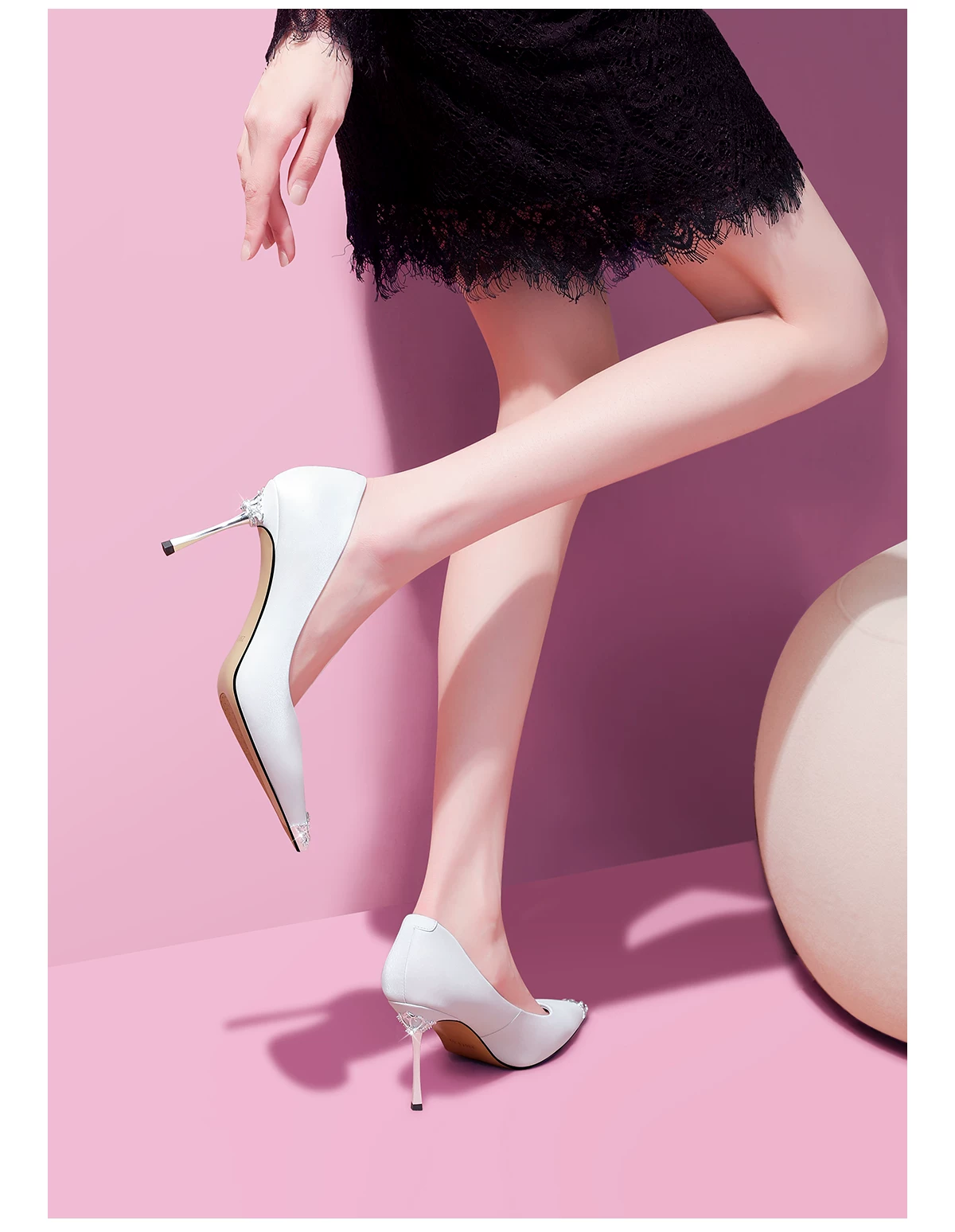
One honest recommendation. If the goal is a white heel for regular wear, a smooth leather pair will hold its shape longer and clean up more easily than a woven one. Our white slim-heel pair is the version that survives a commute. Woven is the version that looks better in photographs and needs a drier climate.
For anyone weighing up how a woven pair fits into a small rotation, the notes on three pairs across nine outfits in one week are a useful reality check on how often a specialty pair actually gets worn.
Before buying, turn the shoe over and look at the weave from the sole side. If the strips are anchored into a stitched or cemented insole rather than glued at the edge only, the pair will hold its shape for years. If the whole upper is bonded at the top edge with nothing underneath, the weave has nothing to pull against, and it will sag by the end of the first summer. That single look tells you more than the price tag does, and it takes about four seconds.
The rest of the women’s heel range is worth a browse with that check in mind, since the same construction question applies to every woven style on the site.
