

It’s 4:20 on a Saturday, the ceremony ended forty minutes ago and you’re still standing in the reception queue. The shoes you picked in March have turned into two small clamps. So you do the thing everyone does: shift your weight to the outside of one foot, slide the heel halfway out, let it breathe for four seconds, push it back in before anyone notices.
I spent that whole afternoon in the white woven leather heels from shoesneed, then wore them to the office for three weeks to see what survived. Here’s the honest version.
They work if your foot is average to narrow and you buy them late in the day. They don’t work if your forefoot is wide or you plan to walk a mile on cobbles. Everything below explains why.
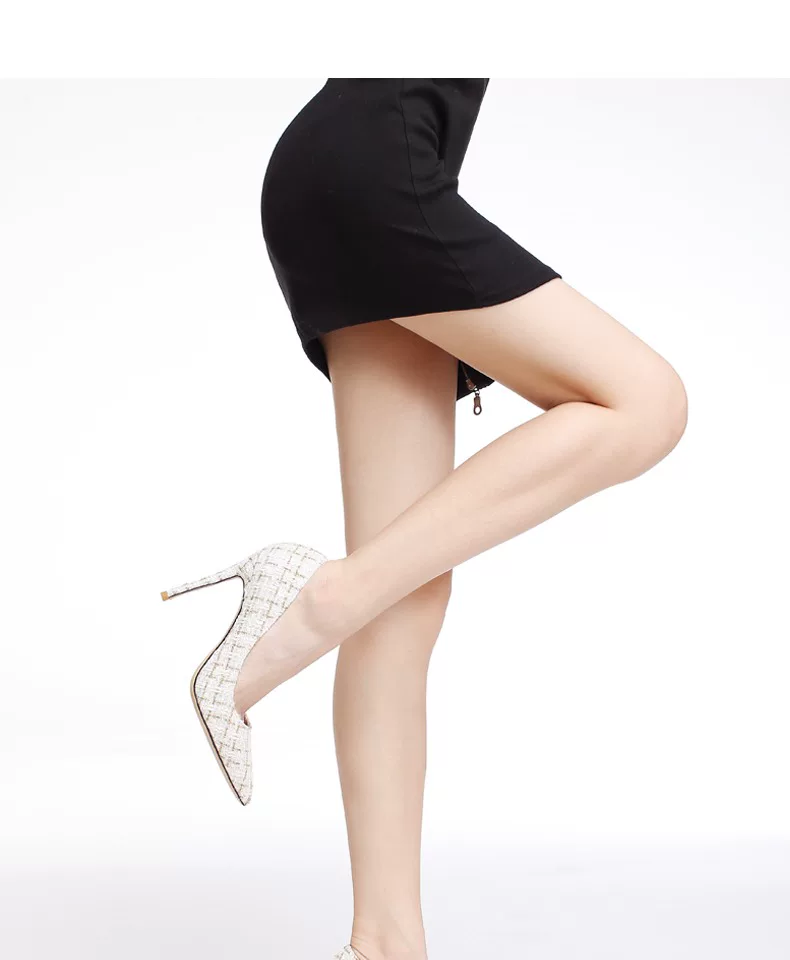
Sizing runs 35 to 42, but the last is narrow
Most white heels on this site stop at 40. This pair goes to 42, which matters if you’ve spent years sizing up into a 41 that still pinched. My foot measures 23.8 cm and the 38 is correct for length. Width is where it gets interesting.
The last is on the narrow side, and the pointed toe narrows it further. My little toe presses against the outer woven panel from the first step. Not painful, just present. By hour three I’d stopped noticing, which is usually the sign of a fit that’s close enough.
If you have a wide forefoot, order one size up and add a thin leather insole. A 39 with an insole gives you the width without the heel slipping, and that combination is what I’d recommend to anyone who normally buys wide-fit trainers.
High instep is the other trap. The vamp sits low across the top of the foot. Press the leather down with your thumb before you commit. If it barely moves, the shoe will press on the ridge of your instep after an hour, and no amount of gel pads fixes a vamp that sits too low.
Here’s a ten-second width test you can run anywhere. Stand up, put your full weight on the shoe and look at the outer edge. If the leather bulges past the sole by more than a couple of millimetres, the last is too narrow for you and no insole will fix it. If it stays flat, you’ve got room.
Heel slip is the other thing to watch. If the 38 lets your heel lift more than half a centimetre when you walk, don’t size down. Add a suede heel grip. Sizing down shortens the toe box, so you’d trade a slip for a pinch, and the pinch is worse.
One more thing about timing. Feet swell. Mine go up roughly half a size between 8am and 4pm, which is why I tried these at 4:20 in the afternoon in a shop with bad lighting. If you try shoes at 10am, you’re fitting a foot that hasn’t finished arriving yet.
The heel is slim, so your walk changes
By tape, the heel sits just under three inches, closer to 75 mm. There’s no platform under the toe, so the whole drop is real and your weight shifts forward onto the ball of the foot. That’s the part nobody mentions in the listing.
With a block heel you can walk almost normally. With this one, you shorten your stride by about a tenth without meaning to, and you start landing more on the outside edge of the heel. I noticed it on the second day, walking to the station.
Three small adjustments made it comfortable: shorter steps, heel down first, and no gripping with your toes. Toe-gripping is what makes your foot ache at 6pm, and it’s usually a sign the shoe is a half size long.
Two checks before you pay. Walk ten metres on a hard floor and listen: a hollow clack means the top piece is plastic and will chew into the heel stack within a season. Then step down a single stair. If your heel wants to slide back off the edge, the counter is too loose at the top and you’ll be gripping with your toes all evening.
The slim heel also has opinions about surfaces. Carpet, tile and wooden floors are fine. Old paving is not. It finds every gap between stones and wobbles just enough to make you look down. For a garden wedding with a gravel path, I’d carry a spare pair or accept that you’ll walk on your toes for twenty metres.
Standing still, they’re good. The heel is set slightly forward under the arch rather than right at the back edge, so your weight sits over the shoe instead of hanging off it. That’s the difference between standing for an hour and standing for four.
Woven leather actually breathes
The upper is real leather woven into an open pattern, and the gaps do what gaps do. Air moves. I wore them through a 29-degree afternoon and my feet were warm at the end, not wet. Compare that with any closed patent pump and the difference is obvious within an hour.
Leather itself is the reason this works rather than just the weave. Skin fibres move and release moisture in a way coated synthetics don’t, which is why leather linings are still the standard for shoes meant to be worn all day. The OEKO-TEX leather standard is the certification to look for if you care what went into the tanning process.
The catch with white leather and bare feet is transfer. The lining is pale, your feet aren’t always, and after a long hot day you’ll see a faint shadow inside the heel. Wear thin no-show socks for the first few wears and the lining stays clean.
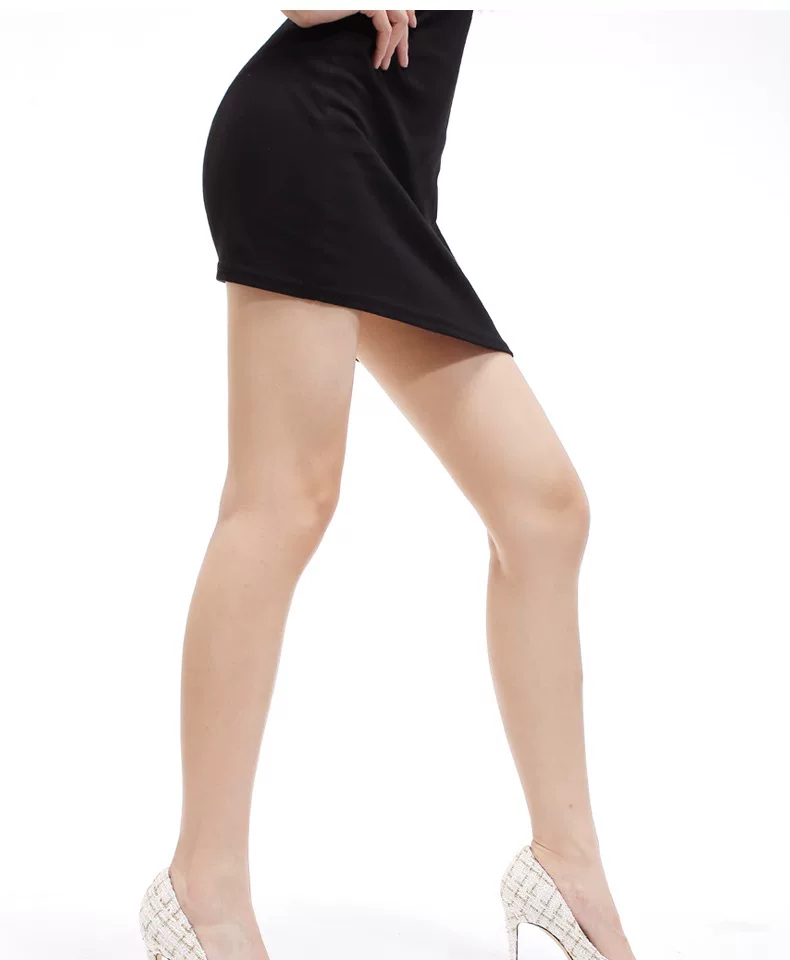
Cleaning takes four minutes if you do it the same day. Damp cloth, no soap, small circles, then dry them away from a radiator. Soap lifts the finish and the white goes patchy around the stitching inside a month. Store them stuffed with paper rather than sealed in a plastic bag, because leather needs to breathe.
Rain is the weak point. Water on white leather leaves a tide mark at the edge of the damp patch, and it doesn’t always come out. A protector spray before the first wear is cheap insurance.
Four outfits, four different ankles
This is the section I’d read twice, because the same shoe changes character depending on where your hem lands. The ankle is the variable, not the heel.
- Wide-leg linen trousers, hem grazing the top of the foot. The best pairing. Only the pointed toe shows, the white keeps the whole line light, and the ankle looks longer than it is.
- Midi bias skirt ending at mid-calf. Works, with one condition: keep the skirt narrow at the hem. A full midi skirt plus a slim white heel reads bridal in the wrong way.
- Cropped straight jeans ending at the ankle bone. This is the pairing that fails. Dark denim, a bright white shoe and a slice of bare ankle creates three horizontal breaks in one leg. Either wear full-length denim or crop higher.
- Long column dress, hem to the floor. Only the toe box shows, so the woven texture does all the work. Quiet, and the easiest way to wear white shoes without looking like a guest at your own wedding.
For colour, the shade is a warm white rather than optic. That matters: warm white flatters most skin tones, while blue-white can look harsh next to bare legs in daylight. WWD’s footwear coverage has been making the same point about neutral palettes for years.
A seasonal note: with 40-denier tights these read more formal, and the white stops looking summery, which is handy in October. On bare legs they’re strictly warm-weather shoes.
Jewellery: skip the ankle chain. The weave is busy enough at the toe and a chain at the ankle fights it.
Cost per wear on a $145 pair
The listed price is $145, which is real money for a white shoe you might wear twelve times a year. So do the division before you decide.
I’ve logged 18 wears since June, mostly half-days and two full events. That’s $8.05 a wear. If they last two summers at 40 wears, you’re at $3.63. A $55 pair worn three times because it pinched comes out at $18.33 a wear and ends up in a bag under the bed.
The construction supports the maths. Real leather upper, leather lining, cemented sole with a rubber top piece. You can’t resole these cheaply, and the sole will be the first thing to go at around 60 to 80 wears of pavement walking.
Dividing it out only works if you actually wear them. White heels are the easiest pair to leave in the box, because they feel like an occasion instead of a Tuesday. If your week is jeans and trainers, five wears a summer is realistic, and $29 a wear is a bad deal however good the leather is. Count the outfits you already own before you count the price.
Compare them with a cheaper white heel that looks nearly identical in photos. The difference shows at month four, when the coated upper starts to crack at the flex point across the toe. Leather creases instead of cracking.
The first two weeks, before they stop hurting
These need breaking in. Anyone who tells you a pointed leather heel is comfortable out of the box is either lucky or selling something.
Day two was the right heel counter, rubbing the Achilles about a centimetre above the shoe edge. A silicone heel grip fixed it in a day, and the counter softened enough by day six that I took the grip out. Day four was the little toe against the outer weave, which eased once the leather took the shape of my foot.
My routine, which costs nothing: wear them for 40 minutes at home on carpet for three evenings, with thin socks. Then a short walk outside. By day ten they’d stopped being an event and started being shoes.
If you’re flying to a wedding and wearing them for the first time at the ceremony, pack blister plasters. Not because these are bad. Because every pointed leather heel punishes a first long day.
Where I’d leave these in the box
Cobblestones and long city days: no. The slim heel is a liability and the pointed toe gives you nothing to push off. For a trip where you’ll walk 12,000 steps a day, look at a thick-heeled pair with a wider base instead. It’s a different job.
Very wide feet or a bunion: this last will fight you, and sizing up only moves the pressure around.
Also true: white is a commitment. Scuffs on the toe show, and the woven panels catch on rough straw bags and wicker chairs. Keep them in the dust bag, wipe with a damp cloth the same day, and they’ll hold their colour.
Duration matters more than distance, too. I’ve stood in these for four hours with breaks and been fine. Six hours without sitting is where the ball of your foot starts to complain, and that’s true of any heel without a platform. If the reception has no chairs, pack a flat pair for the last hour and nobody will notice.
What they’re genuinely good at is the thing you actually need in June and September: a heel that looks formal in photographs, survives a warm room, and doesn’t require you to sit down every twenty minutes. If that’s your summer, this pair earns its place. Read the office-to-dinner heels guide if you want the lower version of the same logic, or the boot heels test for cold mornings once the season turns.
One last detail worth copying: try them at 4:30 in the afternoon, in the size that leaves a thumb’s width at the toe, then stand on the pavement outside for ten minutes before you cut the tag off. Shops have carpet and mirrors. Pavements have the truth. There’s a whole category of women’s shoes built for standing that gets ignored because nobody tests them standing up.
