

At 7:35 on a Tuesday in late October, the pavement outside my building reads 12°C. By four in the afternoon it will be 22°C, the sun will be sitting on every parked car, and my feet will be the only part of me dressed for a different day.
That’s the two-week window nobody plans for. Tights feel like a commitment. Sandals feel like denial. And the boot heels you bought in September are either the smartest thing in your closet or the reason you’re standing in a train toilet with your shoes off.
I’ve done this badly for four autumns in a row. Here’s what actually held up.
The 10am-to-4pm swing, measured at pavement level
Weather apps tell you the air temperature. They don’t tell you what’s happening under your feet. Dark asphalt in direct sun runs noticeably hotter than the air above it, and a closed boot traps that heat with nowhere to go. On a 22°C afternoon, the inside of an ankle boot can feel like a 28°C room with no window.
That’s why the same pair feels fine at 9am and unbearable at 3pm. It isn’t the heel. It’s the humidity you built up between 11 and 2.
Leather helps because it’s skin. It breathes, it flexes, and it takes on the shape of your foot after a week or two, which is why the pair you’ve owned since last year behaves nothing like the pair still in the box. The structure of tanned leather matters more here than the brand name on the insole. A cheap full-grain boot will handle a warm afternoon better than an expensive corrected-grain one, because the grain is what lets moisture move.
Coated leather and patent don’t breathe. At 12°C that’s a feature, since they shrug off drizzle. At 22°C it’s a sauna. If your boot heels for women are patent, plan for a thinner sock and a shorter walk.
Here’s the practical version: check the hourly forecast, not the daily high. If the gap between 8am and 3pm is more than 8 degrees, treat the day as two separate outfits and let your feet be the part you change.
One measurement worth taking yourself: put the boot on at 8am and walk to the end of your street and back. If your foot already feels warm and slightly damp at the end of that, the boot will be unbearable by 3pm. If it feels neutral, you’re fine. The test takes four minutes and it’s more reliable than any review.
Where these two weeks actually bite
The swing isn’t the same everywhere. It bites hardest on days that combine three things: a walk to a station, an office with its heating on a timer, and a commute home in the warm part of the afternoon.
My old office had radiators that came on at 6am and stayed on until 5, regardless of what it was doing outside. Twenty-two degrees on the street plus a radiator under the desk equals feet that feel like they’ve been in a bag. I solved it by taking the boots off under the desk, which is not a solution you can use in a meeting.
The other hard case is the school run or the nursery drop-off, where you’re standing outside for twenty minutes at 8:20 and then walking briskly for another fifteen. Standing still in a closed boot at 12°C is fine. Walking fast in the same boot at 19°C is not. Same shoes, two different jobs, forty minutes apart.
If your day looks like either of those, plan around the walk, not around the outfit. A boot you can walk a kilometre in at 2pm is worth more than a boot that photographs better at 8am.
If your office has no windows you can open, treat it as a 24°C day regardless of the forecast and dress your feet for indoors. That one adjustment fixed about half my autumn complaints.
The same logic applies to long car journeys, where the heater sits at your ankles for two hours and turns an ordinary boot into a sauna. Open a window for five minutes instead of unwinding the climate control, and your feet will be the part of you that stays comfortable.
There’s a shortcut for the indecisive mornings. Keep one pair that works at both ends of the day, and stop rotating the whole shelf. Two pairs doing daily duty is less choice at 7:30 and fewer bad decisions. My mother has worn the same ankle boots from October to December for a decade and never once complained about the temperature.
Ankle height beats shaft height in this window
I own both. The knee-high pair gets worn maybe six times a year. The ankle pair gets worn from late September to the first proper frost, which in my case is around eight weeks of near-daily use.
The reason is boring and physical. A shaft that reaches mid-calf cuts off the airflow around your ankle, and your ankle is where most of the heat collects when you walk. An ankle boot at 10 to 12 centimetres leaves the joint exposed to moving air. You feel the difference at about the fourth block.
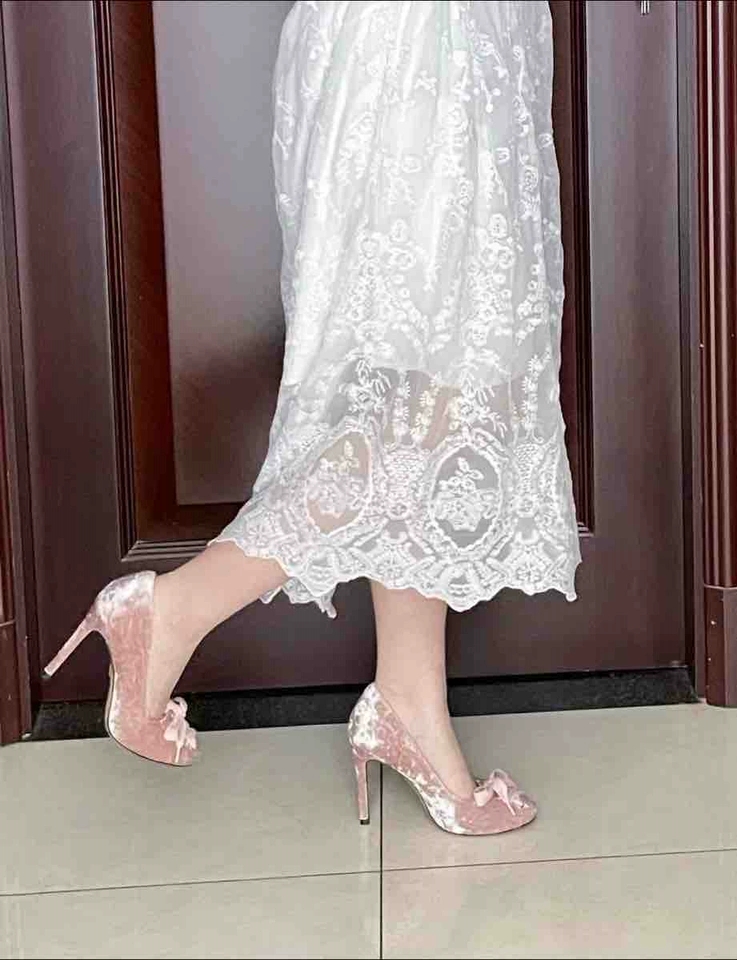
There’s a second argument for ankle height, and it’s the one that sold me. You can wear them with a cropped trouser and nobody notices the season. A tall boot with a cropped hem looks like a decision. A short boot with the same hem looks like you got dressed. If you want the history of why the ankle version exists at all, the evolution of the boot covers the riding and work roots fairly well.
What you give up is rain protection above the ankle. In a real downpour, water runs down your leg and into the boot from the top, which is a genuinely unpleasant discovery at a bus stop. That’s the trade. In this two-week window I’ll take the airflow.
One more thing about the shaft: check it against the widest part of your calf before you commit to a taller version. A shaft that pinches at the top will not stretch, however much the shop promises it will.
Height also changes how the boot reads with trousers. A 10cm shaft disappears under a straight leg, which makes the shoe look like a low court shoe from the front. A 14cm shaft shows below a cropped hem and becomes a visible part of the outfit. Neither is better. It’s just worth knowing which effect you’re buying.
Suede is the wrong bet before noon
Suede in autumn is one of those ideas that photographs beautifully and performs badly. It marks if it rains. It marks if the pavement is wet and you brush past a bin. It marks if you look at it wrong in a car park.
I still wear it. I just don’t wear it on days with a 40 percent chance of rain before lunch, because a suede boot that gets soaked and dries without a shoe tree will come back a half size smaller and slightly grey. I learned that with a taupe pair in 2024 and I’ve been careful since. There’s a longer version of that story in what rain and road salt do to suede over three winters, if you want the depressing details.
Smooth leather is the safer daily choice. It wipes clean, it takes polish, and a scuff at the toe can be dealt with in thirty seconds with a bit of cream and a cloth. Patent is the third option: completely waterproof on the surface, completely unforgiving on a warm ankle, and prone to showing every crease across the vamp after a month.
Grained leather sits between the two. The pebbled surface hides scuffs well and handles light rain without spotting, though it tends to look more casual, which rules it out for anything approaching formal. Nubuck is the worst of both worlds in this window: it marks like suede and creases like leather.
One thing I’d stop doing: spraying a new suede boot with protector and assuming that solves rain. Protector helps with a light shower. It does nothing for a puddle, and it needs reapplying every few weeks, which almost nobody does.
- Smooth leather: best all-rounder for a 12°C morning and a 22°C afternoon.
- Suede: fine if the forecast is dry, hopeless if it isn’t.
- Patent and coated: waterproof, sweaty, creases visibly by week four.
If you only buy one pair of boot heels for women this season, buy smooth leather in a colour close to your own skin tone or to your darkest trousers. Those two options will cover about 80 percent of what you actually wear between October and December.
The sock question nobody wants to think about
Most people solve the temperature swing by changing socks, and almost nobody talks about it. A 20-denier liner adds almost no bulk and takes the edge off a cold morning. A 60-denier wool blend is a different shoe size entirely.
My rule is simple. If the morning is under 14°C, wear a thin liner and carry nothing. If it’s under 10°C, wear a proper sock and accept that the boot will feel tight by 2pm. If it’s over 18°C at 8am, skip the sock and use a terry insole instead, which absorbs what a sock would have absorbed without adding volume across the instep.
Volume is the part people get wrong. Adding a sock changes the fit more than most shoes can absorb, especially in a pointed toe where the toe box has no spare room. If you’re between sizes and you plan to wear socks, take the larger size. If you plan to wear liners, take the smaller one. Don’t split the difference and hope.
Tights complicate it further. A 40-denier opaque tight behaves like a thin sock and will make a boot that fitted in July feel tight by the end of October. If you’re buying specifically to wear with tights, try them on with tights, not barefoot in a shop at 11am.
The cheap fix that works better than it should: a foam heel grip at the back of the boot. It takes up half a size at the heel without squeezing the toes, which is exactly what you need if the boot is right at the front and loose at the back. I keep a pack of them in a drawer and I’ve used them in three pairs this year.
Something else worth knowing: a boot that fits perfectly barefoot will feel tight with a sock, and a boot bought for socks will feel loose and sloppy in July. Since I wear liners about 70 percent of the time in this window, I size for the liner and put up with a slightly roomy fit on warm days.
Heel height: 65mm is the number I keep coming back to
I’ve worn 90mm block heels to an all-day event and regretted it by the second hour. I’ve worn 35mm kitten heels to the same kind of event and felt underdressed in photographs. The 65mm range sits in the middle and does the most work.
At 65mm, your weight still lands mostly through the ball of the foot and the heel, with only a modest forward shift. Walk 6,000 steps in that and you’ll feel it, but you won’t be limping. At 90mm the same walk puts roughly two-thirds of your body weight onto the forefoot, and the pain shows up in the toes before it shows up anywhere else.
A block heel spreads the load further than a stiletto of the same height, which is why a 70mm block often feels easier than a 60mm slim heel on a pavement with cracks in it. The trade is visual: a block heel reads more casual, which is either exactly what you want at 9am or exactly what you don’t want at a dinner.
Heel placement matters as much as heel height. A heel set slightly forward, under the middle of your heel bone rather than right at the back edge, feels steadier on uneven ground. You can check this by looking at the boot from the side: if the heel sits noticeably behind the back of the shoe, every step will feel like it’s tipping you backwards.
The tip is the other number worth checking. A 9mm tip wears down faster than a 12mm one, and a worn tip changes the angle of the whole shoe, which is when the ache in your lower back starts. Replacing tips costs very little. Replacing the boots because the heel has ground down at an angle costs a lot more.
If you’re buying your first pair in this height range, the soft-soled suede commuter heels are about as forgiving as a heel gets for a working day, mostly because the sole flexes where your foot actually bends. For something with a bit more shape, the retro suede pair with the rounded toe gives you the same stability with a squarer line.
What I’d leave in the cupboard
Three things stay home during this window, no matter how good they look.
The first is a brand-new pair, still stiff, still creaking. A boot needs 10 to 15 hours of wear before the leather softens over the flex point, and breaking them in on a 22°C afternoon is the worst possible combination: heat, swelling feet, and a shoe that hasn’t learned your shape. Break them in on a cool morning with a short walk instead.
Second, anything with a shaft that hits mid-calf. I’ve tried. The heat builds, the top edge rubs, and by the end of the day you have a red line and a bad mood.
And third, a very pointed toe with a narrow toe box. My feet swell by roughly half a size between morning and evening on a warm day, and a pointed toe has nowhere to put that extra volume. Rounded and almond toes forgive it.
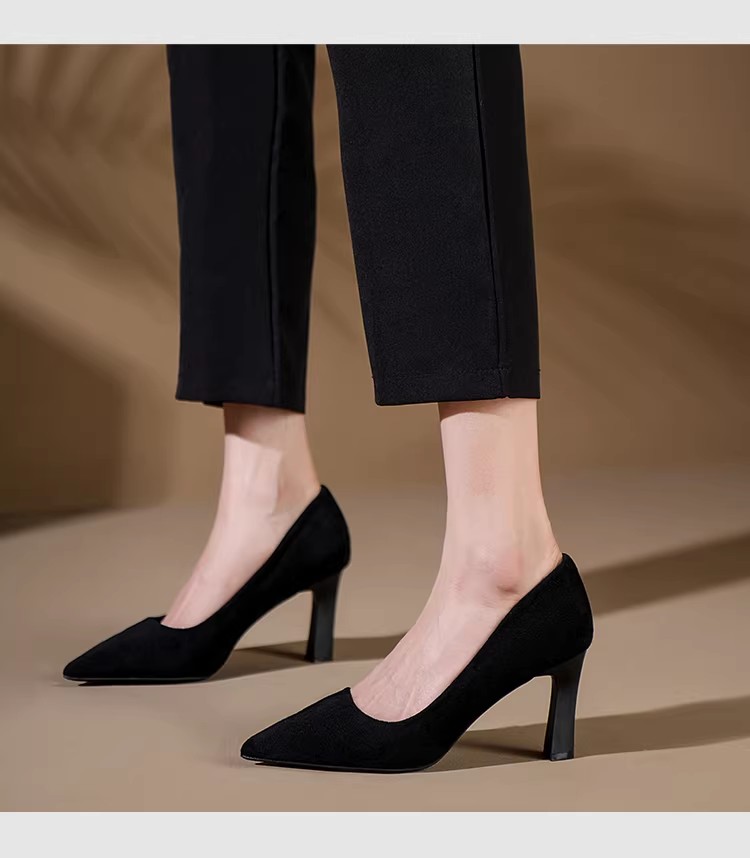
None of this is about quality. An expensive pointed boot will hurt exactly as much as a cheap one if the toe box is wrong for your foot. Fit beats price almost every time, and fit is something you can check in the shop in about ninety seconds.
And if you’re unsure between two sizes, take the one that fits with a thin liner. A boot that’s snug barefoot will be painful with any sock at all, and October mornings are not the time to find that out.
One last exclusion: anything with a decorative buckle sitting right on the ankle bone. It looks good in a photo and it will rub a hole in your patience within a week, especially if you drive.
What I do keep in the cupboard instead: a flat ankle boot for the days when even 65mm feels like too much, and a pair of leather loafers for the office. Both get worn more in October than any of my heels, and neither has ever given me a blister.
The evening test before you commit
Buy shoes in the afternoon. This is the single most useful thing I’ve learned about footwear, and it applies to boot heels for women more than to anything else, because a boot is closed and has no give at the sides.
Here’s the check I run before I take a pair home.
- Walk 40 steps on a hard floor. Listen for the heel tip. A hollow click means the tip is plastic and will wear through in a season.
- Stand still for two minutes, then look at the vamp. If it’s already creasing hard across the instep, it will fold into your toes within a month.
- Press the sole at the ball of the foot with your thumb. It should bend a little. A sole that won’t flex makes your calf do the work on every step.
- Check the heel counter at the back by pressing it. It should hold its shape, not collapse.
The evening part matters because your feet are at their largest then. If a boot fits at 6pm after a day of walking, it will fit at 7am. If you buy at 10am and it feels snug, it will be unwearable by dinner.
And if you’re shopping online, order two sizes and send one back. It costs a return postage and saves you six weeks of pretending a tight boot will stretch. It won’t stretch much, whatever the assistant tells you. It’ll stretch where it rubs and nowhere else.
One last check that costs nothing: walk on a slope. Any shoe shop with a ramp or a slightly raised threshold will do. A boot that grips and holds your heel on a downhill slope will be fine on a station staircase. A boot that lets your foot slide forward until your toes hit the end will do the same thing on every descent for as long as you own it, and no amount of insoles fixes that.
Cost is the last thing I’d weigh, and only after fit. A £60 boot that fits properly will outlast a £200 boot that doesn’t, because you’ll wear the cheap one and leave the expensive one in the hall. Budget for a resole at some point too. Most good boot heels can be resoled once for a fraction of the purchase price, and that second life is usually longer than the first because the leather has already softened.
Come mid-November the window closes and the real cold arrives, at which point this whole argument becomes irrelevant and you go back to the tall boots and the wool socks. Until then, the ankle boot, the liner sock, and the 65mm heel will get you from a 12°C morning to a 22°C afternoon without a change of shoes in your bag. If you want to see how the rest of the range handles a colder week, the women’s shoes collection is the place to start.
