

I bought the wrong pair for a nine-day trip through Portugal and Spain last April, and I only worked out why on day three. Forty-five euros, mesh upper, a sole that felt springy under my thumb in the shop. By the time I got to the top of Alfama my right heel had a blister the size of a five-cent coin, and I spent the next two days walking on the outside of that foot to keep the skin off the shoe.
The replacement pair cost 105 euros from a shop near Rossio. Same drop, same weight class, nothing dramatic about them. I finished the trip with the skin I started with.
So the 60 euros bought something. I wanted to know exactly what, because “better materials” is the answer shops give you when they don’t want to explain. What I found, after cutting one pair open in a hotel room with a Swiss Army knife, is that the gap sits in four places you can check in about ninety seconds.
If you’re weighing two pairs that look the same on a screen, this is the part that saves you a return label.
The pair I bought first cost 45 euros
Here’s what that shoe was: a knit upper stitched to a moulded EVA midsole with a thin rubber pad glued under the heel and forefoot. It weighed 218 grams on my kitchen scale. It felt great. For about six kilometres a day it would probably have been fine.
Lisbon is not six kilometres a day. I did 14,000 steps on the first day, most of it on calcada, the black and white limestone mosaic they’ve been laying since the 1840s. It’s beautiful and it’s slick, and every slab edge is a small uneven hit that your foot has to absorb.
By day two the EVA under my forefoot had compressed into a shallow bowl. You could feel the shape with your fingers through the sock liner. Compressed EVA doesn’t spring back, which is why the shoe felt flat by the afternoon and why my toes started gripping to hold position.
That’s the honest failure mode of a cheap walking shoe. Not that it falls apart. That it quietly gives up in the middle of the day, in the part of the sole you can’t see. It’s also why the best walking shoes for women are rarely the lightest ones on the shelf.
The shop assistant in Lisbon did try to warn me. She said the pair I was holding was a shoe for the city, not for the city on foot, and I heard it as sales talk. In hindsight it was the most useful sentence anyone said to me that week. A shoe for the city means pavements and a taxi. A shoe for the city on foot means eight hours of stone, stairs, and tram tracks.
What I’d add now is that the failure comes with warning signs you can read if you know where to look. The sock liner starts sliding forward. The upper wrinkles across the toes. Your little toe begins to press against the side wall around hour four. All three mean the sole has stopped holding your foot in place, and all three are fixable with a different shoe rather than a different sock.
What the 60 euros actually pays for
The second pair, cut open, had a different stack. A dual-density midsole with a firmer wedge on the medial side, a nylon lasting board instead of cardboard, a rubber outsole with actual lug depth, and a heel counter stiff enough that I couldn’t fold it with one hand. None of that is luxury. It’s the difference between a shoe that holds its shape at hour six and one that doesn’t.
Four things to press with your thumb before you pay:
- Heel counter. Squeeze the back of the shoe. If it collapses flat, your heel will roll inward when you get tired.
- Forefoot flex point. Bend the shoe where your toes bend, not at the middle. If it folds in half at the arch, the shank is missing.
- Outsole edge. Look at the side of the rubber. If you can see foam all the way to the ground, the outsole is a decoration.
- Insole thickness. Pull it out. Under 4mm and you’re standing on the midsole directly.
That’s the whole test. It takes less time than trying on a jacket, and it tells you more than the price tag does. I’ve since done it in four countries and it has never once pointed me at the most expensive shoe in the shop. It has, though, filtered out most of the worst ones, which is roughly what you want from a shortlist of the best walking shoes for women.
What it does do is separate the 45 euro pair from the 105 euro pair almost every time. In the cheaper shoe, three of those four checks failed.
The lasting board is the one nobody mentions. It’s the stiff layer between your foot and the foam, and it’s what stops the shoe folding in the middle. Cheap versions use compressed cardboard, which is fine until it takes on moisture. Then it softens, creases, and stays creased. The nylon board in the second pair still looked flat after nine days of sweat and rain.
Foam density is the other quiet one. Two midsoles can look identical and behave completely differently, because what matters is how much the material resists compression after 50,000 cycles. You can’t test that in a shop. You can test the weight, and a very light shoe in this category is usually a soft shoe. That’s the trade nobody puts on the box.
Cobblestones punish the sole, not the upper
Everyone talks about the upper. Leather, mesh, knit, whatever. The upper is the part you look at, so it gets the attention. On a European trip the upper is rarely what hurts you.
What hurts you is the interface between your outsole and a surface that was laid by hand 150 years ago. Granite setts in Prague, basalt in Rome, the flat limestone slabs in Lisbon. Each one presents a slightly different angle, and your ankle makes hundreds of small corrections an hour. A stiff, grippy outsole with 3 to 4mm of lug depth spreads that load. A flat rubber pad skates on it, especially when the stone is damp.
Rain matters more than people plan for. April in Lisbon gave me two wet mornings, and the calcada turned into a skating rink. The cheap pair had almost no tread left at the forefoot after a week of that, worn smooth in the middle where I push off.
Here’s the practical version: if you’re going somewhere with old paving, prioritise outsole rubber and lug depth over how soft the midsole feels in the shop. Soft feels lovely for ten minutes. Grip decides if you’re still walking on day six.
Pace changes the maths too. A relaxed day in a museum city is maybe 9,000 steps. A day in Rome doing the Colosseum, the Forum, and dinner near Trastevere is closer to 22,000, and most of it is on basalt setts that have been polished by two centuries of feet. That’s not a walk. That’s a small hike with espresso stops.
The pair I’d choose for that day has a heel counter I can barely flex, a forefoot that bends where my toes bend, and rubber that grips a wet stone. My current pair has all three, weighs 289 grams, and looks boring. Boring is what you want at hour seven.
Where the cheap pair still wins
I’m not going to pretend the 45 euro shoe was rubbish, because it wasn’t. It was 218 grams. I could fold it into a day bag, and it dried overnight on a radiator in Segovia after a downpour. The expensive pair took a day and a half to dry and weighed 289 grams, which you notice on the fourth consecutive day of walking.
There are trips where light and fast beats supportive. A city break where you’ll do 5,000 steps and spend the rest of the time at a desk. A warm climate where you want one pair to do dinner and the museum. A trip where you’re mostly on trains.
The mistake is buying light shoes for a walking trip and hoping. I did exactly that, and the blister cost me an afternoon and a pharmacy queue.
So the real question isn’t cheap or expensive. It’s how many hours a day your foot will be in the shoe, on what surface, and whether you get a recovery window. Under four hours on smooth ground, go light. Six hours or more on stone, spend the money.
Cost per wear makes the decision less emotional. The 45 euro pair lasted one trip and then became a garden shoe. That’s about 5 euros per wearing across nine days. The 105 euro pair has now done four trips and roughly 60 wearings, which works out under 2 euros each. Cheaper per walk, even though it cost more at the till.
That maths only holds if the expensive pair actually fits. A 130 euro shoe in the wrong width is worse value than a 45 euro shoe that happens to suit your foot. Fit first, then construction, then price. Most people do it in the reverse order and wonder why the results are random.
Two measurements decide your size
European sizing is not consistent between brands, and it’s not consistent within a brand across models. I’m a 39 in one Spanish maker and a 40 in a German one, and neither of them is lying. Last shape changes everything.
Two numbers matter more than the number on the box:
- Heel to ball length. Where your big toe joint sits, measured with your heel against a wall. Add 8 to 10mm for toe room on a walking shoe.
- Width at the widest point. Most women overestimate this. Measure while standing, at the end of the day, because your foot swells 3 to 5% by evening.
A walking shoe should feel slightly loose in the shop. If it feels snug and perfect at 10am, it will be tight by 4pm. That’s not a small thing: a shoe that’s 5mm too short will cost you a toenail on a trip with downhill sections, and Portuguese hill towns are all downhill sections.
Try them with the socks you’ll actually wear. Sounds obvious. Half the people I’ve travelled with tried their walking shoes on bare feet in a shop and then wore a 3mm merino sock for eight hours a day. Sizing is also where most of the best walking shoes for women get returned: not because they’re wrong, but because they were bought half a size small.
One more: check the heel slip with the laces done up in a runner’s loop. If your heel lifts more than a few millimetres, size down or change model. Heel slip causes blisters faster than anything else on this list.
I stopped paying for waterproof
My first proper pair had a membrane. Fully waterproof, breathable in the marketing, and about as comfortable as a plastic bag by the second hour on a warm day. Waterproof membranes work by keeping water out and letting vapour through, and in a city shoe with a padded collar they mostly keep vapour in.
What happened: my feet got damp from sweat, the sock stopped wicking, and by the evening the skin between my toes was soft and hot. That’s a blister farm. Meanwhile the shoe was excellent at keeping out rain I could have avoided with an umbrella.
For a Europe trip between May and September, I’d take a quick-drying mesh shoe and one spare pair of socks in the bag. For November in Berlin, waterproof earns its money. Match the shoe to the season you’re actually travelling in, not the worst case you can imagine.
If you do buy waterproof, look for a membrane that’s stitched as a bootie and check the tongue gusset. A waterproof upper with an open tongue is a waterproof shoe that lets water in through the laces.
And give any shoe 48 hours between wearings if you can. Damp midsole foam loses its shape faster than dry foam, and that’s the part you can’t replace.
Feet produce a surprising amount of moisture. Call it 100 to 150ml per foot on a warm walking day, and most of it goes into the lining and the sock. In a breathable mesh shoe that moisture leaves through the upper. In a membrane shoe it has two exits: the collar and your sock. One of those is not an exit.
Packing a spare pair of socks is the cheapest fix in this whole article. Change them at lunch on a long day and the second half feels like a different trip. Merino dries faster than cotton and doesn’t hold smell the same way, which matters when you’re living out of a carry-on for a week.
The two-pair rule for a nine-day trip
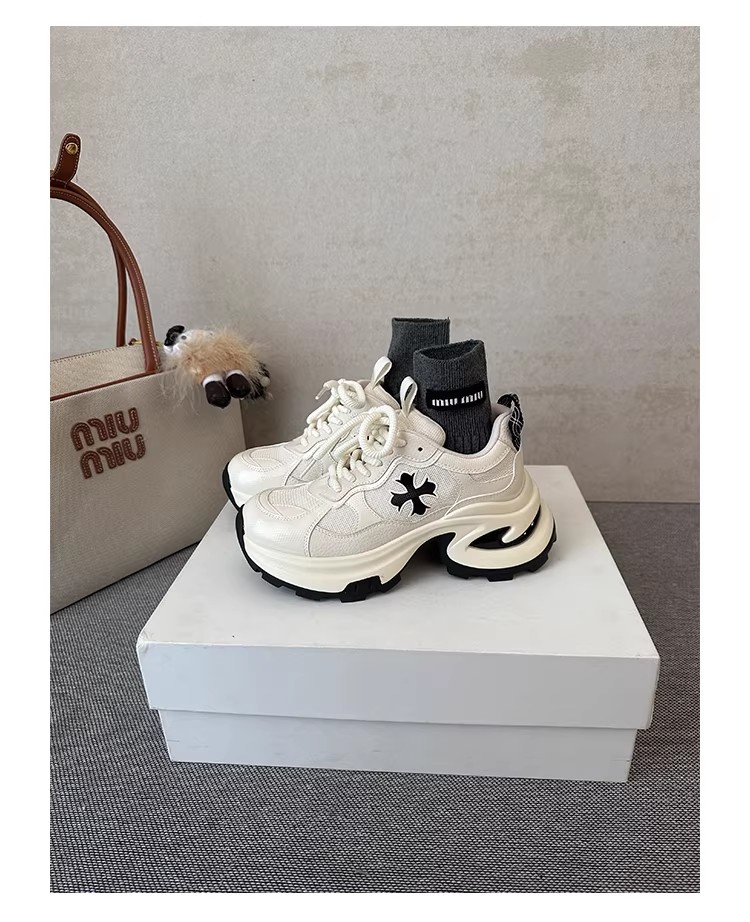
I now take two pairs on any trip longer than five days, and it’s the single change that made the biggest difference to how my feet felt. Not two identical pairs. One supportive pair for long walking days, one light pair for evenings and travel days.
The logic is simple. Foam needs time to recover, skin needs a different pressure pattern, and blisters form where the same seam rubs the same spot for eight hours. Rotating breaks all three cycles.
- Day pair: 280 to 320g, lugged outsole, firm heel counter. Worn for the long walking block.
- Evening pair: 200 to 240g, flat or low, packable. Worn for dinner and the airport.
- Total bag weight: about 600g. Less than a laptop.
On the Portugal trip I had only the cheap pair for the first three days and then only the expensive one. Nine days, two shoes, no rotation. My feet were sore by the end in a way that had nothing to do with fitness.
On a later trip to Slovenia I did the two-pair thing. 90km in seven days, no blisters, and the only issue was a small hot spot on day five that a plaster fixed. Same feet, same body, different plan.
Washing matters as much as rotating. I rinse the footbeds in cold water and air dry them away from heat, never on a radiator, because heat shrinks the foam and hardens the glue. The uppers get a brush and a damp cloth. That’s it. No machine, no dryer, no detergent beyond a drop of soap.
Do that once a week on a long trip and both pairs come home in better shape than a single pair worn every day. If you’re only taking one pair, at least pull the footbed out each night. It’s a thirty-second job that adds months to the shoe.
What I’d put on my feet now
If you’re shopping for the best walking shoes for women heading to Europe this spring, my honest order of operations is: check the four thumb tests, buy for the surface you’ll actually walk on, get the heel to ball length right, and skip the membrane unless you’re travelling in winter.
Budget-wise, the useful range is 85 to 130 euros. Below that you’re usually buying a shoe with no shank and a decorative outsole. Above it you’re paying for design, colourways, and brand. There’s nothing wrong with the top end, but the marginal gain after 130 euros is smaller than the gain between 45 and 105.
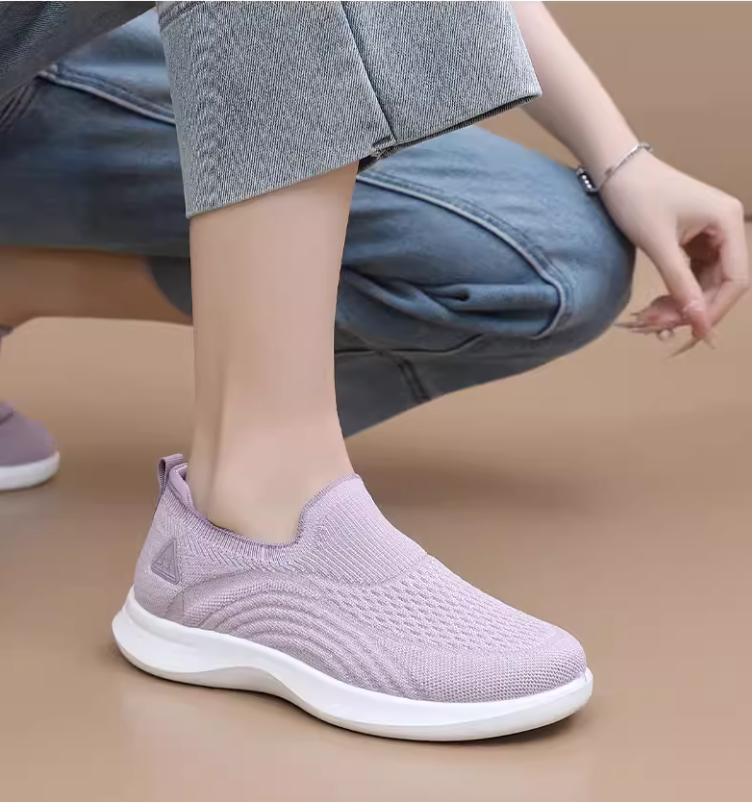
Two specific pairs from our own range are worth a look if you want something in that middle band: this breathable mesh walking shoe with a lugged sole sits in the light-but-grippy category that works for spring city trips, and the soft-soled mesh pair is the one I’d pack as the evening rotation shoe. Neither is a hiking boot. Both are honest about what they are.
One thing I’d say to anyone assembling a trip wardrobe: the best walking shoes for women are the ones that disappear. If you’re thinking about your feet at the Pantheon, the shoe has failed. If you’re thinking about the ceiling, it hasn’t. That’s the whole test, and it has nothing to do with how the pair looks in a photo.
If you want the sizing detail in more depth, the guide to fit and fabric in white walking shoes covers the width issue better than I can here. And if you’re thinking about how a pair holds up over a season rather than a trip, this piece on 10,000 steps a week is the longer view.
The blister on my right heel took eleven days to heal. The shoe that caused it is still in a cupboard, and I still feel slightly stupid about it. Sixty euros would have been cheaper than the pharmacy, the lost afternoon, and the two days of walking like a crab.
Browse the rest of the women’s shoe range if you want to compare soles side by side, and read up on how walking shoes are constructed before you go. It’s twenty minutes of reading that changes what you notice in the shop. More on blister prevention from Healthline’s overview if your feet are already angry.
