

The red sticker says £54, down from £90. That’s the number that gets noticed. The number that decides whether it was a good buy is 34, because that’s how many times the pair gets worn before the sole goes flat and the upper creases into something that can’t be worn to work.
£54 divided by 34 wears is £1.59 a wear. The full-price pair at £90 that gets worn 200 times is £0.45. The cheaper shoe costs three and a half times more per walk.
None of that is a reason to avoid the walking shoes sale rail. It’s a reason to do the division before the sticker does it for you. What follows is the arithmetic, the parts of a walking shoe that set the wear count, and the cases where a reduction is genuinely worth taking.
The sale price is the least useful number on the box
A discount tells you what the shop wants to clear. It says nothing about how long the shoe lasts, which is the only variable that changes the value.
Three prices exist for every pair, and they behave differently:
- Sticker price. What you pay today. Easy to compare, mostly irrelevant.
- Replacement price. What the same pair, or its successor, costs when this one wears out. Often higher, because sale stock is usually end-of-line.
- Cost per wear. Sticker price divided by realistic wears. The only one that says whether the purchase was sensible.
The trap in end-of-line stock is the second number. A discontinued model at 40% off is a bargain if the pair lasts two years and a false economy if it lasts eight months, because the replacement will be at full price and the successor may have changed shape.
There’s also a sizing trap. Sale racks are picked over, so the size that’s left is often the one nobody wanted. Buying half a size off because it’s the last pair in the shop is the most expensive way to save 40%.
Divide before you decide. £72 at 120 wears is 60p. £45 at 30 wears is £1.50. The one that looked cheaper costs more than twice as much to walk in.
Divide by wears, not by months
People estimate shoe life in months, which hides everything that matters. “I got two years out of them” could mean 40 wears or 400.
A more honest count uses a week of real life. Most women who buy walking shoes for daily use land somewhere between 3 and 6 wears a week, at 3km to 8km a wear. Over a year, that’s 150 to 300 wears and 600km to 1,800km.
The midsole is what usually ends the relationship first, and it dies on distance rather than calendar time. EVA foam loses roughly 30% of its cushioning over 500km to 800km depending on the density and the walker’s weight. After that the shoe still looks fine and stops absorbing anything.
So the useful question isn’t “how long will these last” but “how many kilometres are in them, and how many do I walk in a year”. A 700km shoe worn at 20km a week lasts about eight months. The same shoe worn at 8km a week lasts nearly two years.
That single calculation changes what a sale is worth. For a high-mileage walker, an £80 pair that manages 800km is better value than a £40 pair that manages 350km, even at full price.
Three pairs, three honest cost-per-wear numbers
Real examples, using prices that are typical rather than specific to one shop.
Cheapest first: the £35 sale pair. Thin EVA midsole, glued construction, a synthetic upper that creases at the flex point. Realistic life: 300km to 350km before the cushioning is gone, which at 20km a week is about four months. Cost per wear over 60 wears: 58p. But the wear count is low and the last two months are uncomfortable, so most people replace early. Effective cost: 70p to 90p a wear.
Middle of the range sits at £90. Dual-density midsole, stitched overlay at the flex point, removable insole. Life: 700km to 900km, roughly 120 to 150 wears at 6km each. Cost per wear: 60p to 75p. Add one insole replacement at £15 and it’s still under 90p.
Third case: £150 at 30% off, so £105. Better foam, a rubber outsole that can be replaced, a leather upper. Life: 1,200km or more, and a resole at £35 adds another 600km. Cost per wear over 200 wears: 52p, or 44p if the resole happens.
The pattern is consistent. The middle of the range usually wins, and the sale only changes the ranking when the discounted pair is from the middle or top of the range rather than the bottom. That’s the useful filter on any walking shoes sale: which tier is marked down, not by how much.
Where the arithmetic breaks: a £150 pair worn twelve times because it turned out to be the wrong shape. That’s £12.50 a wear, which is worse than any of the cheap options. Fit beats price every time, and no discount rescues a pair that doesn’t fit.
It’s also why a walking shoes sale is the wrong place to experiment with a new brand or a new shape. Sale stock is final-sale stock in most shops, which means no returns. The pair you’re unsure about is exactly the pair you shouldn’t buy at 40% off with no way back.
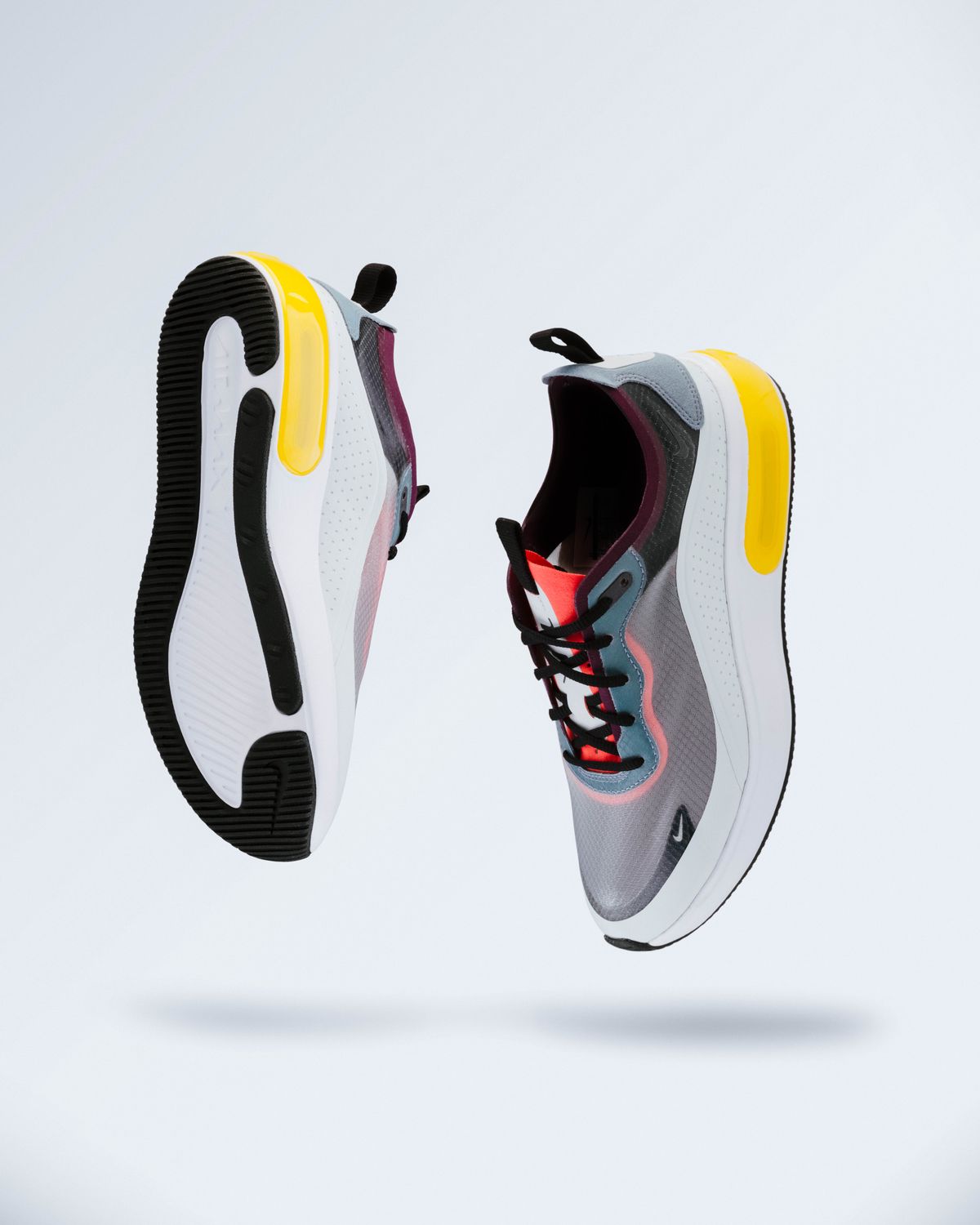
What actually limits the wear count
Four components decide how long a walking shoe stays usable, and they fail in a predictable order.
Midsole foam. Dies first, usually between 500km and 900km. You can’t see it. The test is simple: press your thumb hard into the midsole under the heel and compare it with a new pair. If it compresses easily and doesn’t spring back, the cushioning is done even though the shoe looks intact.
Outsole rubber. Wears through at the heel edge first, because that’s where the foot lands. A blown rubber outsole with 3mm of tread lasts longer than a thin injected one. If the tread under the heel is smooth at 400km, the rest of the shoe is on borrowed time.
The upper at the flex point. Mesh tears; leather creases. A stitched overlay across the ball spreads the stress and adds a year. A glued seam in the same spot separates.
The lining at the heel. This is the cheap failure that ends otherwise good shoes. The lining wears through, the heel counter goes soft, and the pair starts slipping. A heel patch costs very little and buys months.
EVA and similar foams are the standard midsole material for a reason: cheap, light and easy to tune (what EVA actually is explains why it behaves the way it does). It’s also why almost every walking shoe feels wonderful for six months and flat afterwards.
The cheap pair that ends up costing more
There’s a specific pattern that shows up in sale shopping, and it has nothing to do with quality in the abstract.
The £35 pair gets bought in October. By February the midsole is flat, the upper has creased across the toes, and the lining has gone at the heel. A replacement gets bought in the sales, at £40, and the cycle repeats. Over two years: three pairs, £115 spent, and about 18 months of walking on dead foam.
The £90 pair bought once, worn for two years and resoled once: £105, and no month where the shoes were uncomfortable.
Same money. Different experience. The cheap pair isn’t cheaper, it’s just paid in instalments.
There’s a second cost that never makes it onto the receipt: the pairs bought to replace the bad pair in a hurry, at full price, in the wrong size, because the old ones died mid-season. Sale shopping tends to produce more of those purchases, not fewer.
The exception is worth naming. If the pair is for occasional use, say a wedding-season shoe or something worn twice a month, the cheap option can win on pure arithmetic. Low wear count means the midsole never gets the chance to die. That’s the one case where a £35 sale pair is genuinely the better buy, and it’s why the answer depends on the wear count rather than the price.
What the receipt doesn’t show
Two costs sit outside the sums above, and both make cheap pairs look better than they are.
The first is the emergency replacement. Shoes fail at inconvenient moments, usually just before a trip or a wedding, and the replacement gets bought in a hurry at full price in whatever size is left. A pair that dies after four months forces exactly that purchase. A pair that lasts two years doesn’t.
The second is the second pair. When the cheap pair isn’t good enough for a full day, people buy a second, better pair for the days that matter. Now the cupboard holds a £35 mistake and a £90 solution, and the total is £125 for one usable shoe. That pattern is common enough that it’s worth naming before the sale does it to you.
There’s a cleaner way to think about it. A walking shoe has a job: it takes you 6,000 steps a day without complaining. The price of doing that job for a year is roughly £30 to £60 in the middle of the range, or £90 to £140 at the bottom once replacements are counted. Paying less up front usually means paying twice.
None of this argues for spending the most. It argues for spending once. The walking shoes sale that saves you £30 today and costs you £60 in eight months isn’t a saving, it’s a delay.
There’s one more number worth writing down: the distance. Most people have no idea how far they walk in a week. A phone pedometer answers it in seven days, and that number turns the whole calculation from guesswork into arithmetic.
If the budget is genuinely tight, the better move is a mid-range pair on a real discount rather than a cheap pair at any price. Those exist: the pair in the casual walking range is built on the same construction as the higher-priced models, with a simpler upper. The savings come from the finish, not the midsole, which is the right place to take them.

Repairs that reset the clock
Most walking shoes can be kept alive for another season or two, and the maths on repairs is usually better than the maths on replacement.
- Heel lining patch. £8 to £15 at a cobbler, or £5 for a stick-in patch. Adds three to six months if the only problem is slipping.
- New insole. £10 to £25. Restores comfort when the original has packed down, and it’s the cheapest way to extend a pair whose midsole is still alive.
- Resole. £30 to £45 for a stitched construction. Only worth it when the upper is sound and the midsole still has life. On a glued sole, most cobblers won’t touch it.
- New laces and a clean. £5. Doesn’t change performance, changes whether the pair looks like something you’d wear to the office.
The rule of thumb: if the repair costs less than a third of a replacement and the midsole passes the thumb test, repair. If the midsole is dead, no repair helps, because the part that failed is the part nobody can replace.
Stitched soles are the ones that can be resoled, and they’re increasingly rare at the lower end of the market. That’s worth knowing before the sale, because a £70 stitched pair that can be resoled twice beats a £50 glued pair that can’t.
One repair that gets overlooked is the insole swap. Walking shoes are built around a standard footbed, and a £15 aftermarket insole can add a year to a pair whose original has packed down. The sports and leisure pairs take a full-length insole without changing the fit, which isn’t true of every walking shoe. Check that the original lifts out before you buy.
When a sale is real and when it’s a colour problem
Discounts on walking shoes come from four places, and only two of them are good news.
End of season. Genuine. The model is being replaced, the stock is real, the sizes are limited. If your size is there and the shoe fits, this is the best discount available.
Overstock. Genuine, and usually the widest size range. Nobody planned it; the shop ordered too much.
Colour nobody wanted. Half genuine. The shoe is the same, the colour is unsellable. If you like it, it’s a real saving. If you’re buying it because it’s cheap, it will sit in the cupboard.
Made-for-outlet stock. Not the same shoe. Thinner materials, simplified construction, sometimes a different last. The model name is often subtly different, and the price is low because the spec is low.
How to tell them apart without any expertise: check whether the same model is still sold at full price elsewhere, and look at the last two digits of the model code. Outlet versions usually carry a different suffix. The basic anatomy of a walking shoe doesn’t change, but the thickness of each layer does.
One more check that’s worth thirty seconds. Look at the inside of the heel on the display pair, if there is one. If the lining is already polished smooth, the shoe has been tried on a lot, and a sale pair that’s been on the shelf for a year has a midsole that’s been ageing in the box. Foam degrades slowly without use, especially in a warm stockroom.
The buying rule, in one line
Work out the wear count first, then look at the price. A pair that fits and gets worn 150 times is a good buy at full price. A pair that fits badly and gets worn 15 times is a bad buy at any discount.
Practical version: try the pair on at the end of the day, with the socks you’ll walk in, and walk 20 paces. Then ask how many kilometres a week you’ll actually put through them. If the answer is under 10, buy the cheap pair and don’t think about it. If it’s over 25, buy the best midsole you can afford and ignore the sticker.
The sale is a timing decision. The wear count is the buying decision. A walking shoes sale rewards the shopper who already knows both numbers, and punishes the one who reads the sticker first. Most people get those the wrong way round, and that’s why the cupboard fills with pairs that cost £40 and were worn four times.
If you want the fit side of this, the notes on where the extra width goes cover the measurements that decide whether a sale pair is worth trying. For the colour question that sale racks specialise in, the white pair worn at 8°C is a good example of how a pale shoe ages. And the walking shoes product range is where to compare construction before a discount makes the decision for you.
Do the division on your phone, in the shop, before you queue. It takes fifteen seconds and it’s the difference between a bargain and a pair you resent every time you put them on.
