

Your suitcase is open on the bed, the flight leaves at 7:40, and there are three pairs of shoes on the floor. One is the pair you wear at home every day. One is new, still in the box, bought for the trip. One is the pair you packed “just in case.” You will wear two of them and carry the third for ten days.
Here’s the short version: for a European trip, pack two pairs. One that’s already broken in and one that’s lighter. Neither should be brand new, and neither should be white mesh. The rest of this page is the detail behind that rule, including the numbers that make it hold up.
Most people searching for the best women’s walking shoes for Europe end up buying something technically excellent and practically wrong. The shoe isn’t the problem. The plan is.
This is not a brand list. Brands change their lasts every two or three seasons, so a pair that worked in 2024 can be a different shoe in 2026 with the same name on the box. What follows is the set of measurements and habits that survive a change of brand, which is more useful if you’re buying in a hurry.
Two pairs is the answer, and neither should be new
A single pair sounds efficient until it rains on day three. Wet shoes need roughly 24 hours to dry properly indoors, and a hotel room in October is not a drying room. If your only pair is soaked, you spend the next day in paper-thin flats from a pharmacy, and the day after that with blisters in places you didn’t know had skin.
Two pairs also solve a quieter problem: foot swelling, which is the single most common reason people think their best women’s walking shoes for Europe stopped fitting on day two. It’s not the shoe. It’s the flight. On a flight of seven hours or more, feet commonly gain half a size. A shoe that fits at sea level in the morning can feel tight by dinner in a city that’s warmer than home. Having a second, roomier pair gives your feet somewhere to go.
The counterintuitive part is that neither pair should be new. Breaking in happens over 20 to 40 km, not in a hotel corridor. Buy three to four weeks before you fly and wear the pair on your normal commute. If a seam is going to rub, you want to find out at your own front door.
There’s a second reason to buy early, and it has nothing to do with comfort. Return windows. In most of Europe you get 14 to 30 days to send a pair back, which is exactly long enough to discover that the left shoe presses on your little toe at 6 km and not long enough to discover it in a hotel room in Seville.
What to look for in the two pairs:
- Pair A (the workhorse): already worn at least 15 times, 250 to 320 g per shoe, a midsole you can press a thumb into but not squash flat.
- Pair B (the light one): under 240 g, mesh or knit upper, folds flat enough to sit in the bottom of a bag.
Skip the third pair. It weighs about 700 g and you will not wear it. That’s roughly the weight of a jumper you’d actually need in Prague in November. If you want shoes for dinner, pick something that doubles as a day shoe. A pair of low-effort evening heels with a block heel and a 50 mm pitch works for a restaurant and doesn’t wreck the next morning.
One more thing about that third pair. Everyone packs it. Almost nobody wears it. The math is simple: if you walk 12,000 steps a day, the odds you’ll change into a less comfortable shoe at 19:00 are close to zero.
The 12,000-step day on Lisbon’s tiled sidewalks
Lisbon is a useful test case because the ground changes every 400 metres. Smooth calçada, then a ramp of polished stone, then tram tracks, then a 90-step staircase in Alfama with a handrail worn shiny by about a century of palms.
On that kind of day, cushioning matters less than you’d think and stability matters more. A maximal shoe with a 40 mm stack feels wonderful on flat pavement and slightly treacherous on wet limestone. A firmer 25 to 30 mm stack gives you more ground feel, which your ankles use to correct before you notice anything happened.
According to Mayo Clinic’s guidance on walking, most adults benefit from about 150 minutes of moderate activity weekly, which sounds modest until you convert it to tourist mileage: two full sightseeing days and you’re already past it. Your feet are doing 3 to 4 hours of unaccustomed load in shoes they’ve never met.
The practical version: wear the workhorse pair on the two heaviest days of the itinerary, and the light pair on travel days and museum days. Museum floors are hard and flat, which is exactly where a thin-soled, flexible shoe stops being charming around hour two.
Also, count your steps honestly. Phone pedometers undercount when your phone sits in a bag, and they overcount on cobbles because of the jostle. If your app says 9,000, assume 11,000.
When people ask which best women’s walking shoes for Europe they should buy, the honest answer is usually “the pair you already own and have stopped noticing.” A shoe you forget about after 20 minutes is doing its job. A shoe you think about every hour is not, no matter what the review score says.
Two quick numbers before you pack
- 20 to 40 km of pre-trip wear is the minimum for a leather upper.
- 8 to 10 mm of toe room is the minimum for anyone walking more than 8 km a day.
Cobblestones punish the outsole, not the upper
Every article about European travel shoes talks about the upper. Leather or mesh, breathable or waterproof. That’s the wrong end of the shoe.
Cobblestones are typically 10 to 15 cm across with irregular rounded crowns. A thin, hard outsole transmits every crown straight into the metatarsals. A soft, thick, deeply lugged outsole rolls over them. What you want is somewhere in the middle: a rubber outsole 4 to 6 mm thick under the forefoot, with shallow lugs that grip wet stone without collecting gravel.
Two outsole details worth checking before you buy:
- Flex point: bend the shoe where your toes bend, not at the arch. If it folds in the middle, it will feel like walking on a hinge by day two.
- Heel bevel: a slightly rounded heel edge reduces the jarring slap you get on stone steps going down.
This is the detail that separates decent best women’s walking shoes for Europe from pairs that only work at home, where you know every kerb. Wet cobbles are where a smooth, hard rubber sole becomes genuinely risky. Most city falls on holiday happen on polished stone after rain, not on stairs. If your pair has a slick blown-rubber outsole with no tread pattern, it’s a dry-weather shoe, and that’s fine, as long as you know it.
This is also why white mesh is a bad idea in a European autumn. Not because it looks wrong. Because it absorbs the water that splashes up from a wet pavement and holds it against your sock for the next three hours.
One test you can run in a shop in under a minute: press your thumbnail into the outsole at the ball of the foot. If it leaves a dent that stays, the rubber is soft enough for wet stone. If your nail slides off, it’s a dry-pavement sole, and it will skid on the polished slabs outside a church.
EU 38 is not a US 7.5, and that gap costs you a day
Most size charts lie by about half a size, and the lie compounds when you order from another country. EU sizes are based on a Paris point (two-thirds of a centimetre) and are not the same length as the US equivalent on the box.
Measure your foot instead. Stand on a piece of paper against a wall at 18:00, when your foot is at its largest, and mark the longest toe. Then add 8 to 10 mm for walking. A 241 mm foot needs a 250 mm last, which is roughly EU 38 to 38.5 in most walking brands, and closer to a US 7.5 in some, an 8 in others.
Width is the number almost nobody checks. European lasts often run 2 to 4 mm narrower through the forefoot than US-market versions of the same model. If you have a wide foot, that difference is the whole ballgame. There’s a longer explanation of that gap in this piece on walking shoes with a wide toe box, and it’s worth ten minutes before you order.
For a trip, size up rather than down. A shoe that’s 5 mm too long with a decent lacing system can be locked in. A shoe that’s 3 mm too short cannot be fixed with anything except a thinner sock and hope.
There’s one more sizing trap: leather. A leather upper will give about 2 to 3 mm across the ball of the foot after a week of wear. Mesh gives almost nothing. If you’re between sizes in leather, take the smaller one. In mesh, take the bigger.
What actually fits in a 40-litre carry-on
Two pairs of women’s walking shoes take up roughly 4.5 litres of volume and 550 g of weight. That leaves plenty of room, which is why the temptation to add a third pair is so strong. Resist it with math: 700 g is a day’s worth of socks and underwear, or the difference between a bag you carry up four flights and one you resent.
The packing order that works:
- Heaviest pair on your feet at the airport, always. It saves 350 g of bag weight and keeps the bulkiest item out of the suitcase.
- Light pair at the bottom, toes facing opposite directions, socks stuffed inside.
- Nothing else in that compartment. Shoes next to a laptop is how screens get cracked.
If you’re going somewhere wet, add a plastic bag and a sheet of newspaper. Crumpled newspaper inside a soaked shoe pulls water out overnight faster than a hairdryer, and it doesn’t cook the adhesive in the midsole.
One small thing that pays off: photograph the insoles before you go. If a pair gets lost or you need to replace them mid-trip, you’ll have the exact model number instead of a vague memory of “the grey ones with the odd heel.”
On shoes and laundry: wash the light pair before you pack, not after. New mesh sheds dye onto white socks for the first two wears, and a hotel sink is a bad place to find that out. Cold water, no dryer, stuff with newspaper, done in a night.
Run the itinerary in your own city first
Before you spend money on the best women’s walking shoes for Europe you can find, spend one Saturday testing what you already have. It sounds fussy. It’s the cheapest part of the whole trip.
Pick a day with a similar shape to your holiday: a two-hour block on your feet in the morning, a sit-down lunch, then four more hours of walking with a bag on one shoulder. Cities are all the same underneath. A pavement is a pavement, and a wet curb in Manchester tells you more about a sole than a product page ever will.
What to note while you’re out:
- Where the pressure lands at hour three. Toe box, arch, or the outside edge of the heel.
- Whether your sock has moved. A sock that slides down means the heel is too wide, not that the sock is bad.
- What your knees say at hour five. Sore knees after a flat walk usually means the midsole is already compressed.
This test also tells you whether you need a wide fit at all. Plenty of people buy wide shoes for a problem that’s actually a length problem, and end up swimming in a shoe that rubs in a new place. The order matters: length first, width second, cushioning third.
If you’re flying in autumn, run the test on a wet day deliberately. Water changes the whole equation. A pair that’s comfortable dry can turn into a slip hazard on a painted crossing, and painted crossings are everywhere in northern European cities.
One caution about testing in your own city: don’t do it the week you leave. Muscles adapt over about ten days, and a 15 km test walk on the Thursday before a Saturday flight leaves you with sore calves in an airport queue. Two weekends out is the sweet spot.
The pair that ruins the trip, and it’s usually white mesh
This is the part most buying guides leave out. White mesh walking shoes photograph beautifully and behave badly. Three specific failures:
- Water: a mesh upper wicks pavement splash straight to the sock. Two hours later you have the beginning of a blister between the fourth and fifth toe.
- Dirt: the grey line along the midsole is permanent after about four days. You can clean it, but it comes back.
- Drying: mesh dries fast in sun, slowly in a hotel bathroom with the window shut. If it’s raining for three days straight, your white pair is a wet pair.
None of that means don’t buy white. It means don’t make white your only pair, and don’t plan to wear white on the day you’re doing 15 km in a city that rained the night before. If you want the look, choose a white pair with a coated or synthetic overlay across the toe box. It wipes clean and stops the worst of the soak-through.
Second candidate for the trip-ruining award: any shoe with a heel counter that hasn’t been worn. A stiff plastic heel counter that hasn’t moulded to your ankle is a guaranteed three days of plaster-worthy rubbing, and no amount of “it’ll break in” makes a Tuesday in Rome more comfortable.
For a black alternative that photographs well and hides city grime, these notes on black walking shoes and what they pair with are more useful than a colour chart.
Where to spend the money: midsole first, leather second
If you have 120 euros and a choice between a leather upper and a better midsole, take the midsole. Midsoles are what your joints feel. Uppers are what other people see.
EVA foam compresses permanently at roughly 500 to 800 km of walking. That’s about 18 months of normal city wear, or one very enthusiastic holiday plus a year. Once compressed, the shoe isn’t broken, it’s just flat, and flat is what makes your knees complain on the third day. There’s no repair for this. It’s the one part of a shoe that genuinely wears out on a timer.
Leather, by contrast, is the part that gets better. Full-grain leather creases in the direction your foot actually bends, which is why a leather pair from month two feels better than the same pair in week one. The trade-off is weight and drying time. Leather is heavier by 40 to 80 g a shoe and takes a full day to dry once soaked. If your trip is mostly cities with pavements, that’s an acceptable deal. If it’s Scotland in February, it isn’t.
What to spend on, in order:
- Midsole and insole. Replaceable insoles extend the life of a pair by a year at minimal cost.
- Outsole rubber quality. Cheap rubber hardens in cold and loses grip on wet stone.
- Upper material. Leather for city trips, engineered mesh for hot weather and packed luggage.
- Brand. Last on the list, and almost never the deciding factor.
For a leather pair you can wear with a skirt in the evening without looking like you’re heading to a trailhead, leather sports shoes with a softer outsole are the sensible middle ground. They’re heavier than mesh, they scuff, and they need a brush once a week. They also look better in every photograph you’ll take after day three.
Where the money genuinely doesn’t help: logos, limited colourways, and anything marketed as a travel shoe with a hidden pocket. None of it changes how your heel sits. If two pairs fit identically and one costs 60 euros more, the extra money is buying an upper material or a brand, not comfort. Pick the one you’d wear on a normal Tuesday at home, because that’s the pair that will already be broken in by the time you fly.
Budget realistically, though. A pair that lasts 800 km costs about 15 cents a kilometre at 120 euros. A cheap pair that flattens at 300 km costs more per kilometre and hurts for the last 100 of them. The cheapest shoe is rarely the cheapest walk.
If your trip is mostly pavement, museums and one long walking day, a pair of flat-bottomed casual board shoes with a thick sole handles the load better than something designed for trails. Trail shoes have aggressive lugs that feel clumsy on tile, and they look it.
What the second trip taught me about shoes and luggage
The first time, three pairs went and two came back unworn. The second time, two pairs went, one of them had 200 km on it already, and there was still room in the bag for a coat.
The rule that came out of it is boring and effective: buy four weeks early, wear the workhorse pair on your commute at least a dozen times, and pick the second pair for weight rather than looks. Nobody has ever come home from a trip wishing they’d packed a third pair of shoes.
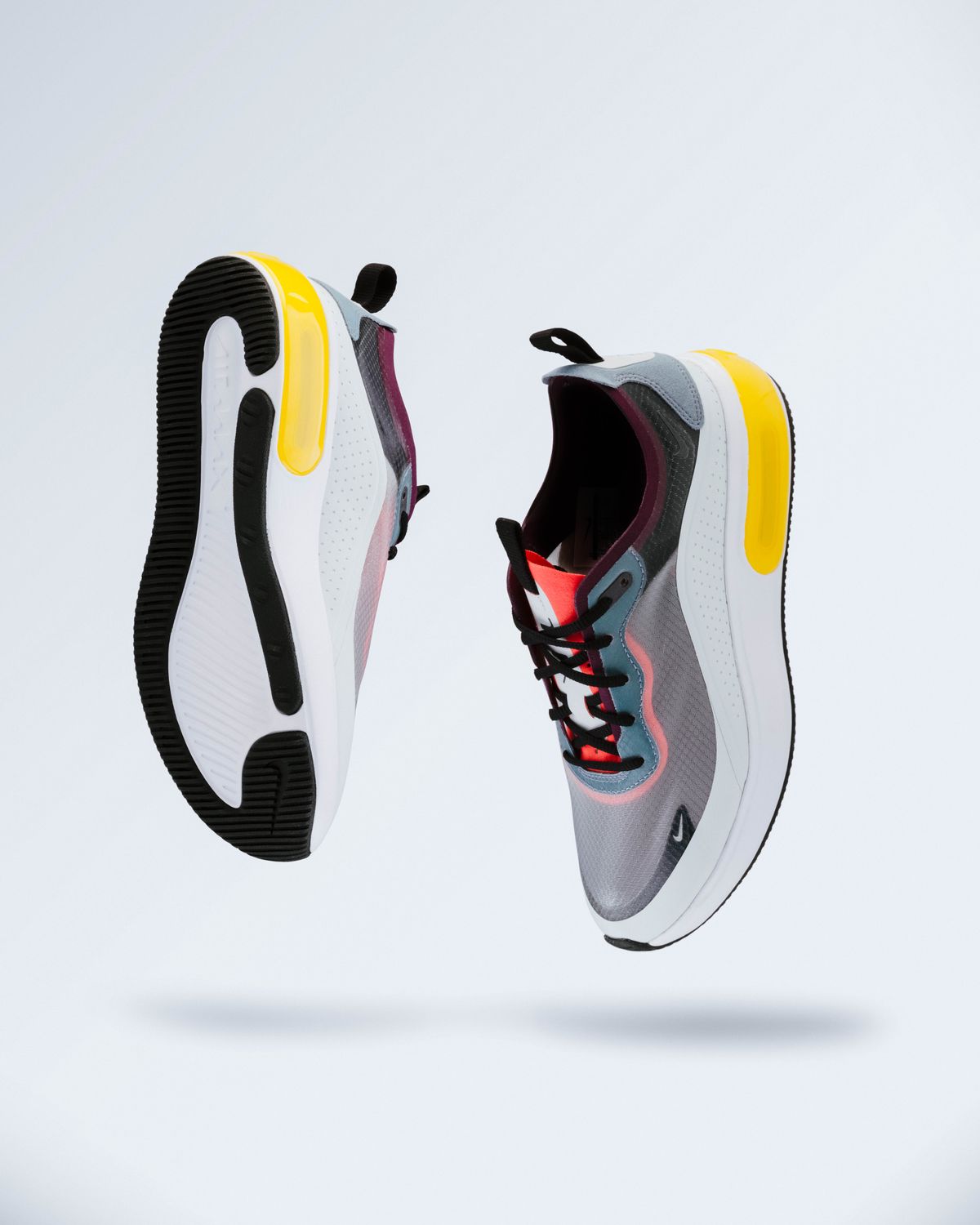
Start with the walking shoes for women section if you want to see what’s actually in stock, then check the sizing note above before you pick a number.
If you’re flying somewhere with rain in the forecast, add a second pair of socks per day and leave the white mesh at home.
And if you only remember one number from this page, make it this: 8 to 10 mm of toe room, measured at 18:00, on paper, before you order. That gap decides whether you spend your holiday walking or sitting down.
