

It’s 7:52. The train leaves at 8:04, the walk to the station is eleven minutes, and you’re standing in the hall with one foot in a sock. This is the moment slip-on heels were invented for: no buckles, no laces, no ankle strap to thread while balancing on one leg.
You step in, you go. That’s the promise. The reality is more mixed, and it depends on three things you can check in about a minute: how the back grips, how high the heel sits, and how much sole flexes under your thumb.
The pairs that work have a shaped heel counter, a 60 to 75mm heel and a sole with real flex. The pairs that fail look identical in photos and slap against your heel from the first step.
What the 90-second window actually needs
When you’re late, you make three decisions and no more. Which shoes, which bag, which coat. Anything that adds a fourth decision gets skipped, which is why slip-on heels end up by the door and lace-up styles stay in the cupboard.
So the test for a slip-on pair isn’t “do they look good”. It’s “can you get them on while holding a coffee”.
- Step in without using your hands, or with one finger in the back.
- No adjustment needed once they’re on.
- No thought about whether they match the bag you grabbed.
If a pair needs two hands and a shoehorn, it’s not a slip-on. It’s a pump with a low back, and you’ll treat it like one.
There’s a second clock running too. Slip-on heels are usually backless or low-cut, which means your heel lifts slightly with every step. That’s fine for the eleven minutes to the station. It’s less fine for a day that turns into 9,000 steps because a meeting moved buildings. Knowing which day you’re having is half the decision.
The pairs worth owning are the ones that survive the surprise. Not the ones that only work on the days you planned.
Mules, backless pumps, and the ones that only look like slip-ons
“Slip-on heels” gets used for at least four different shoes, and they behave nothing alike. Worth sorting out before you buy, because the fit advice changes completely.
Mules are open at the back with no counter at all. They’re the easiest to step into and the worst for walking distance, since nothing holds your foot. A 60mm mule is fine for a restaurant. A 90mm mule on cobbles is a sprained ankle waiting for a date.
Backless pumps have a low back with a small counter, sometimes elasticated. These hold better than mules and still go on in one motion. This is the category most people mean when they say slip-on heels, and it’s the one worth spending money on.
Elasticated or collapsible-back pumps have a soft heel that folds under your foot, so you can wear them as a heel or as a flat. Handy for a wedding that ends with a walk to a taxi. The trade-off: the fold creases within a month and the back never looks sharp again.
Slingbacks are not slip-ons, whatever the listing says. There’s a strap, and you’ll be fastening it at the door like everything else.
The history of the mule runs through several centuries of indoor and outdoor use, and the modern version keeps the same weakness it always had: no back means no grip on the heel.
For a commuter shoe, backless pumps with a shaped counter are the practical middle. For occasional evening wear, mules are quicker and cooler in summer. Buy the wrong one for your week and it’ll sit unworn, which is the most common way a slip-on pair fails.
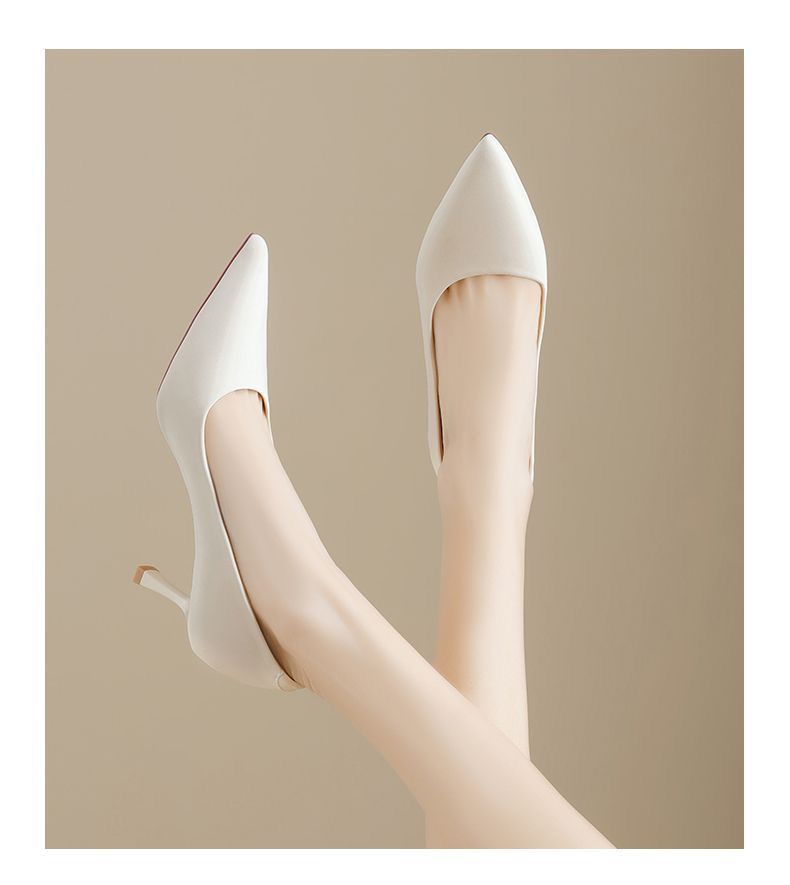
The heel that flaps, and how to fix it
Almost every complaint about slip-on heels comes down to one thing: the heel lifts when you walk. It’s not a size problem in most cases. It’s a counter problem.
The counter is the stiffened piece at the back of the shoe that cups your heel bone. On a backless pump it’s short by design, sometimes only 25mm tall. If it’s also soft, there’s nothing to grip, and your heel rides up with each step. You feel it first as a small slap sound, then as a blister at the achilles around the 40-minute mark.
Three fixes, in order of how well they work:
- Heel grips. A 3mm silicone or suede pad inside the back adds friction and takes up 2mm of gap. Costs about 5 and buys you hours. Replace every few months.
- A cobbler’s strap. A hidden elastic strap across the back, sewn inside, converts a backless pump into something that stays on. Around 15 to 25 at a repair shop, and it’s invisible from outside.
- Size down half. Only if the shoe is genuinely too long at the toe. If your toes are already at the end, sizing down will trade a flapping heel for a crushed toe, which is worse.
What doesn’t work: thicker socks, insoles at the heel only (they lift your foot out of the cup), or “breaking them in”. A backless shoe doesn’t break in at the back. There’s nothing there to mould.
There’s one more fix that costs nothing and gets ignored: walk differently for the first week. A shorter stride with a flatter footfall keeps the heel from levering out of the cup. It looks unnatural for about two days and then it stops being a decision. People who slap in backless shoes are usually overstriding, not wearing the wrong size.
One more cause worth ruling out. If the flap only happens on one foot, it’s probably not the shoe. Most people have one foot half a size smaller, and a slip-on shows that difference more than a laced shoe does. Measure both feet in the evening, standing, and buy for the larger one.
The 60, 75 and 90 question
Heel height decides more about a slip-on than the shape does. A backless shoe at 60mm stays on your foot because your weight sits closer to the ground and the foot doesn’t slide forward. At 90mm, gravity pulls your foot into the toe box with every step, and the back of the shoe starts to look like it’s chasing you.
Sixty to seventy-five millimetres is the usable range for a shoe with no fastening. Above that, you need either a strap, a very deep vamp, or a pair you only wear from the car to the table.
There’s also the sole question, which nobody checks in the shop. A leather sole on a slip-on is slippery on wet tile and wears through at the ball in about a year of regular use. A rubber or rubber-injected sole grips and lasts, and adds maybe 40g per shoe. For a commuter pair, take the weight.
If you’re choosing between two pairs at the same price, press the sole at the ball with your thumb. If it flexes easily, the shoe will roll with your foot. If it’s rigid, every step will be a heel slap. That one test predicts comfort better than the heel height printed on the box.
For a more formal shape, a soft-soled suede commuter pump with a lower heel is the version you can wear for a full day. The suede gives a little at the vamp, which helps if you have a high instep and normally find slip-ons tight across the top.
Sizing for a shoe with no fastening
With laces or a buckle, you get a second chance at fit. With a slip-on, the shoe has to be right the first time, because there’s nothing to tighten.
Here’s what to check, in the shop or on the first wear indoors:
Toe room. A thumb’s width, roughly 10mm, between your longest toe and the end of the shoe. Less than that and a 70mm heel will push your toes forward on every step, which is how you end up with bruised toenails after a long day.
Instep. The top of the shoe should touch the top of your foot without pressing. If you can see the leather straining over the instep, the last is too shallow for you. A high instep and a shallow-mouth pump is the single worst combination in this category, and no amount of stretching fixes it permanently.
Width at the ball. Stand up and check the sides. If your foot spills over the sole edge at the widest point, size up or choose a different last. Pale and soft leathers stretch about 2mm over a month, not more.
Heel hold. Walk ten steps on a hard floor. If the shoe lifts more than 5mm at the back, you’ll need grips. More than 10mm and it’s the wrong shoe.
One honest limitation: very few slip-on heels are made in wide fittings. If you have a wide forefoot, your realistic options are a rounder toe, a softer leather, or a half size up with a heel grip. A pointed slip-on in standard width will squeeze you at the ball within an hour, and the pale colours show the bulge.
For a fuller comparison of how the same fit questions play out across styles, the notes on pairs that last a nine-hour office day go through heel height and sole construction in more detail.
Where they work, and the three places they don’t
Slip-on heels are at their best in a specific kind of day: mostly sitting, some standing, short walks, indoor floors. A desk day with one lunch out. A dinner. A wedding where the car drops you at the door.
They’re also the right answer for travel, if you pick carefully. One pair that goes with everything and comes off at security in two seconds is worth more than three pairs you never wear. A four-day trip with one pair of 65mm backless pumps covers a dinner, a gallery and the flight home. That’s roughly their limit.
The formal version of the same shoe has a long history in offices and courtrooms, where a low-cut front and no fastening was considered correct for years. The court shoe is the ancestor of most backless pumps sold today, and it explains why the shape reads formal even when the heel is low.
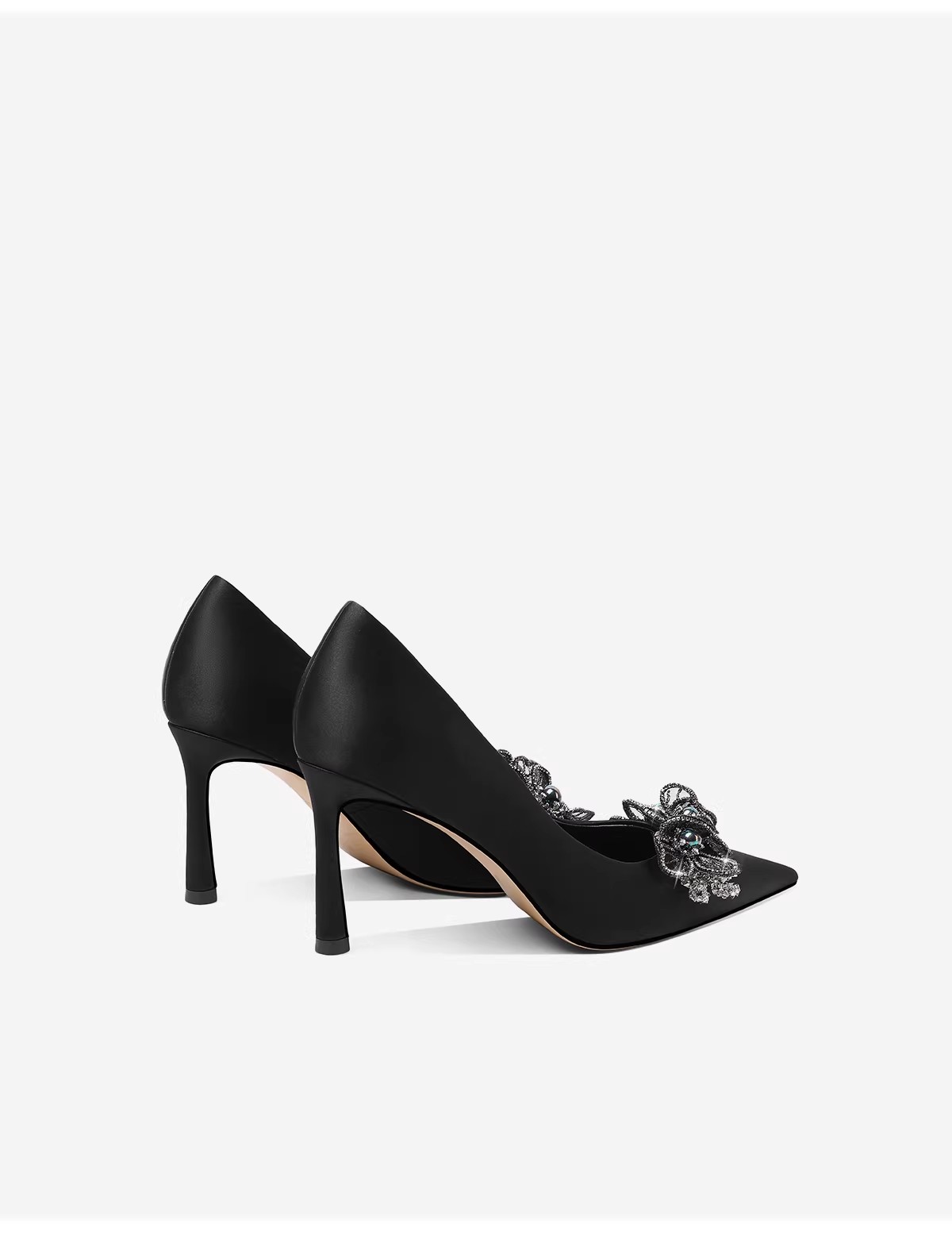
Now the three places they don’t work. Cobbles and gravel, because a backless shoe gives you nothing to push against and every stone goes through the sole. Long staircases in old buildings, for the same reason, plus the risk of the shoe staying behind on a step. And any day with rain forecast: a mule with a leather sole in the wet is a skating rink, and pale suede is finished after one puddle.
If your week includes any of those regularly, a closed commuting pump with a proper counter will earn more wear than a backless pair, even though it takes four extra seconds at the door.
What I’d actually do: one backless pair in a dark neutral for the short days, and one closed pair for everything else. The slip-on is the shortcut, not the whole system.
Prices help here. A 28 soft leather shallow-mouth pair is a reasonable experiment to find out whether you like the category at all. A 87 version with a shaped counter and a replaceable heel tip is the one you’ll still be wearing in year two. And if the shape suits you, the same logic in a taller style is covered in the notes on heeled boots and the two measurements that matter.
Before you pay, do one thing: put both shoes on, stand up, and walk to the far end of the shop and back on the hard floor. If you hear a slap, put them down. You’ll hear it every morning for the life of the shoe, and by the second week you’ll be leaving them by the door and reaching for something else. Browse the women’s shoes range with that sound in mind and you’ll skip the pairs that only look quick.
