

You bought a pair of heeled boots in October, wore them twice, and now they sit by the door doing nothing. The heel was the right height. The colour went with everything. So why does the left boot press on your shin bone by 3pm, and why does your heel lift out of the back with every step on a slope?
If you typed boots women heels into a search bar, you already know roughly what you want. What you don’t know yet is which number on the box decides whether you’ll still be wearing them in February. It isn’t the heel height, and it isn’t the size printed inside.
Two measurements settle most of it: the circumference of the boot’s top opening, and how far back the heel sits under your own heel bone. Get those two wrong and no amount of cushioning rescues the pair. Get them right and a 75mm block heel can be a daily shoe.
Two measurements decide the fit, and neither one is the heel
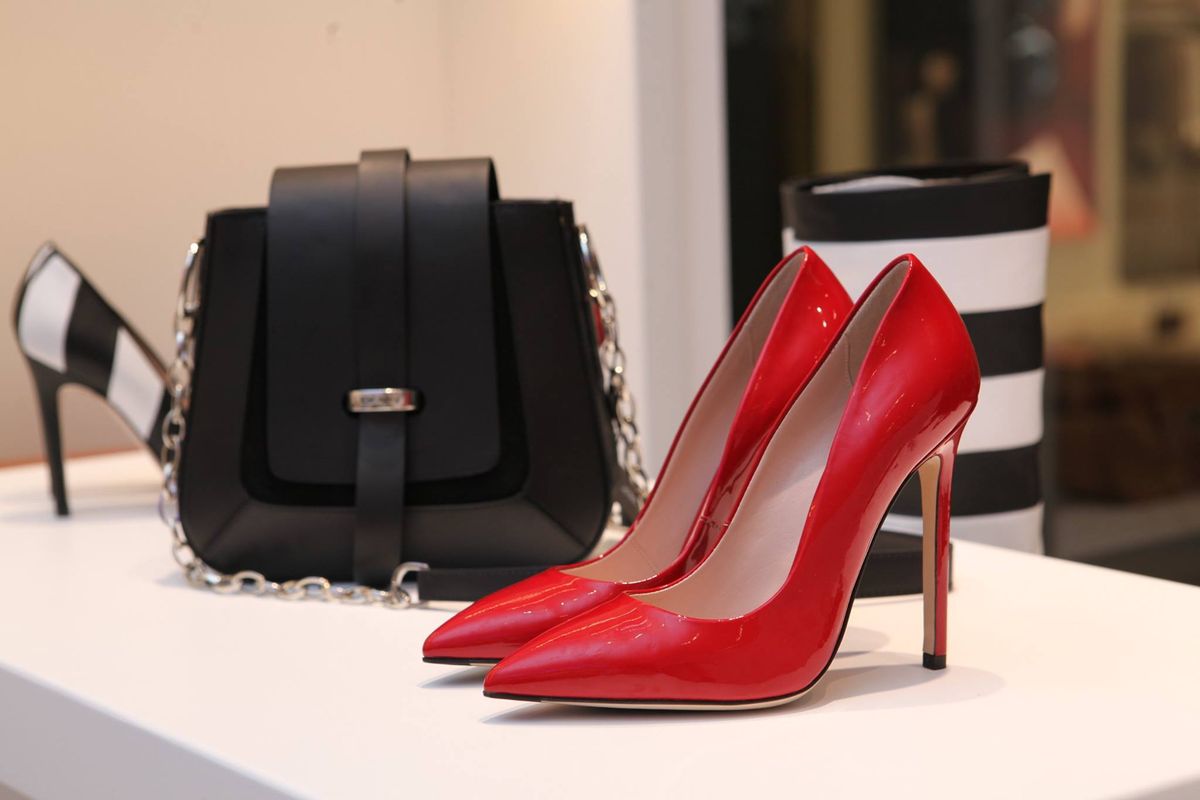
Take a soft tape measure to the pair you already own and wear without thinking. Measure three things: around the top edge of the shaft, around your own ankle at the narrowest point, and around the widest part of your calf. Write them down. Those three numbers are the whole fit conversation.
Most women’s ankle boots land between 24cm and 28cm around the opening. Below 24cm, and the top edge will mark your shin through tights by mid-afternoon. Above 29cm, the shaft starts to look like a rain boot and the boot stops holding your ankle at all.
Measure at the right time of day, too. Calves and ankles swell by a few millimetres between morning and evening, and more in warm rooms or on a long flight. If you measure at 7am and the boot fits exactly, it will feel tight by dinner. Measure in the afternoon, or add half a centimetre to whatever you get at breakfast.
Then there’s the heel’s position, which almost nobody checks. Put the boot on a table, sole down, and look from the side. Draw an imaginary vertical line down from the back of the heel cup. If the heel block sits mostly behind that line, the shoe will feel like it’s tipping you backwards. If it sits under it, your weight lands where your body expects it.
You can also test this on your own foot rather than on a table. Stand in the boots on a hard floor and lift your toes. If you can lift them easily and your weight rocks back onto your heels, the balance point is behind you. If lifting your toes feels like work, the boot is already asking your calf to hold you upright, and that’s the pair that leaves you sore after a normal day.
That second check explains a thing that confuses buyers for years. A 50mm heel that sits far back can hurt more than an 80mm heel that sits forward. Height gets blamed for a design fault.
One more number worth knowing: the platform or sole thickness under the ball of your foot. A 90mm heel with a 20mm front platform is, in practical terms, a 70mm heel. The angle your foot actually stands at is the difference between the two, and that angle is what your calf and Achilles feel at 6pm. Measure the front sole too, not just the back.
The regret that shows up most often: sizing up for the calf
A narrow shaft is the single most common reason a heeled boot goes back to the shop. The sequence is predictable. You try the boot, the top edge digs in, you ask for half a size up, the shaft loosens by a few millimetres, and you buy it. Then your foot slides forward inside the boot all day and your toes pay for it.
Sizing up does not fix a shaft. It moves the problem from your calf to your toes, and toe pain is the version you can’t ignore.
What actually works, in order of preference:
- Find a boot whose opening is already within 1cm of your calf measurement at the right point.
- Look for a shaft with a hidden elastic gusset or a lace or buckle panel that gives 1.5cm to 3cm.
- Ask a cobbler to let out the back seam. On leather boots with a full back seam this is usually possible, and it costs less than a new pair.
- Only then consider going up half a size, and only if the toe box was roomy to begin with.
There’s a related trap with wide calves and tall shafts. A knee-high boot with a 38cm opening sounds generous until you measure your calf at the widest point, which for a lot of women is 37cm to 40cm. The opening has to clear the widest part, not the average. If it doesn’t, the boot will stop halfway up your leg in the shop and you’ll spend the next ten minutes pretending it’s fine.
Ankle boots are more forgiving here because the top edge sits below the calf. That’s why so many women end up owning four pairs of ankle boots and no knee-highs, even when the knee-high is what the outfit wanted.
A heel placed under the ankle beats a lower heel placed behind it
Heel geometry is the part of boot design that buyers can’t see in a product photo, and it’s the part that decides comfort more than anything else. A heel is not a decorative block glued to the back. It’s the point your body balances on.
When your body weight passes down through your heel bone and that bone sits directly above the heel block, your ankle does very little work. When the block is 2cm behind the bone, your ankle spends the day trying to stop you from tipping backwards. You feel it as calf fatigue first, then as lower back ache on the second day.
The geometry of a high-heeled shoe has been studied for decades, and the consistent finding is that load shifts to the forefoot as heel height rises. What the studies rarely mention is that a badly placed heel shifts load even at low heights. A 45mm heel sitting behind the ankle can put more pressure on the ball of your foot than a 65mm heel sitting under it.
So the test is visual, and it takes five seconds. Look at the boot side-on with the sole flat. The back edge of the heel block should line up with, or sit slightly forward of, the back of the boot’s heel cup.
Then look at the top of the heel where it meets the sole. A heel that meets the sole in a narrow waist, with a bit of a taper, flexes better when you walk. A heel that meets the sole as a solid slab, full width all the way up, feels dead underfoot and tends to land hard.
None of this means thin heels are bad. A slim 70mm heel with a well-placed block is perfectly wearable for a wedding. It means a slim heel placed badly is a shoe you’ll take off under the table.
Shaft height and where the top edge lands on your leg
Shaft height is measured from the floor at the back of the heel to the top edge. On an ankle boot it usually runs 9cm to 13cm. The exact number matters less than where that edge cuts your leg, because that’s what your eye reads and what your trousers have to clear. The basic anatomy of a boot hasn’t changed much in a century: shaft, vamp, heel, sole. What has changed is how much variation hides inside those four words.
- 9cm to 10cm: edge sits at or just below the ankle bone. Cleanest line under cropped trousers and midi skirts.
- 11cm to 12cm: edge covers the lower calf. Great with straight-leg jeans, awkward with anything cropped.
- 13cm and up: moving into mid-calf territory. Now you’re choosing a silhouette, not just a boot.
Here’s the part that catches people out. A boot with a 12cm shaft and a wide opening makes your ankle look wider than it is, because the eye follows the widest horizontal line. A boot with an 11cm shaft and a narrower opening makes the same ankle look finer. Same leg, different number, different impression.
If you wear mostly cropped trousers, keep the shaft short. If you wear bootcut or straight-leg jeans, a taller shaft stops the hem from catching on the boot’s top edge when you walk. This is a wardrobe decision, not a comfort one, and it’s worth making before you fall for a colour.
If the number you’re after is where the edge lands against a specific hem, the ankle gap measurement does more for the look than the shaft figure on the box.
Also check the top edge itself. A raw, unlined edge on cheap boots will rub through tights within a week. A folded and stitched edge, or one with a soft lining, survives a winter of daily wear. Run your thumb along the inside of that edge in the shop. If it feels like a cut corner, it is one.
Suede, leather, and the stretch panel that ruins the shape
Material decides how the boot ages, and it decides whether the shaft will give you the 2mm you need. Suede stretches. Smooth leather stretches a little and then stops. Patent leather doesn’t stretch at all, and it creases where it bends, which on a boot means white lines across the vamp by Christmas.
For a first pair of heeled boots that has to work four days a week, suede or a soft grained leather is the safer buy. Suede will mould to your ankle over about two weeks of wear. It also marks in rain, and a wet suede boot that dries without care goes stiff at the flex point. That’s the trade, and it’s worth knowing before you wear them in a downpour.
The stretch panel question is separate. A hidden elastic gusset at the back of the shaft adds real give and is the reason some boots fit women with 36cm calves and 26cm openings. The catch is that a wide elastic panel collapses over time and pulls the shaft out of shape. A narrow gusset, 2cm to 3cm, holds up far better than a 6cm slab of elastic. If you’re comparing materials side by side, a suede pair with a soft shaft will always give more than a patent one in the same size.
Then there’s lining. A boot lined in leather or a wool blend breathes and holds its shape. A boot lined in thin synthetic fabric feels slippery, which makes your foot slide forward, which is exactly the problem you were trying to avoid. On a heeled boot, the lining is doing structural work, not just comfort work.
One more thing worth checking on the sole. A leather sole looks smarter and grips nothing on wet pavement. If you’ll be walking to a station in November, a rubber sole with a defined tread, or a cobbler-applied rubber half-sole, is not a compromise. It’s the difference between arriving and arriving annoyed.
Colour deserves a line here as well, since it’s what most people decide on first. Black hides scuffs and reads formal, which is why it survives four winters. Brown and tan show every mark on the toe, and a light suede pair will look tired by February unless you brush it after each wear. Neither is a reason to avoid them. It’s just worth knowing what you’re signing up for when you pick the pale pair in the sale.
The twenty-minute indoor test, in order
Do this at home, on carpet, before the tags come off. Twenty minutes is enough to find the faults and short enough that you’ll actually do it.
First three minutes. Put both boots on with the tights or socks you’d really wear. Not bare feet, and not the thin nylon pair you keep for funerals. Walk to the end of the room and back twice. If your heel lifts more than about 5mm out of the boot at the back, the pair is too big or the heel cup is too shallow. Both are defects for you, even if they’re not defects in the shoe.
The stand-still bit, around minute five. Shift your weight from foot to foot and stop fidgeting. Feel where the pressure lands. It should spread across the ball of your foot, roughly evenly. If you can point to one spot under your second toe that’s already complaining, that spot will be a blister by hour four. Nothing you add later changes that.
Stairs come next. Walk up and down slowly, and pay attention to the descent. This is where a badly placed heel shows itself. If you feel like you’re falling forward going down, or you catch yourself gripping with your toes, the geometry is wrong for your foot. Go back and look at where the heel block sits.
Sitting is a test too, and people skip it. Sit for five minutes with the boots on, then stand up and walk across the room. Boots that feel fine standing and terrible after sitting have a shaft that’s too stiff at the front. That’s a break-in problem you may or may not win, and it’s the one that most often ends with the pair by the door.
The last two minutes are the ones that matter. Check the top edge of the shaft for a red mark, then check the back of your heel. Redness that fades in a minute is normal. A mark that’s still there after ten minutes is a signal the boot is winning an argument you can’t win with insoles.
If the pair is already in your closet and already hurts
Most people don’t need a new boot. They need two cheap fixes and one honest decision. Try the cheap fixes first, because they cost less than a return shipping label.
A heel grip, the foam or suede kind that sticks inside the heel cup, stops the vertical slip that causes most heel blisters. A thin gel insole under the ball of the foot spreads pressure at the front. A cobbler can stretch a leather shaft by around half a size, and can add a rubber half-sole for grip. Total cost is usually a fraction of a new pair.
What doesn’t work: stretching suede with water and hope, wearing the boots around the house for a week in thick socks if the shaft is genuinely 2cm too narrow, and buying insoles to fix a heel that sits too far back. No insole changes where the heel block is.
Then the honest part. If the boot presses on the same spot after two weeks of careful break-in, it’s not going to stop. Suede gives a few millimetres, not a centimetre. A pair that hurts at the shin in week three will hurt in week thirty, and every wear costs you a day of low-level irritation. Cut it loose and put the money into a pair whose opening already fits.
Where the regret usually comes from isn’t a bad decision in the shop. It’s buying the boot you wanted rather than the boot your calf measurement allowed. Measure first, then fall for a colour. Your October self will thank you in February, when the same pair is still by the door and still being worn.
If you want to see how much difference the front sole makes, compare a thick-heeled pair with a platform under the toe against a flat-soled stiletto of the same height. Same heel number, completely different day. Browse the rest of the heeled styles with a tape measure in hand.
