

A pair of women’s black heels with bow detail sits in a shop window for six weeks before anyone buys it. The bow catches the light, the black looks deep and even, and the price tag is usually reasonable. Then the pair goes home, gets worn four times, and the bow starts to look tired.
Almost always, the problem was visible in the shop. It just wasn’t visible under shop lighting.
What follows is the check that separates a pair worth keeping from a pair that ends up at the back of the cupboard. It takes about two minutes per shoe and needs nothing except a window with daylight coming through it.
Hold the shoe up to the window before anything else
Daylight is unforgiving in a useful way. It shows the grain of the leather, the depth of the dye, and the places where the finish has been sprayed thin.
Turn the shoe sideways so the light rakes across the vamp rather than hitting it head-on. Three things appear.
First, the surface texture. Real leather has slightly irregular pores and a surface that shifts as the angle changes. A coated synthetic looks flat and even, like paint on plastic. Neither is automatically bad, but a coated upper on a bow shoe usually means the bow is the only thing holding the design together.
Second, the colour consistency. Look at the toe, the heel counter and the strap separately. If the black is visibly different between sections, they were cut from different dye lots, and they’ll age differently too. One part will go grey before the other.
Third, and this is the one people miss: the edge where the upper meets the sole. Daylight shows a gap, a wavy glue line, or a thin sliver of lighter material. In shop light, all three disappear.
Leather itself is a material with a documented set of behaviours rather than a marketing word, and the way it takes dye and creases is well understood: the structure of the hide determines how it wears. A bow shoe made from the top layer of the hide will hold a shape. One made from a split and a sprayed finish will not, and no amount of careful wearing changes that.
What each material does after ten wears
Three finishes dominate this style, and they fail in different ways. Knowing which one is on the shelf is most of the decision.
- Smooth calf leather. Creases softly across the vamp and takes a polish. Ten wears in, it looks worn rather than damaged. Scuffs can be coloured out with cream.
- Patent. Holds its shine and its shape, and shows every knock as a white mark that can’t be polished away. Good for evening, poor for anything involving a car door.
- Satin. The dressiest option and the most fragile. Water marks it permanently, and the bow is usually the first thing to flatten.
Patent is the interesting case, because it’s the finish most bow shoes use. It photographs better than anything else, which is why it dominates product listings, and it’s also the finish that looks oldest fastest. A patent bow shoe has a realistic lifespan of about fifteen wears before the marks accumulate past the point where you’d wear it to something important.
Suede exists in this style too, usually in autumn, and it’s a reasonable middle ground if the climate is dry. Suede hides creasing, forgives a knock, and goes bald at the toe within a season if you wear it in the rain.
One detail that’s worth thirty seconds: turn the shoe over and look at how the sole is attached. Stitched soles can be repaired. Glued soles can’t, and on a bow shoe the sole is usually the first thing to separate, right under the ball of the foot where the flex happens.
The bow is a construction detail, not decoration
Most shoppers judge a bow by shape, and most shoppers are buying women’s black heels with bow detail for the look rather than the build. Which is why the build is where the money gets saved by the factory. Round, pointed, floppy, structured. The question that actually matters is how it’s fixed and what sits underneath it.
A stitched bow is attached through the upper with a small bar tack, usually at the knot. You can feel a slight firmness under the knot if you press it. That bow will survive being caught on a bag strap, which happens more often than anyone expects.
A glued bow is attached with a dot of adhesive to the finished surface. It looks identical on the shelf and it will lift at one corner within a month. Press the knot gently with a thumbnail. If it shifts or you can feel a hard lump of glue, that’s the answer.
Then there’s the part underneath, which is where cheap construction hides. Some bow designs cover a seam between two pieces of upper. That’s not a flaw, it’s a design solution, and it can be perfectly well made. Others cover a repair or a weak point in the pattern. If the shoe creases sharply on either side of the bow and nowhere else, the upper has been cut in two and joined, and that join is where it will split first.
Finally, check what the bow does to the instep. A bow adds height at the exact place where a pump already presses on the top of the foot. Women with a high instep will feel it after twenty minutes, and there’s no way to stretch that area without distorting the bow. If the bow sits on the vamp rather than the throat, that pressure disappears.
Fit checks that a bow changes
A bow shoe is not just a pump with decoration. The extra element changes where the shoe grips, and the fit questions follow from that.
Length is the same rule as any pointed shoe: about a centimetre past the longest toe when standing. The bow doesn’t affect length, but it does affect how much you notice a short toe box, because the eye is drawn to the front of the shoe.
Width is where it gets specific. A bow across the vamp takes up volume. If the shoe fits exactly across the ball without any bow, adding one can turn a comfortable pair into something that presses. Sizing up half a size fixes the width and creates heel slip, so the usual compromise applies: size up, then add a suede heel grip rather than a gel one.
Heel height deserves a number here. Seventy to eighty millimetres is where most people stop thinking about the shoe during a normal day. Above ninety, the bow shoe tends to be a sitting shoe. Below sixty, the bow looks out of proportion on a pointed toe, because the design assumes a certain line from heel to toe.
Then the walk test, which matters more with this style than with a plain pump. Walk ten steps on a hard floor and listen. A clicking heel tip that sounds hollow means a plastic block. A duller, denser sound usually means a stacked or covered heel that will last longer and land more quietly.
If the pair feels fine standing and wrong walking, that’s a shoe with a badly placed heel, not a size problem. Put it back.
The twenty-minute test you can run at home
If you’ve already ordered, or the shop won’t let you walk around, this is the version to run on your own floor. It takes twenty minutes and it tells you more than five minutes in a fitting room.
Put the shoes on with the socks or tights you’ll actually wear. Walk to the kitchen, back, and around the table four times. Then stand still for two full minutes and pay attention to three places: the top of your instep under the bow, the outside edge behind your little toe, and the heel cup.
If any of those three starts to feel warm, that’s friction, and friction becomes a blister on the fourth wear. Not the first. That’s what makes it easy to ignore now and impossible to ignore later.
Then sit down for five minutes with the shoes on, and stand up again. Sitting changes the shape of your foot and the way the vamp presses. A pair that passes the walking test and fails the sitting test will ruin a dinner.
When you take them off, look at your foot rather than the shoe. Red marks that fade within a minute are fine. Marks that are still there after ten are pressure points, and no insole fixes a pressure point on the instep.
Finally, check the box for a second pair of heel tips. Good brands include them; cheap ones don’t, and a replacement tip costs more than you’d think once you’ve paid for fitting.
Where this style works, and the one place it doesn’t
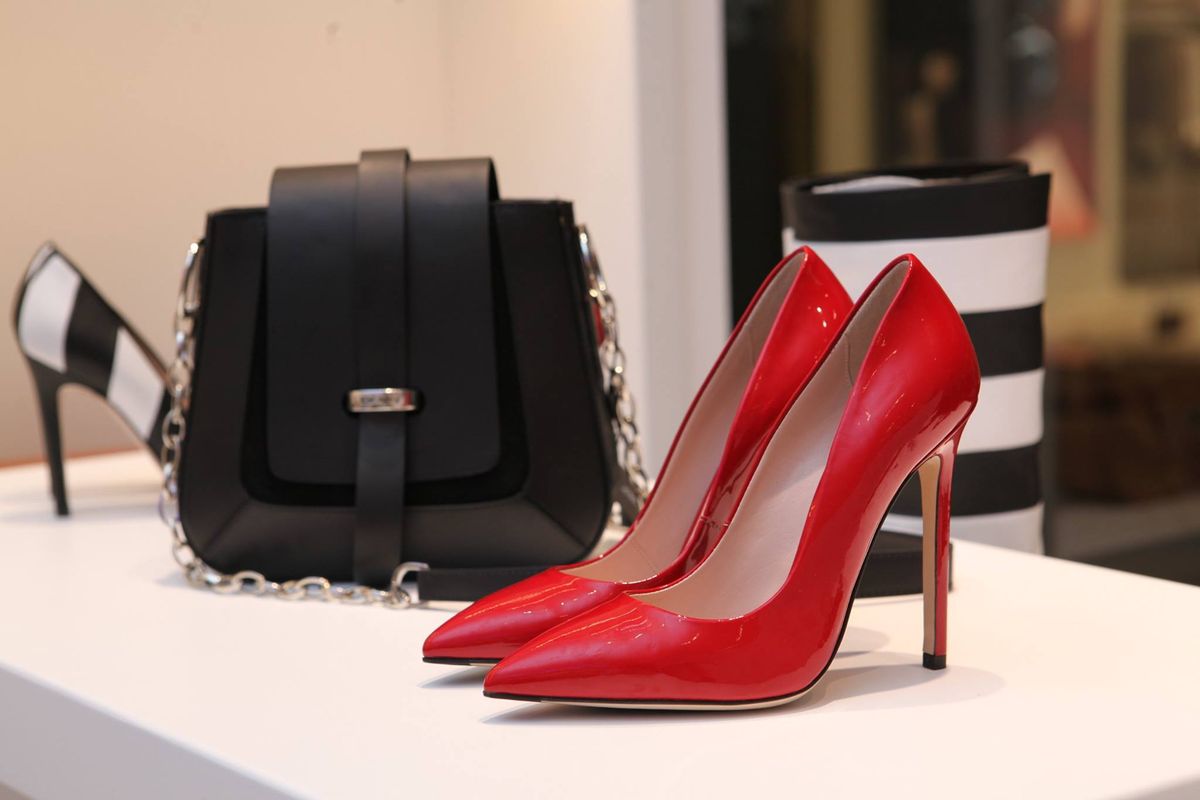
Black heels with a bow are, in practice, an evening shoe that can be pushed into daytime. That’s a narrower brief than the product photos suggest, and it’s worth being honest about it.
Women’s black heels with bow detail work with a black dress, obviously. They work with dark tailored trousers and a plain knit, where the bow provides the only detail. They work at dinners, at theatre, at anything where the outfit is simple and the shoe is allowed to be the interesting part.
The honest limit of the style is the working day. Women’s black heels with bow detail ask for an occasion. Give them one and they behave.
Take a normal nine-hour day and the same pair stops making sense. The instep pressure, the pointed toe and the height add up, and by four in the afternoon the bow is the least of the problems. For office wear, a lower block heel does the same job with none of the friction. Something like a clean pointed pump without the extra detail covers five days a week without asking for anything in return.
The one place this style genuinely fails is a wedding where you’re standing for six hours on grass. Heels sink, the bow catches on the hem of a long dress, and the whole thing becomes a management task rather than an outfit. If the wedding is the reason for buying, a block heel in the same colour is the better purchase, and nobody will notice the difference in photographs.
For something with the same evening weight but a little more visual interest, rhinestone pointed black heels do a similar job, though they’re harder to keep clean and even less suited to daylight.
Care, storage and the scuff that won’t come out
Black leather is forgiving until it isn’t. The scuff that matters is the one on the toe, where the finish has been taken off rather than marked. Polish sits on top of a scuff; it doesn’t rebuild the surface. That’s why a knocked patent toe stays visible no matter what you do.
Two habits keep this style looking new for longer. Wipe the shoes with a dry cloth after every wear, before the dust settles into the creases. And store them with the bows facing outward, not pressed against each other, because a flattened bow never comes back to shape.
Patent has one extra rule: keep it away from heat. A radiator or a hot car will soften the finish and it re-sets with a slightly cloudy look that can’t be corrected. Suede needs a brush and a protector spray before the first wear, not after the first mark.
Patina is a real thing on good black leather and it’s not damage: the surface darkens and softens where it flexes, which is why an old pair of well-kept black shoes looks better than a new one. The goal isn’t to keep them pristine. It’s to keep them from going grey.
One last check before paying, and it costs nothing. Hold the pair up so the toes point at the window and look through the gap between the two shoes. If one bow sits higher than the other, the pair was assembled by hand on a bad day, and that asymmetry will be the first thing you see every time you put them on. Go and find another pair. The wider women’s shoe range usually has four or five variations on the same idea, and one of them will be built straight.
If a pair of women’s black heels with bow detail passes the window test, the bow test and the ten-step walk, it will earn its place. Most won’t. That’s not pessimism, it’s the reason the good ones are worth the search. And if the shape is right but the bow is the sticking point, subtracting detail before you pay is a useful way to think about the same decision.
