

It’s 8:40 on a Saturday and you’re standing in a doorway with one shoe on, because the ribbon around your ankle came loose for the third time since you left the car. The heel is fine. The fit is fine. The lace is the problem, and nobody warned you that a laced heel behaves nothing like a strapped one.
Here’s the short version before the details. On a heel, a lace does one of three jobs: it closes the vamp over your instep, it holds the ankle, or it decorates both and holds neither. Each job fails in a different way, and each failure has a check you can run in a shop in under a minute.
A lace and a strap fail in opposite directions
A strap is a fixed length of leather or elastic. Once you pick the hole, the fit is set for the evening and it won’t change unless the leather stretches. A lace is adjustable in millimetres, and that adjustability is the entire reason heels with laces for women exist as a category rather than a novelty.
Where you feel that difference is the instep, the ridge between your toes and your ankle bone. Feet swell through the day, sometimes by 4 or 5 mm in summer. A buckled strap either digs in by 6pm or floats from the start. A lace lets you give back 5 mm at the table without touching anything else about the shoe.
Laces don’t fix a bad last. They only buy you adjustment.
Lacing on heels isn’t a modern styling trick. Heels began as riding footwear, where the foot had to be locked to the stirrup, and lace-up construction came straight out of men’s shoes of the same period. The history of the high heel runs through a lot of practical strapping before it ever became an evening shoe.
The failure modes are opposite, which is why the two designs suit different feet. A strap fails by losing its shape: the buckle hole wears oval and the leather softens. A lace fails by losing tension: the knot creeps, the bow unties, the crossing points slide a few millimetres until the whole thing is slack.
There’s a cost to lacing too. Crossings add 2 mm to 3 mm of bulk over the instep. Under a wide trouser leg you’ll never see it. Under a thin, close-fitting strap sandal on the same foot, that bulk shows in photos.
Ribbon, cord, and elastic: four lace types with different jobs
Width tells you more than colour does. A 30 mm satin ribbon and an 8 mm waxed cotton cord look equally pretty on a shelf and behave completely differently once your weight is on them.
- 25 to 40 mm satin or velvet ribbon. Decorative. Ties at the ankle. Holds shape, holds almost no fit.
- 10 mm grosgrain ribbon. Same look, more grip, because the ribbed weave has edges that catch on themselves.
- 6 to 8 mm waxed cotton or round leather cord. Grips hardest. Best for ghillie lacing and anything crossing the instep.
- 3 to 4 mm flat elastic with a slider. No bow, no retying, no adjustment after you set it once.
Length matters more than most shoppers expect. A four-eyelet vamp takes about 55 to 60 cm of lace. Six eyelets take 75 to 85 cm. Buy a lace that’s 20 cm too long and you get loops the size of a coin purse, which is exactly what catches on a hem when you walk downstairs.
One pull test settles most of it. Thread the lace, tie it as you normally would, then hook two fingers under the crossing at the top of your instep and pull upward with about the force of a shopping bag. A cord holds. A satin ribbon slides 10 mm and stays there.
Waxed cotton and round leather cord both need a little upkeep that nobody mentions. Wax wears off the first 20 or 30 wears, and once it does the knot starts slipping on smooth leather eyelets. Half a candle stub run along the lace fixes it for a season. Leather cord dries out in winter heating and goes stiff, so it needs a dab of neutral cream every couple of months.
Elastic is the opposite case. It never needs retying, and it never gives you back the 5 mm you wanted at 6pm. If your feet swell noticeably, elastic locks in the morning fit and holds it all day, which is fine at 8am and less fine after a long flight or a salty dinner.
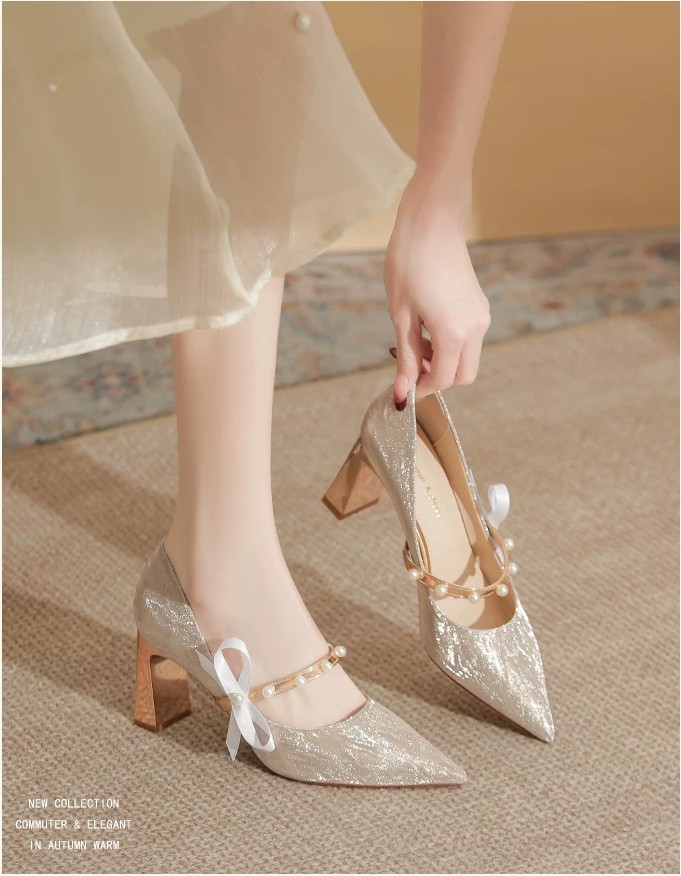
Ghillie lacing is the one that actually stays tied
Ghillie lacing skips eyelets entirely. Instead of holes, the shoe has loops of leather along both edges of the vamp, and the lace crosses over the top of your foot like the lacing on a dance shoe. Pull the two ends and the whole vamp closes around the instep.
That geometry is why it works. Because the lace sits across the highest part of the foot and pulls backward as well as across, tension drags your heel into the cup at the back. Straps pull across only. If you have a narrow heel and a normal forefoot, ghillie lacing is the cheapest structural fix you can buy.
Corset lacing does something similar with two laces instead of one. One starts at the bottom of the vamp, one at the top, and both tie at the ankle. The doubled crossings roughly double the friction, so the tension you set at 7am is still there at 9pm.
Both styles cost you time. Twenty to forty seconds to get a pair on, and you can’t kick them off under a desk without untying them first. If you’re the person who slips shoes off the moment you get home, this is a genuine annoyance rather than a detail.
The other trade-off is visual. Ghillie lacing breaks the clean line of a pointed toe. On a sharp court shoe it reads slightly costume. On a rounded toe, a block heel, or anything with a bit of weight to it, the crossings look deliberate instead of decorative.
Narrow heels and laces: what a lace can and can’t fix
Stand up and walk ten steps in a pump that lifts at the heel. If the back of the shoe rises more than about 6 mm off your heel, lacing can usually save the pair. Tightening a lace across the instep pulls the whole foot backward into the heel cup, and 10 mm of extra tension is often enough.
Check the throat first. That’s the seam where the vamp meets the sides of the shoe, right above your arch. Press your thumb into the gap there while the shoe is on. If you can push in 8 mm or more of empty space, a lace has something to work with.
If the shoe is simply too long, no lace will fix it. A 10 mm gap behind your heel at rest means the ball of your foot is sitting behind the flex point, and the shoe will crease and slap no matter how hard you pull. Sizing down is the answer there, not a tighter bow.
The same logic explains why narrow women’s heels with a close heel fit so often come with lacing built in. A last that’s cut narrow at the back usually needs some way to close the front, and a lace is cheaper than a second pair of lasts.
Where laces hurt instead of help: a high instep combined with a low-cut vamp. The lace presses directly on the tendon that runs over the top of your foot, and 20 minutes in you’ll feel a dull ache that doesn’t fade. If the lace line lands right on a bunion, the same thing happens faster.
So the rule isn’t “laces equal better fit”. It’s “laces fix a loose heel, a swollen instep, and a shoe that’s slightly too wide, and they make a tight vamp worse”.
Where the lace line should sit for your foot shape
Two people can wear the same size and need the lace in completely different places. It comes down to where your foot is widest and where it’s most sensitive, and both are easy to find once you know what to look for.
Start by looking at your own footprint, or the wear pattern on an old pair of flats. A foot that’s widest at the ball and narrow at the heel is the classic case for lacing. A foot that’s wide through the middle, with a low arch that flattens when you stand, needs the lace to sit higher, close to the ankle bone. Put it lower on that foot and the lace presses the arch flat and the shoe rolls inward.
Bunions change the answer again. If the joint sits where the lace would cross, move the whole lacing line back by 15 to 20 mm, which usually means choosing a style with more vamp. Some pairs have a lace panel that starts an inch higher than the version next to them on the shelf, and that inch is the difference between comfortable and not.
High arches are the easiest to fit and the hardest to keep. The extra height means the lace has plenty to grip, so the shoe stays on. But a high instep also presses up into the lacing, so a cord that’s slightly too tight will leave a red mark across the top of your foot within an hour.
None of this needs a measurement tool. Try the pair on, lace them loosely, and look down at your own foot. If the lace disappears into the top of your foot, the line is too low. If it sits on a bone that you can feel under your thumb, it’s too high. It should run across soft tissue, not a joint.
One thing worth knowing before you shop online: a laced vamp almost always reads half a size smaller in photos, because the panel pulls the eye toward the middle of the shoe. Order your usual size unless the listing says the last runs narrow.
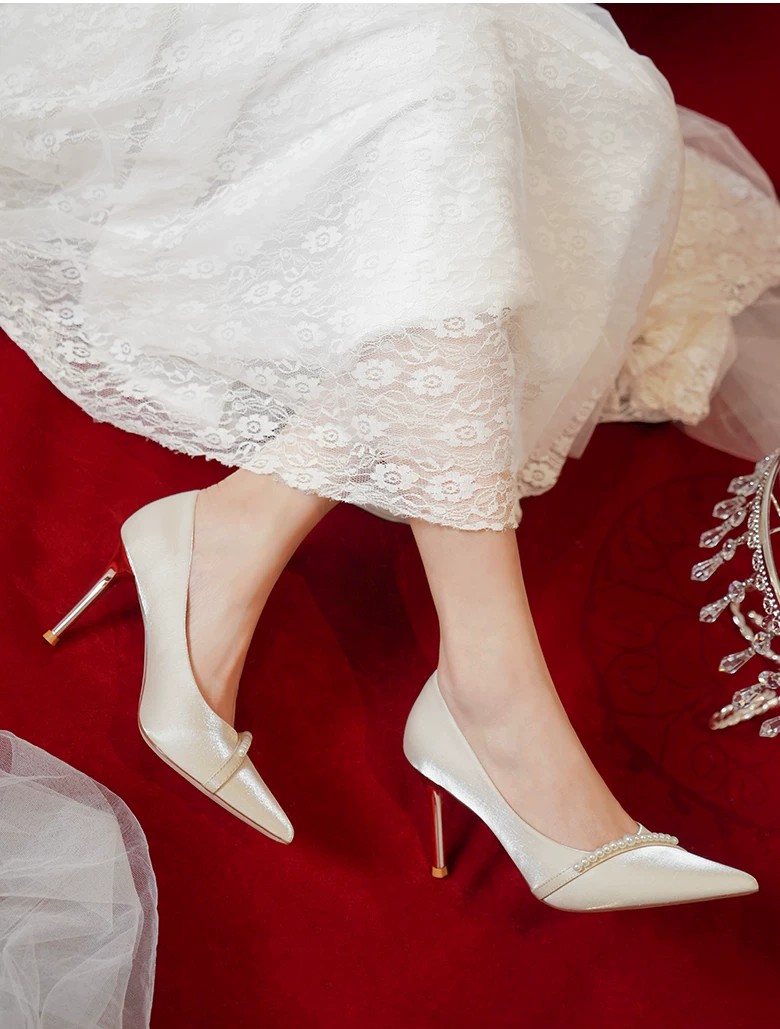
The satin ribbon problem, and four ways around it
Satin is a filament weave with a smooth surface, which is exactly why it looks expensive under a light and exactly why it won’t stay tied. There’s almost no friction between the two tails of a satin bow, so the knot walks itself loose as your ankle moves.
At 23:10 at a wedding last month, a guest had one shoe off under the table and a ribbon wrapped twice around her fingers, trying to get a flat knot. The shoe was a satin black heel with a closed back and an ankle tie, and the tie was the only thing holding it on.
Four fixes work, in order of how much effort they cost. Tie a double knot before you make the bow, so the base can’t creep. Rub a little beeswax or a dry bar of soap along the ribbon tails, which gives the fibres something to grip. Swap the ribbon for grosgrain of the same width and keep the look. Or move the bow to the outside of your ankle, where your other shoe can’t catch it when you cross your legs.
If you’re buying new, ask whether the tie is a fixed ribbon or a lace that runs through loops. Fixed ribbons sewn at one end are far less likely to end up on the floor of a taxi. A loose two-tail ribbon is the worst of the options and the most common one on inexpensive pairs.
Velvet behaves better than satin for the same reason a wool coat holds a lapel and a silk one doesn’t: the pile gives the knot something to bite into. If you like the look and hate the slipping, velvet ribbon in the same width is a straight swap. The colour reads slightly deeper, which most people prefer under evening light anyway.
The physics is old news in textile circles. How a shoelace holds and why knots creep has been studied enough that the humble bow turn out to be a friction problem, not a styling one.
Ninety seconds in the shop: four checks that predict everything
You don’t need to walk a mile in a shop. Four checks take about a minute and a half, and they catch nearly every problem you’d otherwise discover at 10pm.
- Tie and untie twice, cold hands. If the lace ends are shorter than 12 cm you’ll fumble it in the dark. Twice is enough to find out.
- Roll onto the ball of your foot. Watch the vamp. Deep creasing across the toes means the lace is pulling too far forward, and it’ll dig after an hour.
- Walk twenty steps on hard floor and listen. A soft slap at the heel means the lace can’t hold the foot back. Silence means it can.
- Check where the bow sits. If the loops hang past your ankle bone, you’ll catch them on a hem or a chair leg within a week.
Tile, carpet, and a smooth shop floor tell you three different things, so use whatever the store has. Tile shows heel slip. Carpet hides it, which is why so many people buy the wrong pair after a carpeted fitting. A hard floor shows whether the sole flexes where your foot actually bends.
One more check, and it’s the one people skip: stand still for 30 seconds with the shoes laced but not tied. If you can feel the lace path pressing anywhere, that spot will be sore by dinner. Lace pressure doesn’t fade with wear. It gets sharper as the leather softens and the lace sits deeper in the same groove.
When to skip laces and buy the strap version
Laces are wrong for a few situations and it’s worth being blunt about them. If you take your shoes off several times a day, at a desk, at a friend’s flat, at airport security, a laced heel turns a two-second movement into a 30-second one. That gets old in a week.
They’re also wrong if you need one pair to do everything. A laced heel is a commitment to a specific look: slightly vintage, slightly intentional. A plain court shoe or a slingback with an elastic gusset slips on, reads neutral, and survives a change of plan better.
And they’re wrong if the shoe is already snug across the instep. There’s no lace setting that makes a tight vamp comfortable, because the lace is what’s making it tight. A commuting heel cut for a nine-hour day solves that with a wider throat, not with lacing.
What laces do well, they do better than anything else at the price. A 60 cm cord and two loops of leather can turn a pair that slips into a pair you forget about. That’s a real fix, and it costs less than a resole.
If you own a pair that already slips, don’t buy new ones yet. Retie the lace so the bow sits on the outside of your ankle, pull the crossing above your instep 5 mm tighter than feels natural, then walk to the end of the street and back. Forty seconds is usually enough to tell you whether the problem was the shoe or the knot.
For more on how strap placement changes the whole line of a shoe, see this breakdown of T-strap heels and where the slim strap crosses. And if you’re still narrowing the field, the full heel styles for women index is the fastest way to compare shapes side by side.
