

What grey gives you that black and nude don’t
It’s 7:45 on a Tuesday. You’ve got a nine o’clock review, a lunch you can’t move, and the black courts you wore yesterday left a red mark above your heel. The nude pair feels too bare for November. Grey lives in that gap, and that gap is wider than most people think.
Black reads formal and heavy against a wool coat. Nude disappears, which is the whole point of nude, but it also disappears in photographs and against light carpet. Grey keeps a visible line without shouting. On a foot, it does the work of a dark shoe while behaving more like a light one.
That sounds like a small distinction. In practice it decides whether one pair can cover five days of the same office, and it’s the reason women’s grey heels quietly outlast more dramatic colours in most rotations.
Think about what you actually need from Monday to Friday. Something that goes with a navy suit, a grey flannel skirt, black trousers, and jeans on the casual Friday that was never officially announced. Black struggles on two of those. Nude struggles on the other two, and gets destroyed by rain. A mid-grey leather court sits comfortably with all four.
There’s a catch, and it’s worth saying early: grey is unforgiving about finish. A cheap grey upper looks dusty next to a good grey upper, and the difference shows at arm’s length. More on that below.
For the historical version, the court shoe that most grey heels are modelled on is a low-cut style that has barely changed since the eighteenth century, which is why the court shoe’s basic shape still reads as office-standard rather than retro.
Five days, one pair, and what actually rotates
Here’s the working plan. One pair of women’s grey heels in leather, 60 to 70mm, almond or soft square toe. Four outfits that do the heavy lifting, plus one that exists for the days you can’t think.
- Monday: charcoal trousers, white shirt, grey heels. The shoe matches nothing exactly, and that’s why it works.
- Tuesday: navy suit, cream knit underneath. Grey against navy is softer than black and less predictable.
- Wednesday: black dress, bare leg or 40 denier. This is the test day. If the grey looks dirty next to the black, the pair is wrong.
- Thursday: grey flannel or check skirt, near-matching tone. Tone-on-tone reads intentional and costs you nothing.
- Friday: straight-leg jeans, blazer, grey heels. Dark denim and mid-grey is the one combination that makes jeans look like a decision rather than a surrender.
Wednesday is the day that sorts the good pairs from the bad ones, so plan it before you buy. Under office lighting, a warm brownish grey goes muddy against black wool. A cool, slightly blue grey stays clean. Hold the shoe against a black jacket in daylight before you commit.
What rotates is not the shoe. It’s the sock, the hem, and the bag. Rotate those three and the same pair reads as four different outfits to anyone who isn’t studying your feet.
The one thing you should not rotate is the heel. Keep the height constant all week and the shoe becomes a baseline. Change shoes daily and you’ll notice every 5mm difference in how your calves feel by Thursday afternoon.
The 70mm rule, and the three cases where it’s wrong
Most people do best between 60 and 75mm. Not because of any official standard, but because that’s the range where the arch still has something to push against and your ankle doesn’t have to work overtime to stay upright.
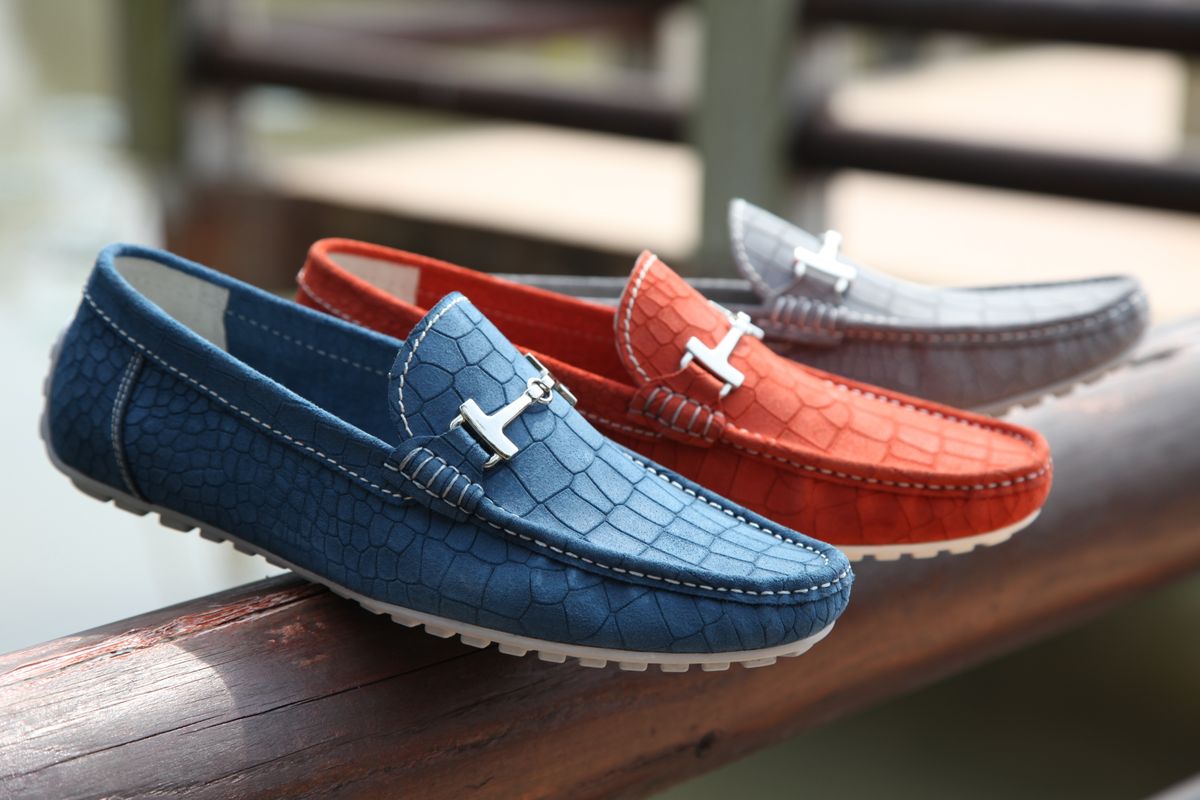
A 65-70mm pitch keeps the arch working without putting the toes on the floor.
Below 50mm, a court can look like a school shoe, especially in grey. Above 90mm, the pitch tips you forward and the toes take load they weren’t designed for. If you’ve ever taken your shoes off in a car park after a long day, you already know which side of that line you were on.
Three situations where 70mm is the wrong answer:
- You’re on your feet for eight hours on concrete. Go to 40-50mm with a rubber-injected sole, or accept that the last two hours will be unpleasant.
- You’re standing at a wedding or a conference where the floor is polished stone. Anything above 80mm on stone is a grip problem before it’s a comfort problem.
- You have a high instep. A higher heel often pulls the vamp tighter across the top of the foot, so the shoe that looks better can be the one that hurts more.
Heel height is also the first thing people fix when the real problem is width. A 65mm shoe in the right width beats a 55mm shoe that pinches at the ball of the foot, every time. Measure your foot at the end of the day, standing, because that’s when it’s at its widest.
If you want the anatomical side of it, the mechanics of a raised heel explain why the calf shortens and the forefoot load rises as the pitch increases. That’s the reason the 70mm compromise exists in the first place.
Finish is where cheap grey gives itself away
Leather in grey shows grain, dust, and edge paint more clearly than black. That’s the price of the colour. So the finish matters more than the price tag.
Polished calf holds up best for office wear. It wipes clean with a damp cloth, resists a light shower, and keeps a defined edge. Suede in grey looks softer and photographs beautifully, but a single wet Tuesday on a city pavement will leave water marks that never fully lift. Patent grey is the riskiest: it bounces light and can read plastic under fluorescent tubes.
Look at three things before you pay:
- Edge paint: run a fingernail along the sole edge. If it flakes at the touch, it will flake within a month.
- Grain consistency: cheap grey leather is often corrected and sprayed, so the grain looks identical across both shoes. Real grain varies.
- Lining colour: a pale lining in a grey shoe stains fast. Cream or light tan is better than white.
One more: check the heel tip. A grey heel with a black plastic top piece looks deliberate. A grey heel with a mismatched beige top piece looks like a factory substitution. Small thing, but you’ll see it every time you cross your legs.
None of this requires spending a fortune. It requires looking at the shoe in daylight for thirty seconds before you hand over a card.
The first five minutes of trying them on
Most returns happen because of something that was obvious in the shop. Five checks, in order:
1. Heel slip. Walk ten steps. If your heel lifts more than about 5mm, the shoe is either too long or the heel counter is too soft. A gel insert fixes a soft counter. Nothing fixes a shoe that’s a full size too long.
2. Toe box. Press the leather above your longest toe. You should feel a small gap, not tension. Grey leather shows creasing more than black, so a tight toe box will look worn within a fortnight.
3. The instep. Stand up. If the vamp cuts across the top of your foot, size up half a size or pick a different last. This is the one problem people try to walk off, and it never works.
4. Balance. Put the shoe on a flat surface and press the back. A well-made heel sits flat and doesn’t wobble. A wobbling heel means a bent shank, and that’s a factory fault.
5. The 3pm test. If you can, try shoes after 3pm. Feet swell through the day, and a pair that fits at 9am can be tight by the afternoon.
Do these in the shop, standing, on a hard floor. Carpet hides everything.
If you’re buying online, order two sizes if the returns policy allows it, and try them on a tiled floor with the tags on. That way you keep the option open without breaking the sole.
One extra check that catches more problems than any of the five: stand on one leg for ten seconds. If you have to grip with your toes to stay balanced, the last is wrong for your foot. It’s not something a shoe can be talked into.
Day four is when the truth comes out
New shoes feel fine for three days. Day four is when the heel counter either softens or starts to bite, and when you find out whether the insole has any give.
Expect a short break-in on leather, usually two to three wears. What you shouldn’t accept is a blister. If you’re reaching for a plaster on day two, the shoe is the problem, not your feet.
Three things worth doing in week one:
- Wear them for a two-hour stretch at home first, on carpet, with thin socks. It shows you where the pressure points are without ruining the sole.
- Put heel grips in before you need them, not after. A £4 grip saves a £40 resole later.
- Wipe grey leather after every wear in winter. Road salt is the fastest way to turn a clean grey into a patchy one.
By the end of week two, a good pair should feel like it was made for your foot. If it still feels like a shoe you’re wearing, take it back while you still can.
Also check the heel tip at the end of month one. Grey heel tips wear to a visible angle faster than black ones because you notice the colour change. Replace them early; it’s the cheapest maintenance there is.
Once women’s grey heels have softened, they hold their shape better than black, oddly. Black leather hides a collapsed vamp. Grey shows it, so you fix it sooner.
Meeting day: what changes and what doesn’t
The upgrade isn’t a different shoe. It’s a different hem and a different bag.
For a client meeting, keep the same grey heels and go one of two ways. Either a slightly longer hem that covers the top of the foot, which reads more formal, or a cropped trouser that shows the ankle, which reads sharper and more current. Both work. What doesn’t work is a midi skirt that stops exactly at the widest part of your calf, because that draws the eye down and makes the heel look taller than it is.
The bag should be darker than the shoe, not matched to it. Matching grey to grey looks like a suit set from 2011. A black or oxblood bag against grey shoes reads considered.
If you wear a lot of pale summer tailoring, a pair of real leather woven pumps in a warm neutral gives you the same trick in a lighter register from May to August.
And keep the jewellery small. Grey is a cool neutral, so silver, white gold, and plain steel sit better than yellow gold. This is the kind of detail nobody compliments directly, but it’s the reason an outfit looks put together rather than assembled.
If the meeting runs into dinner, you don’t need to change. Grey heels with a dark dress and a leather jacket is the same pair doing a second job. That’s the whole argument for owning grey in the first place.
One thing to plan: carry a spare pair of heel tips in your bag if the day runs long. It sounds fussy. It takes twenty seconds to swap and saves you walking across a lobby on a metal pin.
Sizing: where grey leather runs small
Grey dyeing and finishing change how leather behaves more than most people expect. Corrected grain, the kind used for uniform colour, sits slightly tighter than aniline leather in the same last. That’s why a pair of women’s grey heels can fit a half size differently from the black shoe on the same shelf.
Two practical rules:
- If your usual size feels snug across the ball of the foot but fine at the heel, take the half size up and add a thin leather insole. It’s easier than stretching.
- If the heel slips in your usual size, do not size down. Try a different last or a narrower fitting first, because a short shoe will crush your toes within an hour.
Also ask what the upper is lined with. A full leather lining gives about 2mm of give over a month. A synthetic lining gives none, and grey synthetics crease into pale lines that never buff out. If you’re between sizes, the lining is the detail that decides which way to go.
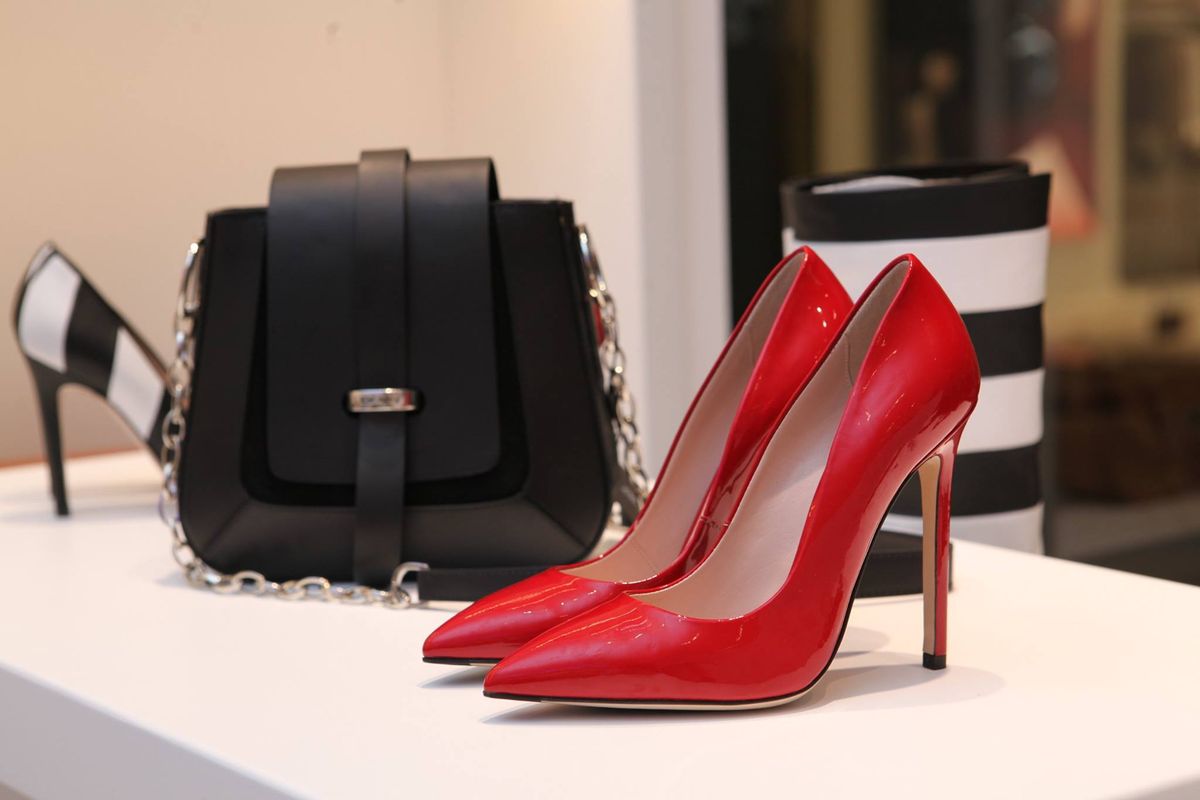
Check the fit across the ball of the foot, not just the heel.
One more quirk: grey shows stretch marks. Where the leather has relaxed across the vamp, the colour lightens slightly. That’s normal on good leather by month three. On cheap leather it happens in a fortnight and looks like a defect. It isn’t one, but it will bother you if you weren’t expecting it.
Keeping grey looking grey
Care for grey the way you’d care for a light coat, not the way you treat black shoes.
Wipe with a barely damp cloth after wear, dry away from radiators, and use a neutral cream polish rather than a coloured one. Coloured polish on grey goes patchy under office light, and you’ll only see it after the second coat.
Scuffs are the main issue. Grey scuffs show as a lighter mark where the surface layer has been lifted. A neutral cream and a soft cloth will lift most of them. Deep scuffs need a touch of grey cream polish matched to the shoe, applied with a fingertip, not a brush.
Store them with a shoe tree or rolled newspaper. A collapsed vamp in grey looks worse than in black because the crease catches light. And keep them out of direct sun; grey leather fades unevenly and the fade is permanent.
Do that and a decent pair will look presentable for two years of office wear, which is a better run than most black courts get.
Where I’d skip grey entirely
Grey isn’t universal, and pretending otherwise would be dishonest.
If your wardrobe is built on warm tones, camel, rust, cream, chocolate, a cool grey heel will look slightly off next to all of it. Warm taupe does the same job and cooperates with what you already own. Try both against your three most-worn pieces before you decide.
If you need one pair for a formal event with a black tie dress code, black is still the safer answer. Grey is a working shoe, not an evening shoe, and it never quite crosses over. A black satin heel built for long dinners does that job without a second thought.
And if you walk more than 8000 steps a day on pavement, a 70mm leather court is not your daily driver no matter how good it looks. Keep a pair of low block heels for the long days and save the courts for the days you sit down.
The last exception is weather. Grey leather handles a light shower better than suede, but neither enjoys slush. If your commute involves twenty minutes on an unsheltered platform, commute in something else and change at your desk. Keeping a pair of grey courts at work under the desk is the unglamorous trick that makes five-day rotation actually possible.
Everyone else: five days, one pair, one colour that doesn’t fight anything in your wardrobe. That’s a better return than most purchases you’ll make this year.
