

A pair of black comfort shoes in a size 16 and the same style in a size 20 are not the same shoe scaled up. That’s the assumption most shoppers make, and it’s the one that produces the return. Above a size 16, the foot gains width and volume faster than it gains length, while most lasts are graded on length alone.
The result is a shoe that fits the length of the foot and misses the shape of it. Buyers describe it the same way again and again: the toes are fine but the top of the foot is tight, the heel slips, or the ball of the foot sits half off the footbed. All three point to the same grading problem.
What follows is what actually changes above a size 16 in black comfort shoes for women, which measurements to check before buying, the one alteration that fixes most fit complaints, and the cases where no adjustment will work.
Why grading breaks above a size 16
Grading is the process of turning one sample size into a full run. Most manufacturers scale length and width by fixed increments, usually 6.6mm of length and 3mm to 4mm of girth per size. Real feet don’t follow that curve. Between a 36 and a 46, foot length grows by roughly 6cm while girth grows by closer to 6.5cm, and the ratio isn’t constant.
Below a size 16 the error stays small enough to hide inside the material. Above it, the gap is often 8mm to 12mm at the ball, which is more than most uppers can absorb.
If you want the background on how heel height shifts load across the foot, the physics of a raised heel explains why 30mm behaves so differently from 60mm. There’s a second issue. Many comfort styles are built on a single wide-fitting last and sold in a wide range of lengths. That works up to a point, and the point is usually around size 16 or 17, where the same width starts to feel narrow relative to the foot. The shoe still says wide on the box. It isn’t wide for that foot.
- Length increments: usually uniform, roughly 6.6mm per size.
- Girth increments: often 3mm, when the foot needs closer to 4mm at larger sizes.
- Toe box volume: usually not graded at all, so it becomes tight relative to the foot.
- Shank stiffness: unchanged, so a longer shoe flexes in the wrong place.
That last item is the one people feel but can’t name. A shank sized for a 38 flexes under a 44 at a point that’s too far forward, which is why longer shoes sometimes feel like they’re fighting the foot on every step.
If you’re shopping above a size 16, this changes how you read a product page. A size range of 36 to 46 in one width tells you the large sizes are effectively narrow, whatever the copy says. A chart that lists girth in millimetres tells you someone thought about it. Those two signals are worth more than any review that says the pair is comfortable.
Where the pressure shows up first
Three hot spots account for most of the complaints above a size 16, and each one has a different fix.
The outside of the little toe. This is a width problem at the ball. The upper presses where the foot is widest and the last is not. A shoe stretcher helps about 3mm. Beyond that, the pair is the wrong last and no amount of breaking in will change it.
Across the top of the foot, just behind the toes. This is a volume problem. The vamp sits too low for a foot with more instep height, and the material cuts across the highest point. Look for a style with a higher vamp or a softer, unlined upper. Laces and straps make it worse, not better, when they cross that point.
Behind the heel. This one looks like a fit problem and is often a proportion problem. A longer shoe puts the heel counter further back, so the foot slides forward and the heel lifts. The instinct is to size down. The better move is to look for a style with a deeper heel counter and a narrower heel seat relative to the ball.
Anyone who has bought three pairs in one season and returned all three usually has two of these three problems at once, and the second one is masking the first.
You can separate them in about a minute. Take the insole out and stand on it. If your foot hangs over the edge at the ball, it’s width. If the foot fits the insole but the upper still presses across the top, it’s volume. If the insole fits and the top is fine but your heel lifts when you walk, it’s the heel seat.
One test worth doing before a purchase: stand barefoot on a piece of paper and trace the outline. Then compare the widest point of the tracing to the widest point of the shoe’s footbed. If the difference is under 5mm, the pair will press. If it’s over 12mm, the pair will slide.
What a properly graded pair looks like
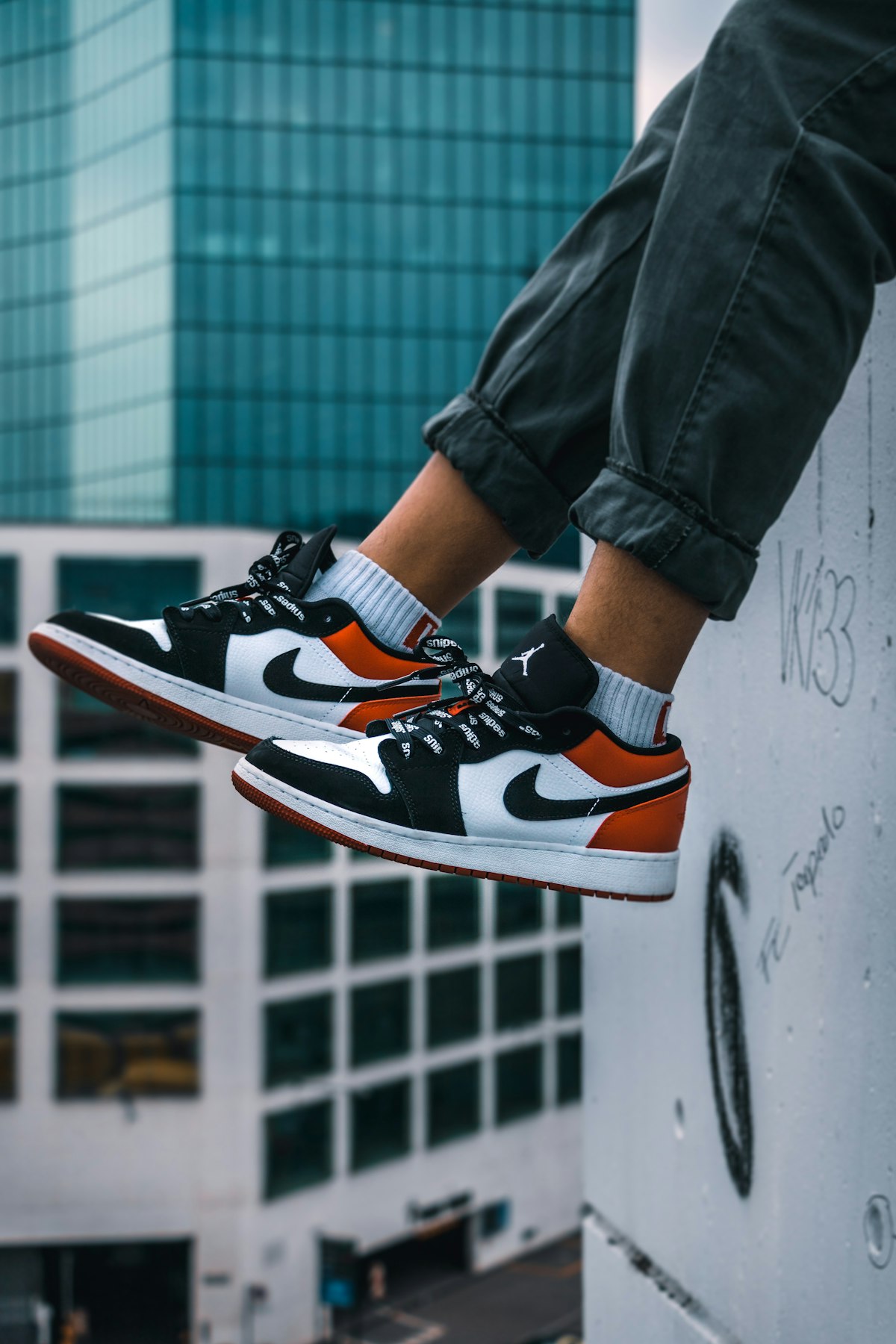
Four features separate a shoe that was genuinely graded upward from one that was stretched.
- A removable footbed. It signals that the brand expects people to add insoles, and it gives you 3mm to 5mm of extra depth when you take it out.
- A wide toe box with a rounded or square shape. Pointed toes above a size 16 push the longest toes into the taper.
- A wider heel base. Not just a wider sole, but a heel that sits under the body of the foot rather than at the very back edge.
- Stitching at the vamp that follows the foot. Seams placed to allow give at the ball rather than across the instep.
The footbed detail is the most useful one in practice. A shoe with a removable insole typically has 6mm to 8mm of internal depth. A shoe with a glued-in insole often has 4mm. That 3mm difference is the difference between a pair that accommodates a thicker sock and one that doesn’t.
Material matters too, but not in the way marketing suggests. Soft leather gives 2mm to 3mm across the vamp after a month. Suede gives slightly more. Knit gives the most but supports the least, which is a poor trade in a comfort shoe meant for standing. Stiff patent gives nothing.
What doesn’t help: a wider sole with the same upper. Several styles add 4mm of rubber at the edge of the sole and call it a wide fit. The foot still sits inside the same upper, so the pressure at the ball is unchanged. Check where the upper meets the sole, not where the sole ends.
When you try a pair on, give it twenty minutes before you decide. Feet spread during the day and the upper relaxes with warmth, so a shoe that pinches at 9 a.m. might be fine at noon, and one that feels perfect first thing may be tight by evening. Try them at the end of your day and you’ll get the honest answer.
Sizing up without losing the shape
The usual advice is to size up half a size. That’s often wrong above a size 16. Going up adds about 6.6mm of length and only 3mm of girth. If the problem is width, sizing up buys you very little and costs you heel slip.
Better order of operations:
- Try the wide fitting in the same size first, if it exists.
- If no wide fitting exists, size up half a size and add a heel grip to take up the extra length.
- If the pair is short in the toe as well as tight, size up a full size and use a thin insole.
- If the pair is long enough but presses on the little toe, stop. That last is wrong for the foot.
Half sizes matter here. Between a 42 and a 43 there’s usually a 42.5 that solves the length problem without adding 6.6mm. Not every brand makes them above a 42, which is its own frustration, but it’s worth checking before ordering the full size up.
There’s also the question of what “wide” means on a listing. A 2E, a D, and “wide fit” are not the same thing, and above a size 16 the difference between a D and a 2E is roughly 6mm at the ball. If the listing gives a letter width with no millimetre measurement, that’s a coin flip.
Black helps here, and not only aesthetically. A black upper hides the slight bulging at the little toe that shows immediately on a pale leather shoe, so a pair that’s 3mm tight looks fine in black even when it isn’t. That’s a real advantage for anyone who wants a work shoe that doesn’t announce the fit problem.
Before you order, check the return window. If you’re between sizes and the policy is 14 days, you have one shot at getting it right, so order both and send one back. If the window is 30 days, order one and wear it indoors for a week. Same outcome, less cardboard.
The alteration that fixes most complaints
If a pair is close but not right, one change solves more cases than any other: replacing the factory footbed with a thinner one and adding a heel grip. Together they cost less than €15 and address both the depth problem and the slip.
Sequence matters. Take the factory insole out first and try the shoe with the original sock. If the fit improves enough, stop there. If it’s now too loose, add a 2mm flat insole rather than a 5mm cushioned one, because the latter eats the depth you just created.
The heel grip is the second half. A suede or foam grip on the inside of the heel counter stops the vertical lift that comes with a slightly long shoe. Place it at the top edge of the counter, not lower down, or it will push the foot forward.
What a cobbler can do, and what they can’t:
- Can: stretch width by 3mm to 5mm, shorten a strap, add a rubber sole, replace a heel top piece, pad the tongue.
- Can’t: add width at the ball beyond about 5mm, raise the vamp, change the heel seat, make a pointed toe round.
A stretch is worth trying on suede and soft leather. It’s a waste of money on patent or on any shoe with a rigid toe puff. Ask before you pay, and expect the stretch to hold for a few months before the material creeps back.
One more option people forget: a half-insole under the forefoot only. It lifts the ball slightly, which reduces pressure on the toes and can make a tight toe box wearable. It’s a 2mm fix for a 2mm problem, and it’s often enough.
If you’re doing this on a pair you already own, give it a week before you decide it hasn’t worked. Insoles compress and the leather adapts, and most people judge the change on day one when the shoe is still fighting back. Wear them for two hours a day, not eight, and check again on day five.
The spec list for black comfort shoes that hold up
Comfort is a spec, not a feeling you can judge from a photo. These are the numbers and features worth checking before buying, especially in larger sizes.
- Heel height under 40mm, ideally 25mm to 35mm. Enough to keep the weight off the heel, low enough to keep it over the middle of the foot.
- Heel base at least 30mm wide at the ground contact point.
- Removable footbed with 6mm or more of internal depth.
- Firm heel counter that flexes at the top and holds at the base.
- Toe box height of 25mm or more at the big toe. Under 22mm, toes press.
- Weight under 400g per shoe in a size 42. Heavy shoes get left in the cupboard.
Forefoot pressure is the other spec worth understanding. Common causes of foot pain and where they start makes the link between toe-box height and joint pressure fairly clear. The weight figure is underrated. A pair that weighs 550g per shoe feels fine for the first hour and exhausting by the fourth, and it’s the reason some comfortable-looking shoes never get worn. If the listing doesn’t state weight, that’s a question worth asking.
Black specifically has one practical advantage: scuffs and creases are less visible, so a pair can go two seasons without looking tired. The downside is heat. A black upper in direct sun gets noticeably warmer than a tan one, which matters if the shoes are worn outdoors in summer rather than in an office.
Take your three priority numbers into the shop or the listing with you: length plus 5mm, ball girth, and the maximum heel height you can wear for four hours without thinking about it. If a pair misses two of the three, walk away, however good the price looks. The fourth pair at full price is usually cheaper than three returns.
For a low block heel with a wide base that stays stable on tile, a thick-heeled pair built for long standing shifts shows the proportions to look for. If the office dress code allows a little more shine, a satin black pair on a lower heel keeps the same silhouette in a dressier finish.
When no adjustment will work
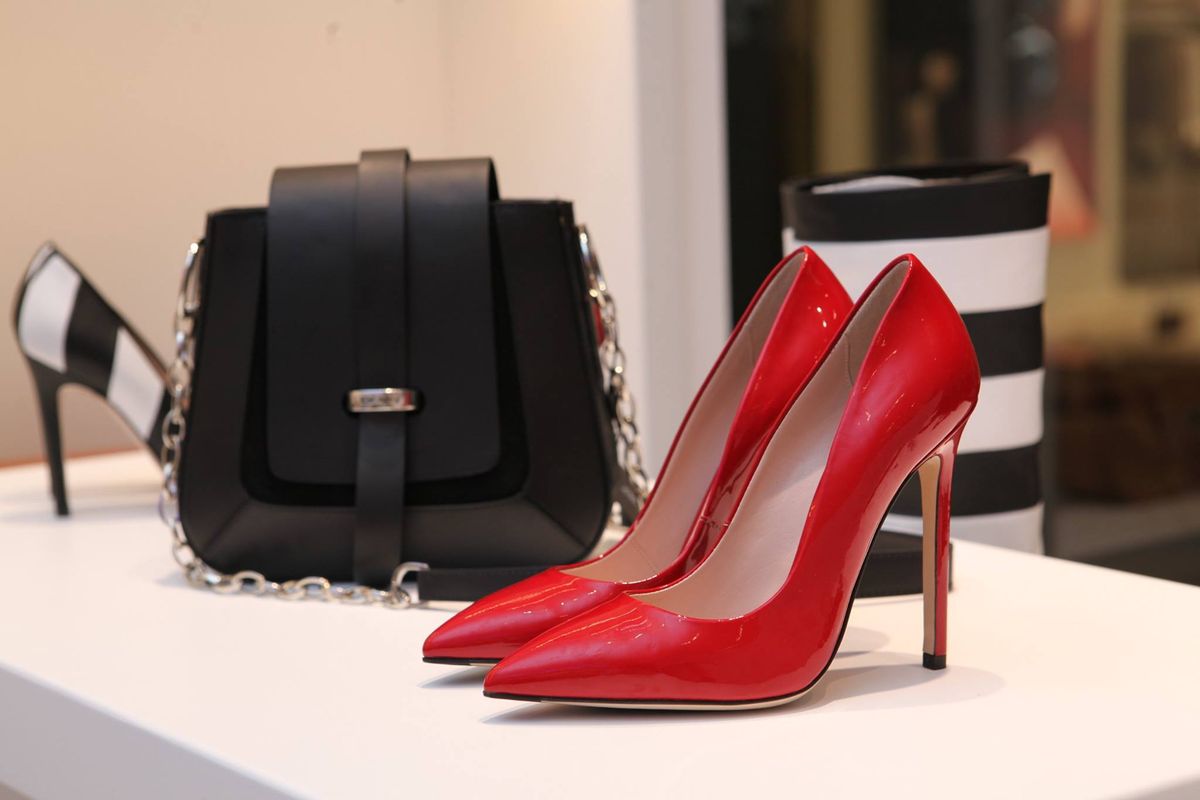
Some shapes can’t be graded upward well, and pretending otherwise wastes money. Three cases stand out.
Pointed toes. Above a size 16, a pointed toe puts the longest toes into a taper that wasn’t designed for that foot length. A stretch won’t fix it because the problem isn’t width, it’s the shape of the space.
Narrow straps across the instep. A 10mm strap that sits well on a 38 cuts into a larger foot, because the load per centimetre goes up even if the strap length is graded. Wider straps or a closed vamp are the answer.
Single-width lasts sold in long lengths. If a brand offers sizes 36 to 46 in one width, the largest sizes are effectively narrow. That’s fine for people with narrow feet and a problem for everyone else.
The honest version: if a brand’s size run stops at 42 and the largest size is already tight at the ball in a standard width, ordering the 43 won’t help. The last was never designed for that foot.
That’s not a reason to give up on the style. It’s a reason to look at brands that publish width measurements in millimetres, offer a genuine wide fitting, or build the upper with more give. Those three things exist, and they’re worth paying for over a discount on a pair that will sit unworn.
One more case worth knowing: a pair that fits in the shop can stop fitting after six months if the lining compresses unevenly. If your heel starts lifting in a shoe that used to be snug, check the lining at the back before you blame your feet. A worn lining is a €10 repair at a cobbler and a €120 replacement if you don’t notice.
Buying plan for the next pair
Start with measurements rather than a size number. Length plus 5mm for toe room, ball girth standing, both taken in the evening. Then compare those numbers against the centimetre chart, not the letter conversion.
If a listing gives you nothing but a size and a photo, treat it as a gamble and price that in. A pair with no width data and no footbed detail has maybe a 50% chance of fitting above a size 16, and that’s being generous. Spend your money where the spec sheet answers your questions.
Filter for a removable footbed, a heel under 40mm, and a toe box of at least 25mm. Check the weight if it’s listed. If the pair arrives and the length is right but the ball presses, that’s a last problem, so return it rather than trying to stretch it.
Keep one thing in mind while shopping: comfort shoes are usually bought for a specific reason, a long shift, a standing commute, a foot that’s been complaining for a month. Buy for that reason rather than for the occasion in the photograph. A pair that works for the 10,000-step day also works for the wedding. The sneaker-shaped comfort options are the place to compare if the heel has to come down entirely.
And if the size run stops before your size, that tells you something useful. A comparison of three shaft heights across one winter covers the same grading logic in boots, where the shaft adds a second place for the fit to go wrong.
Above a size 16, the useful question isn’t “does this run true to size”. It’s “was this last graded for a foot like mine”. Ask it before you pay, and the return pile gets smaller.
