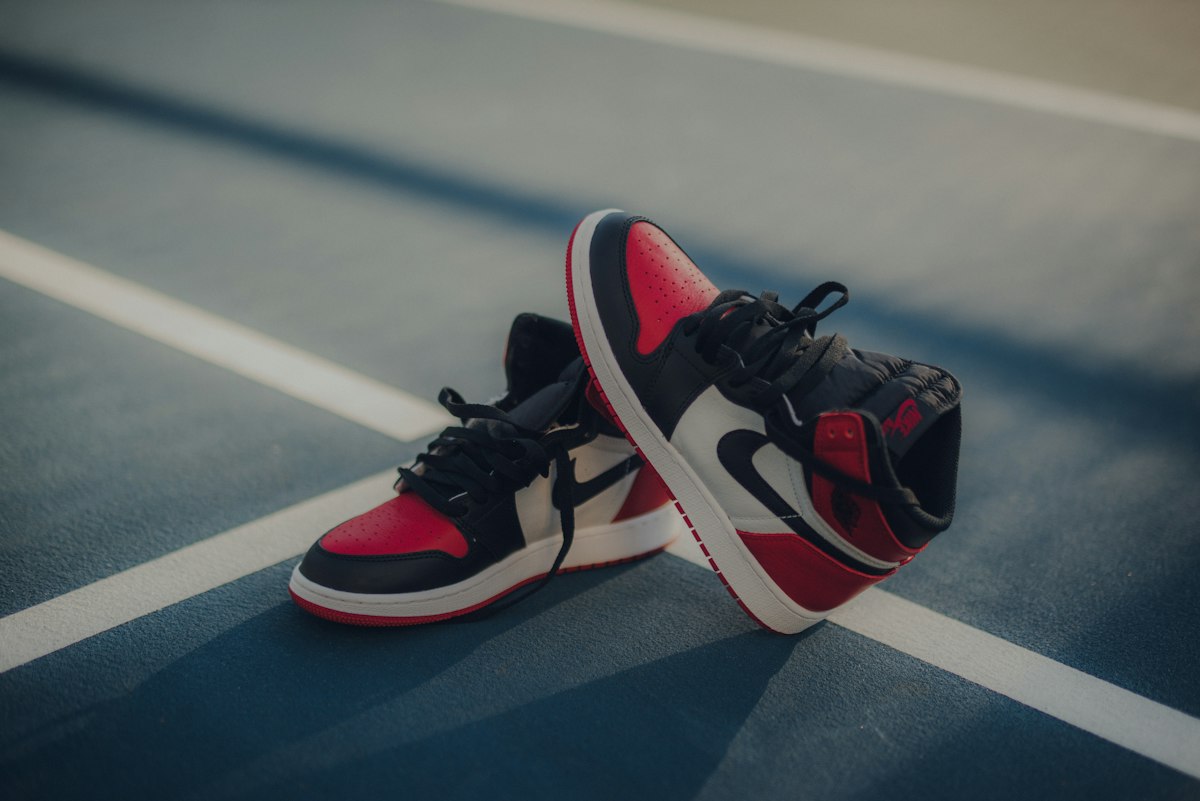
Two pairs of women’s black leather sneakers, side by side. One costs €62, one costs €178. Both are black, both are leather, both look almost identical in the listing photo. The cheaper pair will cost you more per wear, and the maths that proves it takes about ninety seconds.
Before you compare prices, get three numbers. Then the decision stops being about money and starts being about how many times you’ll actually put the shoes on.
Three numbers before you compare anything
Number one: the price, including what you’ll spend on top. A €62 pair usually needs a €12 heel grip and a €9 insole by month four. A €178 pair often needs nothing. The gap is smaller than it looks, and it narrows further if the cheaper pair gets replaced inside two years.
Number two: realistic wears per year. Not aspirational. Count the days you actually leave the house in sneakers, then take 60% of that. Most women overestimate by about half. If your week is four office days and one weekend, and you wear sneakers three of those, that’s roughly 150 wears a year. If you wear them twice a week, it’s 100.
And the third number is the replacement horizon, which is the one people skip. A coated-leather sneaker with a glued sole has a structural life of about 18 months of regular wear. A full-grain pair with a stitched or well-bonded sole runs three to four years, and can sometimes be resoled. Divide the price by the total wears over that whole life, not by the first year.
Do that and the comparison usually flips. €178 over 450 wears is 40 cents. €62 over 150 wears, plus a replacement pair at month 20, is 55 cents. The expensive shoe is cheaper, and it’s also the one you’ll still be wearing.
The catch: this only works if you actually wear them. Below about 40 wears a year, price per wear is a meaningless metric and you should buy the cheaper pair without guilt.
There’s also a floor to the calculation that nobody mentions. Resale. A full-grain pair in good condition still has some value after three years, often 20% of what you paid. A coated pair has none. If you’re the sort of person who sells on, that shifts the maths by another few cents a wear in favour of the better shoe, and it’s the one variable most buyers never think about.
What €60, €110 and €180 actually buy
Price bands in women’s black leather sneakers map to fairly predictable specifications, and knowing the map saves you from paying for things you can’t see. If you’re also weighing up how the pair reads with a coat rather than gym kit, the notes on black sneakers that don’t read as gym shoes are the other half of this decision.
- Around €60: corrected-grain or split leather upper, foam insole bonded in place, glued outsole, synthetic lining. Looks correct on day one. Creases into a pale web at the toe within four to six months.
- Around €110: top-grain leather, removable insole, better bonding, sometimes a leather lining at the collar. The value point in the category. Expect two to three years of regular wear.
- Around €180: full-grain leather, stitched or cemented construction done properly, leather lining throughout, replaceable footbed. The upper improves with age instead of degrading.
Two things don’t scale with price, and it’s worth calling them out because shops imply otherwise. Comfort on the first day is unpredictable at every price point, and a €180 pair can absolutely rub your heel in week one. Water resistance doesn’t scale either. A cheap coated leather is often more waterproof than an expensive full-grain one, simply because the coating blocks water that the open grain would absorb.
So if you walk to work in the rain and don’t want to think about it, the mid-price coated pair may genuinely be the better buy. That’s the sort of trade a cost-per-wear calculation won’t capture, and you should override the maths when the maths is answering the wrong question.
There’s a fourth band worth mentioning because it’s where most people accidentally end up: €140 to €150 on a designer-adjacent pair with a coated upper. You’re paying for the name and getting mid-range materials. Nothing wrong with buying a logo if you want the logo. Just don’t tell yourself it’s a durability purchase, because at that price the leather is usually the same coated hide you’d get for €80 without the branding.
One reliable signal in the listing: if the description bothers to name the tannery or the leather grade, the materials are probably worth the price. If it describes the shoe as premium leather with no further detail, assume coated and price it accordingly.
The leather question: what cracks, and when
Almost all the visible ageing on a black leather sneaker happens at three flex points: across the toe, along the side of the ball of the foot, and at the heel where the collar meets the quarter.
Corrected grain cracks because the surface is a polymer coating over a sanded hide. It has no grain structure to flex with, so it fails in a pattern that looks like a dried riverbed. The crack lines are usually lighter than the surrounding leather, which on a black shoe shows up more than you’d expect. There’s no repair for this. Once the coating goes, it goes.
Full-grain creases instead. The fibres compress and fold, and the fold lines darken slightly rather than lightening. Creases are the reason people say leather looks better with age, and it’s true specifically for this grade. On a black pair the creases are nearly invisible from standing height, which is another argument for full-grain if you care about how the shoe reads from three metres away.
Suede is the third option and behaves differently again: it scuffs rather than creases, and the nap recovers with a brush. If you’re hard on shoes and hate visible wear, black suede is the most forgiving surface in the category. It’s covered in more detail in what the hide grade changes on the foot.
One more thing worth knowing: how a hide is preserved affects how it ages. Vegetable tanning produces leather that darkens and patinas, while most modern chrome tanning produces a more colour-stable but stiffer result. The tanning process explains why two black leathers can feel like different materials at the same price.
Black specifically is the hardest colour to judge, because dyeing hides the grain differences that would be obvious in tan or brown. Two pairs can look identical on the shelf and be completely different materials. This is why the thumbnail test matters more on black than on any other colour: you can’t see the grain, so you have to feel it.
When resoling makes sense, and when it doesn’t
Resoling a sneaker costs €35 to €60 at a decent cobbler, which on a €60 shoe is absurd and on a €180 shoe is reasonable. The rule I use: resole only if the upper is worth more than the sole.
Check three things before you take a pair in. First, is the upper still structurally sound at the flex point, or is the leather about to split? Second, is the midsole foam still doing anything, or has it compressed flat? Third, is the lining intact at the heel? If the answer to any of those is no, a new sole won’t save the shoe.
Most sneakers can’t be resoled at all in the traditional sense, because the sole is bonded rather than stitched and the cobbler has to rebuild the bond. What they can usually do is fit a thin protective half-sole over the worn area for about €25. On a pair you love, that buys another year for the price of a lunch. On a pair you’re indifferent to, it’s money into a hole.
There’s a timing question here that catches people out. Repair is worth doing at the first sign of wear, not at the point where the sole is already through. Once water has been getting in at the toe for a month, the lasting board underneath is compromised and the repair becomes cosmetic. If you notice the tread at the heel going smooth, that’s the week to take them in.
A rotation helps more than any repair. Two pairs worn alternately each get a full day to dry out between wears, which roughly doubles the life of the foam insole compared with one pair worn every day. If you’re spending €178, spending it on one pair and wearing them daily is a worse plan than spending €110 twice and alternating. The maths is not intuitive, and it’s the one place where buying two mid-price pairs genuinely beats one expensive pair.
Drying them properly matters too, and most people get it wrong. Leather sneakers should dry at room temperature, stuffed with newspaper, away from a radiator. Heat dries the leather faster than the fibres can recover, which is how a pair ends up stiff and cracked at the flex point after one wet winter.
There’s a broader point buried in this. Footwear is a category where a lot of pairs are thrown away while the upper is still fine, purely because the sole wore through. Keeping one good pair going for four years instead of buying three cheap ones is the most effective thing an individual can do here, and it’s also the cheapest. The circular design approach to materials makes the same argument at industry scale.
Four buyers, four cost-per-wear outcomes
The same two shoes produce completely different numbers depending on who’s wearing them. Four realistic cases, using the €62 and €178 pairs above.
Case one, the commuter at 200 wears a year. Cheap pair: €62 plus €21 in inserts, replaced at month 20, total €145 over 400 wears. 36 cents. Expensive pair: €178 over 600 wears. 30 cents. Close, and the expensive pair wins on comfort in year three.
Weekend wearer, 45 wears a year. Cheap pair: €62 over 90 wears across two years, then they sit unworn. 69 cents. Expensive pair: €178 over 135 wears. €1.32. The cheap pair wins clearly, and buying the expensive one is a mistake dressed up as an investment.
For the one-pair woman at 280 wears a year, price per wear gets brutal. Cheap pair: €62, replaced every 14 months, so two pairs over three years is €145 for 840 wears. 17 cents. Expensive pair: €178 for the same 840 wears. 21 cents. Almost identical, and the deciding factor becomes comfort rather than arithmetic.
Rainy city, 150 wears a year. Coated cheap leather often outperforms full-grain here, because water beads instead of soaking. €62 for two years is 21 cents a wear. The €178 pair needs protector spray and still looks tired in the wet season. Buy the cheaper one and put the savings into socks.
Notice what the four cases have in common: at high wear counts the gap between cheap and expensive nearly disappears, and at low wear counts the cheap pair always wins. The expensive pair only justifies itself when you’re above roughly 150 wears a year and you care about how the upper ages.
That’s the honest boundary. Below it, the premium is a preference. Above it, it’s arithmetic.
The practical version: if you can’t honestly picture yourself wearing the pair more than twice a week, ignore everything above and buy the cheaper shoe you like. The expensive pair only earns its price in a wardrobe where the sneakers are doing real work, several days a week, for years. That’s a smaller group of people than the marketing suggests, and it’s fine to be outside it.
The three-check buying protocol
You’ve got the maths. Here’s the sequence that turns it into a decision in the shop or on the product page.
Grain at the toe. Press the leather near the toe cap with your thumbnail. If it springs back with a fine, irregular surface texture, it’s full-grain or top-grain. If it feels smooth and slightly plastic, and the surface looks uniform like a printed pattern, it’s coated. That single test predicts how the pair will look in month eight.
Insole, is it removable? Lift the corner. If it comes out, you can replace it for €15 when it flattens, which extends the usable life by roughly a third. If it’s glued down, the pair dies when the foam does, regardless of how good the upper is.
Sole bond at the toe and heel. Look for an even line with no glue visible and no gap, then flex the shoe gently at the ball. A bond that creaks or shows a white line under flex will separate within a year.
If all three pass and the fit is right, buy the pair. If two pass and the price is under €100, buy it and accept an 18-month life. If none pass, walk away regardless of the discount, because you’re paying for a shoe that will look tired before you’ve had your money’s worth.
One caveat on the protocol: it assumes the pair fits. A perfect full-grain upper on a shoe that’s 6mm too long is still a bad purchase, and fit problems are the most expensive thing in the whole calculation because they turn into pairs that never get worn. Try them at the end of the day, on a hard floor, with the socks you’d actually wear. If the heel lifts more than 5mm, stop there and don’t bother with the grain test.
And if you need one pair that handles the days a sneaker can’t, keep that separate rather than forcing a leather sneaker into formal rooms. A woven leather heel for the days a sneaker is too casual costs less than upgrading your sneakers by one price band and solves a different problem entirely.
The last thing worth saying: cost per wear is a tool for choosing, not a personality. If a pair makes you want to leave the house, that’s data too, and it doesn’t show up in any spreadsheet. The women who get the most out of their wardrobes aren’t the ones with the best arithmetic. They’re the ones who bought three pairs they genuinely like instead of nine they tolerate. The women’s black leather sneakers worth the money are the ones you reach for without thinking, and that’s usually a fit question wearing a price tag.
Start with one pair. Wear them for a month. Then you’ll know your real wear count, and every future decision gets easier. If you want one pair for the evenings without spending the difference on a second set of sneakers, a black heel with a bit of sparkle is the cheaper way to cover the same gap in a wardrobe.
And if the maths still feels like homework, use the shortcut: the pair you’d be happy to wear on a wet Tuesday in February, for the third day in a row, is the pair worth the money. Everything else is a spreadsheet pretending to be a decision.