

You order a pair of business casual dress shoes in your usual size, they arrive, and the left one presses on the outside of your foot at the widest point. The length is right. Heel is right. So you send them back and order the same size in another style, and that pair fits fine. Nothing about your foot changed between Tuesday and Friday.
In this trade, that’s the single most common return reason, and it has almost nothing to do with the size number. The number on the box tells you how long the last is. It tells you nothing about the girth at the ball of your foot, which is where most women’s dress shoes actually fail.
So before you compare business casual dress shoes for women by price or by how the toe looks in the photo, measure two things at home and check one number on the spec sheet. That’s the whole method. The rest of this is what each of those numbers means and where the charts quietly mislead you.
The number that decides fit isn’t the length
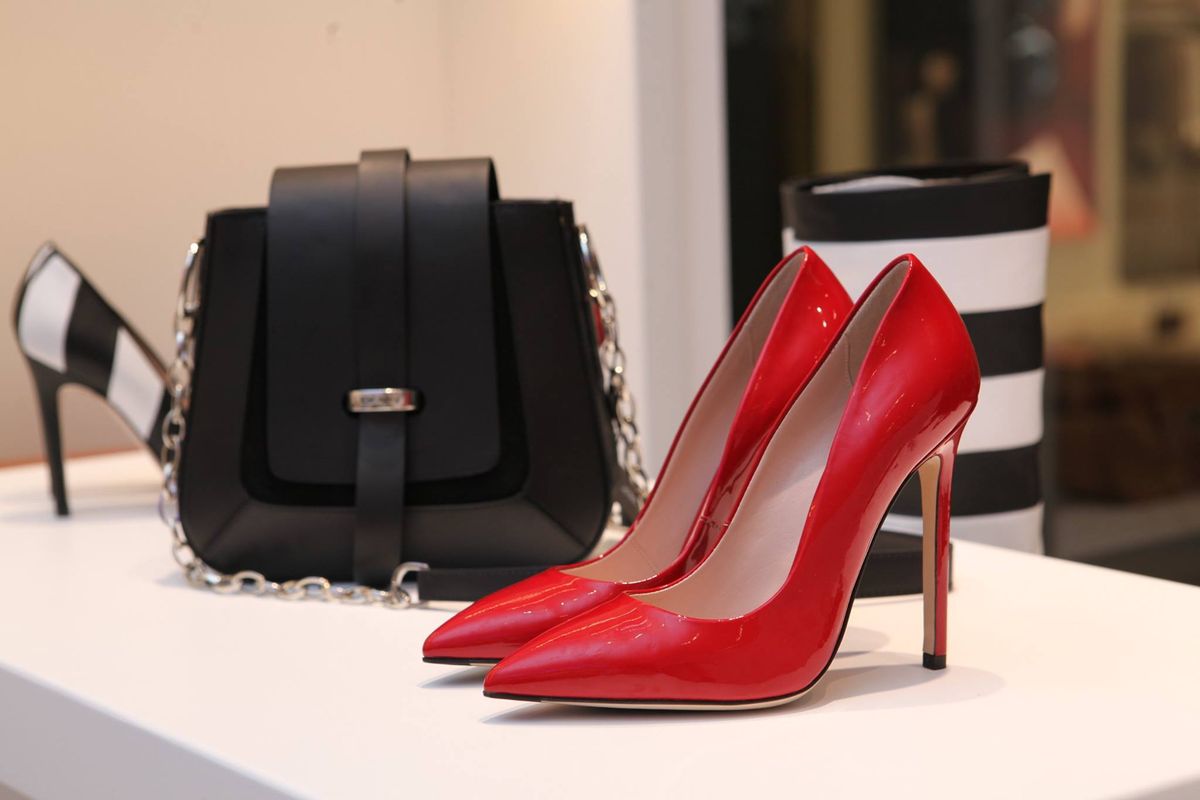
Foot length varies by maybe 6mm between two people who wear the same size. Ball girth varies by 12mm or more. That’s the measurement that decides whether a pair is wearable, and it’s the one almost never printed on a product page.
Here’s how the mismatch plays out. A last built for a narrow foot at size 38 might measure 232mm at the ball. A last built wider at the same size measures 244mm. Both are sold as 38. If your foot needs 240mm of girth, one pair will feel snug in the morning and unbearable by 3 p.m., and the other will fit from the first wear.
- Ball girth: the circumference around the widest part of your foot, at the joint of the big toe. This is the number to know.
- Length: heel to longest toe, usually 3mm to 8mm shorter than the last length.
- Instep: the height over the top of your foot. Decides whether straps and laces close cleanly.
- Heel width: the reason a pair slips at the back even when the length is right.
Two of those four get printed on charts. Guess which two.
With dress shoes the girth problem gets worse because the upper is structured. A sneaker in mesh forgives 4mm of extra width. A pointed pump in stiff calf doesn’t forgive anything, and suede forgives maybe 2mm before it starts to look stretched across the vamp.
If you only do one thing: wrap a tape measure around the ball of your foot while standing, weight on it, at the end of the day. Write the number down. It’s more useful than any size you’ve been buying for a decade.
One more thing worth knowing: girth doesn’t scale evenly with size. Moving up one size adds roughly 4mm of girth, while the foot it’s meant for often needs 2mm. That’s why sizing up helps some people and leaves others swimming, and why the width option exists at all.
Vanity sizing, and why your size moved without you
Women’s shoe sizes have drifted. A size 38 sold in 2026 is often a few millimetres longer and wider than the same label in 2016, because brands gradually relabel to flatter the customer’s self-image. It’s not a conspiracy. It’s a marketing decision made independently by a few hundred companies, and it means your old size is only valid for the brand you bought it from.
The practical fallout is that two pairs labelled 38 can differ by nearly a full size in real measurements. Across the ranges I’ve handled, the spread on the same nominal size is around 8mm in length and 10mm in girth. That’s enough to change whether you keep a pair.
Then there’s the EU/US/UK conversion mess. The EU system is based on Paris points and the UK system on barleycorns, and neither maps cleanly onto the other at half sizes. A US 7.5 is commonly listed as EU 38, but it’s also frequently listed as 37.5, and occasionally as 39 in shoes built on Asian lasts. The conversions are approximate by design.
One table, and treat it as a starting point rather than a truth:
- EU 36 ≈ US 5.5 to 6 ≈ UK 3.5
- EU 37 ≈ US 6.5 to 7 ≈ UK 4.5
- EU 38 ≈ US 7.5 ≈ UK 5
- EU 39 ≈ US 8 to 8.5 ≈ UK 6
- EU 40 ≈ US 9 ≈ UK 6.5 to 7
If you’re between two rows, go by the centimetre measurement on the chart, not by the conversion. And if the chart only gives a conversion and no centimetres, that’s a signal about how carefully the product was specified, which tells you something about the rest of the listing too.
Japanese sizes sidestep the whole problem by listing length in centimetres, which is why JIS numbers look so much smaller than EU ones. It’s the same foot. Only the label changed.
The 2cm that ruins an otherwise correct pair
There’s a measurement nobody lists, and it costs more returns than length and girth combined: the distance from the back of the heel to the point where the shoe starts to narrow toward the toe. Call it usable footbed length.
Two pairs can both be 245mm long overall. If one narrows at 170mm and the other at 190mm, your toes sit in completely different amounts of space. The first pair will feel short even though the measurement says it’s right, because your toes are being squeezed into the taper rather than resting on the flat.
For a pointed dress shoe, usable length matters more than total length. That’s why a pointed pump often needs half a size up compared to an almond one from the same maker, even though the charts are identical.
Heel placement is the other 2cm problem. On a 50mm heel, the heel block usually sits slightly forward of the back edge of the shoe, which is fine. On some 70mm and 80mm pairs the block sits further back to look slimmer, and the result is that your own heel bone hangs over the back edge. It looks fine in a photograph. It feels like standing on a step all day.
- Check where your heel bone sits, not where your ankle sits. It should be inside the shoe’s back edge.
- Press the top of the heel counter. If it folds easily, it won’t hold your foot.
- Walk ten steps on a hard floor. A slap sound means the heel is too wide or the counter too soft.
- Stand on one foot. If the shoe rolls outward, the last is too wide for you at the waist.
None of these tests take more than two minutes, and all of them catch problems that a size chart can’t show. The standards behind shoe sizing systems explain why the charts differ, but no standard forces a brand to publish girth.
Measuring at home in four steps
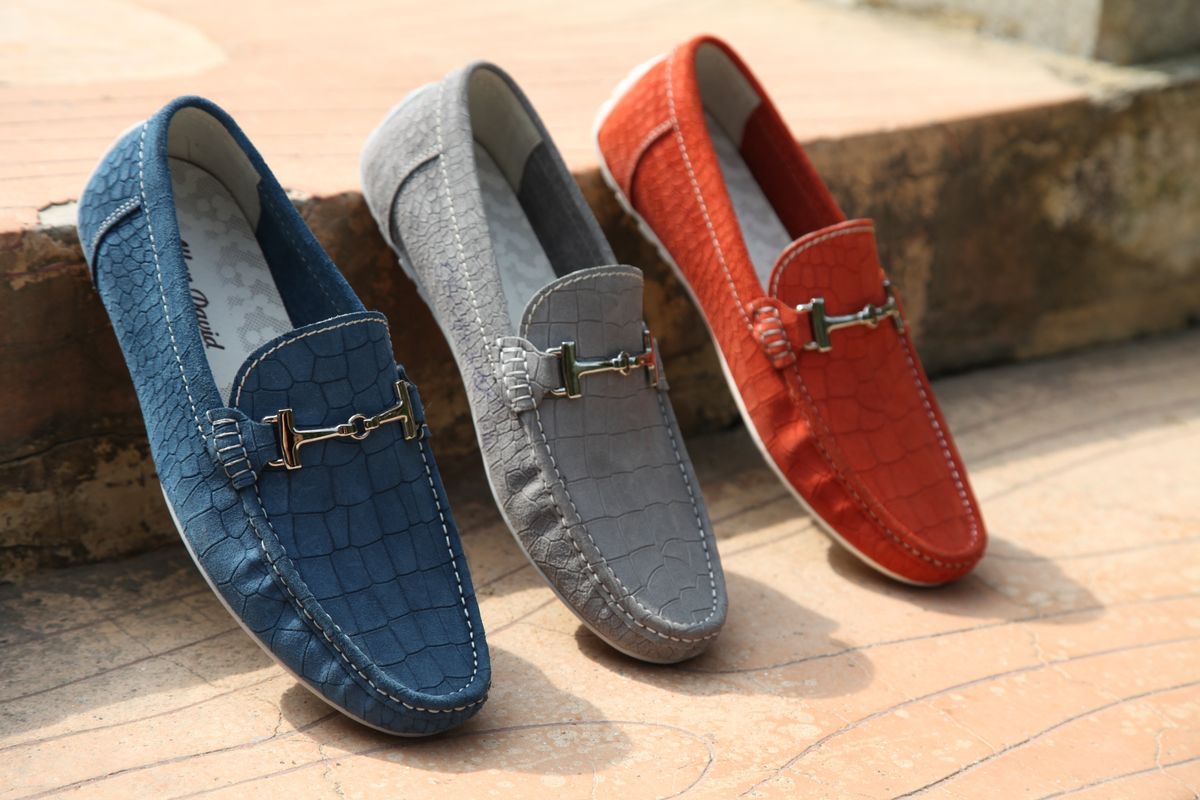
Do this once, in the evening, standing up. Feet are largest then, and that’s the measurement you want.
- Tape a sheet of A4 paper to the floor against a wall. Stand on it with your heel touching the wall.
- Mark the longest toe. Measure wall to mark. That’s your length, and add 5mm for toe room in a closed shoe.
- Wrap the tape around the ball of your foot, at the joint below the big toe, snug but not tight. That’s your girth.
- Measure the widest point across the ball from the floor line if you can. That’s your width in millimetres, which is more useful than a letter grade.
Write the three numbers on a note in your phone. Next time you’re comparing listings, you can sanity-check the centimetre chart in ten seconds instead of guessing from reviews.
Measure both feet. About 60% of people have one foot measurably larger, usually by 3mm to 6mm, and it’s usually the left. Buy for the larger foot and use a thin insole in the other shoe if the difference is annoying. Never buy for the smaller one and hope it stretches out.
If the widest point of your foot sits at a joint that’s already tender, a narrow last will make it worse rather than better. Pressure at the big toe joint is what drives most bunion pain, and shoe width is the part you can control without surgery.
For business casual specifically, add one more check: wear the sock or tight you’ll actually wear with them. A 40-denier tight adds about 1mm of girth. A cotton crew sock adds 3mm to 4mm. That’s the difference between a snug pair that works and one you resell in March.
If your two feet differ by more than 8mm, stop buying symmetrical pairs in your smaller size and start buying for the larger foot. A thin felt insole in the other shoe fixes the gap for a couple of pounds and saves you from a lifetime of pinched toes on one side. Most people never think to do it.
What a business casual dress shoe actually needs to be
Business casual is a wide band, and most of the shoes sold under that label sit at one end or the other. The ones that get worn weekly share a short spec list.
- Heel between 30mm and 50mm. Enough lift to look intentional, low enough that your weight stays over the middle of the foot.
- A heel base at least 22mm wide. Narrow bases look elegant and wobble on tile.
- Leather or suede lining. Synthetic lining holds heat and doesn’t mould.
- A rubber top piece on the heel. Bare plastic on a heel is loud and slick on polished floors.
- A stitched or well-cemented sole. Visible gaps at the toe edge mean water gets in.
The upper material matters less than people think, as long as it’s real. Corrected-grain leather looks smooth and uniform and creases badly within a month. Full-grain creases more honestly and lasts longer. Suede is the most forgiving across the instep because it gives slightly, which is why suede pairs often fit people who sit between two widths.
Where these shoes usually fail is the sole. A dress shoe with a 4mm leather sole and no rubber is a board under your foot after two hours of walking. If your day involves more than 3,000 steps, look for a rubber or rubber-and-leather sole, or plan to add a thin cushioned insole. Expect to go up half a size if you add one.
Also worth saying out loud, because most listings won’t: the difference between a comfortable pair and a painful one is often the 8mm of foam under the forefoot, not the heel height. You can’t see it in a photo. You can feel it in ten seconds by pressing your thumb into the footbed at the ball.
For a shape that keeps the heel low and the block wide, a low block heel designed for standing through a full work day is the profile to compare against when you’re reading spec sheets.
Ordering two sizes is cheaper than guessing once
Here’s the tactic I’d give anyone buying dress shoes online: order two sizes in the same style when you’re unsure, and pay for return shipping if you have to. Two pairs cost you one return label. Guessing costs you three weeks and a pair you resent.
The rule for which two: order your measured size and one size up, not one size down. Going down rarely fixes width, and it usually trades a girth problem for a length problem. If the size up feels long but correct in the width, that’s a solvable fit. If the size down feels wide but short, it isn’t.
Try them at the end of the day, indoors, for twenty minutes each. Keep the box and the tissue until you’ve decided. Then walk on carpet, not tile, because tile scuffs a leather sole and some retailers treat that as worn.
Timing matters too. Order at the start of a week if you can, and try them on the day after they arrive, when your feet are at their normal size rather than swollen from a flight or a long walk. Sounds fussy. It’s saved me more returns than any size chart.
One caveat on the two-size approach: it only works when both pairs are the same style. Two different styles in the same size will fit differently, and comparing them teaches you nothing about which size you need.
Keep a note of what you returned and why. After three orders you’ll see a pattern, usually that one brand runs a half size short or one last is narrow at the ball, and you can stop ordering two pairs entirely.
If you’re buying a pointed pair for the first time and you normally wear almond toes, expect a half size difference even from the same maker. A woven leather pair with a closed pointed toe shows how much the toe shape changes the usable length.
Returns, exchanges, and reading reviews properly
Reviews are the closest thing to a free fitting, but only if you filter them correctly. “True to size” from someone who wears the same brand in everything tells you nothing. Look for reviews that mention a measurement, a width, or a specific complaint.
The three review phrases that predict a return:
- “A bit narrow at the toe” — the taper starts too early, or the last is narrow. Size up or skip.
- “Slipped off my heel” — heel counter is too soft or the last is too wide at the back. Skip.
- “Fine for short wear” — the footbed has no forefoot cushioning. Fine if you sit all day, bad if you don’t.
And the phrase that predicts a keeper: “wore them for a full day at work with no issues.” That’s specific, testable, and hard to fake. Three reviews saying that are worth more than thirty saying “love them”.
On returns, check the policy before the price. Some retailers accept worn shoes within 30 days, some require the box, and some charge for the return label. A pair that costs €20 less but has a paid return and a 14-day window is the more expensive option if there’s a 50% chance you’ll send it back.
One more thing about sizing across materials: the same last in suede and in patent leather fits differently. Patent has no give, so it feels half a size smaller. Suede gives about 2mm across the vamp within a month. If you’re between sizes and choosing patent, take the larger one every time.
For a dressier option that keeps a low, stable heel, an embroidered pair on a modest heel sits in the same business casual band without asking your feet to do anything unusual.
What to check before the first wear
New dress shoes almost always need one adjustment, and it’s better to make it early. Ten minutes of preparation saves a fortnight of blisters.
Break them in on a day when you’re mostly sitting. Wear them for two hours indoors, then outside for twenty minutes. The heel counter will soften where it needs to. If you feel a hard edge at the top of the counter, a heel grip or a thin plaster prevents the blister that would otherwise form on day two.
Sole traction is the next thing. New leather soles are slick on polished stone, and office lobbies are polished stone. Scuff the sole lightly with sandpaper, or ask a cobbler to add a thin rubber pad before you wear them outside. It costs less than a fall.
Check the inside edge of the heel too. A seam that sits proud of the lining will rub through a tight within a month, and no amount of breaking in fixes a seam. Press your finger along it before the first wear.
Then check the fit again after a week. If a pair felt slightly wide on day one and feels loose on day seven, the leather has relaxed and you need a thin insole. If it felt tight and is still tight, it isn’t going to change. Ten wears is the honest cutoff. Past that, no shoe is going to become comfortable.
Finally, rotate. Two pairs worn alternately last roughly three times as long as one pair worn daily, because the lining gets 24 hours to dry out instead of 8. That’s the cheapest durability upgrade available, and it costs nothing but shelf space.
The short version, if you’re buying this week
Measure your ball girth at the end of the day. Note the number. Compare the centimetre chart on the listing to your length plus 5mm, and ignore the letter sizes entirely. If the chart has no centimetres, assume the listing is approximate and order two sizes.
Ignore the star rating until you’ve read the three-star reviews. Five-star reviews are written on day one, before the pair has been worn to a train station in the rain. Three-star reviews are written by people who wanted to keep them and couldn’t, which is exactly the information you need.
Then pick a heel between 30mm and 50mm with a base at least 22mm wide, a leather lining, and a rubber top piece. Try them at 6 p.m., not 9 a.m. Walk on carpet before you walk on tile.
And when the pair arrives and the length is right but the width pinches, don’t conclude that your feet are difficult. You bought the wrong last. Send it back and read the girth instead of the number.
If you’d rather compare shapes before you commit, the heel height groups on the site let you check what a 40mm and a 70mm last look like side by side. Start with the 40mm if this is your first pair in years. Your feet will tell you the rest.
