

You’ve got a 9am meeting, lunch with a client at 12:30, and a commute that involves two trains and about 600 metres of walking on each end. Your outfit is sorted. Your feet are the part you’re still not sure about.
That’s the gap most business casual advice ignores. It tells you what looks right in a mirror and skips the part where you’re standing in a lift at 4:40pm wondering if you can make it to the station without limping.
Comfortable business casual shoes for women are not a myth, but they’re rarer than the shop displays suggest. The pair that works is usually boring to look at, sensible in heel height, and bought with three specific measurements in mind. Get those right and you stop thinking about your feet by mid-morning.
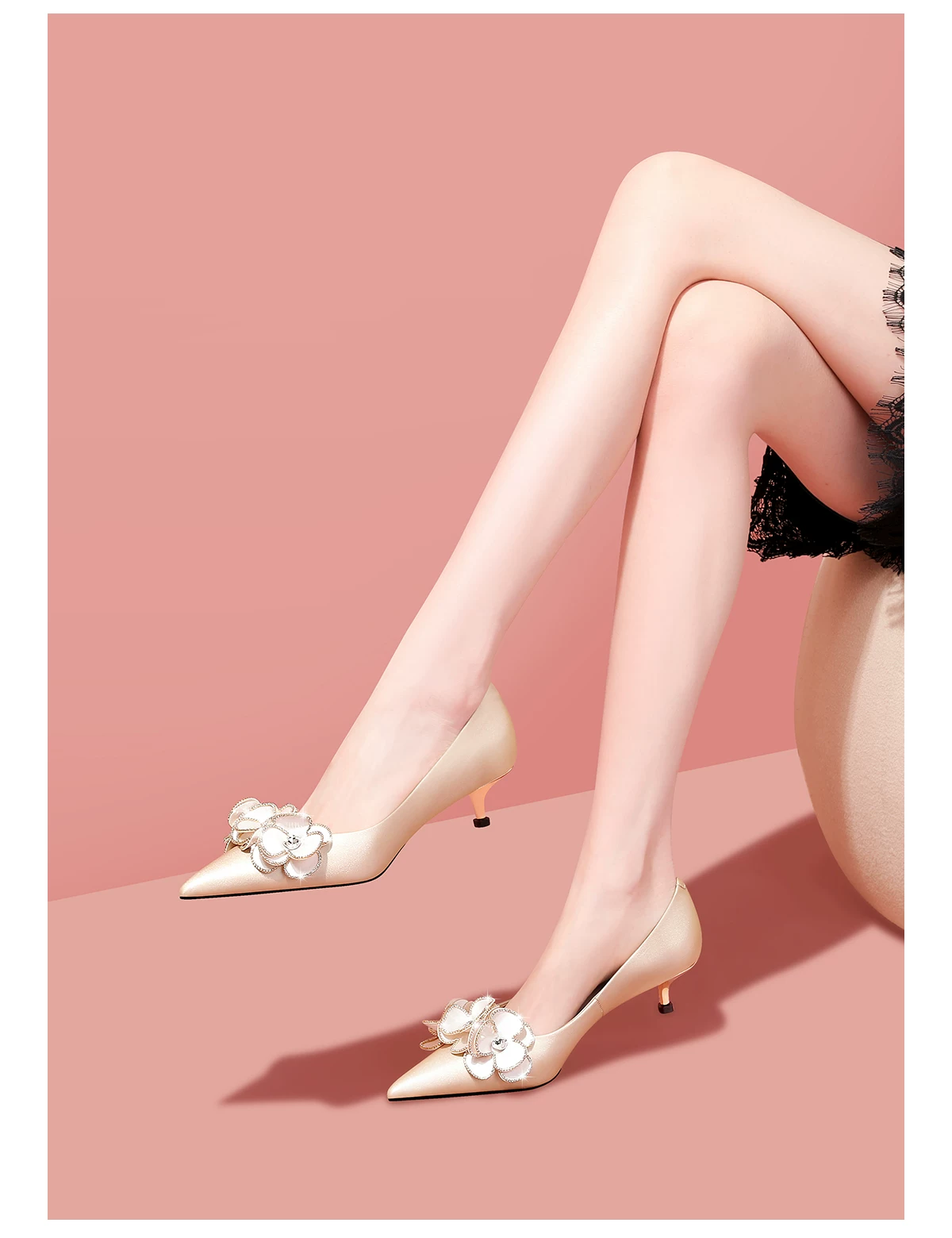
What business casual actually allows, in practice
Business casual has no fixed definition, and that’s the problem. The general description on Wikipedia puts it between formal business dress and streetwear, which covers everything from a blazer with jeans to a knit dress with loafers. Your office will have its own unwritten version.
Look around at what the people two levels above you wear. That’s your real dress code, not the HR handbook. If the finance director wears white trainers with tailored trousers, you have room. If she wears pointed flats, copy the flats.
For shoes specifically, most offices accept a closed toe in leather, suede, or a knit upper, in a colour that isn’t a novelty. Heel height is usually free from zero to around 70mm, and the higher end only survives if you actually sit down most of the day.
What gets commented on, in my experience, isn’t height. It’s noise. A hard sole that clicks on a wooden floor announces you ten seconds before you arrive, and in an open-plan office that gets old fast.
Two rules keep you safe in almost any office:
- Closed toe, always, unless it’s clearly summer and everyone else is in sandals
- One visible material, so leather with leather, suede with suede
- A sole you can walk 15 minutes in without thinking about it
- No colour brighter than your bag
That’s it. Everything else is personal taste, and personal taste is where most people get caught out by buying something beautiful and unwearable.
Three pairs cover about 90% of office days
If you’re rebuilding from scratch, don’t buy seven pairs. Buy three and wear them to death.
The first pair is a low block heel in black or dark brown, something in the 40mm to 50mm range with a toe box wide enough for your little toe to lie flat. These handle meetings, client lunches, and any day with a skirt or tailored trousers. Mine get worn about three days out of five between October and March, and the leather has stretched just enough to be comfortable without losing shape.
Number two: a pointed or almond flat. Not a ballet flat with a paper sole. A structured flat with a firm heel counter, because a flimsy back is what makes flats slip and rub. These are your commute shoes, and they should survive a wet pavement on the way in without your socks going through.
Then something with grip. A loafer, a low wedge, a chunky sole. This is the pair for rainy days, for when you’re on your feet at a site visit, or for travelling when you want one shoe that works with everything in the bag.
Notice what’s missing. No stilettos, no mules, no backless anything. Those are fine shoes. They’re just not the ones you’ll reach for on a Tuesday in November when you have four meetings and a train to catch.
If you only buy one pair this month, buy the block heel. If you already own it, buy the structured flat, because that’s the pair that quietly saves your arches on the days you walk 8,000 steps without planning to.
You can see the shape I mean in this pair of leather office heels built for full-day commuting. Low, closed, and dull in the way that actually helps.
45mm is where most people stop noticing the heel
Heel height is the single number that decides whether a shoe is a work shoe or an event shoe. Measured from the back of the heel, not the front platform.
At 20mm to 30mm, you’re basically in a flat with a lift, and your calf doesn’t work any harder. At 45mm, most women can stand for two hours without shifting weight constantly. At 70mm, you’re fine sitting, and you’ll feel it after 40 minutes of standing. At 90mm and above, you’re choosing the shoe over the day.
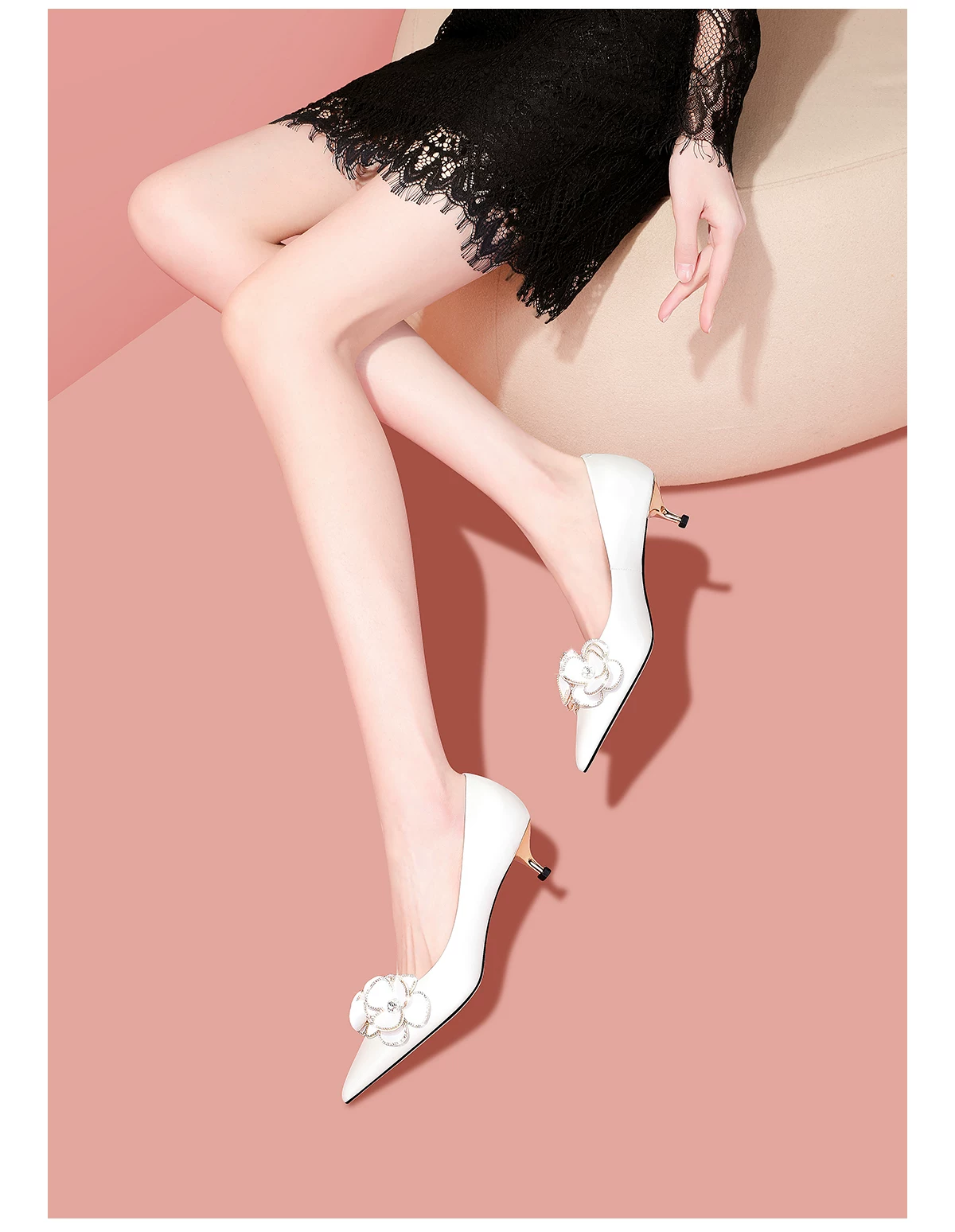
One thing people miss: heel height isn’t the only number that matters. The pitch, meaning the difference between the heel and the toe, changes how much your toes get crushed. A 60mm heel with a 10mm hidden platform feels closer to 50mm, because your foot isn’t angled as steeply.
Then there’s the heel width. A 45mm stiletto puts all your weight through a contact patch smaller than a fingernail. A 45mm block spreads it over something closer to a coin. Same height, completely different eight hours.
If you have plantar fasciitis or a history of it, the Mayo Clinic’s overview of plantar fasciitis is blunt about what aggravates it: thin soles, hard surfaces, and long stretches of standing without support. An office job hits all three.
So a 45mm block heel with a cushioned insole and a sole you can’t fold in half is not a compromise. It’s the correct choice for the job you’re actually doing.
Why your comfortable pair still hurts by 3pm
Almost every pair of shoes feels fine for the first hour. The shop floor is carpeted, you’ve just had coffee, and your feet haven’t swollen yet. Then the day happens.
Feet expand through the day, especially in warm offices or after a salty lunch. A shoe that fit at 8:30am can be tight at 3pm, and the place it shows up first is the little toe and the top of the foot where the vamp sits.
Three things cause most of the pain:
- A toe box that’s 5mm too narrow, which you only notice after hour five
- A heel counter that’s too stiff, which rubs the Achilles
- A sole with no flex at the ball of the foot, so your toes do the work
Here’s the part that annoys me. Price doesn’t predict which of these you’ll get. I’ve had a £180 pair of leather pumps cut into my heel for six weeks, and a £55 pair from a chain that I wore straight out of the box for a nine-hour day with no issues.
The expensive pair had a seam exactly where my heel bone sits. Nothing about the price told me that. Only the shape of my own foot did.
So try shoes at the end of the day when your feet are at their largest, and try them with the socks or tights you’ll actually wear. Barefoot in a shop at 10am is the least useful test there is.
Leather, suede, or knit: how each survives nine hours
The upper decides how the shoe ages, and it also decides how much it gives you on day one.
Leather is the safest bet for office wear. It softens where your foot pushes, keeps its shape, and wipes clean. Full-grain and top-grain hold up better than corrected grain, which has a plastic coating that cracks at the flex point within a couple of seasons. Look for a leather upper with a lining that’s also leather or a breathable textile, because a synthetic lining turns into a sauna by noon.
Suede is softer from the first wear and looks more expensive than it costs. It’s also the one that suffers most in rain, and it will show every scuff from a train seat. A protective spray helps, but it doesn’t make suede waterproof, whatever the tin says.
Knit and mesh uppers are the most comfortable on day one and the least supportive over a year. They breathe well in a hot office, and they collapse around the heel faster than anything else. If your office is air-conditioned and you walk a lot, they’re a reasonable summer pick.
For most women in a four-season climate, leather for the main pair, suede for the second, knit only if you run hot.
Tanning and finishing matter more than most shoppers realise. The OEKO-TEX standard for leather and textile safety is the label to look for if you react to chrome-tanned leather or have sensitive skin on the top of your feet.
The 40-second fit check that saves a return
You can judge a business casual shoe faster than the shop assistant can fetch another size. Do this in order.
First, stand up and press your thumb into the leather above your big toe. It should give about 3mm without your toe pressing back. Less than that and you’ll feel it by lunchtime.
Now walk ten steps on a hard floor, not carpet. Listen for your heel lifting out of the back of the shoe. That slip is what causes blisters, and no amount of breaking in fixes a shoe that’s half a size too long.
Third test: stand on tiptoe. If your heel comes out of the shoe entirely, the last is too shallow for your foot. Try a different style rather than a different size.
Last check, the width at the ball of your foot. Your foot should feel held, not squeezed. If the sides bulge over the sole edge when you stand, the shoe is too narrow and going up a size will only make it too long.
Do all four and you’ll have filtered out most of the pairs that would have ended up in a returns bag three weeks later. It takes less time than queueing for a fitting room.
If you’re between sizes, go up and add a thin insole. That’s easier to fix than a shoe that’s too short, and it buys you a few millimetres of width as well.
Wide feet in a narrow last is the most common mismatch I see. If that’s you, a commuting heel with a roomier toe box will do more for your day than any insole.
What to spend on, and what to skip
Spend on the sole and the lining. Skip the embellishments.
A stitched or cemented rubber sole with a bit of tread will outlast a smooth leather sole by years in an office job, because most of your walking happens on pavement, not carpet. A leather lining moulds to your foot and manages moisture. Both are worth paying for.
Buckles, chains, contrast stitching, and decorative cut-outs are where money disappears without improving your day. They also date faster than the shape of the shoe, which is why the plain pair from four years ago still looks fine and the embellished pair looks like 2021.
One more thing worth saying: don’t buy three pairs in one go and hope one works. Buy one, wear it for two weeks of real days, then decide. The pair that survives that test tells you what your foot actually needs, and the next purchase gets much easier.
If you want to compare shapes before you commit, browsing the main shoe categories side by side is a faster way to see the difference between a 45mm block and a 45mm cone than any description. And if your feet have specific support needs, this piece on dress shoes for flat feet that don’t look orthopedic is worth ten minutes before you spend anything.
For the days when the dress code slips towards jeans, this guide to casual work shoes that survive a nine-hour office day covers the softer end of the same problem.
Start with the boring pair. Wear it for a fortnight. Then you’ll know whether your next purchase is a half size wider, 10mm lower, or exactly the same again.
