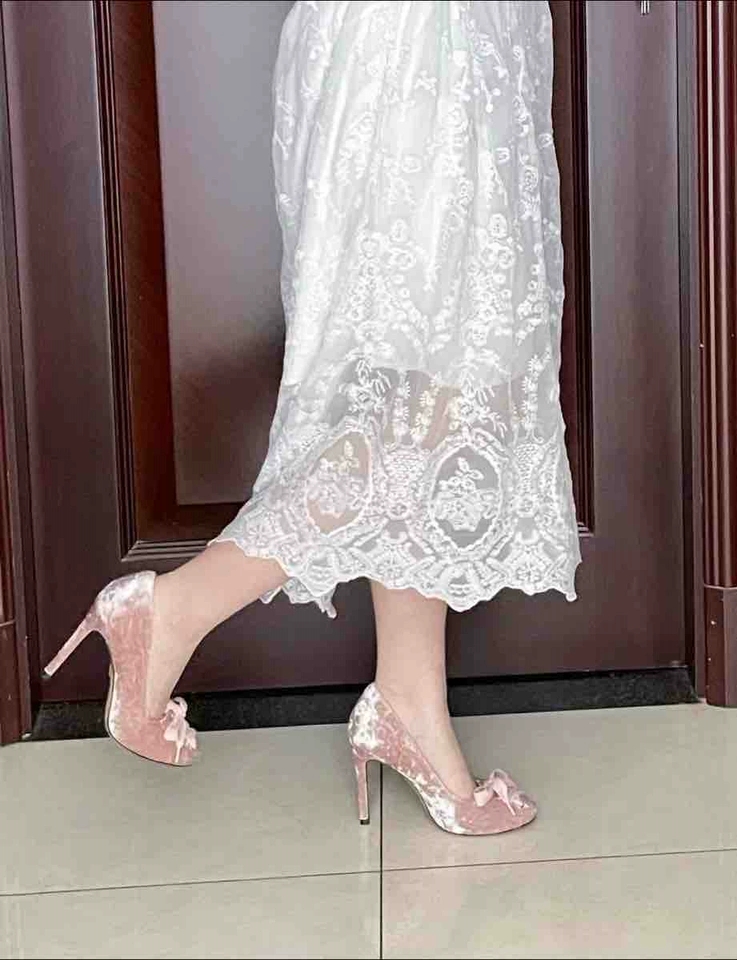
The pair by your front door has a crease across the vamp that no polish will lift. You bought them two winters ago because they slipped on in one motion at 7:45 in the morning, and that was the entire argument for them. Now the leather has gone soft in a way that feels closer to cloth than hide, and the heel counter has started to lean inward.
So you’re doing the math again. A new pair runs somewhere between 90 and 260 dollars. A used pair in decent shape runs 30 to 70. Vintage, if you know what you’re looking at, can cost less than both and outlast them. This is where leather slip on shoes for women split into three completely different purchases that happen to look identical in a listing photo.
I’ve bought all three kinds, in that order, and one of them was a mistake. The cheap new pair lasted eight months. The 40-dollar resale pair is on its fourth year. The vintage pair I almost skipped is the one I reach for on wet days. What follows is what actually separates them, with the case for buying new spelled out properly at the end, because it isn’t always the wrong call.
One rule before anything else: judge the shoe by the inside and the sole, never by the upper in a photo. The upper is the part that photographs well. The inside is where the truth about the previous owner lives.
What a new pair gives you in the first month
New leather is a known quantity. You get the full thickness of the hide, an insole nobody else’s foot has compressed, and a lining that hasn’t absorbed a stranger’s sweat. That last point sounds squeamish until you’ve pulled a used insole out and found the imprint of somebody else’s toes pressed into the foam.
The first month is also when you learn what the tannery did to the hide. Full-grain leather, the top layer with the grain still intact, creases in fine parallel lines and recovers when you flex it. Corrected-grain leather, which is sanded down and stamped to hide scars, creases in bigger folds and tends to crack along them by month fourteen. You cannot tell the two apart in a listing photo, and most sellers don’t know which one they’re holding.
Here’s the test, and it takes four seconds. Press a thumbnail into the vamp. Full grain pushes back with a little resistance and the mark fades within a minute. Corrected grain takes the dent and keeps it. The leather processing methods described by Britannica explain why the difference sits at the surface layer rather than in the dye.
New also means you own the break-in period, and that’s a cost rather than a perk. Stiff leather slip-ons rub the top of your heel for the first week. If the opening is cut tight, the tendon above your arch will complain by day three. You’ll be tempted to soften them with a hairdryer. Don’t. Heat relaxes the fibre and the shoe never comes back to its original shape.
What new leather cannot fix is a last that doesn’t match your foot. If the widest part of your foot lands behind the widest part of the shoe, no amount of wearing will move the leather there. The upper stretches where your toes push and stays tight where your metatarsals sit, which is how people end up with a pair that’s loose at the toe and pinching across the ball.
Where second-hand leather genuinely wins
Broken-in leather is a different material from new leather. The fibres have already flexed along lines close to the ones your foot will flex on, the insole has taken a shape, and the edges have softened. A pair worn for one season by someone with a similar foot feels like a shoe you’ve owned for two years on the day you get it home.
There’s a second advantage that matters more than comfort. Older leather was often better leather. Hides processed before the 2000s leaned less on heavy finishing and more on the actual grain, which is why a fifteen-year-old pair of slip-ons can look better than something made last spring. Leather as a material is a collagen network, and collagen that hasn’t been over-sanded holds up to repeated flexing in a way corrected grain simply doesn’t.
Patina is the third thing, and it’s the one you can’t buy new at any price. Brown leather goes darker at the flex point and lighter where the shoe bends against your ankle. That gradient takes years. It’s also why a 40-dollar resale pair can pass for something four times the price across a dinner table, which is a slightly vain reason to buy used but an honest one.
The catch is that second-hand leather has already spent part of its life. The sole may be sixty percent gone. The heel may be worn on the outside edge, which tells you something about how the previous owner walked and predicts how the shoe will feel on yours. You’re buying the remainder, and the price should reflect the remainder.
Which brings up the thing nobody says out loud about leather slip on shoes for women bought second-hand: the insole has a stranger’s foot shape pressed into it. Sometimes that’s an advantage. Often it means the arch support now sits a centimetre off from where yours wants to be.
Where you shop changes the odds more than any filter. Estate sales and house clearances are the best source, because the shoes come from one household, get photographed badly, and get priced by someone who wants the table cleared by Sunday. Resale apps are the worst for leather specifically, since the listings that survive are the ones with flattering light and a seller who has learned the right words. Vintage shops sit in the middle: higher prices, but someone has already rejected the pairs with collapsed counters. If you’re hunting a specific brown, search the colour plus the word vintage rather than the brand, because brand searches pull in every reseller using the same keywords.
Four checks before you pay for a used pair
Run these in order. Any of them failing is a walk-away rather than a negotiation, because the repairs cost more than the shoe.
- Sole wear at the heel. Turn the shoe over first, before you look at the upper. Wear concentrated on one outer corner means the previous owner supinated, and the shoe will roll you outward too.
- Vamp creases. Fine parallel lines are normal and mean the leather is alive. Deep cracks that open when you flex the shoe by hand mean the finish is failing and it will flake within a year.
- Inside the heel counter. Push your thumb into the back of the shoe from inside. If the stiffener has collapsed, the shoe will slide off your heel with every step, and no cobbler fixes that cheaply.
- Smell, then stitching. Musty is fixable with air and cedar. Chemical or vinegar smells usually mean mould was treated rather than removed. Then check the welt stitching for gaps, which is where water gets in.
There’s a fifth check that isn’t on the list because it’s a judgment call rather than a test. Ask what the seller wore them with. A pair worn barefoot through three summers has a footbed you cannot bring back to neutral. A pair worn with socks is a different object entirely and worth more.
Online, ask for one photo of the insole taken at a low angle with light across it. Sellers photograph the outside because the outside is flattering. The insole is where the wear pattern shows, and a seller who won’t send that photo has told you something useful.
What the numbers look like: new, resale, vintage
Take a plain brown leather slip-on, the kind that works with jeans on Saturday and trousers on Tuesday. Three real numbers, all from pairs I’ve owned.
New, 180 dollars. Worn three times a week for two years works out to roughly 300 wears, or sixty cents a wear. With a resole at year three, a realistic lifespan is five to seven years.
Resale, 45 dollars. Same model, one previous owner, sole at seventy percent. If it lasts three years at the same frequency, that’s eighteen cents a wear. Add thirty-five dollars for a resole and a heel cap and you’re still under a third of the new price.
Vintage, 25 to 60 dollars. Higher variance here. Some pairs are dead on arrival, with dried leather that cracks at the flex point within a month. Others are full-grain shoes from an era when the lining was leather instead of a bonded synthetic, and those genuinely outlast new stock. You’re paying for your own ability to judge, which is why the price stays low.
The break-even lands around month eight. Before that, the new pair is cheaper per wear because you’re not paying for repairs. After that, the used pair wins on almost every line and the gap widens every year you keep them.
What the arithmetic misses is that a used pair you actually like gets worn more often, which pushes cost per wear down further. Cheap shoes you resent sit in the closet and cost exactly the same as expensive ones you don’t.
Budget for repairs properly and the gap gets wider still. A full resole on a leather slip-on runs 45 to 70 dollars at an independent cobbler, and a heel cap is 12 to 20. That sounds like a lot against a 45-dollar shoe until you compare it to replacing a 180-dollar pair every two years. The one repair that never pays is re-lining a bonded interior, which usually costs more than the shoe is worth and comes back stiff.
The lining question most listings don’t answer
Look at the inside of the shoe before anything else, even before the price. An unlined leather slip-on breathes and moulds to your foot within a week. It also stains your bare foot brown for the first month, which surprises people.
A leather-lined pair is cooler against the skin and holds its shape longer. It’s also heavier, by roughly forty grams a shoe, which you’ll notice if you’re on your feet all day.
Then there’s the bonded lining, a fabric or synthetic sheet glued to the inside. It’s cheap, it’s smooth, and it doesn’t breathe. In summer your foot slides forward against it, which is why so many slip-ons collect heel-slipping complaints in July from people who bought them in November.
For leather slip on shoes for women worn without socks, lining is the single biggest comfort variable and almost nobody mentions it in a review. Ask before you buy. A seller who can’t tell you is a seller who hasn’t looked inside their own shoe.
Fit is the thing resale can’t fix
Every other variable can be worked around. Fit can’t. A used shoe has already stretched into somebody else’s foot, and the areas that stretched are the areas that will be loose on you.
If you’re between a regular and a wide, a used regular-width pair will usually feel more comfortable than a new regular-width pair, because the leather has already given at the ball. That’s the opposite of what most people expect, and it’s the one place where resale quietly beats new.
Narrow feet are the harder case. A shoe stretched by a wider foot will never come back in, and heel grips only solve the symptom. Check the width at the ball by measuring the insole across its widest point and comparing it to your own foot on a piece of paper at the end of the day, when your feet are at their largest.
Length is easier. Leather slip-ons shouldn’t have more than about 8mm of space past your longest toe, because there’s no lacing to hold your foot back and you’ll walk out of them on stairs.
Do the measuring at the end of the day, standing, with your weight on the foot you’re measuring. Feet spread by two to four millimetres under load, and a shoe that fits sitting down is a shoe that pinches at 6pm. Trace both feet, because almost nobody is symmetrical, and buy for the larger one. It sounds obvious written down. It’s the mistake I made three times before I started tracing.
When new is the only sensible call
Any fungal history, an open blister, or a compromised immune system means buy new. The savings aren’t worth the risk, and this is the one place where I’d stop arguing about cost per wear.
Need a specific width? New again. Resale inventory is whatever happens to exist in your size that week, and you can’t order a used shoe in a wide fitting. The same goes for anyone who needs a removable insole for orthotics, since used footbeds are already shaped around somebody else’s arch.
There’s also a timing argument. If the shoe is for a wedding, a funeral, or an interview inside the next ten days, buy new. You don’t have time to hunt, inspect, and post back a bad pair, and a return window you can’t use isn’t a return window.
And buy new when the price gap is small. At 120 dollars new against 90 dollars used with a worn sole, the used pair is the worse deal. Resale only wins when the discount covers the life you’re giving up, which usually means a discount above fifty percent.
Five days to break in a stiff new pair
Day one, twenty minutes indoors with thin socks. Not an hour. Twenty minutes warms the leather and is short enough that a hot spot doesn’t turn into a blister.
On day two, put them on straight after a shower when your feet are still slightly damp and the leather is warm from the room. Walk to the end of the street and back. The leather takes a set along your flex lines while it’s soft, and that set is what makes week two bearable.
Day three is when a heel grip earns its keep if the counter is still biting. Wear them for a two-hour stretch that includes stairs, because stairs are the real test for a slip-on: the shoe has nothing holding it on except fit.
Condition the leather on day four with a neutral cream, wait twenty minutes, then buff. This is also the day to check the sole edges for separation, which shows up early on cheaper construction.
Day five, a full workday with a plaster in your bag. If it still hurts at the heel by evening, the last doesn’t match your foot and further wearing won’t fix it. Return them while you still can.
If you’d rather skip most of that, the genuine leather shallow-vamp pumps are cut with a lower opening, which is the part that rubs. For a softer upper that gives sooner, the suede retro slip-on styles break in inside a week, though they show water marks badly. The rest of the women’s shoes collection is grouped by heel type if you want to compare shapes side by side.
Two more reads if you’re still deciding: what the tannery decides about brown leather, and the 6mm that decides whether you can walk in a pointed toe.
Where that leaves you: if there’s a cobbler within walking distance and you have the patience to run four checks, buy used and put the savings into a resole. If you need the shoe this week, or your feet are still recovering from something, buy new and spend the difference on a leather insole. The worst outcome is the middle path, a cheap new pair with a bonded lining that never got comfortable and gave up at month nine.