

You order the black and gold tennis shoes in your usual size. They arrive, you lace them up, and something is off. The length is fine. The toe feels like it’s pressing down on you, and the gold trim that looked sharp in the photo now looks like it’s straining.
Welcome to grading. Above a size 16, most women’s sneakers aren’t the same shoe scaled up. They’re a different pattern, cut from a different set of measurements, and nobody warns you before checkout.
Here’s what actually changes, and how to buy around it.
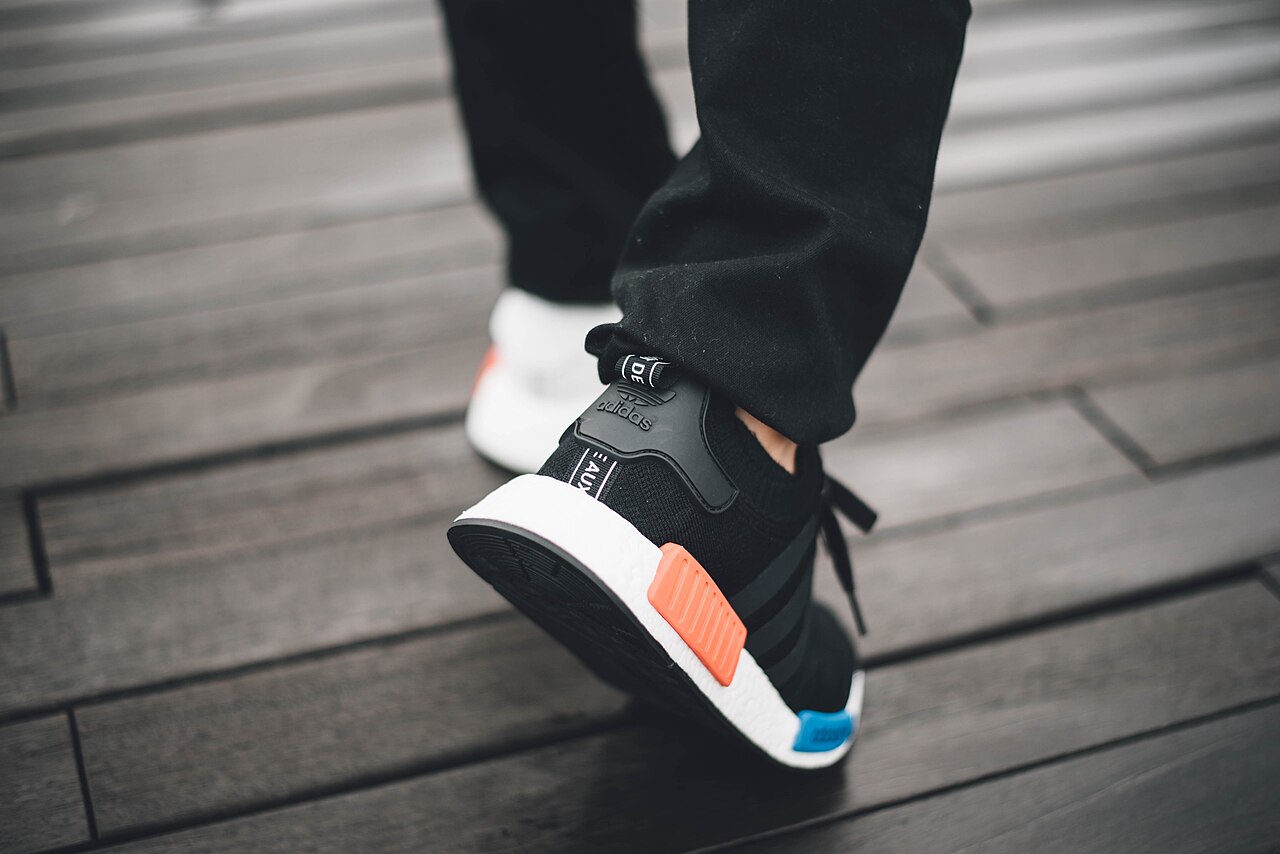
The 38 to 42 jump: what grading actually does
A shoe isn’t enlarged like a photo. Each size is cut from a pattern that gets adjusted by small increments, roughly 8mm of length and about 6mm of girth per full size. That sounds tidy. In practice, brands set a “base size” and grade up and down from it, and the further you get from that base, the more the proportions drift.
Most women’s sneaker patterns are graded from a base around a 37 or 38. By the time the same style is cut in a 42 or 43, several things have quietly happened:
- The toe box gets longer but often not taller. Length is graded generously, height is often held or increased by less.
- The ball of the foot widens less than the foot does. Real feet widen more per size than patterns usually do.
- The ankle collar stays roughly the same. Which is why a higher-volume foot gets a biting top edge.
- Gold hardware doesn’t scale at all. Eyelets and trim stay the same size while the shoe grows, so the proportions read differently.
None of this means the shoe is badly made. It means you have to check four specific things instead of assuming your usual size will behave.
This is also why return rates climb at the top of the size range. Buyers order their usual size, the length is right, the width isn’t, and they blame their own feet. In my experience the pattern is the problem more often than the foot is. A style that fits beautifully in a 38 can be genuinely uncomfortable in a 43 without a single material being different.
One more wrinkle: brands sometimes use a second, larger base size and grade down from it. Those styles fit the top of the range better and the bottom worse. You can’t tell from the product page. You can tell by trying the same style in two sizes and noticing which direction feels more thought through.
Measure width before you measure length
Most women know their length in one brand and their width in none. That’s the gap that bites above a size 16, because at that end of the range width varies more between brands than length does.
Stand on a piece of paper, weight on both feet, and trace the widest part of your forefoot. Measure across the ball, from the joint of the big toe to the joint of the little toe. That number, in millimetres, is the one worth carrying in your phone.
Then compare it to the insole width, not the outsole. A black and gold tennis shoe with a chunky sole can measure 110mm outside and 95mm inside, because the midsole wraps up around the upper. Ask for the insole measurement, or check the removable insole if the pair has one.
One practical shortcut: if a brand sells the same style in a wide fit, that wide version is usually graded from a different base pattern rather than just stretched. That’s a better bet than sizing up in the standard width, where you gain length you don’t need and very little room where you do.
Do the trace twice, once in the morning and once after a walk. The difference is your swelling range, and buying to the afternoon number is almost always correct. If the two traces differ by more than 5mm across the ball, size to the larger one and add a thin insole for the mornings.
Sock choice changes the measurement more than people admit. A cotton trainer sock is about 2mm of thickness, a wool hiking sock is closer to 5mm. Test in the sock you’ll actually wear. Testing barefoot in a shop and then wearing thick socks in February is how a perfectly good pair becomes a pair you resent.
Sizing charts don’t help much here, because they’re built around length. The reference material on international shoe sizing is a useful reminder of how little standardisation exists between a US 11, an EU 42 and a UK 8.5. Treat every chart as a starting point, not a fact.
Black and gold: where colour changes how the shoe fits
Colour doesn’t change a single measurement. It changes what you notice.
A black upper reads slimmer than a white one with the same last, because dark surfaces absorb light and hide the outline of your foot inside the shoe. Gold trim does the opposite. It draws the eye, and where it sits matters more than how much of it there is.
Trim along the eyestay or the heel counter is flattering and stays put visually. Trim across the toe cap is where problems show, because a toe box that’s slightly short will look crowded the moment a gold band runs across it. If you’re between sizes, this is the detail that should push you toward the larger one.
The other thing black and gold does: it shows scuffs less than white and more than charcoal. Patent or high-gloss gold panels scratch visibly after about a month of daily wear, and there’s no fixing that with polish. A matte gold finish wears better than a mirrored one, even though it photographs worse in the shop.
Black dye is the other hidden cost. Cheap black linings transfer onto light socks for the first two weeks, and onto pale tights permanently if the shoe gets damp. Wear dark socks for the first fortnight, and don’t wear the pair with cream trousers on a rainy day until the lining has settled.
Where the gold sits also decides how tolerant the shoe is of a slightly wide foot. Gold on the eyestay draws the eye upward and inward, which makes the shoe look narrower than it is. Gold on the midsole stripe does the reverse. If you’re buying a size where width is the issue, choose the version with the quieter trim.
Four checks that decide whether the pair works
Do these in the first ten minutes, in this order. If two of them fail, send the pair back.
Toe box height. Press down on the top of the toe box with your thumb while wearing the shoe. You want a few millimetres of clearance above your toes. If your toes touch the upper, the shoe will rub on every step for as long as you own it. No amount of breaking in fixes a low toe box.
Heel lock. Walk ten steps. If your heel lifts more than 2mm, the shoe is either too long or too wide at the heel. A heel that moves will blister you at the achilles within a week, and the fix is a lacing change rather than a smaller size.
Collar pressure. Press your thumb into the padding at the ankle collar. Above a size 16, padding is often the same thickness as the smaller sizes, so it compresses faster and the edge sits closer to bone. If you can feel the collar edge with your thumb through the padding, expect it to rub.
Insole reality. Pull the insole out if it’s removable. If it’s glued in and thin, you’re standing on the midsole, and you’ll want a replacement insole that fits the width. That usually means buying a size up in the insole and trimming.
If you want a wider frame of reference on how brands cut women’s sizes differently, Vogue’s coverage of footwear sizing and fit is worth a read before a big purchase, and it’s a useful sanity check against a brand’s own chart.
One last check that costs nothing: count the eyelets. Six pairs of eyelets give you room to adjust volume across the instep. Four pairs leave you with one lacing choice, and at the top of the size range that’s usually not enough.
For pairs built on a wider last, our mesh sports pair with a soft sole gives you more volume through the forefoot than a standard women’s last, and the mesh upper has some give where leather doesn’t.
Six outfits that survive the gold
Gold is the part people hesitate over, and it’s easier to style than it looks. Treat it as a warm neutral and keep everything else matte.
- Black straight-leg trousers, grey knit. The gold is the only shine in the outfit. Works for an office with a relaxed dress code.
- Raw denim, white tee. Gold against indigo is the safest combination on this list.
- Olive cargo trousers, black bomber. Warm on warm, and the black keeps it from reading too bright.
- Black midi skirt, opaque tights. Works if the sneaker is low-profile. Chunky soles fight a midi hem.
- Cream wide-leg trousers, camel coat. The one outfit where gold looks expensive rather than sporty.
- All black, one gold accessory. Earrings or a watch, not both.
What doesn’t work: gold sneakers with silver jewellery, and gold sneakers with a printed dress. Both make the trim look accidental.
The hem is the variable that decides most of these. A cropped trouser that ends 40mm above the ankle makes the shoe the focal point, which is what you want if the gold is the reason you bought them. A full-length trouser covering the collar hides the trim entirely and turns a distinctive pair into a plain black sneaker.
If you’re wearing them to work, the outfit that survives a conservative office is the first one on the list: black trousers, grey knit, no other shine. Gold trim reads as jewellery in that context, which is fine, and stops reading as sportswear.
A note on volume: the chunkier the sole, the more the hem needs to clear it. A 35mm platform under a cropped wide-leg trouser works. The same platform under a slim ankle-length jean looks like a mistake, because the trouser and the sole are fighting over the same visual weight.
The alteration worth paying for
If the length is right and the width is 3 to 5mm tight, a cobbler can help. A professional stretch on a mesh or knit upper gains you a few millimetres across the forefoot and it holds. On leather, it gains less and can distort the shape.
What a cobbler can’t fix is a short toe box or a heel that’s too wide. Those are pattern problems, and the honest answer is a different shoe.
Stretching has limits worth knowing before you pay. A cobbler can usually gain 3 to 4mm across the forefoot on a mesh or knit upper, less on leather, and nothing useful on a structured toe cap. It takes two to three days, costs less than a new pair, and it won’t fix a shoe that’s a full size short in length. Ask for a spot stretch rather than a full-shoe stretch, and never let anyone heat the upper to speed it up.
If you’re not sure whether the problem is width or length, try this. Take the insole out, stand on it, and look at how much of your foot hangs over each side. Hanging over evenly on both sides is a width problem, and a stretch will help. Hanging over at the front and both sides is a length problem, and a stretch won’t.
Two cheap adjustments do more than most people expect. A tongue pad takes up volume if the instep is loose, and a heel grip of 2mm suede stops the slip without changing the fit anywhere else. Both cost less than a return shipping label. Our flat-soled board shoe with a thick sole is the kind of pair that takes a heel grip well, because the collar is soft enough to hold the insert in place.
Laces, socks, and the 3mm fix
Before you return anything, spend ten minutes on lacing. It’s free, and it solves a surprising share of fit complaints at the top of the size range.
The heel lock, sometimes called a runner’s loop, uses the last pair of eyelets to pull the heel back into the counter. Thread the lace back through the top eyelet on the same side to make a small loop, then cross both ends through the opposite loops and pull. Your heel stops lifting without the shoe getting tighter across the instep.
For a wide forefoot with a narrow heel, this is the single most useful trick there is, because most shoes force you to choose one fit or the other. Lace loosely to the midfoot, tightly at the top, and the two ends of your foot get what they need.
Socks do the rest. A 3mm wool sock changes the internal volume of a sneaker more than half a size does, and it’s reversible. If the pair is slightly loose, thicker socks fix it for the winter and thinner ones bring it back in summer. If the pair is slightly tight, a thin technical sock buys you a few millimetres without any permanent change.
There’s one more trick that sounds trivial and isn’t: swap the laces. The flat laces that come with most black and gold tennis shoes are about 5mm wide and don’t hold tension well. A 7mm flat lace or a round lace with a slight stretch distributes pressure across the instep, which removes that biting feeling on the top of the foot that makes people size up when they don’t need to.
Insoles are the last lever. Pull the stock insole out and replace it with a 3mm flat one, and you’ve gained room in the toe box. Replace it with a 6mm cushioned one and you’ve lost room but gained comfort underfoot. Neither is right or wrong. Just measure the insole you’re putting in, because a thick insole in a shoe that was already borderline will make the toe box feel a size smaller.
Where the limit is, honestly
Some sneaker shapes don’t grade well, and no amount of sizing up will fix them. Low-profile fashion sneakers with a narrow toe are the worst offenders, because the pattern has almost no room to give above a certain size. If a black and gold tennis shoe in the photo looks slim and pointed, it will look slim and pointed on a size 17 foot too, which usually means cramped.
The shapes that grade well are the ones with structure: a defined toe cap, a wider last, a padded collar, laces that run far enough down the vamp to adjust volume. Court-style silhouettes and skate-influenced shapes tend to behave better than sleek runners.
There’s also a ceiling on how much any brand can do with a pattern that was never designed for a wider foot. Grading is arithmetic. If the base pattern has a narrow toe, no amount of added length creates room above the toes.
One thing worth saying plainly: if you’re above a size 16 and shopping women’s ranges, you’re often being served a men’s pattern with a different label. That’s not a scandal. Men’s patterns are frequently graded from a larger base size, which means better proportions at your end of the range. Check the men’s equivalent if the women’s version keeps disappointing you, and ignore the label.
If you’re building a rotation instead of buying one pair, the sneaker collection has more low-profile options than the boot-heavy sections, and this piece on black-sole sneakers at a garden wedding covers the formal end of the same question. Start with the full women’s shoes range if you want to compare widths across styles before committing.
Buy the pair that fits at 4 p.m. on a warm day, not the pair that fits at 9 a.m. in air conditioning. Feet swell, and the black and gold tennis shoes you keep will be the ones that still feel right after eight hours.
