

There’s a pair of white and pink sneakers by my front door right now with a grey smudge across the left toe box and a heel tab that has faded from bubblegum to something closer to salmon. I bought them in July for 67 euros. Four months and roughly 460km later they’re still the pair I reach for on Saturdays, which honestly surprises me. I’ve killed two white sneakers in a single summer before, one of them inside six weeks.
So this is a wear report rather than a review. You already know what a white sneaker looks like on a shelf under shop lighting. What you probably want to know is what happens to the pink panel after twenty washes, whether the sole goes yellow, and whether the pair still looks deliberate in November or just tired. I kept notes, took photos on the same windowsill every two weeks, and did the boring maths at the end.
The pair I actually wore, down to the size
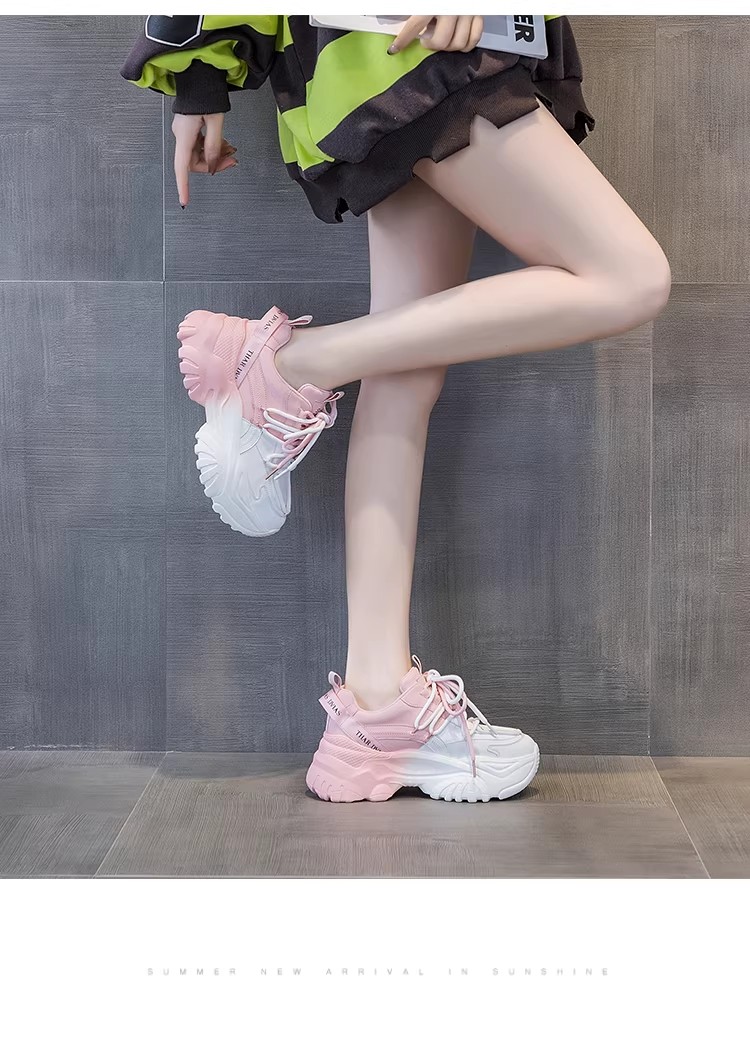
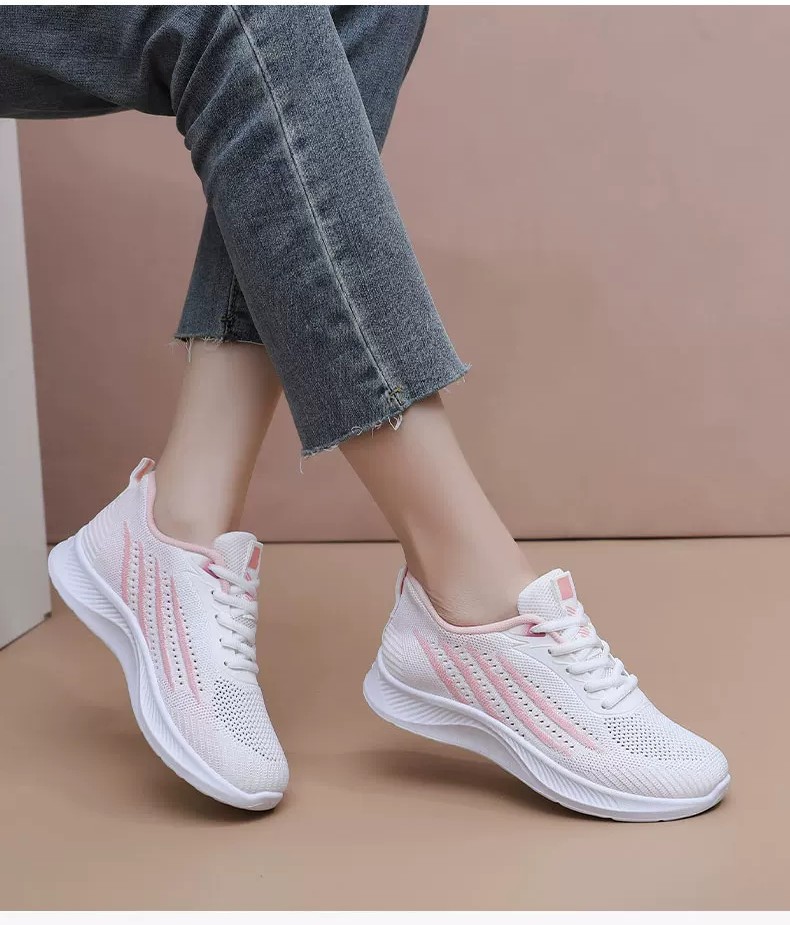
Mine are an EU 38 in a cupsole shape with a 24mm stack at the heel and 16mm under the ball. Weight came in at 254g per shoe on my kitchen scale, which is light enough that I forget I’m wearing them and heavy enough that they don’t feel like slippers. The upper is a mesh and synthetic-leather mix. The pink sits on the heel tab, the side stripe, and a thin line along the eyestay. The rest is off-white, not optical white, and that matters more than you’d think.
I have a wide forefoot and a high instep, which is the combination that makes most fashion sneakers feel like a vice by the second hour. These ran true to size in length and about 3mm narrow at the ball. I kept the 38 and swapped the stock insole for a 3mm flat one, which bought me the width without going up half a size and swimming in the heel.
Here’s the thing about the pink on this particular pair of white and pink sneakers. From two metres away, it reads as white with a warm cast. Up close it’s unmistakably pink, and that changes which outfits work. A pure white pair goes with everything and says nothing. A white and pink pair has an opinion, and the opinion is “slightly sporty, slightly 1982”. If your wardrobe is mostly navy, grey and denim, that’s a good opinion. If it’s mostly black tailoring, it’s a fight you’ll lose every morning.
I wore them to a casual Friday, a wedding rehearsal, two airport days, and one very long museum Saturday. They handled all four. The thing they didn’t handle was a formal dinner, and I knew that before I put them on.
White is a maintenance schedule, not a colour
Optical white looks incredible for eleven days. After that it starts collecting the world: pavement dust on the toe, indigo transfer from jeans on the heel, a faint grey ring where the mesh meets the sole. None of that is a defect. It’s just physics, and how much it bothers you is a personality question, not a shoe question.
I cleaned mine every two weeks, which worked out to eight sessions over four months. The routine is unglamorous. Soft brush, lukewarm water, a drop of pH-neutral soap, circular motion on the mesh only. Then a dry towel press to pull the water out and 24 hours in a breezy room, never on a radiator. Radiator drying is how white mesh turns the colour of weak tea, and it’s permanent.
Two myths worth burying. Toothpaste does not whiten mesh, it leaves a chalky residue in the weave that attracts more dirt. I tested both on a beige pair last year and got the same result, which is why the notes on what three washes do to a pale sneaker read like a warning rather than a tip. And a washing machine on 30 degrees will clean the upper and quietly wreck the bonding at the sole edge, which is the failure I caused on my previous pair in month five.
What actually works on the sole edge is a melamine sponge, lightly, on dry rubber. What works on scuffs is a pencil eraser before any liquid. What works on the pink panels is nothing at all, because they don’t stain easily. They fade.
If you want the technical side of why some dyes hold and others don’t, colour fastness is a measured property rather than a marketing claim, and the standard description of colour fastness explains the tests. Light exposure and repeated washing are the two things that break a bright dye down. Pink is unusually vulnerable to the first one.
Fit notes from a wide forefoot in an EU 38
Most people buy sneakers a half size too small and then blame the shoe for the numb spot across the toes. You can check this in about ninety seconds if you do it standing up.
Take the insole out, stand on it with your full weight, and look at how much insole is left in front of your longest toe. You want 8 to 10mm. Mine had 9mm on the right foot and 12mm on the left, which is normal because almost nobody has identical feet. Then press your thumb into the upper at the widest point of the ball while standing. If the material doesn’t give at all, the shoe is too narrow regardless of what the label says.
Three more checks I’d repeat on any white pair. None of them are specific to white and pink sneakers, but a pale colour makes every fitting error more visible, so the stakes are higher:
- Walk ten steps on a hard floor and listen. A squeak at the heel means the counter is loose or the insole is sliding, and it will not go away.
- Look down at your own feet in a mirror. If the shoe bulges out past your little toe, you’re in the wrong width, and a white shoe exaggerates that bulge.
- Check the collar height against your ankle bone. Anything that sits exactly on the bone will rub by hour three. You want it just above or clearly below.
The high instep issue is the one nobody warns you about. If the tongue presses down on the top of your foot when you lace them up, don’t tighten the laces to fix it. Skip the second-from-top eyelet instead. That single change turned a pair I was about to return into one I wore for four months.
Where the money went: sole, lining, heel counter
A cupsole is a construction detail rather than a marketing word, and the background on how sneakers are built is worth ten minutes if you’re spending real money on a white pair. The short version: cupsole means the upper is stitched to a pre-moulded sole unit, vulcanised means the whole thing is baked together, and the first one survives more washes.
At 67 euros you’re not paying for leather. You’re paying for three things that decide whether the pair lasts a season or a year, and only one of them is visible.
The sole is the first. A moulded EVA midsole with a rubber outsole patch under the heel and ball gives you cushioning where you land and grip where you push off. A single-density slab of hard rubber looks the same in photos and feels dead by month two. Flex the shoe at the ball with both hands in the shop. It should bend where your toes bend. If it folds in the middle of the arch, walk away.
The lining is the second. Textile lining is fine and breathes better than most people expect. What you don’t want is a lining that’s glued in visibly uneven folds, because those folds become hot spots. Run your fingers around the inside of the heel and feel for ridges.
Third, and the most ignored: the heel counter. Squeeze it from both sides. Firm with a slight inward curve at the top means the shoe will hold your heel. Soft and collapsible means you’ll be curling your toes to keep the shoe on, all day, without realising you’re doing it. That’s the hidden reason people say a pair “feels tiring”.
My pair scored well on all three and badly on one thing: the insole was glued in on the left shoe only. I found out when I tried to swap it and tore the top layer. If a removable insole matters to you, check both shoes, not one.
This is also where a cheaper white pair usually gives itself away. Something like the 6cm casual white dad shoe looks almost identical to mine in photos, and the difference between the two is entirely in the counter and the insole, neither of which shows up in a product shot.
Eight washes later: what survived
The mesh held up better than I expected. No pilling, no stretched-out weave, no sag around the toe. Four months of brushing didn’t fuzz it, which tells me the yarn is decent.
The pink faded. Not dramatically, and not evenly. The heel tab, which faces the sun when the shoes sit by the door, lost the most. The side stripe, mostly in shadow, barely moved. In direct comparison photos the difference is obvious. In person, in a hallway, nobody would notice. I notice because I have the photos.
Optical white is now cream. That’s the honest headline, and cream looks intentional in a way that dirty white doesn’t, so I’ve made peace with it.
First casualty: the laces. Flat white cotton ones pick up grey within a month and stop coming clean around week six. I replaced them at week seven for four euros. Buy two spare pairs when you buy the shoes. It’s the cheapest way to make an old pair look new.
Along the glued sole edge, a hairline gap appeared at the outer heel of the right shoe in month three. Not a separation, just a visible seam where the adhesive line has collected dirt. My previous pair did the same thing and then failed there at month five, so I’m watching it.
Outfits they carry, and the one they ruin
Straight-leg jeans, cuffed once, with a plain white tee. That’s the pair’s home turf and it never misses.
A midi skirt in navy or olive, with the pink doing the work of a necklace. This is the combination that made me stop thinking of them as gym shoes. The trick is a sock that disappears, so the ankle stays clean.
Wide-leg linen trousers in summer, cropped above the ankle bone. White sneakers under wide trousers look intentional when there’s 2cm of ankle showing and sloppy when there isn’t.
And the outfit they ruin: a cropped, sharply tailored suit in charcoal. The proportions fight. A 24mm cupsole under a cropped jacket makes the leg look shorter than it is, and the pink reads as an accident in that context rather than a choice. If you need one pair for both, buy a lower-profile white sneaker with a 15mm sole and leave the pink for weekends.
The general rule I landed on after four months: these shoes want volume on top. Loose jeans, wide trousers, an oversized shirt. Anything tight and structured above the ankle makes them look like the wrong answer to a question nobody asked. For a sense of how sole height changes the leg line, the piece on low-top sneakers and the 4cm that decide the leg line covers the geometry in more detail.
The details that age badly, and how to spot them
Contrast stitching is the first thing to fail visually. White thread on a coloured panel goes grey, then brown, and it can’t be cleaned without abrading the thread. If a pair has heavy contrast stitching in a light colour, price in that it will look two years old at eight months.
Coloured eyelets are the second. Painted metal chips at the lace hole, and once the paint chips, the raw metal underneath oxidises. On a pink-accented shoe this is the detail that quietly kills the look, because the chip sits exactly where your eye goes when you tie the laces.
Pink foam or pink rubber on the outsole is the third. It wears fastest at the outer heel, where everyone lands, and it goes from saturated to dusty in about 300km. If you want the pink to stay pink, keep it on the upper.
All three of these are visible before you pay. Turn the shoe over, look at the outsole wear pattern on the display pair if there is one, and check the eyelets with a fingernail. Ten seconds of poking tells you more than the box copy.
Cost per wear, with actual numbers
I paid 67 euros for these white and pink sneakers. By the end of October I’d worn them 91 times, which puts them at 0.74 euros per wear. If I get another eight months at the same rate, the number drops to about 0.37. That’s cheaper than the coffee I buy on the way to the station twice a week, and it’s the argument that finally convinced me to stop buying 25-euro pairs that die in ten weeks.
The cheap pair maths is where people go wrong. A 25-euro white sneaker that lasts eight weeks costs 0.78 per wear if you wear it four times a week. Same as mine, worse shoe, more landfill. The only scenario where cheap wins is if you genuinely wear white sneakers six times a year, and almost nobody who buys them does.
Add the consumables to be fair: two sets of laces at 4 euros, one bottle of cleaner at 9 euros, one insole at 12 euros. That’s the real cost of keeping a pale pair presentable, and it’s why I stopped buying white and pink sneakers in the 25-euro bracket. Total outlay 96 euros over four months, or about 1.05 per wear. Still fine. Still less than replacing a bad pair twice a year.
What you can’t put in the spreadsheet is the mental cost of a pair that looks wrecked. I’ve retired shoes early purely because I stopped wanting to be seen in them, and that’s a real cost even if it doesn’t show up in a column.
What I’d do differently buying the next white pair
Buy in spring, not high summer. Every pair of white and pink sneakers I’ve owned has faded fastest in the first eight weeks, and starting the clock in April means the fading happens before you care about it.
Check the outsole colour before falling for the upper. If the pink lives on the rubber, expect it gone by autumn. If it lives on the textile, expect it to soften rather than vanish.
Buy the spare laces with the shoes, in the same length, in white and in a colour that matches the accent. Lace length is the single most annoying thing to get wrong later, because 110cm and 120cm look identical in a packet.
And ask yourself one question in the shop, standing up, holding the shoe: does this read as white from two metres away? If the answer is no, you’re buying a pink sneaker with white panels, and you should style it that way from day one. That’s not a problem. It’s just a different purchase than the one you thought you were making.
The pair by my door is going to make it to spring, I think. If your white and pink sneakers are already past the cream stage, that’s the normal arc, not a bad purchase. The sole edge is the thing I’m watching, and if it holds through February I’ll call the 67 euros well spent. If your own white pair is already at the cream stage and you’re wondering whether that’s normal, it is. White sneakers don’t stay white. They stay wearable, which is the only promise worth caring about.
One last thing, because it took me three pairs to learn it. Rotate them. Two days on, one day off, with newspaper inside on the off day. The pair I babied that way is the pair that lasted. The pair I wore five days a week is in a bin bag in the garage. If you want a second option to rotate with, the mesh soft-sole sports pair is the closest thing to a fair-weather backup we stock, and the full sneakers range is worth a browse if you’re rebuilding a small rotation rather than replacing one shoe.
