

Every November the same conversation happens across shop floors. A customer comes in wearing boots, picks up a pair of low sneakers, and asks whether they’ll be warm enough. The honest answer is that a sneaker at 8°C is warm enough for about forty minutes of standing and roughly twenty minutes of sitting still, and after that the cold comes up through the sole regardless of what the upper is made of.
That’s not a reason to put them away until April. It is a reason to understand which parts of a sneaker hold heat and which ones don’t, because the difference between a pair that works in cold weather and one that doesn’t is mostly construction, and it’s visible before you buy.
Why a sneaker feels colder than a boot at the same temperature
Two shoes, same 8°C outside, same person. The boot feels warmer, and it isn’t only because it covers more ankle. The bigger factor is the sole.
A typical winter boot has a 20 to 30mm rubber or PU sole with a closed-cell structure, and rubber is a poor conductor of heat. A fashion sneaker often has a cupsole of EVA foam, which is lighter and softer but also thinner at the forefoot, sometimes only 8 to 12mm under the ball of the foot. Heat leaves your foot through the sole faster than through the upper in most cold-weather conditions, because the ground is colder than the air. Pavement at 2°C pulls heat out of a thin sole continuously.
The second factor is the collar. A low sneaker leaves the ankle exposed, and the ankle sits right over the main blood vessels feeding the foot. Cold air moving across that patch cools the blood before it arrives. A boot covers it. A sneaker with a padded collar and a sock that reaches above the bone gets most of the same effect for a lot less weight.
In the trade, the rough rule is that 1mm of sole thickness is worth about 1°C of comfort at the forefoot. It’s not a measurement anyone can defend in a lab, but it matches what customers report: a 25mm cupsole is usable to about 5°C for walking, a 12mm flat sole gets uncomfortable below 12°C if you’re standing still.
There’s also the question of what you’re standing on. Cold comes out of concrete much faster than out of grass or gravel, because concrete conducts heat well and holds the cold from overnight. The same pair that’s fine on a park path at 6°C is unpleasant on a station platform at 8°C, and that’s the variable most people never account for when they decide a shoe “isn’t warm”.
The sock layer does more than the upper
This is the part most people get wrong, and it’s the cheapest thing to fix. Changing from a cotton no-show to a merino crew sock changes the perceived temperature of a sneaker by more than upgrading from mesh to leather does.
Cotton holds moisture against the skin, and it’s worth knowing why that matters so much in a shoe. Wool fibre has a crimped structure that traps air between the fibres, and that trapped air is the insulation, not the wool itself. Once it’s damp, it conducts heat away roughly 25 times faster than dry air trapped in fibre, which is why cotton socks feel cold the moment you stop moving. Wool behaves differently: merino can absorb a significant percentage of its own weight in moisture without feeling wet, and it keeps insulating while damp. That’s the physical reason wool socks cost more and work better.
Thickness matters less than fit. A sock that’s too thick lifts the heel inside the counter and creates the slipping problem described in most fitting guides, and a sock that’s too thin leaves a gap at the instep where cold air circulates. The target is a sock that fills the shoe without compressing your foot, which usually means a 2 to 3mm merino crew for a sneaker with a normal-volume last.
There’s a second layer worth mentioning, and it’s the one nobody sells you: a thin silk or synthetic liner sock under the wool one. Two thin layers trap more air than one thick layer and reduce friction at the same time. Walkers have used the system for decades. It works just as well in a pair of leather sneakers on a cold commute.
If you’re choosing between two pairs and both cost the same, put the money into the sock drawer first. A 12-euro merino crew will do more for your comfort in a 45-euro sneaker than a 90-euro sneaker will do with a cotton no-show. That’s the least glamorous advice in this piece and the most reliably true.
What the lining is actually doing
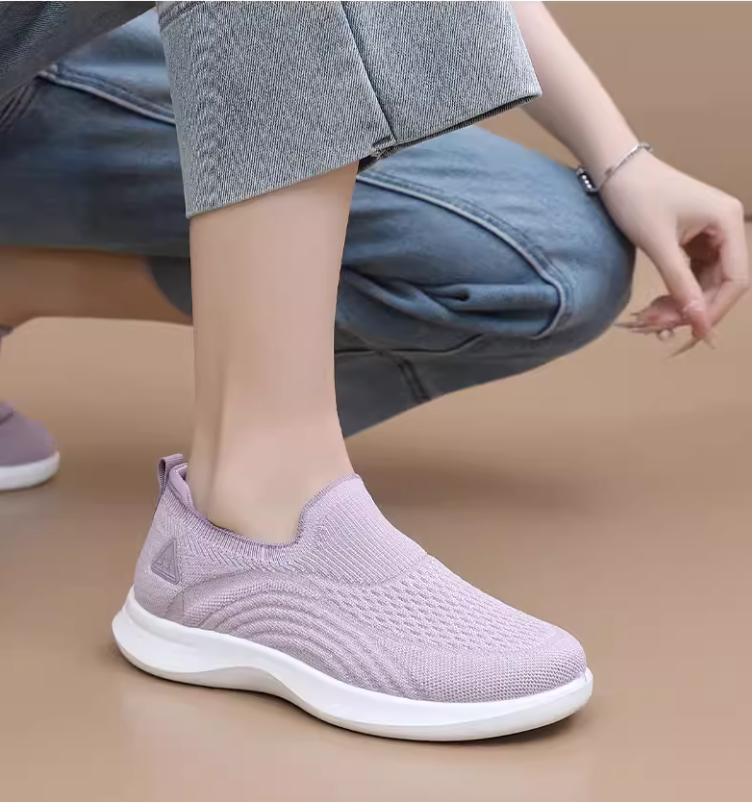
Lining is the most under-described spec in footwear. On a winter-rated shoe it’s usually a brushed textile or a short faux-fur, and its job is to trap a layer of still air next to the sock. On a summer sneaker it’s an unlined or thin synthetic mesh, engineered to move moisture out as fast as possible, which is exactly the opposite of what you want in November.
The practical test in a shop: put your hand inside and leave it there for thirty seconds. A lined shoe warms up noticeably. An unlined one stays at room temperature, because there’s nothing between your skin and the upper to hold heat.
Leather is a special case. It’s wind-resistant by nature, which matters more than most people realise on a bike or at a bus stop, and it blocks the convective heat loss that mesh allows. Unlined leather is warmer than lined mesh at the same thickness. Lined leather is warmer still. That hierarchy explains why a plain black leather sneaker so often becomes the default winter pair, and why our own 480g travel pair is a summer object despite looking similar in photos.
Wind is the other half of the story, and it’s the reason thermal comfort depends on moving air as much as on temperature. Still air at 6°C feels fine; moving air at 6°C feels like 2°C. If your commute involves a bike, a scooter or a long wait at a bus shelter, wind resistance jumps up the priority list and leather earns its price. If you step from a warm car into a warm building with ninety seconds outdoors, it doesn’t matter at all, and you can wear whatever you like.
What lining can’t do is compensate for a thin sole. A faux-fur lining over an 8mm foam sole is a warm upper on a cold floor, and the customer notices within twenty minutes. If a shoe is marketed as a winter style, check the sole thickness before the lining. It’s the more honest number.
Three places cold gets in
Cold doesn’t arrive evenly. It comes through specific gaps, and each one has a different fix.
- The toe box. Toes are the furthest point from your core and the first thing to go numb. In a sneaker with a tapered toe, there’s less air around the toes to insulate them, which is why a rounder toe feels warmer at the same temperature. Half a size of extra length helps more than people expect.
- The sole edge. The sidewall of a cupsole is where ground cold meets the upper. A shoe with a rubber wrap that comes up 8 to 10mm around the edge is measurably warmer than one where the foam is exposed, because rubber insulates better than exposed EVA and doesn’t soak up water.
- The collar gap. A low-cut sneaker worn with a no-show sock leaves bare skin between the shoe and the trouser hem. That gap is where most of the “my feet are freezing” complaints come from. A crew sock that overlaps the collar by 3cm solves it, and costs less than any other fix on this list.
There’s a fourth, less obvious one: the tongue. A thin, unpadded tongue transmits cold straight to the top of the foot, and it’s the spot people describe as “the cold coming from above”. Padded tongues exist mostly in running models for pressure reasons, but they happen to help in winter too.
You can test all three gaps at home without buying anything. Stand outside for ten minutes in the pair you already own, then come in and notice which part of your foot is coldest. Toes means the sole or the toe box. The top of the foot means the tongue or the vamp. The ankle means the collar gap. Fix the part that’s actually cold rather than buying a whole new shoe.
Rain changes the maths entirely, and it’s the condition people underestimate most often in northern Europe. A soaked mesh upper at 8°C is colder than a dry leather upper at 2°C, because water replaces the air in the fibres and air is the insulator. If you only own one pair for the cold half of the year, make it the dry-weather-proof one.
Wet is worse than cold. A damp upper loses insulation value fast, and a mesh sneaker in sleet is effectively a refrigerated sock. If the forecast is wet rather than cold, leather or a coated textile beats anything breathable, even if it’s less comfortable in a warm office.
What to buy, and what to skip
For a sneaker to work between 5°C and 12°C, the checklist is short.
- A sole of at least 20mm under the forefoot, with a rubber wrap at the edge.
- A leather or coated upper rather than open mesh.
- A collar that sits at or just above the ankle bone, padded by 5mm or more.
- Room in the toe box for a proper sock without pressing on the toes.
- An insole you can remove and replace with a wool or felt one in December.
What to skip: mesh runners worn as winter shoes, flat canvas plimsolls below 10°C, and anything with a sole under 12mm if you’ll be standing outdoors. A running shoe like the ultra-light pair in our range is superb at what it’s for and genuinely cold at a bus stop, because every design decision in it favours weight over warmth.

One more skip: shoes with decorative perforations across the toe. They look harmless and they vent cold air straight onto your toes, which is the one part of the foot with the least padding and the worst circulation. In summer they’re pleasant. In January they’re a hole in your shoe.
There’s a middle path that costs nothing: keep a pair of thin wool insoles by the door and swap them in from November. They add about 3mm of thickness under the foot, which is roughly 3°C of perceived warmth, and they come out again in March. The only catch is that they take up volume, so make sure the shoe has room for them when you buy it rather than discovering it in December.
The honest limit is around 3°C. Below that, no low sneaker with a normal sock is comfortable for a long outdoor wait, and the people who claim otherwise are either walking continuously or wearing boots and calling them sneakers. If you need a shoe for a cold commute with a ten-minute platform wait, buy the boot. If your cold exposure is a five-minute walk from car to door, a lined leather sneaker is fine down to about 5°C and pleasant above 8°C.
One more thing from the fitting side: try winter sneakers in the afternoon, with the socks you’ll wear, and don’t size up to fit a thick sock. Buy the shoe that fits your foot and let the sock be the variable. A shoe bought half a size large to accommodate wool will slip in October and be genuinely dangerous on wet steps in January.
For a rotation that covers the cold months, look at the leather options in the sneakers category and the insulated styles in walking shoes. The mesh casual pair is the one to leave for spring, and the women’s shoes index is the fastest way to see which styles come in leather rather than textile. Cold feet in November are usually a sole problem, not a style problem, and that’s a much easier thing to fix than most people think.
