

Every June the same thing happens in shoe retail. A wave of women buy strappy sandals for a wedding, wear them for one afternoon, and by Monday the returns start arriving with grass stains on the sole and a note saying they didn’t fit. They fitted fine. They just weren’t built for four hours on a lawn.
Wedding guest shoes are the hardest brief in the whole category, because the invitation never tells you the things that actually matter. It says “cocktail attire, 3pm”. It doesn’t say the ceremony is on grass, the bar is on gravel, the dancing is on a wooden deck, and the car is parked 300 metres away across a field.
What follows is how womens sandal heels tend to behave at real weddings, drawn from the patterns that repeat every season, and what to look at before you order rather than after the photos are up.
The dress code says less than the venue does
Dress code tells you the formality. The venue tells you the shoe. Those are two different questions and most guests only answer the first one.
Black tie on a terrace is still a terrace. A stiletto on grass sinks to the sole within three steps, and once it’s caked in soil the whole look goes. Cocktail attire in a hotel ballroom is genuinely a thin-heel situation, because the floor is level and the walk from car to table is 20 metres.
The information worth chasing before you shop:
- Is the ceremony outdoors, and is the ground grass, gravel, decking or stone?
- How far is the car park from the seating?
- Is there a marquee with a temporary floor, and is it solid or matting?
- What time does it end, and are you standing for most of it?
A 60-second text to the couple, or to whoever is in the wedding party, answers all four. It’s the single most useful thing you can do before buying, and almost nobody does it.
If you can’t find out, assume grass and pack accordingly. That’s the conservative read and it’s rarely wrong in summer.
One thing worth knowing about the category itself: most womens sandal heels sold for occasions are built to look right in a photograph, not to be walked in. That’s not cynicism, it’s how the price points work. Thin straps, a slim heel and a light sole keep the cost down and the silhouette clean. If a pair has survived three weddings on grass, it usually means someone chose structure over elegance at the buying stage.
Grass, gravel, decking, stone: what each one does
Four surfaces, four different failure modes. In the trade you see the same complaints attached to each.
Grass swallows thin heels. Anything under 8mm at the tip will sink on soft ground, which is why block heels and wedges outsell stilettos for garden weddings by a wide margin. A wider heel spreads the load: 20mm across the tip and you stay on the surface.
Gravel is worse, because a thin heel doesn’t sink evenly, it catches between stones and twists. Ankle injuries at weddings are almost always gravel plus a narrow heel plus a glass of something.
Decking is the sneaky one. Boards are usually fine, but gaps between them grab a heel tip and hold it. So do the joins on temporary matting, which is why venues with matting often have a shoe table by the door.
Stone and tile are the easy case, with one exception: polished stone plus a smooth leather sole is genuinely slippery. That’s where a rubber sole or a textured forefoot earns its money.
Practical translation: for an outdoor summer wedding, a sandal with a block or a 70mm heel and a rubber-tipped sole is the sensible buy. For an indoor hotel wedding, a thin heel is fine and looks better in photos.
Photographs last longer than the ceremony
An open sandal puts your feet in the frame in a way a closed shoe never does. That’s the appeal and the risk.
At ankle level, three details get remembered: the strap line, the toenail colour, and whether the shoe looks like it belongs with the dress. Everything else is noise.
The strap line is the one people get wrong. A thin ankle strap cuts the leg at the narrowest point, which is flattering. A strap that sits higher, near the calf, can shorten the leg in photos, and it’s usually the strap that’s also uncomfortable by hour three. Mid-ankle is the safe placement.
Colour is a live issue at weddings and worth saying plainly: don’t wear white or anything that photographs white. Ivory, cream and pale champagne all read as white under flash. Metallics, black, navy, burgundy and most greens are safe. Nude is safe and photographs as skin, which is either the point or a disappointment, depending on what you wanted.
For style references and the way colour gets handled in editorial shoots, Vogue’s wedding and party coverage is a better guide than most wedding blogs, mostly because it shows real outfits rather than styled product shots.
Nail colour deserves one sentence, because it’s the detail that shows up in every photo of the shoes. Deep red and near-black flatter a metallic sandal. Pale pink disappears next to a nude strap. And chipped polish is more visible on an open toe than on any other shoe, so book the appointment for two days before, not five.

Four inches is where most guests make the mistake
The 100mm sandal is the most photographed heel height in the category and the least worn. Buyers choose it because it looks decisive in the listing. Wearers regret it by the toast.
Here’s the arithmetic that matters. A 100mm heel shifts roughly 70% of your body weight onto the ball of the foot when standing still. A 70mm heel shifts closer to 50%. Over four hours with a ceremony, drinks, dinner and dancing, that difference is the whole experience.
What actually works at a wedding, by heel height:
- 50 to 60mm: survives grass, gravel and a long day. Looks less dramatic in photos.
- 70mm: the best compromise. Fine on decking and stone, acceptable on firm grass.
- 85mm: indoor venues only, and only if you’re used to it.
- 100mm and up: seated events, short walks, or a car that drops you at the door.
There’s also the toe cap question. A sandal with a covered toe holds the foot better on uneven ground and hides a stubbed toe, which is a real risk after dark. A fully open sandal is cooler and photographs lighter. If your venue is grass, the covered toe version is the more forgiving shoe.
Something like these summer sandals with a capped toe and a mid heel is the shape that survives an outdoor ceremony without looking like a practical shoe. The cap does most of the work: it stops the foot sliding forward on a slope, which is the actual mechanism behind most wedding-day ankle rolls.
The half-size trap, and why the chart won’t help
Sizing is where online buying of womens sandal heels goes wrong most often, and it’s not the buyer’s fault. Two shoes marked 38 can measure 242mm and 248mm and both be honest about it, because there’s no enforced standard across manufacturers.
What that means in practice: your size in one brand is a data point, not a rule. For sandals specifically, the strap decides more than the length. An open sandal with a fixed ankle strap has about 5mm of adjustment in it. A closed pump has none.
Three rules that hold up across most of what’s on the market:
- If you’re between sizes and the sandal has a closed heel cup, size up and use the strap to take up the slack.
- If the sandal is fully open with only a toe post and an ankle strap, stay at your usual size; going up makes it flap.
- If you have a high instep, avoid sandals with a fixed horizontal band across the top of the foot. It will cut in by hour two.
Measure your foot at the end of a hot day, standing, heel against a wall. Write the number down. It’s more reliable than any size chart, and it’s the figure to compare against the insole length in a product listing, which many listings do include if you look past the marketing copy.
If the wedding is the first time you’ll wear the pair, that’s the other mistake worth avoiding. Buy early, wear them for an hour indoors in the evening, and walk on a hard floor. A sandal that’s fine on carpet can be a different shoe on tile, because the sole grips differently and the strap starts doing its real job. There’s a related argument about wearing one pair across two events in how slingback kitten heels cover office and dinner without a change, and the strap logic carries over.
Ninety minutes on your feet, with a strap doing the work
Most wedding sandals fail at the strap, not the sole. It’s the cheapest component and the most loaded one.
Three things to check before you commit to a pair for an all-day event. First, the buckle: a small, thin buckle with a short tongue will slip when the leather warms up. Second, the elastic: any hidden elastic panel in the strap will stretch after a few wears, and a stretched strap means the shoe moves with your foot instead of holding it. Third, the lining on the inside of the strap, because that’s where a blister starts and it starts within the first hour, not the fourth.
Then there’s the backup pair question. Take one. A flat pair in the car, or foldable flats in a bag, is not a failure of planning, it’s the standard move among people who do this often. The photos are taken in the first two hours anyway.
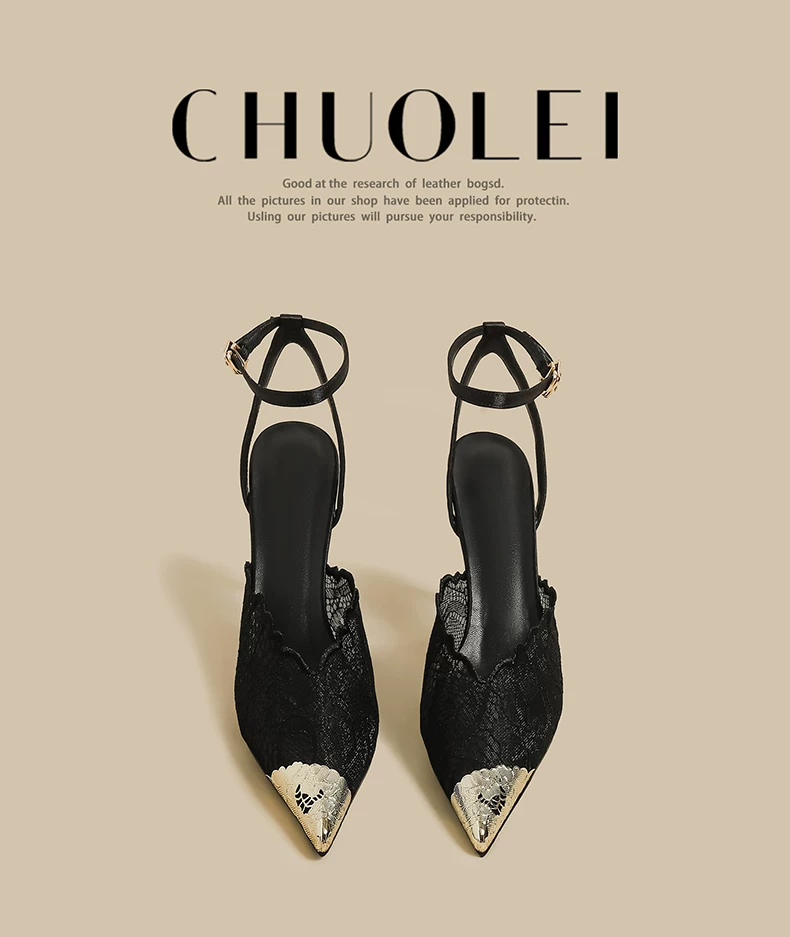
If the venue turns out to be indoors after all, the whole calculation changes and you can go lighter on structure. A pair like these pointed-toe sandals with a slim heel and an open side is the type of womens sandal heels that works for a ballroom and looks wrong on a lawn, so it’s worth ordering only once you know which one you’re attending.
Industry coverage is worth a skim before buying, particularly on how comfort claims get made and tested; Footwear News is where most of those claims get scrutinised. What you won’t find there is a label that guarantees a shoe will work at your specific venue. That part is still on you.
One honest drawback about strappy sandals: they show wear faster than any other shoe type. The straps crease, the sole edges darken, and the footbed takes on the shape of your toes. After three weddings a pair looks used, which is fine if you bought it as a workhorse and annoying if you paid evening-shoe money for it.
What I’d say before you order
Buy the shoe for the surface, not for the outfit. Then make the outfit work around it. That order of decisions saves more money than any sale.
If the answer is grass, go block or wedge, 60 to 70mm, covered toe, rubber-tipped sole. If the answer is a hotel ballroom, a thin heel in a metallic or a deep colour is the better call, and you can go higher than you think because you’ll be sitting for most of it.
Order with time to test. Two weeks before the date, wear them indoors for an hour in the evening, when your feet are at their largest. If the strap leaves a mark after 20 minutes, that mark will be a blister on the day. Send them back and size up or change style.
And check the return policy on the day you order, not the day you need it. Once a sole has touched gravel, most sellers won’t take the shoe back, and wedding season is exactly when people discover that.
If you want to compare heights and finishes in one place, the women’s shoes range grouped by heel shape is quicker than a search page, and the sandal options in silver and nude cover most dress colours. A silver high-heeled sandal with a slim strap is the safest single pair if you only want to buy once, since silver photographs neutral against almost everything except cream.
One last buying note: check what the sole is made of before you pay. Womens sandal heels with a leather sole look better and wear faster; a rubber or synthetic sole is uglier in the hand and far better on gravel, wet grass and stone steps. Nobody has ever regretted a rubber sole at a wedding. Plenty of people have regretted a leather one on a sloping lawn.
The last thing, and it’s the one that actually decides the day: whichever pair you choose, walk 200 metres in them on a hard surface before the wedding. Not around the bedroom. Outside, on pavement, in the afternoon heat. If they survive that, they’ll survive the toast.
