

You’re looking at a pair of blue walking shoes online, and the photo shows a deep, clean navy. Then they arrive and they’re closer to a dusty slate, and suddenly the jeans you bought them for look wrong.
Blue is the most useful shoe colour after black, and it’s also the one most people get wrong. There are at least six blues in a normal shoe shop and only two of them will work with the clothes you already own. The shade matters more than the style.
So here’s the short version: navy and dark denim blue go with almost everything, mid-blue is the risky one, and pale blue belongs to summer only. Below is how to tell them apart before you pay, plus the practical side of scuffs, cleaning, and whether women’s blue walking shoes really are more versatile than black.
Six blues, and only two are safe
In women’s blue walking shoes you’ll mostly see these:
- Navy: very dark, almost black in low light. Works with jeans, grey, camel and white.
- Denim or indigo: mid-dark with a grey cast. Nearly as safe, but don’t match it to jeans of the same tone.
- Slate: grey with a blue cast. Neutral, forgiving, hides dirt well.
- Cobalt or royal: bright and saturated. Needs a plain outfit or it fights everything.
- Powder or sky: summer only, and it shows every mark.
- Teal or petrol: blue with green in it. Beautiful, hard to pair, dates fast.
If you want one pair to do most of the work, buy navy or slate. If you want a pair that makes a plain outfit look deliberate, buy cobalt and keep everything else neutral. Everything in between needs more thought than most people want to give a shoe at 7am.
Navy has one advantage that gets overlooked: it reads as formal from a distance in a way that black sometimes doesn’t. Dark navy leather, well kept, looks expensive next to grey trousers in a way that black mesh never will.
Where blue sits on the leg
Colour changes how a shoe reads in proportion to your leg, and blue is no exception. Dark blue shoes with dark trousers create an unbroken line from hip to floor, which makes you look taller. That’s an old trick, and it works with walking shoes as long as the blue is close enough to the trouser colour.
Light blue shoes do the opposite. They break the line at the ankle and pull the eye down. That’s fine with cropped trousers or a skirt, where you want the shoe to be the point. It’s not what you want in wide-leg trousers.
Practical rule: match the depth, not the exact shade. Dark trousers want dark shoes. Light trousers can take either, but a mid-blue shoe with cream trousers is a harder combination than most people expect, because the contrast makes the shoe look heavier than it is.
There’s a reason blue keeps coming back in footwear while other colours cycle in and out. It’s the only hue that sits comfortably between formal and casual, which is part of why blue as a pigment has stayed in clothing for centuries while most colours had shorter runs.

The denim problem, and how to dodge it
Most people buy blue walking shoes to wear with jeans, and that’s exactly where it goes wrong. Match a mid-blue shoe to a mid-blue jean and the two tones sit close enough to look like a mistake rather than a choice, like you tried to match and missed by 10 percent.
Three ways around it:
- Go much darker than your jeans, so the contrast is obviously deliberate.
- Go grey-blue or slate, which reads as a neutral and sidesteps the match entirely.
- Wear the blue shoe with black, grey or cream trousers instead, and keep denim for the black pair.
Distressed or faded denim is easier than raw indigo, because the fading breaks up the block of colour. Raw denim with a new navy shoe is the hardest combination in the whole wardrobe, and it also risks dye transfer in the rain.
One real warning: cheap navy uppers can bleed onto light socks in the first few wears, especially in wet weather. If you’re wearing white socks, test the shoe with a damp cloth on an inside seam first. A minute of checking saves a pair of socks and a lot of confusion.
Scuffs show up differently on every blue
Pale blue is the worst for wear, and it’s not close. A scuff on powder blue shows as a grey mark with a dark edge, and it never quite blends back in, even with polish. Light blue shoes look a season old after a month of city walking.
Navy hides nearly everything. Small scuffs disappear into the colour, and a mark on the toe is invisible from standing height. This is the single strongest practical argument for navy over any other blue.
Slate sits in the middle. It hides dust beautifully and shows dark scuffs, which is the opposite problem to pale blue and much easier to live with.
If you do go light, treat the shoe before you wear it. A water-and-stain repellent spray on a clean, dry upper makes dirt sit on the surface instead of soaking in, which means you can wipe rather than scrub. Reapply every few weeks. It won’t stop creasing at the toe, and it won’t stop the sole edge going grey, but it keeps the upper looking new for longer.
The sole edge is worth a separate mention, because on a blue shoe it’s the first thing that looks tired. White midsoles are painted, not moulded in white rubber, and that paint scuffs off at the heel and toe within a few weeks of real walking. A melamine sponge takes the grey off in about two minutes. It also takes a thin layer of the paint with it, so use it once a month rather than once a week.
Cleaning blue without ruining it
Mesh and knit blues are the easy ones. Lukewarm water, a soft brush, a drop of mild detergent, and blot rather than rub. Rubbing pushes dirt into the weave and lightens the colour in patches, which on blue looks like sun damage.
Leather blues need less water than you think. A damp cloth, then a neutral cream polish. Don’t use a coloured polish on navy unless it’s an exact match, because a mismatched polish leaves a patchy finish that’s harder to fix than the scuff was. Neutral cream and a buff does more than most people expect.
Suede blue is the one to avoid for walking shoes. It looks great for two weeks and then it’s a different shoe. If you already own a pair, a suede brush and a protective spray are the whole kit, and neither will save them from a wet pavement.
Never put blue shoes in a washing machine. The dye can migrate into the lining and onto the midsole, and the heat can warp the sole unit. Hand washing takes ten minutes and doesn’t wreck the shoe.
Check the shade in daylight before you commit
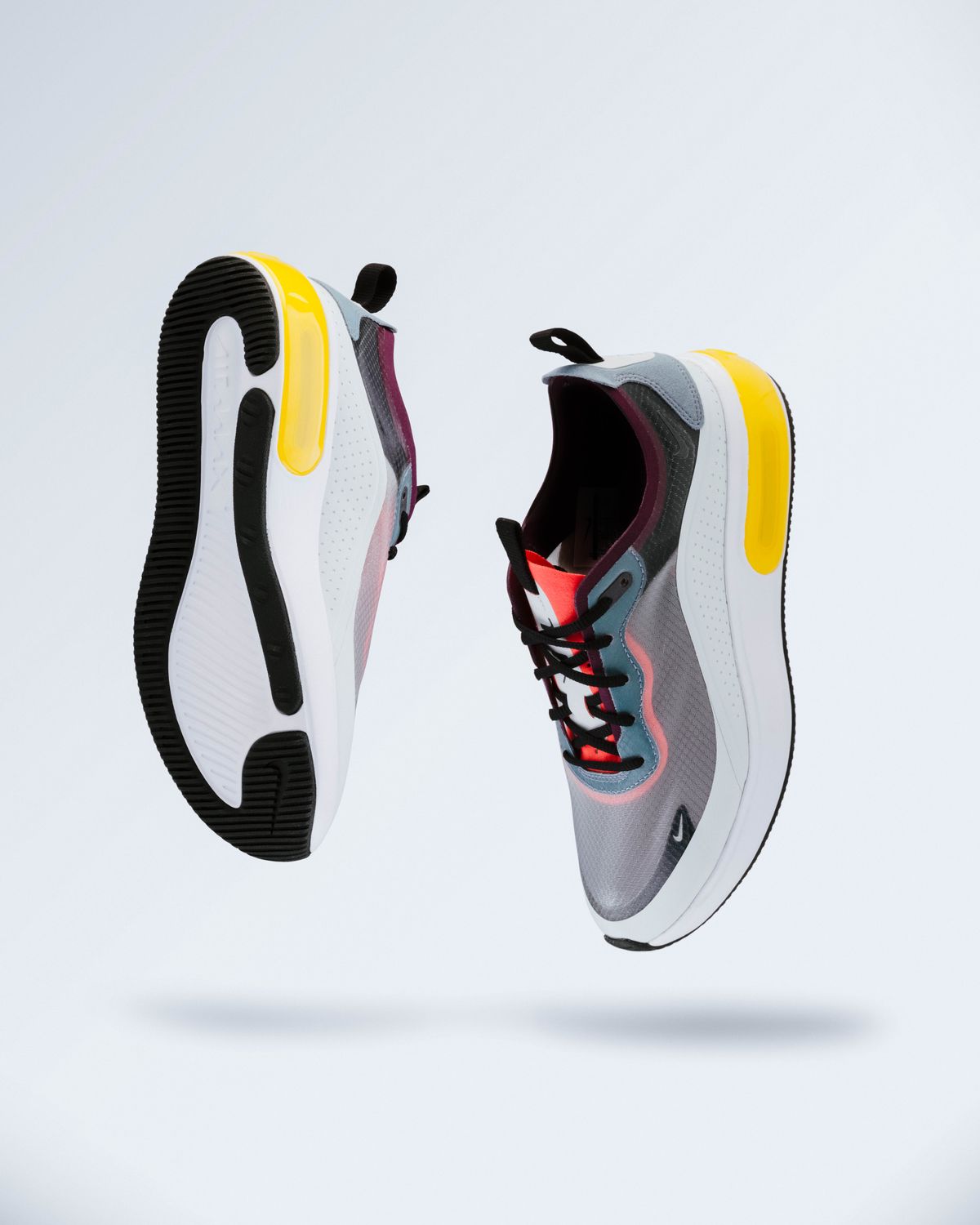
Product photos are lit, edited, and often shot in a studio with a warm light that pushes navy toward black and pushes mid-blue toward cobalt. Indoor shop lighting does the same thing in reverse, which is why shoes that looked right in the shop look wrong at home.
Two things you can do:
- Ask for a photo of the shoe in daylight next to something neutral, like a white wall or a grey floor.
- Buy from a shop with free returns and check them by a window before you wear them outside.
This matters more for blue than for black, because black is black under almost any light while blue shifts 20 percent in perceived saturation between a shop and a cloudy pavement. If you can only see the shoe on a screen, look at the sole and the lining too. A cheap blue upper is usually paired with a bright white midsole that makes the whole shoe look cheaper than it is.
Three outfits that make blue shoes earn their place
If you’re buying blue and want it to work hard, build the outfit around it rather than hoping it fits in. These three combinations cover most of a normal week.
Grey trousers, white shirt, navy shoe. The safest of the three. Grey and navy are close enough in value to look coordinated without matching, and the white shirt keeps it from going flat. It works in an office with a business-casual dress code, which is more than most trainers manage.
Black jeans, slate shoe, dark knit. Slate against black reads as a deliberate soft contrast. It’s the combination that looks most expensive for the least effort, and it hides scuffs better than any other pairing.
Cream trousers, cobalt shoe, neutral top. The loud one, and it only works if everything above the ankle is plain. No pattern, no print, no second colour. Do it once a week and it looks like a choice. Do it three days running and it looks like the only thing you own.
A fourth, riskier option: all navy, top to shoe. Head-to-toe one colour is a real look, and with walking shoes it reads as practical rather than try-hard as long as the blues are close in depth. Get it wrong by two shades and the whole thing falls apart, though, so it’s not a starter outfit.
What doesn’t work: blue shoes with a floral dress, blue shoes with red, and blue shoes with a warm brown coat. None of them are impossible, but all three need more care than a walking shoe usually gets.
If you’re building the rest of the outfit for an office setting, this piece on casual shoes that still read as work shoes picks up where this leaves off.
Are they more versatile than black?
Not more, but differently useful. Black goes with everything and can look flat next to denim. Navy goes with almost everything and looks intentional next to denim, grey, camel and cream. If your wardrobe is mostly jeans and knitwear, blue is the better buy. If it’s mostly black and dark tailoring, black still wins.
The other thing to weigh is the outfit you actually wear on a weekday. Count the trousers and skirts you’ve worn in the last two weeks, and be honest about the colours. If more than half are blue or grey, buy blue. If more than half are black, buy black and stop overthinking it.
There’s also the question of what the shoe is for. A blue walking shoe in a mesh upper looks casual, and it reads as a weekend shoe even when you wear it to the office. If you need something that works in an office with a dress code, a pair like these thick-heeled shoes that hold up on a long day will do more for you than a coloured trainer, in blue or otherwise.
And if you walk to work in the rain, keep a second pair at your desk. Blue mesh takes about six hours to dry on a radiator, which is one working day. Nobody wants to put on a damp shoe at four in the afternoon.
If you like the idea of blue but want it in a dressier shape, a patterned pair can carry the colour without the matching problem. Something like these blue snake-patterned heels with a slim heel works with navy, black or cream because the pattern breaks up the colour, so it doesn’t need a matching partner.
For walking pairs, start in the walking shoes range and look at the shade in daylight shots before anything else. If you’re also refreshing a white pair, this piece on keeping white leather sneakers white past month six covers the same care questions from the other end of the spectrum.
Buy the navy. Or the slate. Those two will survive three winters and still look like a decision you made on purpose.
