

You want one pair that works for the 8:40 walk to the station, the 6pm client dinner, and the Saturday market. So you buy black leather walking shoes, because black leather is the obvious answer. Then the shine on the toe looks cheap under office lighting, the creases turn white at the flex line, and by February they look like someone else’s shoes.
None of that is inevitable. Most of it comes down to one decision you make in the shop without realising it: how shiny the leather is.
Here’s how black leather walking shoes for ladies actually behave over a year, and which finish survives the life you’re actually going to give them.
Three leathers, three completely different shoes
“Leather” on a box covers everything from a full hide to a bonded scrap sheet. On a black walking shoe, the difference shows up within weeks, not years.
- Full-grain: the whole hide, pores visible, no sanding. Creases into soft folds, takes polish, and looks better at month eight than at week one. Heaviest and priciest.
- Corrected-grain: sanded flat and stamped with a new grain. Uniform, easy to clean, creases sharply, and the finish can crack at the fold within a year.
- Bonded or “genuine leather”: shredded leather fibre glued and pressed. Light, cheap, and it delaminates at the toe after a wet winter. Not repairable.
- Patent and coated: a plastic film over the surface. Mirror shine, zero breathability, and the coating peels where your toes bend.
For walking, full-grain is the only one that gets better with use. Corrected-grain is the practical compromise if you want a uniform look and don’t mind replacing them every 18 months. The other two are for occasional wear.
A useful check in the shop: press your thumbnail into the leather near the toe. Full-grain shows a small crease that fades. Corrected-grain shows almost nothing. Bonded leather feels like a stiff plastic sheet over foam. If it feels like the last one, walk away.
One more question worth asking: is the upper lined with leather or with textile? A leather lining moulds to your foot and breathes. A synthetic lining is cheaper, and it’s the part that wears through first on a shoe that gets 10,000 steps a week. On black leather walking shoes for ladies, the lining is where the price difference usually hides.
Matte, satin or high shine
This is the part nobody warns you about. Shine level decides how the shoe ages, because light behaves differently on each surface.
Matte. Hides scuffs, because a scuff on matte is just a slightly lighter patch. It also looks softer and more casual, which suits jeans and wide trousers. Downside: matte leather absorbs water and needs a cream every couple of weeks in winter.
Satin finish. The middle ground and the best choice for a shoe that has to do office and weekend. It takes a polish, resists light rain, and a scuff can be buffed out with a cloth and a bit of wax. This is what I’d buy.
High shine or patent. Looks sharp for about three wears, then every crease becomes a bright line because the coating reflects light differently where it folds. On a walking shoe, which flexes thousands of times a day, patent is a mistake. Save it for a heel you wear twice a month.
One more factor: black itself. A deep, slightly warm black looks expensive. A flat blue-black looks like uniform. Hold two pairs side by side near a window and you’ll see it instantly, and no amount of polishing fixes the wrong black. If you want to understand why some black leathers age better than others, the basics of how leather is made and finished explain most of it.
There’s also weight to consider. A full-grain black leather walking shoe runs 380 to 450g per shoe in a women’s size 38, which is roughly double a mesh trainer. That’s fine for a commute and noticeable on a 12,000-step day. If you walk more than an hour each way, weight matters more than finish.
The sole is what makes leather walkable
Leather uppers get all the attention. Soles decide whether you can walk 10,000 steps in them.
What to look for on a leather walking shoe:
- Rubber, not leather, on the bottom. Leather soles are beautiful and lethal on wet pavement. A thin rubber top piece over a leather sole is the compromise.
- 6 to 10mm of tread depth with a heel brake. You want to see an actual pattern, not a decorative groove.
- A stitched or cemented sole with a visible welt. A welt means a cobbler can resole it, which doubles the life of a good upper.
- Enough under the ball. Press your thumb into the forefoot. Less than 4mm of cushioning and you’ll feel every paving slab by the third kilometre.
Also check the heel counter, the stiff part at the back. On cheap leather shoes it’s cardboard that softens and collapses after a wet winter, and once it goes the shoe never holds your heel again. Squeeze it. It should be firm, with a little give at the top edge.

This is where a lot of smart-looking leather shoes fail as walking shoes. They’re built to look right standing still. Put 8,000 steps through them and the sole wears through at the outer heel first, because that’s where most people land.
Breaking in leather without the two-week limp
Leather doesn’t stretch much. It moulds. That’s a different process, and it takes about 20 to 30km of walking rather than a few evenings in thick socks.
The mistake most people make is buying black leather walking shoes a week before a trip and hoping. Leather has almost no give in the first 48 hours, so day one of a holiday is the worst possible day to wear them.
A schedule that avoids the limping phase:
- Days 1 to 3: two hours indoors each day. Just enough flexing to find the pressure points.
- Days 4 to 7: 30 to 40 minutes outdoors, dry weather only, on flat ground.
- Week 2: your normal commute. Keep a plaster on the heel if it rubbed in week one.
- Week 3: a 5km walk. If a spot still hurts here, it will always hurt. Return them.
Skip the old tricks. Soaking leather in water and walking them dry does soften them, and it also strips the oils, weakens the stitching and leaves a watermark that never lifts. Heat is worse: a hairdryer on leather dries the fibres and creates cracks at the flex line that no polish hides.
What actually helps is a thin layer of conditioner on the inside at the heel and the little-toe area before the first wear, plus proper lacing. Loosen the bottom two eyelets if your instep is high. Two minutes with the laces beats a week of plasters.
What goes wrong first
Honest list, in the order it happens on a pair you wear four days a week.
Month 2: white creases. The flex line across the toe box goes pale. That’s the finish breaking, not dirt. Prevent it with conditioner before it starts, because once the colour is gone you’re covering it with polish, not restoring it.
By month 4, the toes scuff. Kerbs, car doors, escalators. Black polish hides most of it, but a deep gouge in corrected-grain never fully disappears.
Sole wear shows at month 6, at the outer heel. Predictable, and it’s the first thing to check when you’re deciding whether to resole. A cobbler can add a heel tap for very little money and buy you another year.
Salt lines arrive around month 9. If you walk through a winter in a city that salts its roads, the white tide marks appear at the seams. They’re mineral deposits, and they come off with a diluted vinegar wipe, not with more polish.
The lining goes last, usually at the heel where your foot rubs. By the time you feel it, the shoe has become uncomfortable in a way that no care routine reverses.
None of this makes leather a bad choice. It makes it a choice that rewards a bit of maintenance and punishes neglect more visibly than mesh does.
If you only remember one thing from this list, remember the sole. Black leather walking shoes for ladies usually die at the heel, not at the upper, and a £12 heel tap at month six is the cheapest repair in shoemaking.
Care in four minutes, once a week
You don’t need a shoe-care ritual. You need four minutes and the right order of operations.
- Brush off dust with a horsehair brush. Dust is abrasive, and polishing over it grinds it into the grain.
- Wipe with a barely damp cloth. Not wet. Wet leather swells and dries out of shape.
- Conditioner, thin coat, worked in with a cloth. Twice a month in winter, once a month in summer.
- Polish only where you need colour. A whole-shoe polish every week builds a waxy layer that cracks.
For scuffs, a tiny amount of cream polish on a cloth, buffed in circles, works better than a heavy coat. For wet shoes, stuff with newspaper, dry at room temperature, and condition once they’re fully dry. Never dry them near a radiator.
Learn one thing about what shoe polish actually contains and you’ll stop over-applying it. Wax fills and shines. Pigment colours. Solvent cleans. Buying one product that claims all three is how shoes end up with a waxy crust that cracks at the fold.
Store them with shoe trees if you care. Cedar trees absorb moisture and keep the toe box from collapsing, which is what turns a good pair into a shapeless one. If you don’t have trees, rolled newspaper works nearly as well and costs nothing.
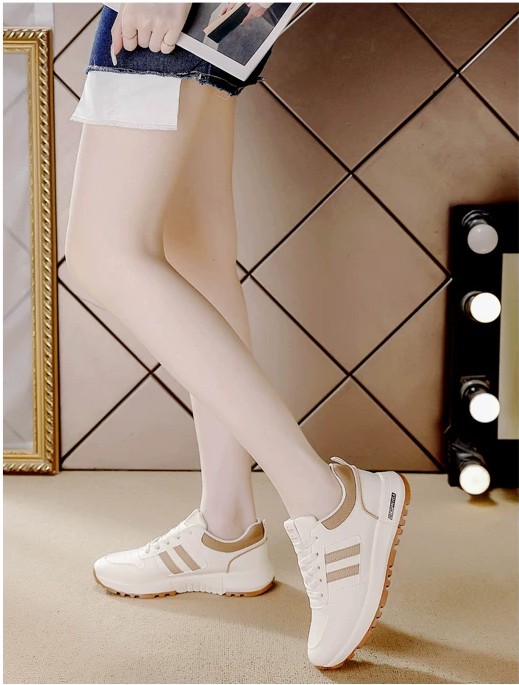
What to wear them with, from desk to airport
Black leather walking shoes are the most useful pair in a wardrobe when the shine level is right, and the most awkward when it isn’t.
Combinations that work with satin-finish black leather:
- Straight-leg dark denim, navy coat, no visible socks. The classic version.
- Wide wool trousers, fine knit, a leather bag in the same tone. Reads intentional.
- Midi skirt with opaque tights. Slightly retro, works from October to March.
- Black tailoring for a client meeting, with the shoes doing the walking between appointments.
What fights a shiny black leather shoe: pale summer dresses, cropped wide trousers, anything with a lot of texture like chunky corduroy. Shine and texture compete, and the shoe usually loses.
If your week is mostly a commute plus a desk, the flat-bottomed board shoes with a cushioned sole give you a leather look without the break-in. For the days that start with a 20-minute walk and end with dinner, the spring and summer leisure shoes handle more distance. And if you need one pair that reads dressier for client days, commuting heels are a separate calculation, covered in this guide to shoes you can stand in for a twelve-hour shift.
If you’re weighing leather against textile for the walking itself, this comparison of leather shoes after 400km of wear has the wear pattern by material. Browse the full shoe range for other uppers, or the sneaker side of the shop if you’d rather have mesh for summer and leather for winter.
Buy the satin finish and stop thinking about it
Matte if you walk in the rain and hate polishing. Satin if you want one pair for everything. Never patent on a shoe you plan to walk in, no matter how good it looks in the shop mirror.
Then condition them before the first wear, not after the first crease. The difference between a pair that looks good in month twelve and a pair that looks tired in month three is roughly eight minutes of care over a year.
And if you’re shopping in a hurry, the order of decisions is finish first, then sole, then fit. Most people do it backwards, fall for the shine, and spend the next year working around a shoe that was never going to survive a commute.
