

The pair looked perfect in the shop. Pale blue, almost grey, sitting under a warm spotlight at two in the afternoon. Three weeks later they were the colour of a swimming pool that nobody had cleaned, with a dark smudge across the outer heel that wouldn’t come off.
That’s the thing about blue walking shoes for women: the shade you pick decides how long they look new, and the shop’s lighting is designed to make you pick the wrong one. Navy forgives almost everything. Ice blue forgives nothing. And the difference between those two outcomes is about ten minutes of homework.
This is the version of that homework I wish someone had handed me, from a person who has ruined a light blue pair and learned the specific reasons why.
Navy hides everything. Pale blue hides nothing. Pick deliberately.
Think of blue in three groups, because that’s how the practical differences fall out.
- Navy and dark indigo: hide scuffs, road dirt, coffee, and rain spots. Look formal enough for an office. Can look almost black indoors.
- Mid blue and denim blue: the most forgiving of the mid-tones, but they show salt lines badly in winter.
- Pale blue and sky blue: beautiful in sunlight, brutal on the evidence. Every scuff shows as grey, every rain drop dries into a ring.
None of those is the wrong choice. But if you walk 8,000 steps a day on city pavement and you want the shoes to look decent in eighteen months, pale blue asks more of you than navy does. That’s not a style opinion, it’s a maintenance budget.
None of those is the wrong choice. I’d just rather you chose the shade on purpose than because it was the only pair in your size on the shelf. Most regrets in blue walking shoes for women come from buying a colour for the shop’s lighting instead of for the pavement outside.
Here’s the test I now do in the shop: take the shoe to the door, look at it in daylight, and then look at the sole edge and the inner heel. Pale blues show dirt first at the sole line, where your trouser hem brushes. That’s the first place to inspect.
There’s a reason navy outsells every other shade in this category, and it isn’t taste. It’s that navy blue walking shoes for women do the job of two pairs: they pass at work and they don’t look precious on a wet Tuesday. If you only want one pair and you walk to a job, start there.
Also look at the toe. If the shoe has a pale rubber bumper, it will pick up grey marks from escalators and car pedals within a week. A darker sole unit hides that entirely, and it’s the main reason navy walking shoes look newer for longer than their lighter siblings.
The dye decides whether you get five years or five months
Two shoes in the same shade of blue can behave completely differently, because leather takes colour in different ways. It’s worth knowing the three main types before you spend money.
Aniline leather is dyed all the way through with transparent colour, so the grain stays visible. It looks expensive and ages into something nicer than it started. It also marks easily and has almost no surface protection. If you see an incredibly deep blue with visible pores and no shine, that’s aniline, and it will need care.
Semi-aniline sits in the middle: dyed through, then given a light surface coat. Most good walking shoes use this. You get depth of colour plus a bit of resistance to splashes.
Pigmented leather has a coloured coating sitting on top of the hide. It’s the most uniform and the most water-resistant, which is why a lot of navy walking shoes use it. The catch is that when it scuffs, the coating lifts and you see a lighter patch underneath. That patch never blends back in, though a matching cream polish gets it close.
If you’re buying online, the product description rarely names the dye type. Look at the photos instead. Shiny, even colour with a smooth surface is pigmented. Matte with visible variation is aniline. The overview of how leather is finished is a useful primer if you want the detail.
Here’s a five-second check that tells you a lot about the finish. Rub the inside of the heel with a white tissue. If colour comes off, the dye is sitting on the surface and it will transfer to your socks for a while. If the tissue stays clean, you’re dealing with a properly fixed dye.
Suede and nubuck are a separate case. Blue suede is gorgeous and it’s a commitment. It scuffs into a lighter nap, it hates rain, and brushing only partly recovers it. I’d wear blue suede in summer and keep it away from winter entirely.
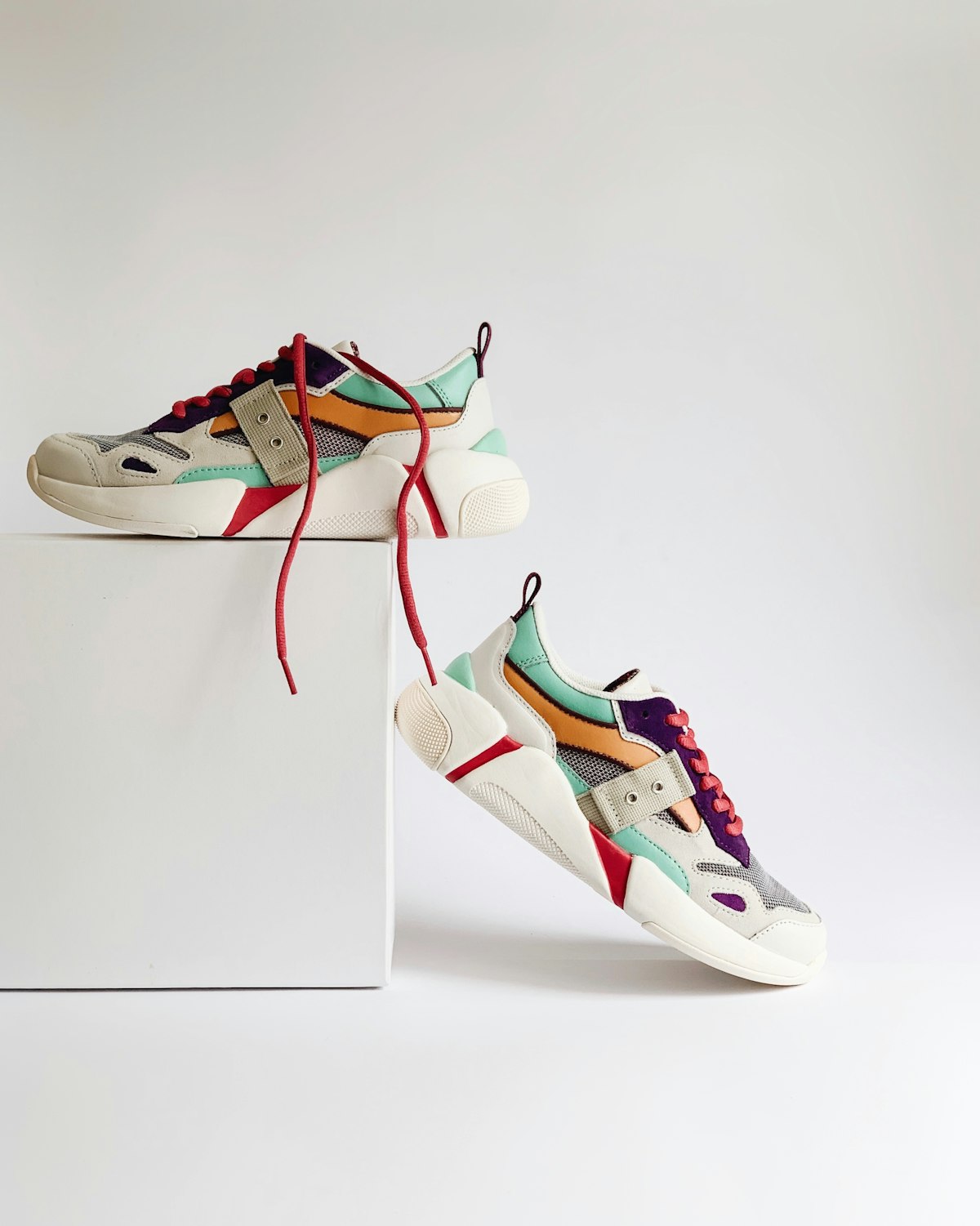
Denim transfer is the real risk, not rain
Everyone worries about getting caught in a shower. The thing that actually ruins light blue shoes is the jeans you wear them with.
Indigo rubs off. It’s a surface dye that never fully bonds to cotton, which is why your favourite jeans fade at the knees and why they leave a blue-grey smear on anything pale they touch. On a walking shoe, the contact points are the heel collar and the outer side of the ankle, exactly where the fabric swings.
You can test your own jeans before you commit. Dampen a white cloth or a cotton bud, rub it firmly on the inside of the hem for ten seconds, and look. If the cloth goes blue, those jeans will mark a pale shoe.
Two fixes work. The first is a protector spray applied before the first wear, which buys you a few seconds to wipe a mark off before it sets. The second is washing new dark jeans once in cold water before you wear them with anything light. Both are cheap and both are ignored by roughly everyone.
Colour fastness is a real, measured property, not a marketing claim. Labs test how much dye transfers under rubbing and wet conditions, and the standards behind those tests are worth knowing if you’re comparing two pairs from different brands. The write-up on colour fastness testing explains the categories in plain language.
Your socks matter too. A pale blue lining with dark socks is fine. A pale blue lining with white socks, on a pair that still has loose surface dye, ends with blue toes and a ruined wash load. Wear dark socks for the first week.
One more transfer risk people miss: the black rubber sole of another pair. If you stack shoes in a cupboard with a dark rubber sole resting against a pale upper for months, it can leave a permanent shadow. Store them sole to sole, or in bags.
Which blue works with what’s already in your wardrobe
A colour that doesn’t go with anything you own is expensive, no matter how good the discount. So count your clothes before you buy.
If your wardrobe leans denim and grey, mid blue works almost as a neutral and pairs with everything navy does. If you wear a lot of black, navy reads as a near-black and looks intentional with black trousers. Pale blue works best with white, stone, and light denim, and it fights with black.
There’s a shortcut that’s saved me twice: put the shoe next to three things you actually wear, in daylight, and see if it looks like it belongs to the same outfit. If one of the three clashes, you’ll notice it every morning.
One trick that costs nothing: if you’re comparing two pairs of blue walking shoes for women online, screenshot both photos side by side and look at them at arm’s length. Whichever reads as the colour you’d point at in the street is the one to order.
Mid blue is the safest bet for a first pair, and it’s the shade I’d recommend to anyone who only wants one pair of blue walking shoes. It’s dark enough for a work day, light enough to look deliberate with jeans, and it doesn’t show scuffs the way sky blue does.
Navy is the second-best default and it has one specific advantage: it looks fine with a coat in winter, which mid blue often doesn’t. If you walk to a office in a wool coat four months a year, navy earns its place.
For a lighter pair you’d wear mostly in spring and summer, sky blue is genuinely lovely and I wouldn’t talk you out of it. Just buy it knowing you’ll be wiping them down weekly, and keep a suede eraser or a magic sponge by the door.
If you want a low-commitment way into the colour, a pair like these breathable mesh walking shoes takes colour well in the mesh panels, and mesh is far easier to spot clean than suede. The soft leather sports pair is the other direction: more structure, better in rain, and it will show creases at the toe within a month.
Rain, road salt and the white tide line
Water and leather are not enemies in the way people think. A wet shoe that dries slowly and evenly is usually fine. A wet shoe dried on a radiator is ruined, because the heat pulls oils out of the leather and leaves it stiff and pale.
The tide line comes from salt. Winter roads are covered in it, it dries onto the leather as a white ring, and if you leave it there it pulls moisture out of the hide and cracks the finish. The fix is a cloth wrung out in cool water with a drop of mild soap, wiped over the whole shoe rather than just the stain, then dried at room temperature with newspaper inside.
If you’re buying blue walking shoes for women and you live somewhere with real winters, ask whether the upper is treated before you pay. It saves a step.
Protector spray is worth the $15 if you own pale blue shoes. Reapply every four to six weeks if you walk daily. It doesn’t make the shoe waterproof, and any product claiming that on a mesh upper is overselling. It buys you time to blot instead of scrub.
Drying is where most people go wrong, so the routine is worth spelling out. Stuff the shoe with newspaper, change the paper after an hour, and leave it in a hallway rather than a bathroom. A shoe that dries in six hours at room temperature keeps its shape. One that dries in forty minutes next to a radiator comes out looking two years older.
Mesh uppers dry fast and clean well, but they hold grit in the weave. A soft brush with a little soapy water lifts it. Don’t use a hard brush on mesh, because it fuzzes the fibres and that fuzz catches dirt permanently.
One mistake worth naming: waterproofing a brand-new suede shoe with a wax product. Wax darkens suede and changes the colour permanently. Use a suede-specific fluoropolymer spray, test it on the heel first, and accept that blue suede and wet pavements are a bad combination.
Judge the colour in daylight, not under shop lights
Shop lighting runs warm, around 3000K, and it pushes blue toward teal. Daylight is closer to 5600K and makes the same shoe look cooler and greyer. That gap is why a pair can look wrong the moment you get outside.
Walk to the window or the door. If the shop has no daylight, take a photo with your phone and look at it outdoors. Phone cameras aren’t colour-accurate either, but they’re more honest than a spotlight.
One retail trick worth knowing: ask to see the shoe under the shop’s coolest light, usually near the fitting bench rather than the display wall. Two or three lamps in a shoe shop will render the same blue completely differently, and the one near the mirror is usually the most honest.
Buying online has the opposite problem: the product photo is usually lit and edited. Look for a photo of the shoe on a real foot, in a real setting, and read the reviews that mention colour. “Darker than the picture” and “more grey than blue” are the two most useful phrases in any review section, and they show up constantly.
Order from somewhere with a proper return window and try them on at home in the afternoon. Not in the morning, when your feet are smaller, and not straight after a long walk when they’re swollen. Mid-afternoon is the honest measurement.
If you’re shopping online, order two shades at once if the shop allows it, keep the one that looks right in your own hallway, and send the other back. Postage both ways is usually cheaper than a pair you never wear because the colour was off by two shades.
While you’re at it, wear the socks you’d actually walk in. A blue shoe with a white sock is a different outfit from the same shoe with a grey one, and you’ll know in ten seconds which one you are.

Care that keeps blue from turning grey
Blue is the colour most likely to dull rather than fade. Dust settles into the surface, sunlight bleaches the top layer, and after a year the shoe looks washed out without any single dramatic stain to blame.
A two-minute routine once a week prevents most of it. Wipe with a damp cloth, dry at room temperature, and brush the nap if you’re dealing with suede or nubuck. That’s it. No polish needed on mesh, and a neutral cream on smooth leather twice a season.
Store them somewhere dry and out of direct sun. A cupboard by a window is worse than people expect over two summers. If you have the box, use it, because dust is the slow killer.
Don’t machine wash leather or suede, whatever the internet says. Mesh trainers can survive a cold gentle cycle in a pillowcase, but the glue that holds a leather walking shoe together doesn’t enjoy it, and blue dye can bleed into the lining.
Rotate with a second pair. A shoe worn every day never fully dries inside, and trapped moisture is what makes a lining smell and a sole delaminate. Two pairs alternated will outlast three worn in sequence.
If you end up with two blue walking shoes women’s pairs, one for wet days and one for dry, keep the darker one by the door. You’ll reach for it more often than you expect, and the lighter pair stays new for longer.
Final check on fit, because colour is pointless if they hurt. Your longest toe should have 8 to 10mm of clearance standing up, the heel should hold with under 5mm of lift on a slope, and the widest part of your foot shouldn’t press against the upper. If a pale pair passes those tests and a navy pair doesn’t, buy the pale pair and a bottle of protector spray.
For more colour-by-colour notes, the piece on pink walking shoes and which shades last runs the same logic through a harder colour. And if your feet are wide, read the guide to women’s 4E width walking shoes before you fall in love with a shade.
Take the pair to the window before you pay. If the blue still looks like the blue you wanted in daylight, it’s the right shoe, and the rest is just wiping them down on Sundays.
