

First, check whether you actually have high arches
Most women who think they have high arches do. Some don’t, and they’ve been buying the wrong insoles for years because a shop assistant glanced at their footprint once.
The quick test: wet your foot, stand on a piece of brown paper or a dry paving slab, and look at the print. A high arch leaves a narrow band down the outside, sometimes just a thin line connecting the heel to the ball. A neutral foot leaves a band about half as wide as the foot. A flat foot leaves nearly the full shape.
That test is rough. It tells you the shape of your sole, not how your foot behaves when you walk, and those are different questions. If your print is narrow but your shoes wear evenly across the heel, you probably just have a high instep rather than a genuinely high arch.
The better test costs nothing and needs a phone. Film yourself walking away from the camera, ten paces, barefoot on a hard floor. Watch the back of your heel. If it tilts outward as you push off, you’re supinating, which is what most high arches do. If it rolls inward, you’re in the other camp and the piece on walking shoes for flat feet is the one you want instead.
Why bother? Because high arches and flat feet need almost opposite shoes, and the shoe industry sells both under the same word. “Arch support” means one thing to a flat-footed buyer and something close to useless to you. Getting the category right halves the number of shoes you have to try on.
One more clue from your own cupboard: look at the wear pattern on the outside edge of an old pair. A high arch leaves a narrow strip of wear down the lateral border with almost nothing in the middle. If the wear is broad and central, your arch is doing more work than you think.
What a high arch does to your walk, in plain terms
A high arch is a rigid lever. It doesn’t flatten much under load, so it doesn’t absorb shock the way a mobile foot does. Pes cavus, the medical term for a high-arched foot, is associated with exactly that: reduced shock absorption and extra load at the heel and the ball. Supination and pronation are worth a two-minute read, since the vocabulary comes up in every shoe review you’ll see.
In daily walking, that shows up in three predictable places.
- Heel: the first point of contact takes more force, and heel pain after long days on concrete is common.
- Ball of the foot: the metatarsal heads carry load that a flatter foot would have spread. Callus under the second and third toes is a clue.
- Outside edge of the shoe: the sole wears on the lateral border before the middle, because your foot rolls outward rather than in.
Then there’s the fit problem, which is the one nobody warns you about. A high arch makes the top of your foot taller, so you need more volume at the instep. Most shoes are built for an average instep. You end up with a shoe that’s long enough and wide enough, and still presses down on the top of your foot until your toes go numb at 3km.
That’s why so many high-arched women end up sizing up, which then makes the heel loose, which then causes a different set of problems. The fix is volume, not length.
There’s a knock-on effect worth knowing about. Because the foot doesn’t flatten, the calf and Achilles do more of the work of absorbing each step, and they get tight. Tight calves pull the heel up and forward, and suddenly your shoe feels like it’s pushing you downhill. If you’ve had a summer of walking in flat shoes and your calves are sore, that’s the mechanism, and a 6mm to 10mm drop helps more than stretching alone.
The high arch also changes where your foot lands. Many high-arched walkers land slightly further back on the heel than average, which puts more load on the heel fat pad. That structure thins with age, which is why heel comfort often becomes the deciding factor in your forties and fifties rather than the arch itself.
Why “arch support” is close to the wrong ask for you
Here’s the counter-intuitive part. Flat feet often benefit from a shoe or insole that props the arch up. High arches usually don’t, because the arch is already high and rigid. Push it up further and you put more pressure on the middle of the foot and lose the little contact you had.
What you want instead is load distribution. Cushioning under the heel and the ball, a footbed that fills the space under the arch without levering it, and a shoe that doesn’t fold where your foot is stiff.
Sounds like hair-splitting. It isn’t. I spent two years in a pair of “maximum support” walking shoes that turned my mild heel ache into a genuine problem, and the change that fixed it was a soft, flat-ish footbed with a metatarsal pad. Less support, more comfort, and the pain went in six weeks.
So when you read product copy, translate it. “Firm arch support” means flat-footed buyers. “Cushioned with a contoured footbed” is closer to what you need. “Neutral” is usually the right category, and it’s the least exciting word on the box.
There’s a second reason to distrust the phrase. Support, in shoe marketing, often means a firmer medial post, which is a denser wedge on the inside of the midsole. That wedge exists to stop a foot rolling inward. If your foot doesn’t roll inward, the post does nothing except make one side of the shoe stiffer than the other, and you’ll feel it as an odd tilt after an hour.
Test it in the shop. Turn the shoe over and press along the inside edge of the midsole. If it’s noticeably harder than the outside edge, that’s a medial post. Fine for flat feet. Not what you’re after. The same test spots a shoe that’s been designed for overpronation, which is the opposite problem to yours.
Where the millimetres should go

If you only remember one thing, remember this: heel first, ball second, arch last.
Under the heel, you want 10 to 15mm of foam that stays firm rather than collapsing. When you land on a high-arched foot, there’s less ankle travel to soften the impact, so the shoe has to do more of that work. Too soft and you bottom out; too firm and your heel takes the whole load.
At the ball of the foot, you want a metatarsal pad or a slightly thicker forefoot layer. This is where high-arched walkers get sore after 6,000 steps on pavement, and it’s the area most walking shoes under-cushion because they’re designed around heel strikers with average arches.
Beneath the arch itself, you want contact, not lift. The footbed should touch the arch along its length so pressure is spread. If you can slide a finger under your arch while standing in the shoe, the footbed isn’t touching and you’re loading two points instead of the whole sole.
One more measurement that matters: heel-to-toe drop. A high-arched foot generally does better in a moderate drop, somewhere between 6mm and 10mm. Zero drop feels fine for the first week and then the calf and Achilles start complaining, because a rigid arch doesn’t lengthen the way a flexible one does. If you already wear flat shoes happily, ignore this. If you’ve had Achilles twinges, it’s the first number to check.
Outsole grip is the last piece. Because you push off from the outside edge, you want rubber that wraps slightly up the lateral side rather than stopping flat at the bottom. It’s a small detail that adds a few months of useful life, and it’s visible in any product photo if you know to look.
Insoles: what to buy, and what to leave on the shelf
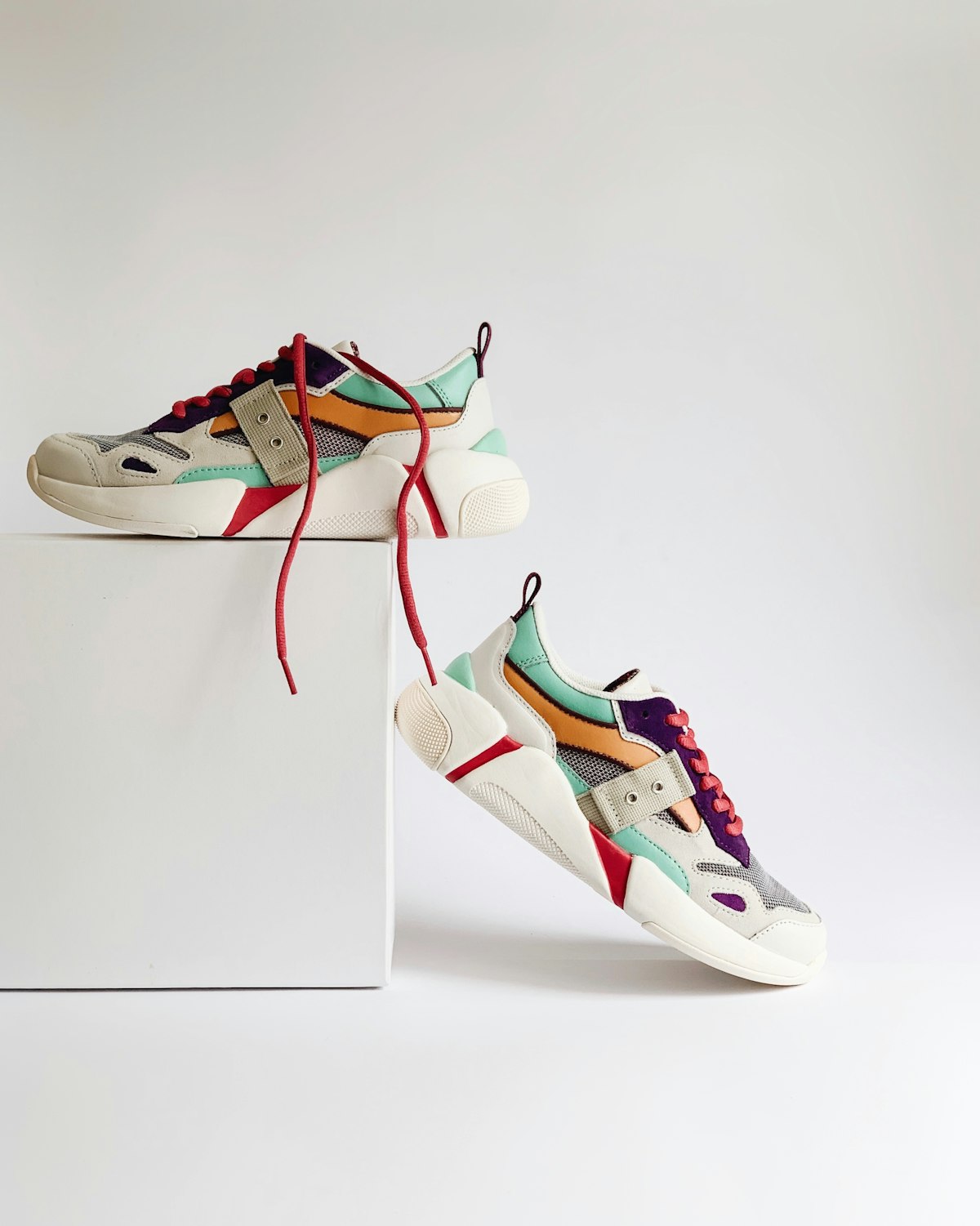
Replacing the insole is the cheapest real improvement available to you. It’s also where most people waste money, because the shelf is full of products designed for flat feet.
What to look for:
- Soft or medium density, not firm. You’re adding cushioning, not correction.
- A metatarsal pad just behind the ball of the foot, roughly 5 to 8mm thick.
- Heel cup depth of 15mm or so. Enough to hold, not enough to lever.
- No rigid plastic shell. A hard orthotic shell under a rigid arch is a recipe for midfoot pain.
What to skip: “high arch support” insoles with a raised dome under the midfoot. They feel precise in the shop and bruise by day three. Also skip the thin gel pads if you’re walking long distances; they compress to nothing within a month.
Fit matters as much as material. A thick insole in a shoe that was already snug on top of your instep makes the whole thing worse. Take the original insole out, compare thickness, and buy something within 2mm of it. If you need more cushioning than that allows, you need a bigger shoe, not a thicker insole.
Price is a poor guide here. I’ve had a cheap flat EVA insole with a stuck-on metatarsal pad outperform a moulded one that cost four times as much, because the cheap one actually matched the volume of the shoe.
Replacement timing is easy to get wrong in the other direction. Insoles don’t need replacing on a schedule; they need replacing when the heel area compresses. Press it monthly, and when it stops springing back, swap it. For a daily walker that’s roughly every nine to twelve months, and it’s the cheapest maintenance you’ll ever do on a pair of shoes. Keep the old one in a drawer as a template for thickness when you buy the next.
Fit problems specific to a tall instep
This is where high arches cost you the most time in shops. The shoe fits everywhere except across the top of your foot, and that’s the one place you can’t ignore.
Signs the volume is wrong: the tongue presses when you lace up, the laces leave a mark within ten minutes, your toes tingle after 2km, or the upper bulges at the sides of the tongue. Any of those and you need a different last, not a different size.
Options that work, in order of how well they work:
- Skip an eyelet. Lace from the third pair up, leaving the bottom two looser across the instep.
- Use a thinner insole to gain 3mm of vertical room without going up a size.
- Choose a shoe with a soft, unpadded tongue and a wider throat opening.
- Try a wide fit in your normal length, which adds room at the sides without lengthening the shoe.
What doesn’t work: lacing looser everywhere. You lose heel hold, and then your heel lifts with every step. Loosen only the bottom two eyelets and keep the top two firm.
Socks change the volume too, and it’s the variable people forget. A thick cushioned sock can eat 3mm of instep room, which is the difference between comfortable and unbearable in a shoe that was already close. If you find a pair you love that’s slightly tight on top, try it with a thin sock before you reject it. And if you’re between sizes, always take the one that fits with the thinner sock, then add volume with an insole rather than removing it with a size.
Summer makes all of this easier and winter makes it harder. Feet swell in heat, which loosens the instep, and shrink in cold, which tightens it. A pair that fits perfectly in July can feel like a clamp in January, so buy winter walking shoes in the afternoon in a warm room if you can.
The breathable mesh walking shoe handles this better than most because the upper has some give across the instep without a stiff overlay. If your feet are also wide, the flat-bottomed board shoe gives you a generous toe box and a soft forefoot, which is the combination most high-arched walkers end up wanting.
Break-in, rotation, and the outside-edge wear problem
Because your foot rolls outward, the lateral edge of the sole wears first. That’s not a defect, and it’s not something to correct with a shoe. It’s momentum doing what momentum does.
What it does mean is that your shoes reach the tipping point earlier than other people’s. Once the outside heel is worn to a visible slope, the shoe starts rolling you further outward with every step, and the wear accelerates. Check the outside corner every couple of months and replace before it’s rounded off.
Break-in for a high-arched foot should take days, not weeks. Wear them for an hour at home, then a 2km walk, then a normal day. If the instep is still pressing after three wears, the shoe is wrong and no amount of patience will fix it.
Rotation helps more than usual. Two pairs alternating gives the foam 24 hours to recover, which matters when your whole stride depends on that cushioning rather than on ankle movement. The piece on underpronation and why cushioning beats support goes further into the mechanics if you want the longer version.
And if your current shoes have lasted two years, they’re done regardless of how the upper looks. Foam at the heel and ball is what you bought them for, and it’s the first thing to go.
There’s an easy way to tell. Put the shoe on a flat table and look along the sole from heel to toe. A worn pair will rock slightly, with the heel and ball sitting lower than the arch area. That rock is the foam collapse, and it’s why a two-year-old shoe feels like it’s fighting you on uneven ground. Compare the old pair against a new one side by side and the difference is obvious in about four seconds.
What to check in the shop, and when to stop self-diagnosing
Five minutes, in this order.
Press the forefoot with your thumb. It should give 3 to 4mm before resisting. Then press the heel, which should feel firmer than the forefoot. Then put the shoe on, lace only the top two eyelets, and stand up. If the top of your foot complains immediately, put it back.
Walk 30 paces on the hardest floor available. You’re checking two things: whether your heel lifts, and whether you can feel the ground through the forefoot. A little ground feel is good. Sharp pressure under the ball is not.
Finally, take the insole out and stand on it. Your arch should be in contact along most of its length. Gaps mean the footbed shape is wrong and you’ll be buying insoles anyway.
Where shoes stop being the answer: if you have persistent pain in the same spot for more than three weeks, clawed toes, a deep callus that keeps returning, or numbness, get it looked at. A high arch can be a structural feature or a neurological one, and those need different help. Footwear is a good first move and a poor only move.
One practical note on callus. Under a high arch, hard skin builds under the first and second metatarsal heads because that’s where the pressure lands. Filing it down helps for a week; a metatarsal pad changes where the pressure goes, which helps for months. If you’re filing the same spot every fortnight, the shoe is the problem.
For most people, though, the fix is unglamorous: a neutral shoe with real forefoot cushioning, a soft insole with a metatarsal pad, and a lacing pattern that leaves the top of your foot alone. Try that before you spend anything on custom anything. If you want to browse by shape rather than by label, the trainer and walking listings are a reasonable place to start comparing stack heights.
Then go for a two-kilometre walk and see whether your feet shut up. That’s the only test that counts.
