You’re on your feet from 7:45 until 8 at night. Somewhere around hour six, the shoes you thought were fine in the shop start telling you the truth, and it’s not kind. By hour nine you’re standing on the outside edge of your feet without noticing, and by the time you get home you’re walking like you’re on ice.
Comfortable shoes for women for work come down to four numbers, and none of them are the colour or the brand. Heel height, heel-to-toe drop, forefoot cushioning thickness, and the width at the ball of your foot. Get those right and you can stand for twelve hours. Get them wrong and a £180 pair will hurt more than a £40 pair.
Here’s what actually matters, in the order it matters. And one promise: no pair of comfortable shoes for women for work will fix a 14-hour shift on concrete. What they can do is stop making it worse.
Heel height: 35 mm is the practical ceiling
Anything under 35 mm, your calf doesn’t complain. Between 35 mm and 60 mm, most women can do a full day if the heel is wide and the shoe is laced. Above 60 mm, you’re borrowing comfort from tomorrow, and the loan comes due in your lower back.
The reason is ankle angle. A higher heel shifts load onto the ball of your foot and shortens the calf. Standing still is worse than walking in this position, because your foot has no movement to pump blood back up. If your job is reception or retail, where you stand in one spot, treat 35 mm as the hard limit.
Heel width matters as much as height. A 50 mm block heel distributes load across a wider base than a 30 mm stiletto, so a chunky 50 often feels steadier than a thin 30. Look at the base area, roughly a square centimetre count, not the millimetres in the product name.
- 0 to 20 mm: flats, loafers, most sneakers, safest for long standing
- 35 to 50 mm: the office compromise, fine with a wide heel
- 60 mm and up: sit-down jobs, weddings, not a twelve-hour shift
One correction to the usual advice: a completely flat shoe isn’t automatically better. A zero-drop flat with no cushioning loads your heel and Achilles differently, and for some women it’s worse than a 25 mm wedge. If you have tight calves, a small heel is kinder than none.
Soft isn’t the same as supportive
Press your thumb into the midsole at the ball of the foot. A good work shoe gives about 5 mm to 8 mm before it resists. If your thumb sinks 15 mm with no resistance, the foam will bottom out by 2 p.m. and your metatarsals will take the load instead.
That’s the trick the memory foam marketing plays on everyone. It feels amazing for the first 40 minutes and then compresses into a pancake. There’s a whole article on this site about why memory foam walking shoes flatten after a season, and the same applies to work pumps.
What you want is a firmer foam with a rocker shape, so the shoe rolls you forward instead of letting you sink. EVA at 55C to 60C hardness is the standard for work footwear. Anything softer and you’re trading a good first week for a bad third month.
Also check the shank. Bend the shoe at the middle. It should resist. A shoe that folds in half under the arch has no shank, which means your foot’s arch is doing the structural work all day. That’s a fast track to arch pain by Thursday.
The toe box question nobody asks until it’s too late
Your feet swell about 5% over a working day. In a closed shoe, in summer, on a hard floor, that number can hit 8%. So the shoe that fits at 8 a.m. is a size too small at 4 p.m., and the pinch lands on your little toe and the top of your foot.
Buy for the end of the day. Go shopping after work, or at least after a walk. Try shoes with the socks you’ll wear, and stand up for two minutes in them rather than sitting on the bench and wiggling your toes.
Aim for 8 mm to 10 mm between your longest toe and the end of the shoe, measured standing. For a pointed toe, add another 3 mm, because the taper steals room your toes still need.
If you have a bunion, the shape of the toe box matters more than the size. Look for a wide, rounded toe and a soft upper with no seam over the joint. A seam sitting exactly on a bunion will rub through skin in about three hours. I’ve seen it happen on a pair that cost €210.
Socks and insoles do more than the shoe does
Swap the insole before you swap the shoe. Most stock insoles are 3 mm of flat foam with no arch. A £20 pair of contoured insoles with a firm arch and a cushioned heel will change how a £70 shoe feels, and it’s reversible if it doesn’t work.
Replace them every 6 months to 12 months if you’re on your feet daily. Compressed insoles are worse than none, because they hold the shape of a flattened foot.
Socks are the other lever. Thin cotton socks bunch under the arch and hold sweat against the skin. Merino or a cotton-synthetic blend with a padded sole keeps friction down and dries faster. In winter, a wool sock adds roughly half a size, so test with them on. In summer, change socks at lunch if you can. It sounds excessive until you’ve done a 12-hour shift in damp socks and felt what it does to your heel skin.
Two pairs beat one expensive pair
Foam needs 24 hours to recover. Wear the same pair five days running and the midsole never fully rebounds, so it packs down faster and unevenly. Two pairs rotated will outlast three pairs worn one after another, which means the cheaper strategy is also the longer-lasting one.
If you can only buy one pair, at least take them off at lunch and let them air. And don’t store them in a hot car, because heat above 40°C permanently deforms EVA.
Rotation also helps with smell and with the upper. Leather and knit both stretch with body heat, and a day off lets them return to shape. A shoe that’s worn daily becomes a shoe shaped like yesterday’s swollen foot.
The styles that actually work for a long day
Loafers with a rubber sole and a 20 mm heel are the safest bet for office work. They slip on, they hold the heel, and they don’t need lacing at 6 a.m. Look for a flexible forefoot and a firm heel counter.
Laced derbies and oxfords give you the best fit because you can adjust across the instep. If your foot is narrow, this is the category to shop. If your foot is wide, look for a wide fit rather than sizing up, since sizing up shifts the flex point forward and creates a crease across your toes.
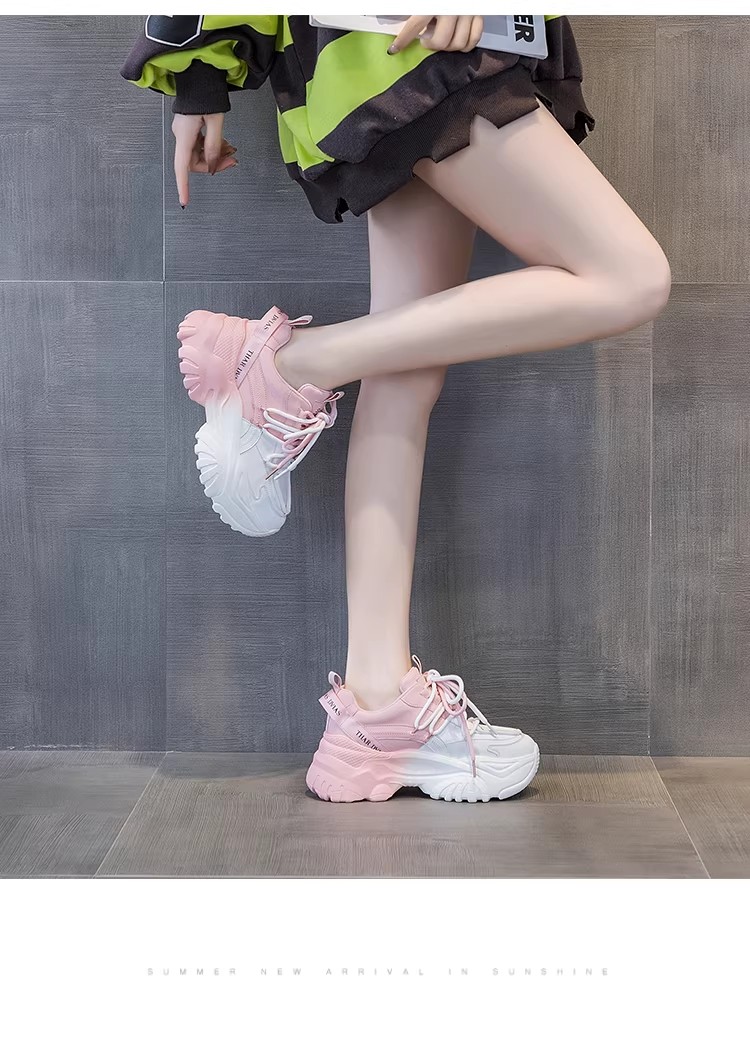
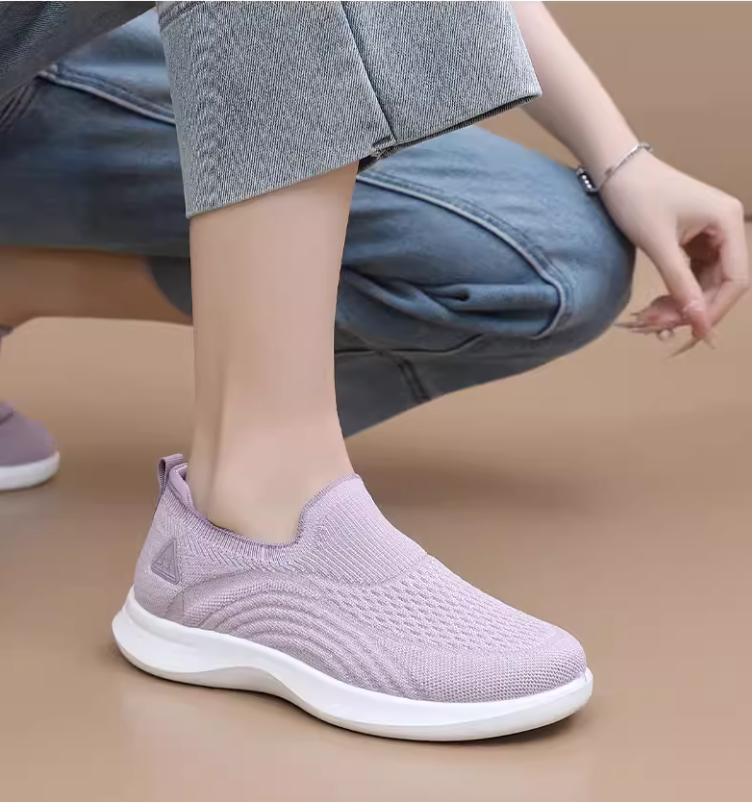
Sneaker-style work shoes are fine if the upper is structured. A soft knit runner looks casual and collapses at the sides after a month. A leather or suede upper on a running-style sole holds its shape, and nobody in a business-casual office will say anything.
Flats with a thin sole are the trap. They look professional and feel like standing on cardboard by noon. If you want a flat, pick one with at least 15 mm of midsole under the forefoot, and check that the heel isn’t a hard slab.
For a middle ground, a soft-soled suede commuter shoe handles a full office day without the heel math. If your workplace is casual, a breathable mesh walking shoe is the safer pick for standing all day, and there are more options in the walking shoe category.
What to skip, and when to spend
When people ask me which comfortable shoes for women for work actually deliver, I point at the midsole, not the label. Skip anything described as “comfort” with a 70 mm heel and no platform. Skip shoes with a stitched seam across the top of the toes if you have a high instep. Skip pointed toes for a job where you’re on your feet, no matter how good they look with trousers.
Spend on the midsole and the fit, not the upper. A £120 shoe with a proper shank and 20 mm of forefoot foam will serve you better than a £200 shoe with a designer name and a flat insole. The upper is what people see. The midsole is what your knees feel.
Also spend on a second pair early rather than late. The moment you notice the foam has gone flat under the ball of your foot, you’re already compensating with your gait, and that shows up as knee or hip pain within a fortnight.
If you do develop heel pain that’s sharp in the morning and eases after ten minutes of walking, that’s the classic pattern of plantar fasciitis, and shoe choice is part of the fix rather than the whole fix. Get it checked rather than buying your way out of it.
Three jobs, three different days
A nurse on a ward covers 9 km to 12 km in a shift, mostly walking, with a lot of sudden stops. What she needs is grip and a heel that locks, because a slip on a wet floor is how this ends badly. A running-style work shoe with a lugged outsole makes more sense than a loafer, and closed lacing beats a slip-on for the same reason.
A teacher stands for maybe four hours and sits for three, then stands again. That pattern punishes a stiff shoe more than a soft one, because the shoe has to keep re-forming around a foot that keeps changing shape. A lightly cushioned lace-up with a flexible forefoot works better here than a structured derby.
Retail or hospitality is the worst of both: standing still at a till, then sprinting to a stockroom, then standing again. This is where heel height quietly wrecks people, because standing still in a 50 mm heel is harder on the foot than walking in one. If you can’t go flat, pick the widest heel you can find and put a cushioned insole under the forefoot.
If your day is a hybrid of desk and site visits, one pair can cover it. Choose a leather sneaker with a 20 mm sole, and keep a second pair of comfortable shoes for women for work in your bag for the days that run long. That’s not vanity, it’s load management.
Travel weeks are their own category. Airport floors are hard, terminals are huge, and you’ll walk 8 km before lunch. Wear the bulkiest pair on the plane and pack a flat one, and never break in new shoes on a trip.
The four-minute shop test
Stand in the shoes for two minutes, not ten seconds. Walk 20 steps on a hard floor, not carpet. Then do this.
- Press the heel counter: firm, springs back, holds your heel when you twist
- Bend the toe: flexes at the ball, not the middle
- Twist the shoe: resists, doesn’t wring out like a cloth
- Check the seam over your toes: no contact when you flex
Then walk away and come back in ten minutes. If you’re thinking about your little toe already, it’s a no. The shoe doesn’t get better.
One last thing about heel height and long days. The biomechanics of a raised heel haven’t changed since the shoe was invented, whatever the insole marketing says. Height costs you stability. The only question is how much you’re willing to trade for how it looks, and whether your job lets you sit down.
If you only take one thing from this: the best comfortable shoes for women for work are the ones you stop noticing. Buy the pair you can forget about by 3 p.m. That’s the only comfort test that counts, and it’s the one no product page can run for you.