

You bought the insert. You put it in the dress shoes. Now your heel lifts out of the shoe with every step and the top of your foot feels tight by 11am.
That’s the usual story. Orthotic dress shoes for women are hard to get right, not because the shoes are bad, but because an insert adds 4 to 6mm of volume inside a shoe that was built with no spare room. Everything shifts: your heel sits higher, your toes get closer to the front, and the laces or strap that felt fine in the shop now cuts in.
The fix isn’t a better insert. It’s picking a shoe shape that has room for one from the start. Below is what to check before you pay, in the order that matters.
Most dress shoes are built to look good empty
A dress shoe is designed around a last, which is the foot-shaped block the upper is stretched over. That last is usually narrow through the middle and shallow at the heel, because that’s what makes a shoe look sleek on a shelf. Your foot with an orthotic in it is wider, taller and further back than that shape.
So the shoe doesn’t fit your foot. It fits the version of your foot the brand imagined. That’s why a pair can feel fine for twenty minutes and unbearable by the afternoon: nothing is actively squeezing at first, but the volume has nowhere to go, and pressure builds in the two places with no give, the heel counter and the toe box.
Shoes built for orthotics are different in three specific ways. They have a removable footbed rather than a glued-in one. They have a deeper heel cup so a 5mm insert doesn’t push your heel out of the shoe. And they have a straighter inner edge through the arch, so the support sits under your foot instead of jabbing the side of it.
None of those things show up in a product photo. You have to look inside the shoe, or read the description for the word “removable” and nothing else.
The removable footbed is the only spec worth chasing
If a listing says “cushioned” and doesn’t say “removable”, assume the footbed is glued down. You can sometimes force it out, and you’ll usually take a layer of glue and half the insole lining with it.
A removable footbed does two things for you. It lets you drop in a full-length orthotic without stacking two layers of foam, which is what causes the tight-instep feeling. And it gives you back the original insole for the days you don’t want support.
Watch the depth, too. A shoe that fits a thin 3mm insert may not fit a moulded 6mm one. If your orthotic is rigid and full-length, you need a shoe with a deep heel and a roomy forefoot, and you may need to go up half a size to keep your toes off the front.
That half size is not a failure. It’s the correct answer. According to the clinical definition of an orthotic device, the insert is meant to change how load travels through your foot, and it can only do that if it sits flat in the shoe rather than riding up at the heel.
Heel height maths once you add 5mm
Here’s a number most people miss. A 30mm heel with a 5mm insert inside is not a 30mm heel anymore. Your heel is 5mm higher relative to the toe, so the effective drop goes up, and your calf tightens that little bit more over an eight-hour day.
In practice, that means dropping your target heel height by about 5mm when you plan to wear an orthotic. If 25mm was comfortable before, look at 20mm now. If you need a heel for work, a block heel of 20 to 30mm with a wide base will do more for you than a 50mm kitten heel with a narrow tip, because the base is what stops the ankle rolling.
Also check the ramp angle, which is how steeply the sole rises from toe to heel. A shoe with a thick forefoot and a thin heel is easier on the calf than the reverse, even at the same heel height. You can feel this by putting the shoe on a table and looking at the gap under the toe.
If you want the longer version of this argument, there’s a useful read on how to tell a leather heel that lasts from a one-season shoe, and the construction points apply to orthotic-friendly styles too.
Toe shape decides whether you can wear them at all
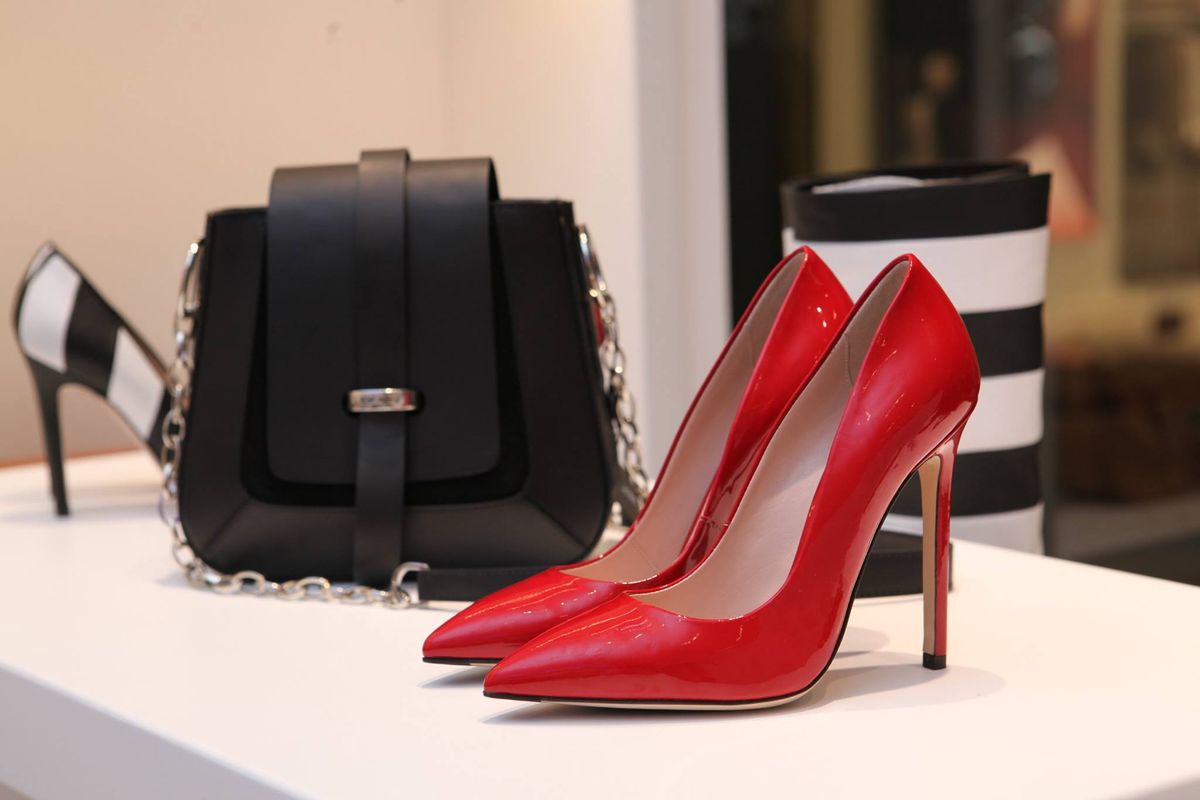
Pointed toes and orthotics are a bad marriage, and it’s not about looks. A pointed toe forces your toes into a triangle, and the rigid orthotic underneath won’t bend to follow it. The result is pressure on the big toe joint and a shoe that feels a size small even when it isn’t.
Square, rounded and almond toes all give you more room at the same length. You want 10mm between your longest toe and the front of the shoe with the orthotic in, measured standing. If you can’t get that, the shoe is wrong, not your foot.
Bunions make this urgent rather than annoying. With a bunion, the joint needs a soft upper that stretches and a last that’s straight on the inside edge, so the shoe doesn’t sit on the bump. A firm leather will hold its shape and press. There’s a plain-language summary of what’s happening at the joint on the Mayo Clinic’s bunion page, and the takeaway for shoe buying is simple: soft upper, straight inner edge, room across the ball.
Materials matter here too. Suede and soft nappa give. Patent, coated leather and stiff calf hair do not. If you have a bump or a wide forefoot, the same shoe in suede can be wearable where the patent version is not.
Three shapes that take an insert without a fight
Not every dress shoe is hopeless. These are the shapes that tend to work, based on what has room inside rather than what looks good on a shelf.
- Block heel pump, 20 to 30mm: the wide base spreads load, and the higher vamp holds your foot in without a strap.
- Loafer with a soft vamp: no laces to fight, and the opening is generous enough to take a moulded insert.
- Mary Jane with an adjustable strap: the strap stops the heel lifting once the insert raises your foot.
Two examples worth looking at. A retro block heel with a rounded toe, like these suede retro heels with a generous toe box, works because suede gives where a coated leather would press. And if you need something that reads formal with a dress, a woven leather pair such as these woven white leather heels has a softer upper than the photo suggests.
For a lower, more forgiving option, a pointed-toe style with a slim heel is the one to avoid unless the toe is genuinely roomy. Most aren’t. If you’re browsing, the heeled styles on the site are easier to filter by height than by shape.
Breaking them in without breaking the fit
Do not break in new dress shoes on a work day. Wear them for two hours at home with the orthotic in, on carpet, then take them off and look at your feet for red marks. Red marks that fade in ten minutes are fine. Marks that are still there an hour later mean the shoe is pressing, and no amount of wearing will fix that.
Leather does stretch, but mostly across the vamp and the width, not length. If the shoe is short, it stays short. That’s why the 10mm rule matters more than any break-in trick.
One trick that does work: put the orthotic in, then lace or strap the shoe with your foot pushed back into the heel. Most people lace too loosely at the bottom and too tightly at the top, which lets the heel slide and pinches the instep. Start snug at the bottom, looser as you go up.
And keep the original insoles in a drawer. If you sell the shoes or your orthotic needs change, you’ll want them.
Socks, straps and the 4pm swell
Your feet get bigger during the day. Not dramatically, but enough that a shoe which fits at 8am will be tight by 4pm, and if you’ve added an orthotic there’s even less room to give.
Two things help. First, try dress shoes on in the late afternoon, or at least buy with the assumption that you need 3 to 4mm of spare length rather than a snug fit. Second, think about what you wear inside them. A thin cotton or bamboo sock takes up less room than a trainer sock with a cushioned sole, and it wicks better than nylon, which is why your feet slide forward in a lining that feels slippery.
Straps are more useful than they look. On a Mary Jane or a slingback, an adjustable buckle lets you tighten the shoe as your foot swells, and loosening it after lunch is a two-second fix for a hot afternoon. A fixed strap has one setting and you live with it.
Half sizes matter here too. If you’re between sizes, size up and add a thin insole under the orthotic. Taking up space is easy. Creating it isn’t.
One product note: a lower vamp makes a surprising difference with an insert in. A shoe that covers more of your foot holds it back against the heel without needing a tight strap. A style like these french retro heels with a covered vamp sits in that category, and it’s the sort of shape that works when you can’t use a strap.
If your feet swell a lot in summer, keep a second pair half a size up at your desk. It sounds excessive until the first heatwave, and then it’s the most sensible thing in the building.
Where I’d spend and where I wouldn’t
Spend on the upper and the heel construction. A well-made block heel is glued and nailed, and it survives being worn on pavement. A cheap one is a plastic mould with a screw in it, and it will wobble within a season, which is exactly the motion your orthotic is trying to reduce.
Save on the insole. The factory insole in most dress shoes is going in a drawer anyway, so don’t pay extra for “arch support” that you’re about to remove.
My contrarian take: a $300 orthotic in a $60 shoe usually feels worse than a $60 insert in a $150 shoe. The shoe’s job is to hold the insert flat and stop your heel moving. The insert’s job is to support the arch. When people are disappointed with orthotics, it’s usually the shoe failing at its half of the deal.
If your feet hurt in every pair
One honest caveat. If dress shoes hurt regardless of shape, height or insert, the problem may not be shoes at all. Flat feet, plantar fasciitis, hallux rigidus and nerve issues all present differently, and the right answer might be a custom orthotic made from a cast of your foot rather than anything off a shelf.
Get assessed before you buy a fourth pair hoping it’ll be different. Take your current shoes with you, because the wear pattern on the sole tells a podiatrist more than your description will.
Then, when you do buy, do it at the end of the day with your orthotic in your bag. Try the shoe on with the insert, stand up, walk twenty steps, and check two things: can you feel the front edge of the insert under your toes, and does your heel stay down when you lift your other foot. If both answers are no, buy that pair. If either is yes, walk away, even at a discount.
