

You saw them in a shop window in June: pale straw-coloured shoes with a visible weave, sitting next to a linen dress. They looked like the answer to a hot commute. Then you picked one up and it felt like a basket with a sole glued on, and you put it back.
That reaction is fair. Plenty of wicker shoes women buy in summer are exactly that: basketwork over a cardboard sole, designed for a photograph and nothing else. The good ones are a different object entirely, and the difference is in how the weave is finished and what’s underneath it.
Short version: a woven shoe works if the weave is tight at the heel and loose only across the vamp, if the sole has some structure, and if you can flex the whole thing in one hand. If it’s stiff as a placemat, it will cut your foot at the arch within an hour.
What “wicker” means once it’s a shoe
Wicker is a construction method, not a material. It means weaving plant fibre into a shape. On a shoe, that usually means one of four things, and shops use the word loosely for all of them. When a listing says wicker shoes women can wear to a wedding, it’s almost always raffia.
- Raffia. Palm leaf fibre, usually plaited into a braid and stitched into a flat sheet. Most summer wedges are raffia.
- Rattan or cane. Thicker, stiffer, and normally reserved for the heel or the platform rather than the upper.
- Straw or seagrass. Cheap, coarse, and prone to splintering. Common in very inexpensive espadrilles.
- Woven leather. Strips of leather plaited together. Not technically wicker, but it lives in the same visual category and it’s the most durable of the four.
The braid matters more than the plant. A tight, evenly tensioned braid holds its shape and doesn’t rub. A loose braid opens up at every curve, and the gaps catch your little toe.
Wicker as a craft has been around for thousands of years, mostly for furniture and baskets, and the shoe version inherited the same problem furniture has: it’s strong in compression, weak against point pressure. Your heel and your big toe joint are both point pressure.
If you want the look without the fragility, woven leather is the smarter buy. Same texture, none of the splintering, and it takes a polish. The trade-off is weight and price, and the fact that it isn’t really a summer material in the breathability sense.
Why the open weave actually helps in heat
Sweat is the real enemy of summer footwear. Your foot produces a few hundred millilitres of moisture on a hot day, and a closed shoe with a synthetic lining turns that into a warm puddle by mid-afternoon. That’s where odour comes from, and it’s why the inside of cheap trainers goes shiny after one August.
A woven upper moves air. Not as much as a mesh running shoe, but far more than a leather pump, because the gaps between the fibres act as vents in every direction. If you’ve ever worn a raffia wedge on a 32°C day and noticed your feet didn’t feel swampy, that’s the mechanism.
Two caveats, though.
First, ventilation only helps where the weave is open, which is usually the vamp. The heel counter and the sole are often solid, and that’s where heat builds up. If your feet sweat mostly under the arch and at the heel, a woven upper won’t fix much.
Second, an open weave lets water in just as easily. A woven shoe in a sudden downpour is a wet foot in about forty seconds, and raffia takes hours to dry. If your summer involves a real commute rather than a car ride, plan around that.
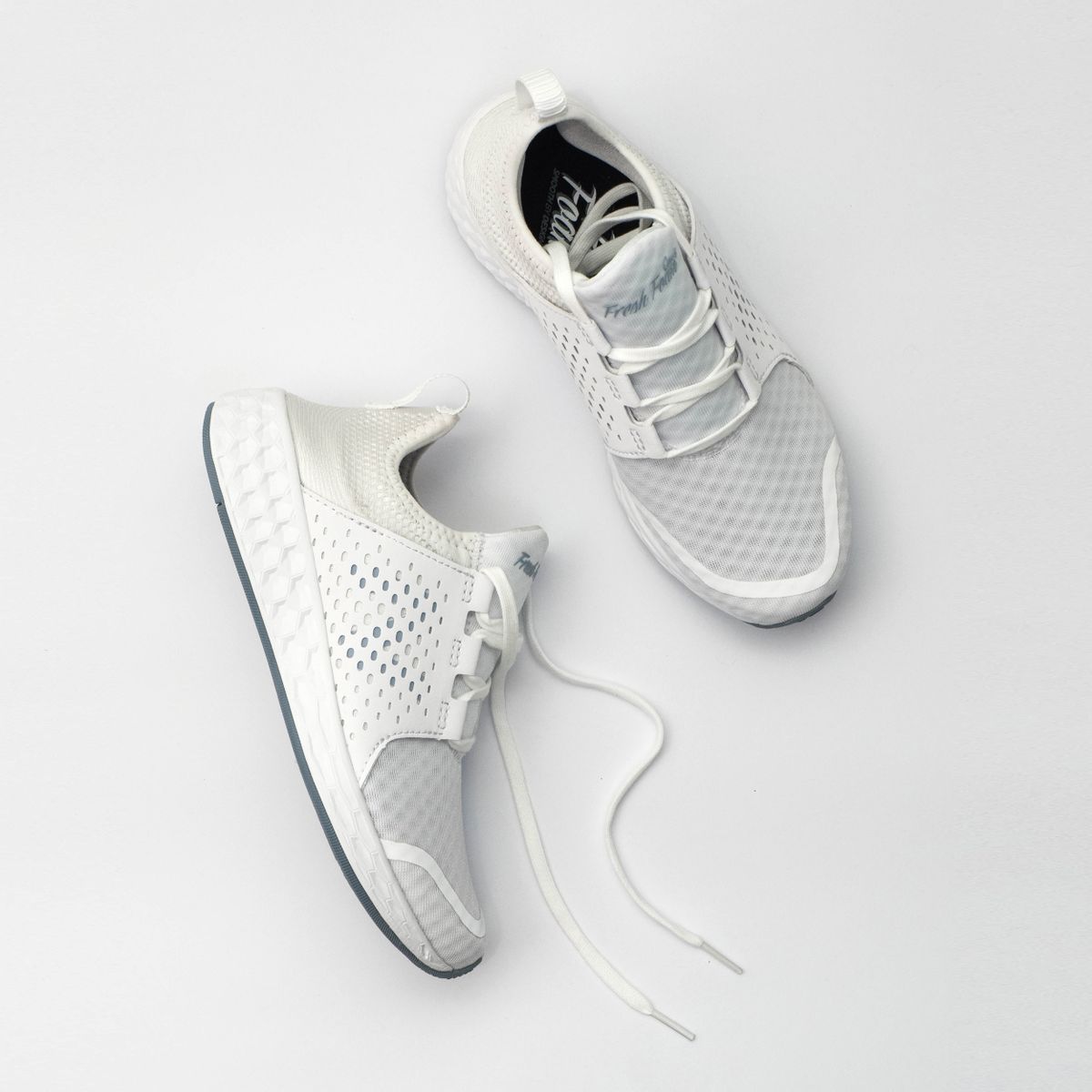
The best summer compromise I’ve found is a woven upper with a leather lining at the heel and a rubber outsole. You get air across the top of the foot, a soft surface where it rubs, and grip on hot pavement, which gets slick in a way people forget about until they slide.
Fit: the part that catches people out
Woven uppers don’t stretch. That’s the whole thing. Leather gives 2 to 4mm over a few weeks, suede moves too, and raffia just stays exactly where the braid put it. If a woven shoe pinches in the shop, it’ll pinch in September.
Which means you should size for the widest part of your foot, not for the length. Most wicker shoes women try on in-store are bought half a size too small because the weave looks like it’ll give, and it won’t. If the shop only has whole sizes, take the larger one every time.
Three specifics worth checking before you pay:
- The heel counter. Press it. If it folds down with no resistance, the shoe will slip. If it’s hard as plastic, it’ll chew your Achilles on the first long walk.
- The seam across the toes. Run a finger along it from inside. Any raised ridge will rub the top of your toes raw within a mile.
- The sole edge. Stand on it. If your foot spills over the side, the braid will press into your little toe with every step.
Also consider the sock question honestly. Most people wear these barefoot, and bare feet slide forward inside a smooth woven insole, which pushes your toes into the front. A thin no-show sock fixes it. If you refuse to wear socks with sandals-adjacent shoes, which is a reasonable position, look for an insole with a slight suede finish instead of a slick synthetic one.
And if your feet are wide, the shape of the toe matters more than the size on the box. A rounded or open toe gives you room. A pointed woven flat takes it away, and it won’t give any back. There’s more on that in the guide to what a woven upper does to fit and wear over time.
Bunions, high insteps, and other awkward feet
Woven shoes are unusually forgiving in one direction and unusually cruel in another. The upper doesn’t press the way leather does, because the braid sits away from the skin in places. But it also refuses to move out of the way, so anywhere it does touch, it stays touching.
If you have a bunion, that’s the joint at the base of your big toe. Look for a shoe where the braid clears that joint entirely, which usually means an open-toe sandal or a mule with a wide vamp. A closed woven flat will press right on it, and no amount of breaking in will help.
A high instep is the other common problem. Raffia has no give across the top of the foot, so a shoe that looks roomy in a photo can be unwearable if your instep is high. The fix is either an adjustable strap or a lower-cut vamp. Test it by putting the shoe on and standing up, then seeing whether you can slide a finger under the vamp. If you can’t, walk away.
Narrow feet have the opposite issue. A woven mule that fits a medium foot will fall off a narrow one, because there’s nothing to grip. Look for an ankle strap or a slingback with a buckle. Elastic is not enough, since raffia straps have no stretch to balance against it.
The one group that should probably skip these shoes entirely is anyone who spends all day on their feet on hard floors. Woven soles are thin, and the foot takes the whole load. A woven shoe is a two-hour shoe, not an eight-hour one, and there’s no insole thick enough to change that on a cheap pair.
Shapes that work, and the ones that don’t
Not every silhouette survives being made in wicker. The material is stiff, it’s bulky at the edges, and it doesn’t drape, so anything that relies on a soft upper looks wrong immediately. That’s why the wicker shoes women actually wear for more than one season tend to fall into four shapes.
These are the ones that hold up.
Wedge sandals. The wedge gives structure underneath and the weave sits on top where it doesn’t need to bend. This is the classic raffia shoe for a reason, and it’s the safest first purchase.
Mules and backless slides. No heel counter means no heel rub, which removes the single most common complaint about woven shoes. Great for wide feet because the opening is generous.
Espadrilles. The jute rope sole is woven by definition, and the fabric upper is usually canvas rather than raffia. Cool, cheap, and they only last a season. The espadrille’s history is worth a read if you want to know why the sole is shaped like that.
Woven leather ballet flats. The most forgiving option if you need something closed. The leather braid flexes a little where raffia doesn’t, and it can be stretched by a cobbler, which raffia cannot.
The ones I’d avoid: pointed woven pumps, which combine zero stretch with a narrow toe; any woven boot, which is a hot foot in a basket; and heavily embellished woven sandals where the beads are glued on, because the glue fails in heat and you’ll lose them one by one.
If you want the texture with more support underfoot, a white woven leather heel with a closed toe gives you the same summer look with a leather base that can actually be repaired.
Keeping them alive through one summer
Woven shoes die from water and from drying too fast. That’s it. Almost every failure I’ve seen traces back to one of those two things.
Rain is the obvious problem. Raffia absorbs water, swells, and then shrinks as it dries, which loosens the braid. Two soakings and the shoe is finished. If you get caught out, don’t put them near a radiator or in direct sun. Stuff them with newspaper, change the paper after an hour, and let them dry at room temperature overnight.
The less obvious problem is storage. A woven shoe put away damp in a dark cupboard grows mould in the fibres, and mould doesn’t come out. Let them air for a full day before they go in the wardrobe, and don’t store them in a plastic box.
For regular cleaning:
- Brush dust out of the weave with a soft toothbrush, dry.
- Wipe stains with a barely damp cloth, then dry away from heat.
- Skip the spray-on protectors unless the label says they’re safe for natural fibre. Most aren’t, and they darken raffia permanently.
Leather woven shoes are easier. Wipe with a damp cloth, condition twice a season, and keep them out of the rain. The braid collects dust in the grooves, so a soft brush every couple of weeks keeps them looking new for years instead of months.
One repair note: a cobbler can re-sole a woven shoe and can restitch a braid that’s come loose at the toe. What nobody can fix is a braid that’s frayed through in the middle of the vamp. Check that area before you buy, because that’s the failure point that ends the shoe’s life.
What to spend before you commit
The price gap in this category is enormous, and it doesn’t track quality as closely as you’d hope. There are £200 raffia wedges with cardboard insoles and £45 pairs that hold up for three summers. Cheap wicker shoes women buy on impulse usually fail at the toe, where the braid meets the sole and the glue gives up first.
What separates them is mostly the finishing: whether the braid is stitched down or glued, whether the insole is leather or foam, and whether the sole is stitched to the upper or just cemented. A stitched sole can be repaired. A cemented one cannot.
A rough guide to what your money buys:
- Entry price: fine for a wedding, a holiday, or one season of occasional wear. Expect the sole to separate at the toe within a year.
- Middle: stitched sole, leather lining at friction points, replaceable insole. This is where the value sits.
- High: hand-plaited leather or premium raffia, and you’re paying for the finish rather than durability. Worth it if you wear them forty times a year.
Whatever you pay, try them on late in the day and walk on a hard floor rather than carpet. Carpet hides a stiff sole and a slipping heel, which are the two things you’ll notice most on pavement.
And if you’re shopping online, order two sizes if the returns are free. The sizing on woven shoes is inconsistent enough that guessing once is a bit of a gamble. Two sizes, one return, done.
Which leaves the original question. The pair in the window that felt like a basket: was the problem the material, or was it that particular shoe? Most of the time it’s the second one, and a better-made pair from the same category will change your mind about the whole idea. Start with a mule if you’re unsure, and see how you feel after a fortnight of real wear.
If flats are more your thing, the flat-soled casual board shoes with a thick sole handle the days when a woven pair won’t, and the guide to suede that survives rain and salt covers the other summer material that needs a plan.
