

It’s the first cold morning and you’re standing in front of the shoe rack realising the problem: everything there is either a sandal or a trainer that got soaked in September and never really dried out.
Fall is the one season where your shoe choice changes weekly. Warm and dry in early October, wet leaves in November, and a temperature swing of 12 degrees between the morning commute and the walk home. Buying for that is different from buying for summer, where one pair does the job until it dies.
What follows is the short list of what actually works, based on what I wear and what I keep seeing people regret in November.
Buy the shoe you’ll wear to work, first
Most people buy fall shoes for the weekend, then spend five days a week in the same tired pair they wore in August. Fix that order. The work shoe gets the most hours, so it should get the budget and the fit attention.
For an office job, that’s usually a low boot or a closed shoe with a rubber sole and a bit of tread. Tread matters more than people think on wet tile and painted stairs, and a smooth leather sole in the rain is genuinely dangerous, not just slippery.
Look for a 20 to 30mm heel or a flat with a thicker sole, a shaft that stops below the ankle bone so it doesn’t rub, and a side zip rather than laces if you’re leaving the house in a hurry. If your workplace has a dress code that rules out boots, a closed-toe shoe with a rubber outsole does the same job with less risk.
The other thing worth checking is weight. A leather boot with a rubber sole and a full lining weighs around 400 to 500 grams per shoe. If it feels heavy in your hand, it’ll feel heavy by 5pm, and heavy shoes change how you walk.
Budget allocation, if it helps: put two thirds of your fall shoe money into the pair you’ll wear four days a week, and one third into a weather-proof pair you keep by the door.
A 20mm boot beats a flat ankle boot in November
Here’s a small argument that saves a lot of cold feet. A fully flat boot puts your heel directly on the pavement, so every step transmits straight up through your leg, and in cold weather your feet feel it sooner.
A 20mm heel, on a boot with a rubber sole, gives you two things. The sole material is thicker under the heel, so it insulates and absorbs. And the slight lift changes the angle of your calf, which most people find comfortable for long days rather than tiring.
Go past 50mm and it flips. A high-heeled boot on wet leaves is a balance problem, and the narrower the heel, the worse it gets. If you want height, a block heel or a platform is the way to get it, because the base is what keeps you upright.
Ankle boots are the shape most people land on. Mid-calf boots are warmer, but the shaft has to be wide enough to fit over jeans and a sock, and most aren’t. Measure your calf at its widest point, then check the shaft circumference before you buy. This is where a lot of online returns come from.
There’s a good breakdown of why the sole geometry matters more than heel height in this piece on the subtraction you should do before buying a platform, and it applies to boots as much as heels.
Waterproofing is a material choice, not a spray
You cannot make a suede boot waterproof with a can. You can make it water-resistant enough for a ten-minute walk, which for most people is the actual requirement.
What works, in order: rubber or a rubberised lower half for real rain, smooth leather with a wax or spray treatment for drizzle, and suede for dry cold days only. Anything labelled “waterproof” with a membrane inside will also be less breathable, which means warmer feet in a heated office.
If you walk or cycle as part of your commute, that order flips. Rubber wins, and style comes second. There’s no way to make a leather sole work in standing water, whatever the product page claims.
For the boots you already own, clean them before treating them. Dirt stops the treatment bonding, and a spray on a muddy boot is money down the drain. Then re-treat every six to eight weeks through the wet season, not once in September.
Wet shoes need to dry at room temperature, stuffed with newspaper, away from radiators. Heat is what cracks leather and shrinks the lining, and it’s the most common way people ruin a good pair in one night.
If you care where the leather comes from rather than just how it performs, the Textile Exchange’s material standards are the reference point most brands cite, and they’re a better guide than a marketing badge.
Socks change the fit more than you think
Your summer shoes fit your summer foot. Add a wool sock and a boot that felt right in the shop will be tight across the instep, because you’ve added 2 to 3mm of thickness in every direction.
This is why the same size feels different in October. It’s not the shoe. Try boots on with the socks you’ll actually wear, and if you’re between sizes, take the bigger one and add a thin insole for the days you want a lighter sock.
Wool is still the best sock material for cold weather, and the reason is simple: it keeps insulating when damp, which cotton doesn’t. Cotton socks hold moisture against your skin, and cold wet cotton is how you get chilled feet on a 20-minute walk. Merino blends are softer than they used to be and don’t itch the way people remember.
Thickness is the trade. A thin merino sock fits in most boots. A chunky hiking sock needs half a size of extra room, and it will make a snug boot unbearable. If you plan to wear thick socks all winter, buy the boot with them on.
One practical note: buy three pairs of the same sock you’ll wear most, not one of everything. Socks disappear in the wash, and mismatched pairs are how you end up with one thick and one thin on a cold morning.
The colour rule that stops you buying twice
In fall, buy one dark neutral and one thing you actually like. That’s it. The dark neutral does 80% of the work.
Black boots go with everything and show scuffs less than brown. Dark brown is warmer against denim and navy, and it looks better with wool coats. Both are safe. Tan and cream look great in photos and show every splash of November, which is why so many pairs get retired after one season.
The second pair is where you have fun, because one pair won’t carry the whole wardrobe. A burgundy, olive or deep green works with almost everything dark and gives you something to look at. What doesn’t work is buying two pairs in the same shade and discovering you only ever reach for one.
A quick test before you pay: picture the three outfits you wore most last week. If the shoe works with two of them, it’s a buy. If it only works with the outfit you’d wear to a party, it’s a maybe, and you probably already own something for that.
Three pairs that cover the season
This is the rotation I’d actually build, rather than a list of everything available.
For wet commutes and long days, a closed shoe with a thick sole and a bit of tread is the workhorse. These flat-bottomed shoes with a chunky tread handle pavement, puddles and a full day standing, and they don’t look like hiking gear.
Dry cold days are a different job. When you want something softer, a suede or napped style in a dark neutral does the job, like these suede shoes with a low block heel. Keep them for dry weather and they’ll last years. Take them out in the rain and they’ll last a month.
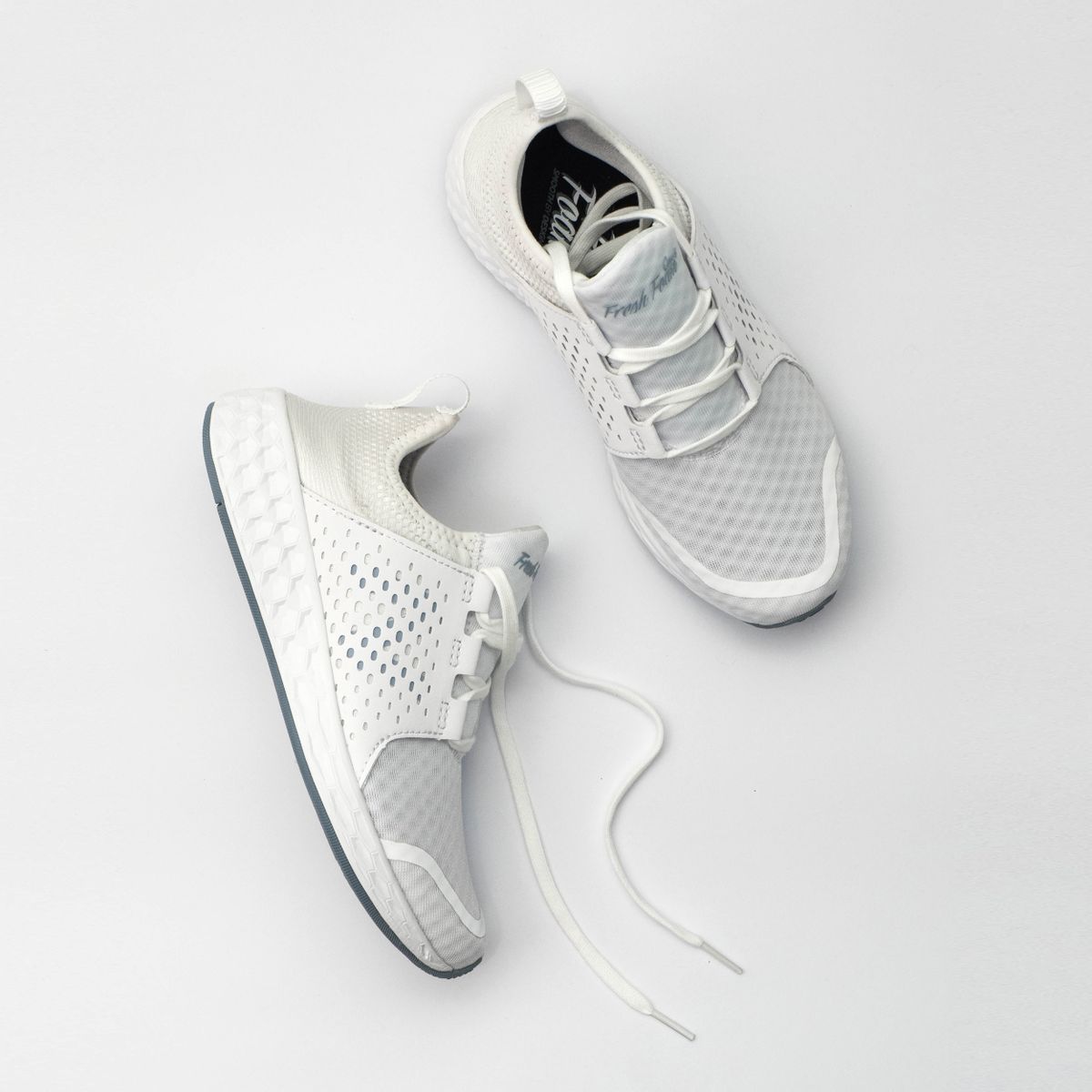
Weekends and the school run call for, a mesh trainer with a cushioned sole is the pair you’ll reach for without thinking. These breathable walking shoes for everyday wear dry faster than leather and weigh half as much, which matters when you’re carrying shopping.
Three pairs, three jobs, no overlap. If you want to see what else is in the range, browse the sneaker styles on the site by shape rather than by trend.
How to check a sole in thirty seconds
Soles fail in predictable places, and you can spot the weak points in a shop without any tools.
Press your thumb into the tread at the ball of the foot. It should give a little and spring back. If it feels like a block of wood, the shoe will be cold and unforgiving on pavement. If your thumb goes straight through, there isn’t enough rubber to last a season.
Then look at how the sole is attached. A stitched sole has visible thread along the edge and can be replaced by a cobbler. A glued sole is lighter and cheaper and, once it lifts, the shoe is usually finished. Neither is wrong, but a stitched sole on a $150 boot is what makes it a five-year purchase rather than a one-winter one.
Check the heel last. On a block heel, the top piece should be a separate, replaceable block of rubber or plastic. When that wears down, a cobbler swaps it for a few dollars. On a cheap boot the heel is one moulded piece, and when it wears you throw the boot away.
Grip on wet ground comes from the pattern, not the depth. Wide, shallow channels that push water sideways work better on pavement than deep lugs, which are designed for mud and feel unstable on tile. The difference matters most on painted stairs and smooth station floors, which is exactly where people fall.
One more check that takes no time: bend the boot at the ball of the foot. It should flex there and stay stiff through the middle. A boot that folds in the arch will feel fine standing and awful after a mile. The construction of a welted or cemented boot is what determines this, and it’s the single best predictor of how a pair will age.
What I’d skip this fall
Three things I’ve bought and regretted.
White or cream boots. They look incredible for three weeks and then every wet leaf leaves a mark. If you love the look, buy them as a second pair for dry days, not as your everyday.
Thin-soled ballet flats for a wet commute. They’re comfortable until the pavement is cold and wet, and then you feel every stone. A flat with a 15mm rubber sole weighs almost the same and is a different experience entirely.
And anything with a decorative buckle right where your ankle bone sits. It looks fine standing still. Walk a mile and it becomes the only thing you can think about. Check the inside of the boot with your thumb before you buy: if you can feel hardware through the lining, it’ll rub.
One last thing about buying in season
Fall stock arrives in August and gets picked over by October. If you see a pair that fits properly in early September, buy it then, because by November the sizes left are the ones nobody wanted. This is the one category where waiting for a sale usually costs you the pair you actually needed.
And if you’re shopping online, order two sizes when the return policy is free. Feet swell, socks vary, and the pair that arrives tight across the instep will still be tight in January. You’ll know in ten minutes which one to keep.
So before the next cold morning: pull out the three pairs you wore most last fall, check the soles for wear at the heel, and replace the one that’s worn through. Then decide what’s actually missing. It’s usually one pair, not four.
