

Two shoes, same look, different jobs
You’re standing in a shop holding two pairs. One is mesh, light, and looks like it could be folded into a bag. The other is leather, slightly heavier, and looks like something you could wear to the office without anyone raising an eyebrow. Both are sold as running shoes. Only one of them is built for running.
That’s the whole tension in leather running shoes for women. Leather gives you durability, weather resistance, and a look that fits into normal life. It gives you less breathability, more weight, and a break-in period that a mesh trainer doesn’t have. Whether that’s a good trade depends entirely on where you’ll be wearing them.
I’ve run in both, badly and slowly. For anything over 10km, mesh wins every time, and it isn’t close. For commuting, walking to work in the rain, standing in a school playground at 8am, leather wins. The mistake is buying leather for the first job and expecting the second.
Here’s the quick answer before the detail: leather is the right call for a running-shaped shoe you’ll mostly walk in. It’s the wrong call for actual training, especially in summer. If you run more than twice a week, own both, or run in mesh and wear leather for everything else.
Breathability, or why your feet get hot by kilometre two
Mesh uppers move air. That’s their main job, more than weight. A good engineered mesh has thousands of openings that let heat and moisture out with every step, and it’s why a running shoe can be comfortable at 25°C.
Leather is a closed surface. Full-grain leather has some permeability because it’s skin, and it can absorb a small amount of moisture vapour. But a coated or corrected-grain leather, which is what most affordable leather sneakers use, is effectively a plastic sheet with a leather texture. Air doesn’t move through it.
The practical consequence is simple. In leather, your feet get damp faster and stay damp longer. On a 30-minute walk that’s a minor annoyance. On a 5km run in July it’s a blister by the end of the week.
Some brands punch perforations into the leather to help. It works, a little. Perforated leather breathes better than solid leather and far worse than mesh. It’s a compromise for people who need the look more than the airflow.
If you’re choosing leather for a shoe you’ll wear to work and walk 4,000 steps in, breathability barely matters, because you’re not generating much heat. If you’re choosing it for exercise, it matters more than any other factor on this page.
One workaround for summer: a thin merino sock instead of cotton. It doesn’t make the shoe breathe, but it moves moisture away from the skin, which is most of the discomfort problem. Cotton holds water against your foot and that’s what causes the rubbing.
Where leather genuinely wins: rain and road grit
Water resistance is leather’s strongest argument, and it’s why so many people buy leather running shoes for women in the first place. A treated leather upper sheds light rain for 20 to 30 minutes before it starts to soak through at the seams.
Mesh does not. A standard mesh trainer lets water straight through in about 30 seconds, and then your sock is a sponge. If you walk to work, that’s a genuinely bad start to the day.
Leather also resists abrasion better. Scuffs on leather can be polished out. Scuffs on mesh are holes waiting to happen, and a mesh upper that catches on a door frame will fray within a month.
The limit is the seams and the tongue. Water enters through stitching first, then through the collar, then through the lace area. No leather shoe is waterproof unless it has a membrane, and a membrane changes everything, including weight and breathability.
If you need actual waterproofing, look for a shoe with a membrane liner rather than a leather upper with a water-repellent coating. The coating wears off in a few months and needs reapplying. The membrane doesn’t.
Snow and salt are a different problem. Salt stains leather permanently if you leave it on, and the fix is to rinse with a dilute vinegar solution within 24 hours, then condition. Do that twice a winter and the uppers survive. Skip it and the leather goes stiff and grey at the flex point.
Break-in: what the first three weeks actually feel like
New leather is stiff. Not unbearably so, but enough that a 20-minute walk on day one feels different from day thirty. The upper softens where your foot flexes, and the shoe moulds into the shape of your foot over roughly 10 to 15 hours of wear.
Expect the first week to feel snug across the instep, especially if you have a high arch. Expect the heel counter to press slightly for the first two or three wears. Expect the toe crease to appear by day four.
Don’t try to speed this up with heat or water. Wetting leather and walking it dry does soften it, and it also weakens the fibres and shortens the shoe’s life. A shoe that only fits after being soaked was the wrong size to begin with.
What does help: wear them for short stretches, an hour at a time, and use a leather conditioner on the inside of the stiff areas. A thin sock in week one and a normal sock in week two is a gentle way to work them in.
If they’re still pinching after 15 hours of wear, they’re not going to relax enough. Return them if you can. Leather stretches about 2mm across the width over its life, not half a size.
Contrast that with mesh, which needs no break-in at all. You put it on and it fits. That immediacy is underrated, and it’s a real reason people who walk a lot stick with mesh even when leather looks better.
Weight: 80 grams per shoe is a different stride
A typical women’s mesh running shoe weighs 210g to 240g in a size 38. A leather equivalent is usually 300g to 340g. That’s roughly 80g to 100g per shoe, or about 200g per pair.
On a 5km run, that extra weight costs you. Research on running economy suggests each 100g per shoe adds roughly 1% to the energy cost of running. For a casual runner that’s a few seconds per kilometre. For a competitive one it’s the difference between two shoes.
On a walk, the maths changes. Walking is less sensitive to shoe weight, and the extra 200g is roughly the weight of a phone and keys. You’ll notice it on stairs. You won’t notice it on the flat.
The other weight issue is the sole. Leather uppers are often paired with firmer, thicker midsoles, because the shoe is designed for durability rather than speed. That combination makes the whole shoe feel more substantial, which some people love and others find clunky.
If you want the leather look with less weight, look for a leather upper on a running-style foam midsole. That’s the middle ground, and it’s where most “lifestyle running” shoes sit. It weighs about 270g and feels like a trainer while looking like a shoe.
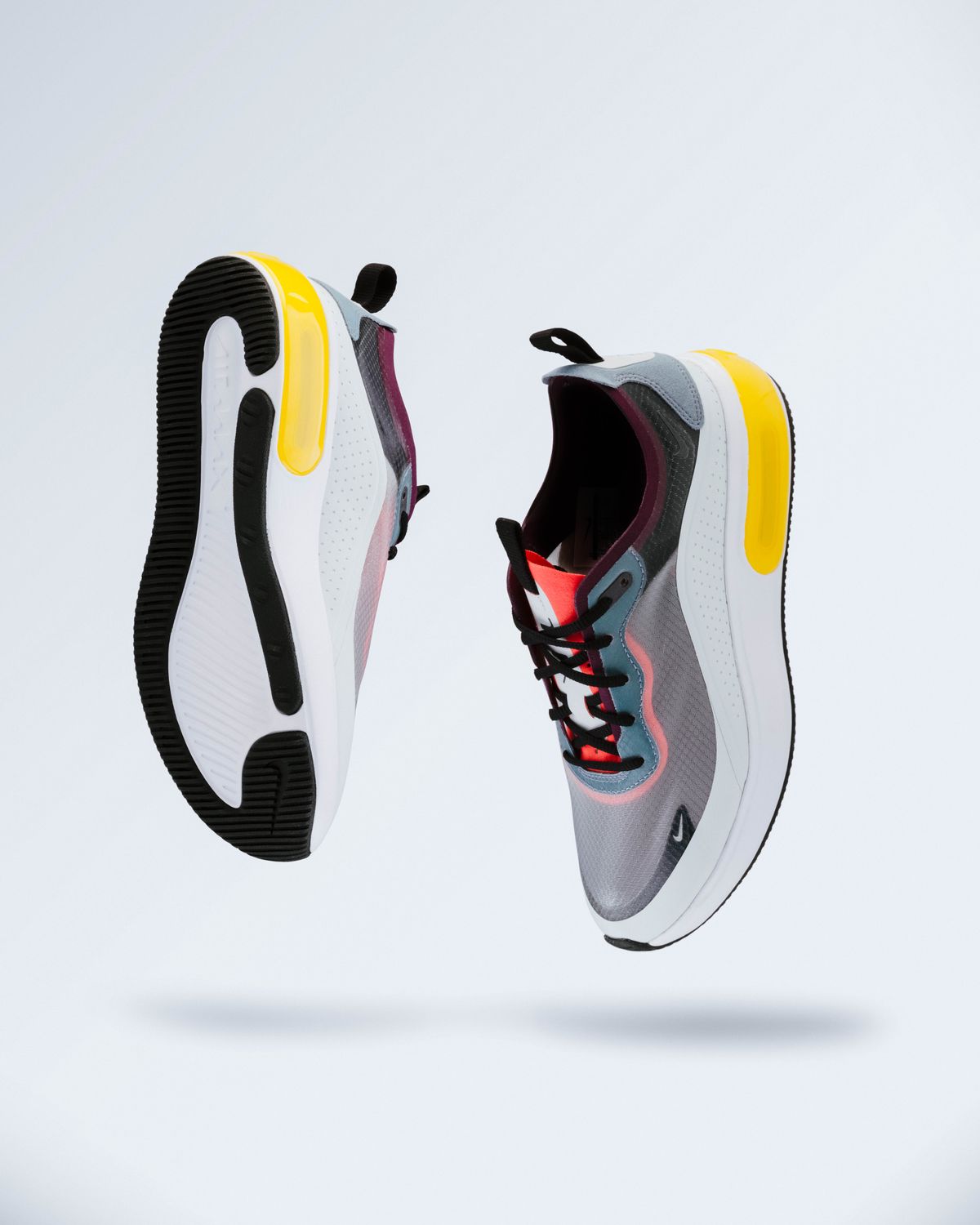
The ultra-light running pair here is the mesh end of that spectrum: shock-absorbing, well under 300g, built for actual movement rather than for looks. It’s the one I’d pick for a 10km.
When leather running shoes for women make sense
Four situations where I’d choose leather without hesitating.
- You commute on foot in a wet climate. 20 minutes each way, rain half the year. Leather keeps your socks dry long enough to matter.
- You want one pair that works for the office and the walk there. Mesh trainers read as gym wear in most workplaces. Leather reads as smart casual.
- You’re on your feet indoors all day. Retail, teaching, hospital wards. Less heat build-up than a run, more need for something that survives 12 months of daily wear.
- You travel with one pair of shoes. Leather creases rather than tears, wipes clean, and looks acceptable at a dinner. Mesh doesn’t.
The sports and leisure pair sits in that space, and so do most of the leather-look shoes in the women’s sneaker range. Look for a rubber outsole with tread, a removable insole, and a heel counter that doesn’t collapse when you press it.
Where they don’t make sense: marathon training, treadmill intervals, hot-weather running, and anything where you’ll sweat heavily for more than 30 minutes. Buy mesh for that and keep the leather for the rest of your life.
If you like the high-top shape, my notes on where a high top should sit on the ankle are relevant, because leather high-tops are stiffer at the collar than canvas ones.
Sizing: leather fits differently, and the charts won’t tell you
A running shoe in mesh and the leather version of the same last will not fit the same way. The mesh one gives immediately. The leather one holds its shape for the first fortnight, and that changes what feels right in the shop.
Start with your normal size, then judge the width rather than the length. Leather won’t stretch much across the ball of your foot, so if it pinches there in the shop, it will still pinch in March. Length is different: leather can give about 2mm at the flex point, which is why sizing up rarely fixes a tight toe box.
If you’re between sizes, take the larger one in leather and the smaller one in mesh. That sounds like nonsense until you’ve spent a month in a leather shoe that was half a size too small.
Heel slip is worth checking separately. Leather heel counters are firmer and grip better once broken in, but before that they can lift slightly. If the slip is more than a finger’s width, the shoe is wrong. If it’s a few millimetres, it’ll settle.
The other sizing variable is the sock. Leather shoes worn barefoot in summer will feel looser than the same shoe worn with a merino sock in winter, because leather doesn’t grip skin the way mesh does. Try them on with the sock you’ll actually wear most.
One more thing, and it’s the detail that catches people out: leather sneakers often have a thicker insole than their mesh equivalents, because the shoe is built for standing rather than for speed. That extra 3mm reduces internal volume. If the mesh version felt roomy, the leather one can feel snug in the same size.
Try both on in the same visit if the shop stocks them. It takes four minutes and settles the question better than any size chart. And if you’re shopping online, order two sizes and return one, because the cost of a return is smaller than the cost of a shoe you don’t wear. My notes on slip-on sneakers that stay on cover the same fit logic from a different angle, and it applies here too.
Care, and knowing when to retire them
Leather needs four things: a brush, a damp cloth, a conditioner, and a shoe tree. That’s it. Brush off dust after wear, wipe with a damp cloth monthly, condition every six to eight weeks in winter, and keep a shoe tree in them so the toe doesn’t curl.
Don’t use heat to dry leather. Radiators and hairdryers pull moisture out too fast and crack the finish. Stuff them with newspaper and leave them at room temperature overnight.
Polish does more than shine. A wax polish fills small scuffs and adds a water-repellent layer. A cream polish feeds the leather. For everyday shoes, cream every month and wax before bad weather is enough.
The outsole decides when to retire them, not the upper. A leather upper can look fine for five years while the midsole has compressed to nothing. Press the midsole with your thumb. If it feels hard and doesn’t spring back, the cushioning is gone, and continuing to run in them is how people end up with knee pain.
For walking, you can push a dead midsole further, but 500km of walking is a reasonable ceiling for a foam midsole, and 800km for a firm one.
Final thought, and it’s the one I’d want someone to tell me earlier: a shoe is a tool with a job. Leather running shoes for women are excellent at the wet commute and the long day on your feet, and mediocre at the thing in their name. Buy them because they suit your day, not because of the category on the box. And if you do run, keep a mesh pair by the door so you’re not tempted to make the leather ones do both.
