

Something odd happened to office footwear over the past few seasons. The pointed toe — the default shape for anything that had to look professional — started to look dated, and a boxier silhouette took its place on runways, in showrooms, and eventually in the shoe cupboard of people who never think about fashion at all. Square toe dress shoes for women are now common enough that they no longer read as a statement. They read as a choice, and a fairly practical one once you understand how the shape behaves on a real foot over a ten-hour day.
That is the part most buying guides skip. A toe shape is not decoration. It determines where your toes sit, how much room the ball of your foot has, which part of the upper creases first, and whether the shoe still looks sharp in month eight. If you are shopping for women’s shoes that have to work from a morning meeting to a dinner reservation, the square toe deserves a closer look than the trend pieces gave it.
What follows is the practical version: how the shape fits, which materials hold a clean line, which heel heights actually function, how to size a pair you cannot try on, and what separates a well-made square toe from a cheap imitation that collapses by spring.
Why the Square Toe Came Back, and Why It Stayed
Toe shapes move in long cycles, and the square toe is on its second or third pass through fashion history. It appeared in the seventeenth century as a wide, blunt shape associated with comfort and gravitas, returned in the 1960s with mod tailoring, and came back again in the late 1990s as the deliberately awkward counterpart to the stiletto. The current version is different from all of those. It is softer at the corners, lower in profile, and built on lasts that were designed with actual walking in mind rather than photographed on a runway.
Part of the appeal is visual. A square toe distributes width across the front of the shoe, so the foot looks grounded rather than tapered. On a slim foot it adds weight and presence. On a wider foot it stops the upper from pinching at the little toe, which is the single most common complaint about pointed dress shoes. According to the general footwear history summarised in reference works such as Wikipedia’s entry on dress shoes, toe shape has always tracked both fashion and function — blunt toes have historically appeared whenever wide, comfortable daywear dominated, and tapered toes whenever formal, decorative footwear did.
The commercial side matters too. The global footwear market tracked by Statista’s footwear outlook is measured in the hundreds of billions of dollars annually, and women’s dress categories sit inside a segment where replacement cycles are long and loyalty is low. Brands need a reason to make you buy again. A shape change is one of the cheapest reasons available, which is why toe shapes rotate every decade or so — and also why you should judge the current crop on construction rather than novelty.
What kept the square toe past its trend window is simpler: it works with the way people actually dress now. Wide-leg trousers, straight jeans, midi skirts, oversized blazers — all of these pair better with a squared front than with a needle point. The shoe stops fighting the hem. That practical compatibility is why square toe dress shoes for women survived the moment when the trend cycle moved on, and why they now sit in the permanent range rather than the seasonal one.
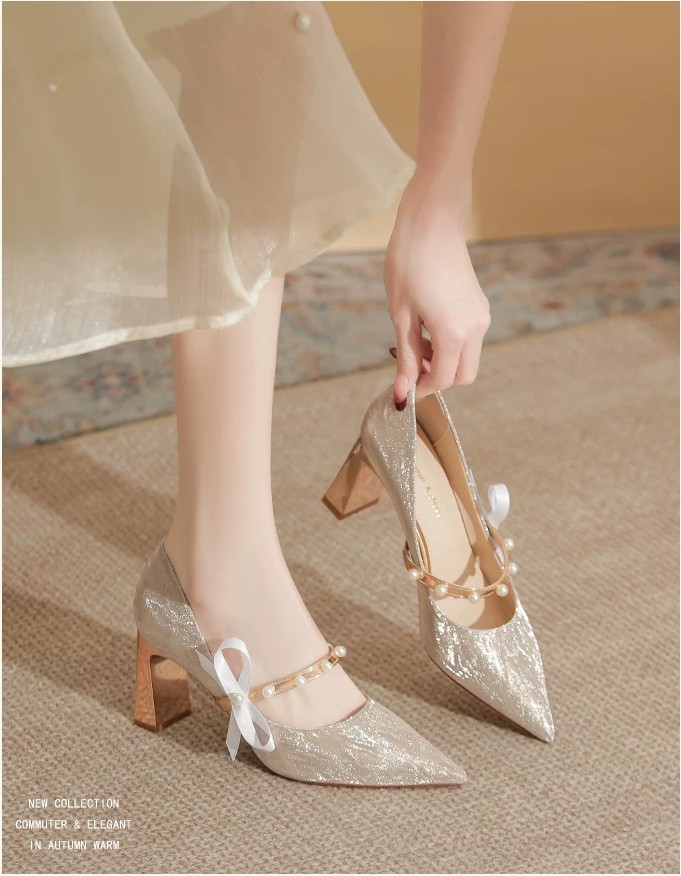
How the Toe Shape Changes the Way a Shoe Fits
The last is the wooden or plastic form a shoe is built around, and it decides everything you feel. A pointed last narrows progressively from the ball forward, which forces the toes into a triangle. A square last keeps more width at the metatarsal heads and cuts the front off bluntly, so the toes sit side by side rather than stacked. In a well-made pair, the widest point of the shoe lines up with the widest part of your foot, and the toe box has enough vertical depth that your toes can lift slightly when you walk.
That vertical depth is the detail people miss. Square toe dress shoes for women can be wide and still uncomfortable if the ceiling of the toe box is low, because the big toe needs room to extend upward during push-off. Press down on the top of the toe box before buying: there should be a few millimetres of give, and your toe should not touch the roof when you stand. If it does, size up or walk away — no amount of break-in will add height that was never built in.
Length is the other trap. Because a square toe looks shorter than a point from above, people often buy a half size small and end up with the ball of the foot sitting too far forward. Measure your foot at the end of the day, standing, with the sock you plan to wear, and add about a centimetre of clearance at the front. The heel should grip without slipping; if the heel lifts more than a few millimetres when you walk, the shoe is too long regardless of what the toe looks like.
There is also the question of the instep. A blunt toe shifts the visual weight forward, so designers sometimes compensate with a lower vamp or a wider throat, which changes how the shoe holds the midfoot. If you have a high instep, look for a slightly higher cut across the top of the foot; if you have a flat instep, a deeper throat will gap. Try the pair on late in the day when feet are at their largest, walk on a hard floor rather than carpet, and pay attention to the little toe — it is the first place a bad square last will announce itself.
Leather, Suede, or Patent: What Holds a Clean Line
A square toe lives or dies on the crispness of its edges, and different materials hold that edge very differently. Smooth calf leather is the safest choice: it takes a sharp crease at the vamp, holds its shape across the toe, and relaxes slowly enough that the shoe moulds to your foot instead of collapsing around it. Full-grain leather behaves similarly but with more visible character, which suits a matte, slightly heavier look.
Patent is the most graphic option and the least forgiving. The coating limits stretch almost completely, so a patent square toe must fit correctly on day one — there is no gentle break-in period to rescue a tight pair. It also shows every scuff at the corners, which is exactly where a square toe takes the most contact. If you want patent, buy it for occasions rather than daily wear, and keep the toe corners clean with a damp cloth rather than polish, which can cloud the finish.
Suede is soft from the first wear and moulds quickly, which makes it comfortable but structurally weaker. On a square toe, suede tends to round off at the corners over a few months, softening the very line you bought the shoe for. It also marks at the front, where a squared shoe inevitably brushes against desks, car doors, and stair risers. A protector spray applied before the first wear helps; nothing will stop the shape from relaxing.
For square toe dress shoes for women that need to survive a real working week, the best combination is a smooth leather upper with a lightly structured toe puff and a soft leather lining. The toe puff — the stiffener between the upper and the lining at the front — is what keeps the shape from folding. You can feel it: pinch the toe box, and it should hold its form with a little resistance rather than crumple. If it crumples, the shoe will look tired within a season no matter how good it looks on the shelf.
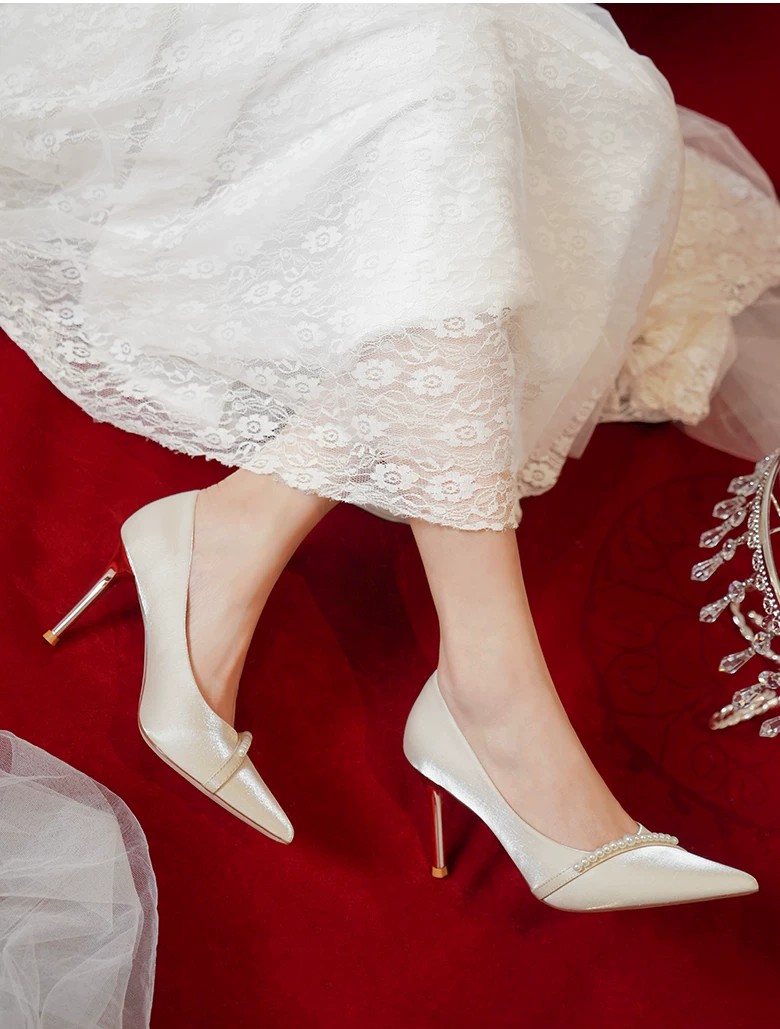
Heel Heights and Sole Profiles That Stay Wearable
A square toe changes the balance of a shoe, and heel height has to be adjusted to match. A 90 mm stiletto under a blunt toe looks top-heavy, because the front of the shoe carries visual weight that a needle heel cannot counter. This is why most well-designed square toe dress shoes for women sit between 30 mm and 60 mm — a block, a cuban, a sculpted mid-heel, or a low kitten. The proportions work, and so does the walk.
Block heels are the obvious pairing and the most forgiving over distance. A 50 mm block gives you enough lift to look intentional without loading the ball of the foot, and the wide contact patch keeps you stable on pavements, train platforms, and office stairs. Cuban heels — slightly tapered, higher at the back — add a little more elevation with a similar footprint. Sculpted heels are the fashionable middle ground: interesting from the side, stable enough for a working day, though the narrower base makes long walks less pleasant.
Sole profile matters as much as heel height. A leather sole looks refined and is appropriate for carpeted offices and restaurants, but it is slick on wet stone and wears quickly if you walk outdoors. A thin rubber sole or a rubber insert at the forepart adds grip without changing the silhouette much. Chunky lug soles are a different aesthetic entirely — they push the shoe toward a casual, almost boot-like look that works with wide trousers and denim but not with tailoring.
Think about the surfaces you actually cross. If your commute involves twenty minutes of walking, cobblestones, or a wet climate, prioritise a rubberised forepart and a heel at or below 50 mm. If the shoe travels from car to lobby to desk, a leather sole and a 60 mm sculpted heel will be fine. And check the heel tip: a small plastic or rubber cap that can be replaced cheaply is a sign the maker expects the shoe to be worn, not just photographed.
Building Outfits Around a Squared Front
The reason this shape reads as modern rather than retro is that it sits comfortably with the way wardrobes are built now — looser, layered, less formal. A black leather square toe with a 45 mm block heel will carry straight-leg trousers, a midi skirt with tights, and dark denim equally well. That versatility is the practical argument for owning one pair rather than three specialised ones.
Trouser length is the detail that decides whether the look works. A square toe benefits from a hem that either breaks cleanly at the top of the shoe or stops just above the ankle. Trousers that pool over the toe turn a sculpted shape into a shapeless lump. If you wear wide-leg trousers, choose a shoe with a slightly longer toe to keep the line continuous; if you wear cropped or tapered cuts, a shorter, blunter toe looks more deliberate.
Colour is more flexible than people assume. Black is the default, but a deep burgundy, chocolate brown, or off-white square toe often works better with the neutral palettes most wardrobes actually contain. Metallics are worth considering for evening: a silver or brushed-gold square toe with a low heel reads as considered rather than flashy, and it does the job of a dress shoe without the usual evening-shoe discomfort.
For a sharper, more formal register, pair square toe dress shoes for women with a slim tailored trouser and a tonal top — the blunt front gives the outfit a modern edge that a pointed pump would make conventionally pretty. For weekends, wear the same pair with straight jeans and an oversized shirt. The shoe does not need to change; the hem does. That is a useful thing to know before you spend money, because it means one well-chosen pair covers more of your week than a rack of specialised options.
Sizing, Break-In, and the First Two Weeks
Most returns happen in the first fortnight, and most of them are avoidable. Start by measuring both feet — they are rarely the same size, and you should fit the larger one. Measure standing, late in the day, with the socks or tights you will actually wear. Add roughly a centimetre beyond your longest toe for clearance, then check that the widest part of your foot sits at the widest part of the shoe rather than behind it.
When the pair arrives, wear it indoors for an hour on the first day, then two hours the next. Leather softens with heat and flex, so short repeated wears break a shoe in faster and more evenly than one long first outing. Put a small blister plaster on the heel before you need it, not after. If the shoe rubs at the same spot for three days running, it is not breaking in — it is the wrong shape for your foot, and returning it is the correct decision.
Expect the vamp to crease. A square toe creases across the metatarsals in a horizontal line, which is normal and largely unavoidable. What you can control is how deep the crease goes: use shoe trees from day one, and avoid wearing the same pair two days in a row. Leather needs roughly a day to dry out, and a shoe that stays damp never recovers its shape. Two pairs rotated will outlast three pairs worn consecutively.
One more sizing note specific to this shape: because the toe is blunt, the shoe can feel short even when the length is right, purely because there is less visual taper. Trust the measurement and the heel grip, not the mirror. If your toes touch the front but the heel slips, the shoe is the wrong last for you — try a different brand rather than a different size. A well-fitting square toe should feel roomy at the front and secure at the back, with no pressure anywhere in between.
Care, Storage, and Keeping the Shape
The square toe is a structure, and structures need maintenance. Wipe leather with a damp cloth after wear, condition it every few weeks, and keep the toe area free of the grit that collects at the corners. Salt stains from winter pavements should be rinsed with a dilute vinegar solution and dried away from direct heat — radiators warp leather faster than rain does.
Shoe trees are not optional if you care about the line. Cedar trees absorb moisture and hold the toe box open, which stops the upper from curling inward at the front. Without them, a square toe gradually rounds off, and once the toe puff has softened, no product restores it. Store shoes in dust bags rather than stacked on top of each other, and never in a sealed plastic box where moisture has nowhere to go.
Heel tips wear faster than anything else on a dress shoe. Replace them as soon as the plastic cap reaches the leather stack; ignoring it means the heel itself starts grinding down, and repairing that costs several times more than a new tip. A cobbler can also add a thin rubber sole protector to a leather-soled pair, which extends its life outdoors considerably for very little money.
Finally, rotate. Three pairs worn in rotation last longer than three pairs worn one after another, because each shoe gets time to dry and recover. That single habit does more for the appearance of square toe dress shoes for women than any polish on the market — it keeps the shape crisp, the leather supple, and the corners from collapsing, which is the whole reason you chose this silhouette in the first place.
What to Check Before You Buy
There is a short list of things worth checking in the shop, or in the first ten minutes after a delivery arrives. The toe puff should resist a firm pinch. The heel counter — the stiff part at the back — should hold its shape when you press it, because a soft counter means the heel will slip and the shoe will wear unevenly. The lining should be leather or a breathable textile, not a coated synthetic that traps heat.
Look at the sole attachment. Stitched soles can be repaired; glued soles usually cannot, and a glued sole on a dress shoe is a sign of a short service life. Check the heel tip and whether it can be replaced. Bend the shoe at the ball of the foot — it should flex there and stay rigid through the middle, which tells you the shank is doing its job.
Then consider the wardrobe question. A pair of square toe dress shoes for women earns its price if it works with at least three outfits you already own. If it only works with one, it is a costume. If it works with trousers, denim, and a skirt, it is a tool — and tools are worth buying well. For more options in the same family, browse the heel and dress shoe range alongside the women’s category, and compare toe shapes, heel heights, and sole construction side by side before deciding.
The blunt front is not a trend to be endured or avoided. It is a shape with a specific set of mechanical advantages — more room at the toes, a wider base, better balance with modern hemlines — and a specific set of requirements: a proper toe puff, the right heel height, and a fit you verify rather than assume. Get those right and the shoe stops being a style decision and becomes the pair you reach for without thinking, which is the highest compliment any dress shoe can earn.
