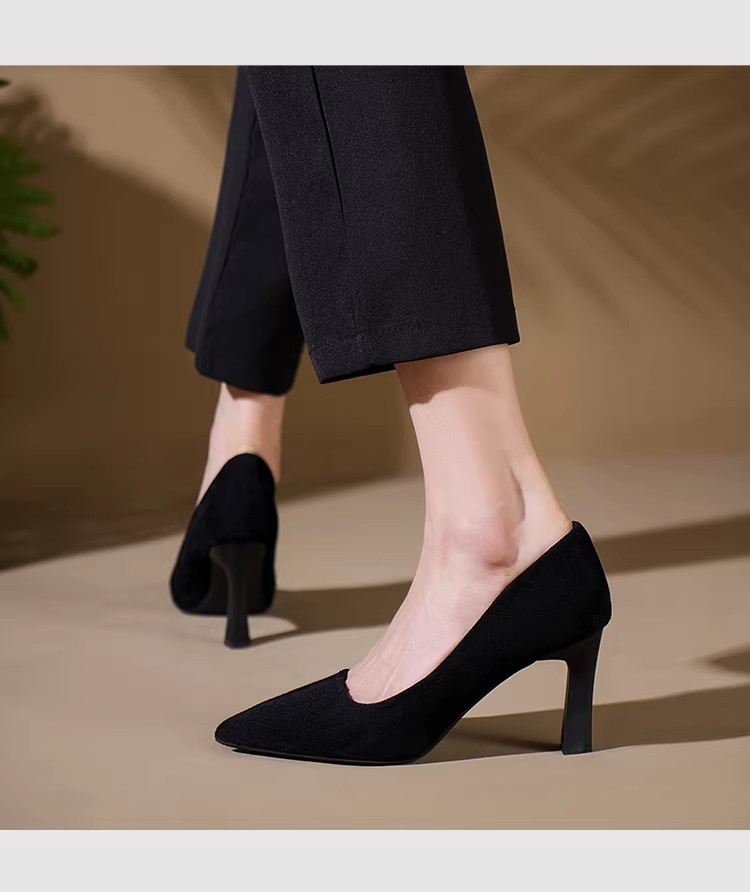
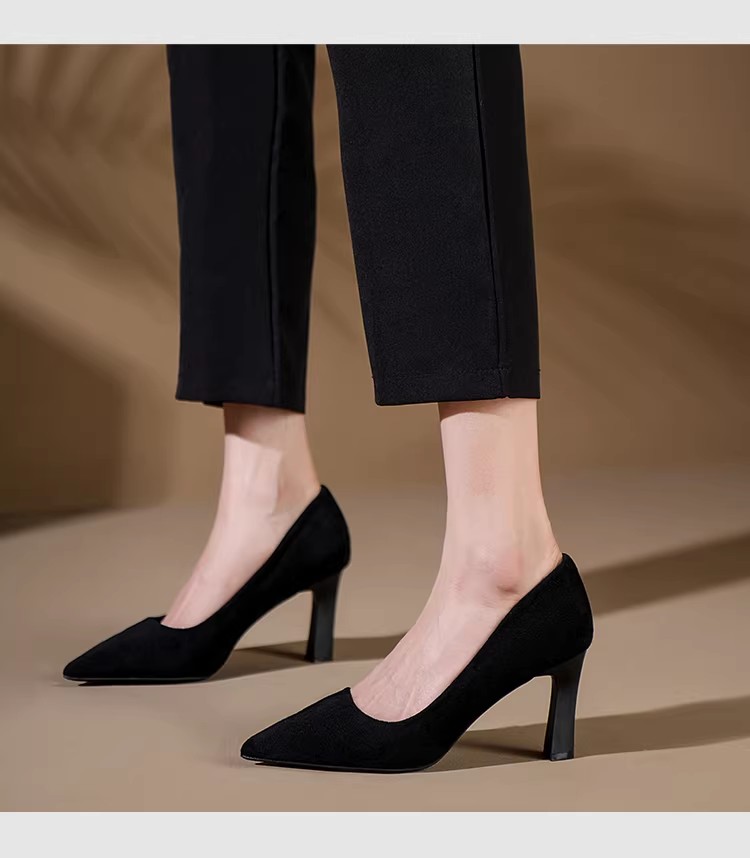
You pull on a suede slip-on, take four steps across the kitchen, and feel the heel lift. Not enough to fall out, just enough to know you’ll be clenching your toes by noon. Then you look at the price tag and wonder whether you can live with it.
Most of the time you can’t. Suede slip-on shoes for women are the least forgiving category in footwear, because there’s no lace to pull and no strap to tighten. The fit is either right or it’s a slow argument with your own foot.
This is the category where I’ve made the most expensive mistakes, which is why the advice below is blunt. Suede slip-on shoes for women are worth owning, but only if you buy the right shape and treat them like suede rather than like leather.
Good news: the fix is predictable. Three things decide whether a pair works, and you can check all of them before you leave the shop.
The heel is the whole fit
Suede has more grip than smooth leather, which is why a suede slip-on holds better than a polished loafer of the same shape. That grip is also why suede feels tight for the first week, then relaxes about 2 mm across the width. Not in length. Length stays put.
So the heel must be right on day one. Slip the shoe on, stand up, and try to walk out of it without using your toes. If the heel lifts more than 5 mm, it’s the wrong shoe. If it lifts 2 mm and settles when you walk, that’s normal and fine.
Test it on a hard floor, not carpet. Carpet grabs the sole and hides a loose heel, and you’ll discover the truth on a tiled station concourse at 8 a.m.
Also press the heel counter between your thumb and finger. It should be firm enough to spring back. A soft counter on a backless shoe is a design flaw, because suede alone can’t hold a heel in place.
Half a size down, or a heel grip?
If you’re between sizes, size down in suede slip-ons. The material relaxes and the shoe will end up right. Sizing up gives you a shoe that flaps by the second week, and no insole fixes a flapping heel.
If you’re already stuck with a pair that’s slightly loose, a suede heel grip is the honest fix, and a foam one is the dishonest one. Foam compresses in a fortnight and you’re back where you started. A leather-lined grip with a bit of texture will hold for a season.
What won’t work: thick socks. They change the fit at the toe and the instep but not at the heel, so you get a tight shoe that still slips.
- Heel lift over 5 mm: return them, don’t fight it
- Heel lift of 2 mm to 3 mm: normal, walk 40 steps to confirm
- Snug across the instep: fine, suede gives here
- Pinching at the toe: not fine, suede doesn’t stretch lengthways
One more check that catches people out: the opening. A slip-on with a narrow throat will cut across the top of your foot if your instep is high. Stand in them for two minutes. If you can feel the edge, you’ll feel it a lot more at 4 p.m.
Barefoot, no-show, or a thin sock
Suede is a napped leather, which means it holds dye and it holds sweat. Worn barefoot in summer, a cheap suede slip-on will discolour inside within three weeks and start to smell by August. Lined suede is better, unlined is worse.
No-show socks are the practical answer. Look for a pair with a silicone heel grip, because a sock that slides down inside a slip-on is a specific kind of misery. Cotton is fine in cool weather, but a merino blend handles sweat better and doesn’t bunch.
If you want to wear them barefoot, do it for short outings and let them air for a full day between wears. Two days in a row is how the inside of a suede shoe gets a permanent smell.
And if the shoes are black or dark brown, don’t wear them barefoot with a new pair of jeans. Indigo transfers onto suede and it doesn’t come off, which is the single most common complaint I hear about suede slip-ons.
Rain is the real test
Untreated suede and water don’t mix. A light shower will spot it. A proper downpour will soak through in about three minutes and leave a watermark that dries into a ring you can’t brush out.
That’s why the first thing you do with a new pair is spray them. A fluorocarbon-free protectant, two thin coats, 20 minutes apart, in a well-ventilated room. Let them dry overnight before wearing. That buys you roughly 20 minutes of light rain and, more usefully, it stops coffee and pavement splash from staining.
It doesn’t make them waterproof. Nothing makes suede waterproof without turning it into plastic. If you commute on foot in a wet city, keep a pair of smooth leather or rubber shoes for the wet days and save the suede for dry ones.
If they do get soaked, stuff them with newspaper, reshape the toe, and let them dry at room temperature. Never on a radiator, never with a hairdryer. Heat shrinks the nap and hardens the leather into a crust.
Mud is easier than water. Let it dry completely, then brush it off with a suede brush in one direction. Brushing wet mud just pushes it deeper into the nap.
Breaking in suede without ruining it
Suede doesn’t need much breaking in, and it hates being forced. Wear them for an hour at home on the first day, two hours the next, then a short walk outside. That’s it.
Skip the stretching sprays. They work on smooth leather and they flatten the nap on suede, which leaves a shiny patch exactly where the shoe was tight. If a spot presses, take it to a cobbler and ask for a targeted stretch, which is a mechanical job rather than a chemical one.
Creasing is normal and you can’t prevent it. What you can do is control where it happens. Creases form at the flex point, so if the shoe bends at the ball of your foot, the crease sits where it should. If it bends further back, near the arch, the shoe is too long and you’ll get a deep fold across the vamp within a month.
Store them with the shape held. Cedar shoe trees are the standard answer, and a rolled pair of socks does most of the same job for free. Don’t store them in a plastic bag, because trapped moisture is what turns suede stiff.
The three-month check
At three months, look at three things and you’ll know whether the pair was worth it.
- Nap at the toe: if it’s flattened and shiny, the quality is low
- Crease depth: a shallow crease is fine, a crack means cheap leather
- Sole edge: wear at the outside heel is normal, wear through the midsole is not
A decent suede slip-on will look slightly lived-in at three months and still presentable at two years. A cheap one goes shiny at the toe by month two and starts separating at the sole seam by month eight.
Resoling is worth it on a good pair. A cobbler will charge £30 to £45 for a new sole and heel top, which is a fraction of replacement, and the upper will usually outlast one resole. On a pair under £60, it isn’t worth it, because the upper will fail first.
Colour, nap, and how they age
Black suede slip-on shoes for women look sharp for about two months and then go grey at the toe. That’s not a quality problem, it’s what happens when the nap gets flattened by pavement, car pedals, and the underside of a desk. A suede brush brings most of it back, but not all.
Dark brown and navy hide wear better than black. Taupe and sand show water marks more. If this is your first suede pair, buy brown, because it’s the only colour that looks fine when it gets a bit scuffed.
Light colours have one big advantage: they show you when the protectant has worn off. With black, you find out too late. If you go for cream or pale grey, re-spray every four to six weeks in wet weather and keep a suede eraser in your bag.
The nap direction matters when you clean. Brush with the nap, which is the direction the fibres naturally lie, and the finish stays even. Brush against it and you’ll raise a patch that looks lighter than the rest of the shoe until the next rain.
One thing nobody tells you: suede slip-on shoes for women that are lined with leather stay cleaner inside for longer, but they’re warmer. Unlined pairs breathe better and smell sooner. There’s no version that wins on both, so pick based on whether you run hot.
Which pairs earn their place
For office wear, a suede loafer with a rubber sole and a 20 mm heel is the most useful version. It holds the heel, it survives a commute, and it works with trousers and a midi skirt. The soft-soled suede commuter pair is built for exactly that job.
For evenings, a suede mule or a block-heel slip-on gives you the look without the lace-up fuss, and the wider heel base keeps you upright on a pavement. Something like these suede block-heel slip-ons works with jeans and with a dress, which is more than most pairs manage.
What doesn’t earn its place: a thin-soled suede ballet flat. It slips, it has no support, and the sole wears through in a season. I’ve bought two. Both ended up as house shoes.
Cheap suede slip-on shoes for women usually fail at the same two points: the sole seam and the toe. If a pair costs under £45, check the seam before anything else, because a stitched seam that runs through the flex point will split within a season. Glued seams fail faster than stitched ones, but a stitched seam in the wrong place is worse than glue.
If you want the slip-on comfort without the suede maintenance, the walking shoes section has mesh options that handle rain and 8 km days. And if you’re weighing up heel heights for the same silhouette, this piece on black kitten heels at 40 mm covers the comfort maths.
What suede actually is, briefly
Suede is leather sanded on the flesh side, or a split hide, to raise a nap. That’s why it’s softer than smooth leather and why it stains. The difference between suede and nubuck comes down to which side of the hide gets sanded, and nubuck is the tougher of the two because the grain is still there.
For shoes you’ll wear in a city, nubuck is the better choice if you can find it. It resists scuffing, takes a protectant better, and holds its shape longer. Suede looks softer and stains faster. Neither is a mistake, but they’re not the same purchase.
One more thing about friction: if a slip-on rubs, you’ll get a blister on the heel within 40 minutes, and a blister that keeps getting rubbed takes about a week to settle. The basics of friction blisters are worth knowing before you decide to “just wear them in”.
Try this before you pay
Put both shoes on, stand up, and walk 40 steps on a hard floor. Then stop and stand still for one minute. Then walk back.
If the heel lifted, if the throat pressed, or if you were aware of your little toe at any point, put them back. Suede doesn’t fix fit problems, it just makes them softer while they happen.
For most people, one good pair of suede slip-on shoes for women covers the smart-casual gap in a wardrobe. Not three. One, in brown or navy, with a rubber sole and a heel you can walk in.
The pair worth buying is the one you forget you’re wearing by the time you reach the door. Everything else is a shoe you’ll keep in the cupboard and feel guilty about, and there are already enough of those.