

It’s 8:12 on a Tuesday and you’re standing in the hall in one shoe. The chunky pair that carried you through summer looks wrong under wide-leg trousers. The flats are fine, except your heel already knows what the walk to the station will feel like.
That gap between a shoe that disappears and a shoe that props you up is where low profile sneakers live. Flat-ish, quiet, usually under 22mm of sole at the heel. They don’t add height. They don’t announce themselves. They just let you get out of the door without a decision.
I’ve worn a 16mm pair for four months, through school runs and one 9,000-step museum day, and I’ll be honest about which parts earned their place and which parts are just photoshop.
Low profile means 14mm to 22mm under the heel, whatever the product page says
Most listings won’t tell you a sole height. You get “lightweight” in the copy and a photo taken from above, which hides the only measurement that matters. So measure what you can see: the rubber under the heel at the back, the rubber under the ball of your foot, and the difference between the two.
Here’s the range that counts as genuinely low:
- Heel stack of 14mm to 22mm, measured at the very back
- Forefoot stack of 8mm to 14mm, with no hidden wedge inside
- Heel-to-toe drop of 4mm to 8mm, so your foot sits close to level
- Weight of 200g to 260g per shoe in an EU 38
- Outsole thickness of 3mm to 5mm at the ball, since anything thicker feels like a rocker
Above 30mm at the heel you’re in chunky territory, and the shoe starts changing how you stand rather than just how you look. Below 12mm you’ve basically got a plimsoll, which is fine for a beach town and rough for a pavement full of gravel.
A lot of that thinness comes down to construction. Soles made from ethylene-vinyl acetate foam can be moulded thin and stay soft, which is why so many lightweight pairs use it. Rubber that has been vulcanised onto the upper sits flatter still, and it’s the reason canvas skate styles feel glued to the ground.
Sole height is the whole personality of a shoe. Everything else follows from it.
The 12mm topline trick that makes your leg look longer
Look at where the collar of the shoe sits relative to your ankle bone. On a low profile pair, the topline usually lands 12mm to 18mm below that bone, which leaves a strip of skin visible above the shoe. That strip is why these shoes read as longer on the foot than a high-top ever will.
It works with trousers too. A hem that stops 1cm above the shoe, with no break and no puddle of fabric on the instep, gives you a continuous line from knee to floor. The same trousers over a 40mm sole break differently, because the shoe pushes the hem up and the extra volume lands right where your ankle is narrowest.
I learned this the expensive way with a pair of wide-leg wool trousers. They were hemmed for a 20mm shoe and looked sloppy over anything thicker. Two centimetres of sole changed the whole silhouette, and not in a good way.
If you want the opposite effect, that’s a real choice too. Our notes on how chunky sneakers change the proportion of your leg cover the taller-sole route, which is a different game with different rules.
Where a thin sole lets you down
Concrete is the enemy for low profile sneakers. Two hours standing on a hard floor in a 4mm outsole and you’ll feel every edge of it through your heel pad. Foam compresses, and by hour three the shoe you loved at 9am has become a mat with laces.
Wet pavement is the second problem. A low profile sneaker usually has 2mm to 3mm of tread depth, sometimes less on the smoother colourways. That’s enough for a dry footpath and not enough for a rainy crossing with painted lines. I’ve done the small slide at a zebra crossing. Nobody was hurt. My dignity was.
The third issue is support, and it’s the one worth thinking about properly. A flat shoe asks your foot to do the work, which is fine for a healthy arch and less fine if you’ve had plantar fasciitis or a heel that complains on waking. A removable insole helps, but check what it does to the fit. Most inserts add 4mm to 6mm at the heel, and that pushes your heel up out of a shallow shoe.
Short answer: brilliant for a normal day, wrong for a 12-hour shift on tile.
Sizing: the half size you’ll probably want back
Low profile uppers are cut closer to the foot. There’s less foam padding around the collar and less material over the toes, so a pair that measures the same as your old trainers can still pinch across the top of your foot.
Two things to check in the shop, and both take ten seconds. Press your thumb across the widest part of the toe box; if the upper doesn’t give at all, the shoe will bruise your little toe by lunchtime. Then stand up and see whether your heel lifts when you walk. A shallow shoe with a stiff counter will rub, and no amount of breaking in fixes a heel that slides.
Wide feet, this matters more. If the ball of your foot measures 95mm or above in an EU 38, look for a pair listed as wide or a knit upper that stretches. Our own shoe size charts won’t save you here, because width is the number nobody publishes.
Half a size up is usually the safer bet. Not a full size, or the shoe will flap at the heel.
One exception worth knowing: suede and unlined leather loosen more than mesh. If you’re between sizes in a leather pair, take the smaller one; in a knit pair, take the larger. Same rule, opposite direction, which is why blanket advice online is useless.
Six things to check before you pay
This is the list I run through now with any low profile sneakers, after two returns that could have been avoided in the shop:
- Press the forefoot outsole with your thumb. If it dents and stays dented, the foam is soft and will pack down in weeks.
- Bend the shoe where your toes bend, not in the middle. A shoe that folds in half at the arch has no shank and will tire your foot.
- Look at the stitching where the sole meets the upper. Glue lines that already show gaps will open in the rain.
- Weigh one shoe in your hand against your phone. A phone is about 200g, and that’s your reference for “light”.
- Check the insole comes out. If it’s glued in, you can’t swap it when it flattens.
- Walk on a hard floor for 30 seconds. Tile shows you the cushioning honestly, carpet hides everything.
The stitching check is the one most people skip. A stitched or vulcanised sole can be worn until the tread goes. A glued sole on a thin midsole often separates at the flex point first, usually around month seven.
If you want something in this shape with a bit more under the ball of the foot, a pair like these casual walking shoes with a flatter sole splits the difference. They’re not as sleek, and they don’t pretend to be.
What they work with, and what they fight
Wide-leg trousers, straight jeans, a midi skirt with a bit of weight to it. All fine. The shoe is quiet enough to sit under volume without competing, which is the main reason it keeps coming back into rotation.
Anything cropped right at the ankle is trickier. A cropped wide trouser plus a low shoe plus a visible ankle can chop your leg into three sections. It can look intentional, but it needs a high waist and a bit of confidence.
Office days are where these earn their keep. They read as tidy under tailored trousers in a way that a running shoe never does, because there’s no 30mm slab of foam shouting from below. If that’s your use case, these dress sneakers that work with tailored trousers are worth a look before you commit.
Summer dresses are the one pairing I’d skip. A thin white sole under a light dress looks like you forgot to change after the gym.
Lightweight running styles sit at the other end of the same idea, thin but built for motion. This ultra-light running pair for women is the version that works if you actually walk fast, though the upper is less forgiving with a skirt.
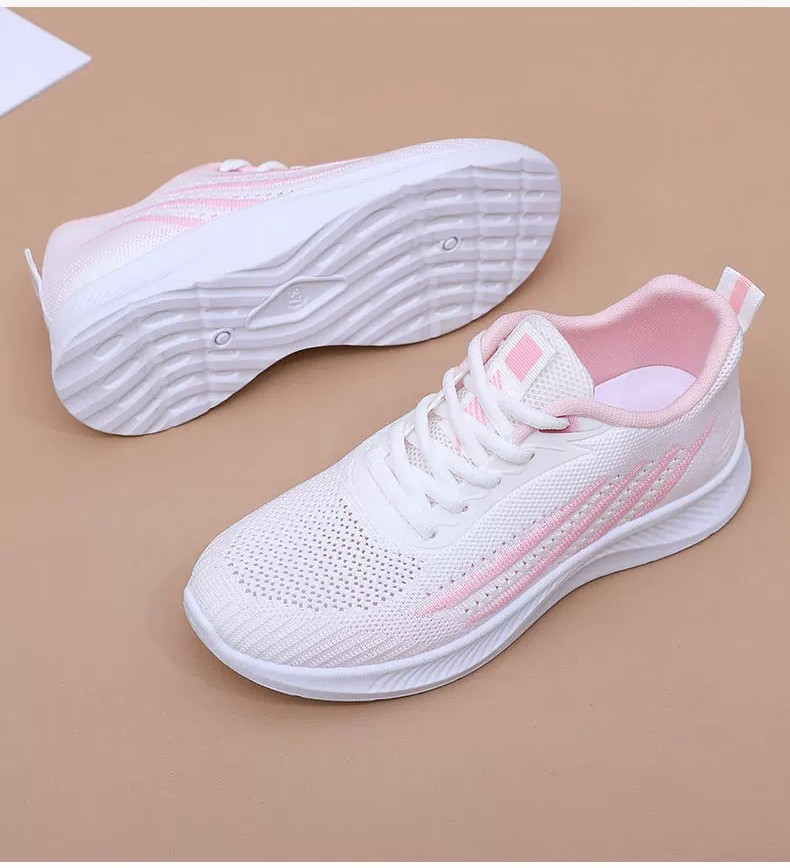
How long a 4mm outsole actually lasts
At 8,000 steps a day, a thin EVA midsole with a rubber outsole is good for roughly 500km to 800km before the foam stops springing back. That’s six to nine months of real use, less if you’re on concrete all day and more if you rotate two pairs.
Resoling usually isn’t worth it on a shoe at this price. The upper outlives the sole, which is the annoying part, so buy the version with stitching rather than glue and accept the timeline.
Care makes a difference, just not the difference the internet claims. Wipe the midsole with a damp cloth and mild soap, skip the washing machine on anything with a glued sole, and let them dry away from a radiator. Heat is what kills foam. A pair left on a hot balcony in July will feel flatter by September, and there’s no fix for that.
One more thing worth knowing: the tread wears fastest at the outside heel, so check that corner at month four. If the rubber is already gone there, the rest of the sole won’t be far behind.
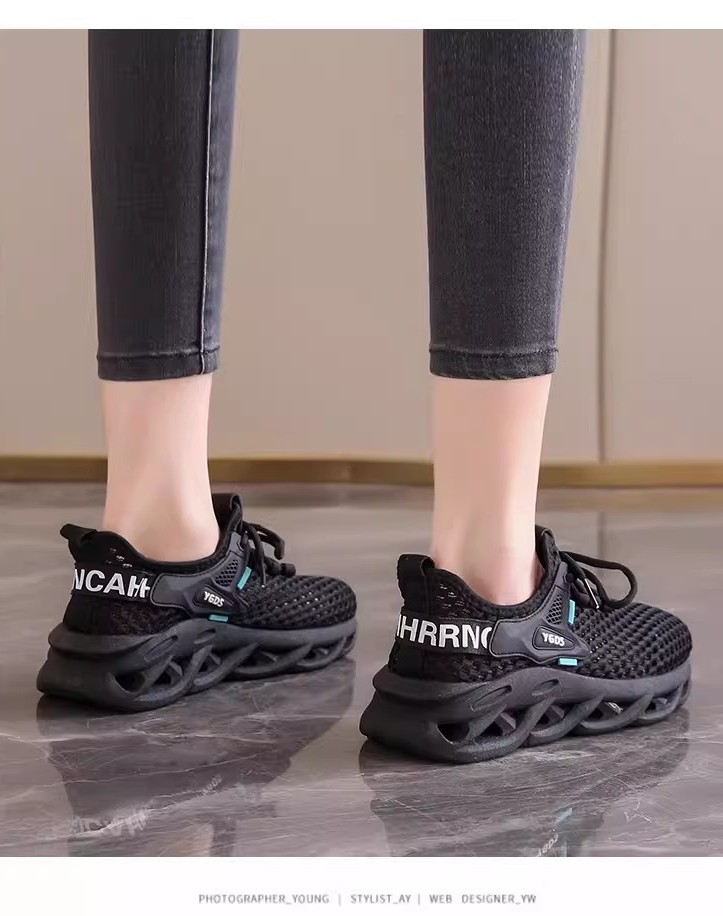
Breaking them in takes two evenings, not two weeks
A thin sole doesn’t need much breaking in, because there’s barely anything to soften. What does need time is the upper, especially where it crosses the top of your foot. Give it two evenings of an hour each indoors and you’ll know whether it’s going to work.
The heel counter is the part that decides it. Walk around the kitchen in thin socks and pay attention to whether your heel rubs on the way down or on the way up. Rubbing on the way down usually means the shoe is too shallow and no amount of wear will fix it. Rubbing on the way up means the collar is stiff, and that one usually does settle after a few wears.
If a spot does bite, a dab of beeswax on the inside of the counter softens it faster than anything else I’ve tried. Plasters work for a day and then move. Thick socks work better than plasters, but only if you have room in the toe box, which brings you back to sizing.
Canvas pairs break in quickest, often within a day, and they also stretch the most across the width. Leather takes about a week and holds its shape afterwards. Mesh does neither, which is why mesh is comfortable from hour one and looks tired by month six.
Don’t try to speed any of this up with water. The old trick of soaking leather and walking it dry works on heavy boots and ruins thin cemented soles.
A note on the flat-bottomed versions
Some pairs take the idea further and drop the midsole entirely, leaving you with a flat rubber base and a fabric upper. They look sharp and they pack into a bag, and they’re the closest thing to a plimsoll you can wear to work. The trade-off is real: 30 minutes of standing and you’ll want a mat.
If that shape appeals but you need slightly more underfoot, breathable flat-bottomed board shoes keep the low line while adding a couple of millimetres. Look through the full sneakers category if you want to compare heights side by side, since product photos are often taken from the same angle.
Whatever you pick, do the thumb test on the forefoot before you leave the shop. The cheapest pair of low profile sneakers you’ll own is the one you don’t have to return.
