

You’ve got a meeting at ten, lunch with a client at one, and a train at six. Heels are out because your knee is still complaining from last week. So you reach for the one pair that can pass in all three rooms without anyone looking at your feet twice.
That’s the entire job of dress sneakers for women: look tidy enough for a room where everyone else is in leather soles, and feel good enough that you’re not counting the hours. Most pairs fail at one end or the other. The fashion ones look right and destroy your feet. The comfortable ones look like gym shoes with a logo problem.
The difference is in four details, and you can check all of them in about 90 seconds in the shop.
What actually counts as a dress sneaker
Strip the marketing away and the definition is simple. A dress sneaker is a low-profile shoe with a clean upper, a sole under 25mm, and no visible branding. That’s it. No mesh panels, no chunky midsole, no reflective strips.
The dress shoe half of the name refers to the finish, not the construction. It’s a sneaker that’s been dressed up, usually with leather, a minimal sole and a shape that follows the foot instead of padding it.
Two things to know before you shop. First, a dress sneaker is not a running shoe with a nicer colourway. The last is different, the sole is stiffer, and there’s no cushioning to speak of. Second, the category has a ceiling. In a formal office, or at a wedding where the invitation says black tie, they don’t work and no styling trick saves them.
Within their range, though, they’re the most useful shoe in a working wardrobe. They go with tailored trousers, midi skirts, and dark denim. They survive a 12-hour day. And they don’t announce themselves, which is the point.
Four details that separate sharp from sloppy
Look at these in this order. Each one either holds up or it doesn’t, and there’s not much middle ground.
One: the sole thickness. Anything over 25mm reads casual. The ideal is 15mm to 20mm, with a slim profile that follows the shape of the foot. A thick white sole on a leather upper is the single most common mistake in this category, and it’s why so many pairs look like school shoes.
Two: the sole colour. Tonal wins. A black upper with a black sole, or a tan upper with a gum sole, looks intentional. A white sole under a dark upper creates a hard horizontal line at the ankle that shortens your leg and draws the eye to your feet. There’s a whole article on why a black sole on a black sneaker works if you want the reasoning.
Three: the upper. Full-grain or smooth leather, with as few seams as possible. Every extra panel is a place for dirt to collect and a line to break up the shape. Suede works in dry weather and not in wet. Knit doesn’t work at all here, because it sags and the sag is visible from three metres away.
Four: the hardware. Metal eyelets, flat waxed laces, no visible logo. If there’s a logo, it should be small, embossed, and the same colour as the leather. A contrast logo makes the shoe casual instantly.
One extra check that’s easy to miss. Look at the toe shape from above. A slightly squared or almond toe looks more formal than a round one. A very pointed toe looks like a 2014 trend and will date the pair faster than anything else on this list.
Tailored trousers: hem, break, and the 2cm rule
This is the combination people buy dress sneakers for, and it’s the one that goes wrong most often.
A tailored trouser worn with a flat, slim sneaker needs a hem that sits about 2cm above the floor, with no break over the shoe. Any break and the fabric pools on the instep, which looks like the trousers are too long rather than like a style choice.
If your trousers were hemmed for heels, they’re roughly 4cm too long for sneakers. Get them re-hemmed. It costs less than a new pair of shoes and it’s the difference between looking put together and looking like you got dressed in a hurry.
Straight-leg and slightly cropped trousers work best. Wide-leg trousers also work if the hem is clean and the shoe is visible when you walk. Skinny trousers are the hardest, because the narrow ankle above a slim shoe creates an unbroken vertical line that can look severe.
Colour is straightforward here. Match the shoe to the trouser or go darker. A mid-grey trouser with a black sneaker is safe. A navy trouser with a tan sneaker is a nice contrast. A black trouser with a white sneaker is a statement, and it only works if the rest of the outfit is deliberate.
For the trousers themselves, the fabric matters as much as the cut. Wool holds a crease and looks sharp with a leather sneaker. Linen wrinkles and looks better with canvas. If you’re wearing the same shoe with both, pick the leather one, because it’s the only one that works in both directions. A pair like these soft leather sports sneakers sit in the right place between formal and casual.
Skirts, dresses, and the ankle question
Sneakers with a dress is a look that either works completely or looks like you forgot your shoes. The deciding factor is where the hem lands.
A midi hem that stops at the narrowest part of your calf works with any low sneaker. A hem that lands right at the ankle bone is the difficult one, because it creates a horizontal line exactly where the shoe starts. Either raise the hem 5cm or lower it 5cm and the problem disappears.
Maxi dresses are the easiest. The hem covers most of the shoe, so you only see the toe, which means a clean leather toe box is all that matters. Midi skirts need a slimmer shoe. Mini skirts need a chunkier one, because a slim shoe under a short hem makes your legs look thin in a way that isn’t flattering.
Tights change everything. Opaque black tights with a black leather sneaker is one of the most reliable outfits in a winter wardrobe, and it works because there’s no visible transition at the ankle. Sheer tights with a white sneaker is a harder sell, mostly because the contrast draws attention downward.
For anything with a structured skirt, a leather sneaker in a dark neutral is the safe choice. For a soft, floaty dress, canvas or suede is better because the textures sit closer together.
The invisible details: socks, tights, laces
Nobody notices a good sock choice. Everyone notices a bad one, and bad sock choices are what make a leather sneaker look sloppy.
Under tailored trousers, wear no-shows that actually stay put. A sock that peeks over the collar of a slim leather shoe breaks the line and looks like laundry day. Look for a silicone heel grip, and don’t buy the cheapest pack, because they slide down within an hour.
In tights weather, think about the colour transition. Black tights into a black shoe read as one line. Black tights into a tan shoe creates a strong horizontal break at the ankle that makes your legs look shorter. If you want the contrast, wear a longer hem so the gap is smaller.
Bare ankles hand the whole job to the shoe. Keep the hem clean, keep the ankle visible, and don’t add an ankle bracelet or a strap. A dress sneaker is a plain shoe, and plain is what makes it versatile.
Laces matter more than people think. Flat waxed cotton laces in the same colour as the leather look considered. Round athletic laces look like you borrowed them from a gym shoe. If you want a small change, swap in a slightly thinner lace in a tonal shade. It’s a two-pound fix that changes the whole read of the pair.
And if you’re hunting for the right pair, start with the shape rather than the brand. The women’s shoe collection sorts by silhouette, which is more useful than sorting by price. Once you know you want a low, clean upper, most of the range falls away and the decision gets easy.
Where they don’t work
Being honest about the limits saves you money.
They don’t work at a formal interview at a law firm, a bank, or anywhere the dress code is written down. They don’t work at a wedding unless you know the couple well enough to know the dress code is relaxed. And they don’t work with a suit, in the tailoring sense, because a suit expects a shoe with a heel and a defined waist.
They also don’t work in heavy rain. Leather sneakers with a slim sole have almost no tread, and a wet pavement in a shoe with 3mm of rubber under the ball is genuinely slippery. The sole is the trade-off for looking sharp.
And they don’t work for long walks. A dress sneaker has a stiff shank and minimal cushioning, so 10,000 steps is about the limit before your feet start filing complaints. If your commute involves 20 minutes on foot each way, keep a pair of walking shoes at the desk and change.
There’s a version of this shoe that solves the comfort problem, and it’s the plain casual walking shoe with a slightly thicker sole. Less sharp, much kinder after 4pm. Which one you pick depends on whether your day ends in a meeting or a train.
Keeping leather looking like leather
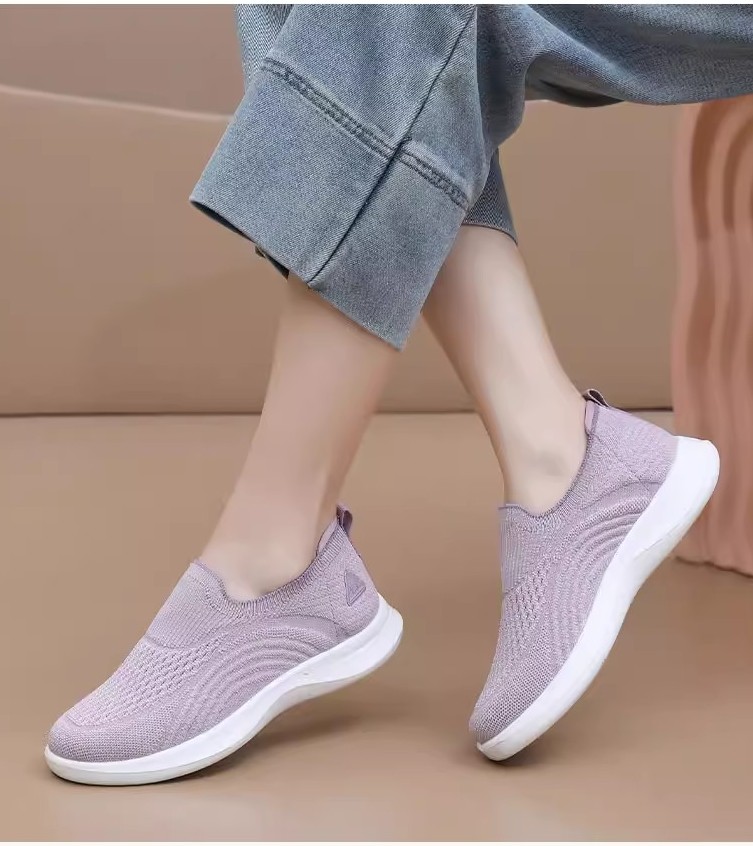
A leather sneaker that’s looked after will outlast three pairs that aren’t, and the routine takes five minutes a fortnight.
Wipe with a damp cloth after wear if there’s visible dirt. Once a fortnight, work in a small amount of cream with your finger, paying attention to the crease across the toe. Let it sit for ten minutes, then buff with a dry cloth. That’s it.
Don’t use a coloured polish on a sneaker. It fills the grain and leaves a waxy film that attracts dust. Neutral cream only.
For scuffs on the toe, a melamine sponge works on smooth leather if you’re gentle. On suede, use a suede eraser and nothing wet. On patent, a microfibre cloth and a breath of warm air.
Store them with something inside to hold the shape. Cedar shoe trees are the proper answer, rolled socks are the cheap one. Without support, the toe box collapses and the crease deepens within a season. A collapsed toe box on a dress sneaker is unfixable, and it’s the difference between a pair that looks expensive in year two and one that looks tired in month four.
If the leather is light-coloured, keep it away from dark denim. Indigo transfers, and once it’s in the grain it doesn’t come out. A protective spray helps for about six weeks before it needs reapplying. OEKO-TEX testing standards are worth checking if you have sensitive skin, since leather finishes vary a lot in what they contain.
The 90-second shop check
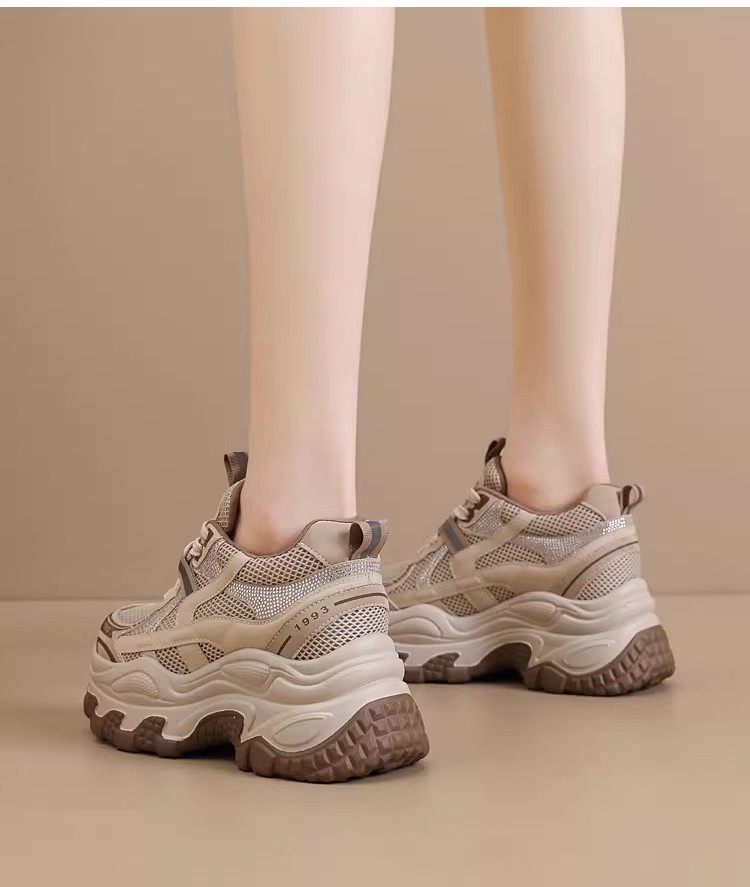
Walk in knowing what you want. Low profile, tonal sole, leather upper, no logo. Then run this sequence.
- Press the sole under the ball of the foot. It should be stiff, not spongy.
- Squeeze the heel counter. It should hold its shape with pressure.
- Look along the side profile. The sole should be thinnest at the arch and thickest at the heel.
- Check the tongue. Padded tongues look casual, thin ones look sharp.
- Try them with the trousers you’ll actually wear them with, if you can.
Then walk for five minutes. Not around the shop, properly, on a hard floor. A dress sneaker that rubs at the heel on day one will still rub in week three, because there’s no padding to soften.
Personalisation is worth considering if the fit is right. A slightly different lace colour or an embossed initial on the heel is a small thing that makes a plain pair feel like yours. Just don’t personalise a pair you’re unsure about. There’s a good breakdown of what’s worth personalising on a sneaker if you’re tempted.
Finally, buy the boring one. Black or dark brown, smooth leather, slim sole. It’ll be the pair you reach for on the mornings when you have four minutes to get out of the door and no patience for a decision. That’s most mornings. A wardrobe of three pairs of dress sneakers for women will get less use than one pair that fits properly and goes with everything you own.
