

It’s 7:40 on a Tuesday, you’ve got a train at 8:05, and the white pair by the door has a grey smudge across the toe that wasn’t there last night. So you reach for the black ones again. That’s how a good pair ends up sitting unworn for a year.
White leather sneakers should survive that morning. Most don’t, and the reason is boring: they were never leather in any useful sense, and nobody told you how the white was put on. This is what to look at before you spend money.
Turn the shoe sideways and look at the sole edge
The upper gets all the attention. The sidewall decides whether you keep wearing the pair in March. Pick one shoe up, hold it at eye level, and follow the thin band of material wrapped around the bottom where the upper meets the sole.
Cheap white sneakers fail there first. The midsole is usually a foam core with a white coating sprayed on, so the coating lifts at the flex point behind your big toe and leaves a grey scar that no wipe can fix. Test it with a thumbnail. Drag your nail along the sidewall near the toe. If white powder or paint comes away, you’re looking at a finish, not a material.
Three things hold up better, in rough order of durability:
- A vulcanised rubber sole. Fine ribbing where rubber meets the upper, no painted edge. Scuffs, doesn’t peel.
- A cup sole in solid white rubber. Thick, heavy, and the white goes all the way through.
- A leather-wrapped midsole. Seen on court styles. Looks sharp for a year, then the wrap cracks at the flex point.
None of those are scuff-proof. All of them stay white-ish for two seasons instead of two weeks. That’s the difference you’re paying for.
While the shoe is in your hand, press the heel counter with your thumb. You want resistance, roughly like a fridge magnet pulling back. If it folds flat, your heel will roll inward on long walks and the collar will stretch into a sad flap by August.
Three words on the label, three very different shoes
Labels on white sneakers use leather language loosely. Here’s what those words actually mean when you’re buying a pair you plan to wear 3 times a week.
- Full-grain leather. The top layer, sanded barely at all. Creases into soft lines, takes a wipe, and darkens slightly where you bend it. The expensive option, and the one that ages best.
- Corrected-grain leather. Sanded smooth and stamped with a leather texture. Very uniform, very white, and it creases in sharper folds. Most branded white sneakers sit here.
- Bonded or “genuine” leather. Leather scraps glued into a sheet, then coated. Feels plastic under your thumb, doesn’t breathe, and the coating cracks within a season. Common at the low end of the market.
You can sort them out in five seconds without reading anything. Pinch the upper between finger and thumb. Full-grain gives a little and shows fine grain. Bonded leather feels like a folder from a stationery shop. It also traps heat, which matters more than you’d think in July.
One honest catch: corrected-grain leather is genuinely easier to keep clean than full-grain, because the surface is sealed. If you want a pair that wipes down after a rainy commute and never needs cream, the cheaper-feeling option wins. If you want the pair that looks better in year two, you want the grain.
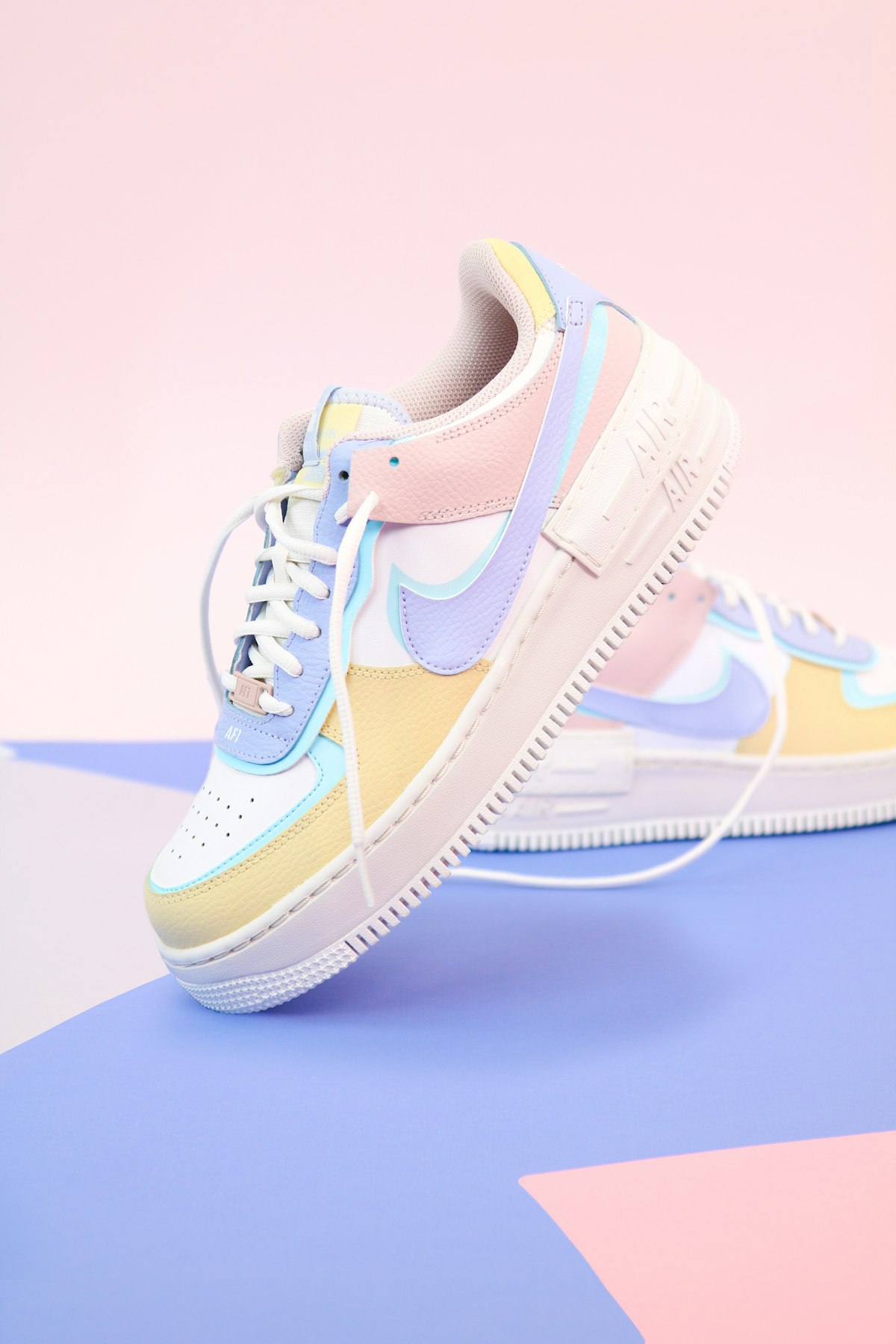
The three scuffs you’ll get in week one
Every white leather sneaker collects the same damage in the first seven days. Knowing which one you’re looking at saves you from scrubbing the wrong thing with the wrong product.
Grey transfer marks on the inner heel and outer toe come from rubber soles of other shoes, car pedals, escalator edges. They sit on top of the finish. A melamine sponge with water takes them off in about 20 seconds. Don’t press hard on corrected grain or you’ll dull the surface.
Blue-grey dye transfer from dark jeans is a different animal. It’s absorbed, not sitting on top, and it usually shows up along the collar and the outside of the toe box. Mild soap won’t budge it. A leather cleaner with a soft brush, then a conditioning wipe, lifts most of it if you catch it the same week. Leave it a month and it becomes part of the leather.
Denim rub is the one that catches people out. Raw or new indigo jeans bleed onto white leather fast, especially on a hot day when you sweat a little. My rule: no new jeans with a fresh white pair for the first three washes.
Friction blisters are the other week-one surprise, and they usually come from the collar rather than the sole. If the top edge digs in above your heel bone, you get a blister on day two. Healthline’s breakdown of friction blisters is a plain explanation of why that spot fails first: repeated rubbing, moisture, and pressure in one small area. A heel grip insert costs less than a coffee and fixes it.
Also worth knowing: the white on leather isn’t a dye in the usual sense. Pigment sits in a finish coat, and that coat is what scuffs. Britannica’s entry on leather covers the finishing stage if you want the technical version.
Which white, though? Your jeans decide
There are two whites in the shop and they behave nothing alike. Optic white is blue-based and very bright. Cream or chalk white is warmer and slightly yellow.
Optic white looks incredible with black trousers, navy, and grey. Against faded blue denim it can look almost surgical, especially in daylight. Cream white is the opposite. It softens next to blue jeans, looks expensive with beige and olive, and reads slightly yellow under warm indoor light.
If you own one pair, pick the shade that matches the trousers you actually wear on weekdays, not the outfit you’d wear to a shoot.
- Mostly black and navy tailoring: optic white.
- Mostly blue jeans and chinos: cream or chalk.
- Mostly all-white or pastel outfits: optic white, or the whole look goes flat.
There’s a trade-off nobody mentions. Optic white shows yellowing faster, because the base is already cool and any oxidation reads as dingy. Cream hides oxidation for months. If you’re the kind of person who cleans shoes twice a year and no more, buy cream.
If you want a read on how metallic and high-shine finishes age by comparison, this piece on silver sneakers at month six tracks the same wear pattern from a different angle.
They fit tight for a week, and that’s not a size problem
White leather sneakers feel half a size small on day one. That’s normal. Leather has less give than canvas or knit, and the lining is thicker than it looks from outside.
What you should not do is size up automatically. Leather relaxes about 2mm across the widest part of your foot over the first two weeks of wear, mostly at the flex point and the instep. If you buy a pair that’s already roomy, you’ll be sliding forward by week three and the heel will rub.
Use this instead: try them on at the end of the day, when your feet are at their largest, with the socks you’d actually wear. You want a thumb’s width at the toe, no pressure across the top of your foot, and a heel that stays put when you walk on your toes.
Two fit traps specific to this style:
- Narrow toe boxes. White leather court styles often taper. If you have a wide forefoot, look for a rounder toe or go up half a size and add an insole.
- Stiff collars. A padded collar breaks in nicely. A hard, thin one never does. Bend it with your fingers in the shop.
Socks change the fit more than most people expect. A thin cotton no-show sock and a cushioned crew sock can be a full half size apart in feel. Take both to the shop if you’re between sizes, and decide with the pair you’ll wear most.
Break-in should take about 10 hours of walking, not two weeks of pain. If a pair hurts on day four, it’s the wrong last for your foot, not a pair that needs more time. For a softer, more forgiving construction, a mesh-upper pair with a soft sole breaks in on day one, though it won’t hold a crisp shape.
The four-minute routine that actually works
White leather doesn’t need a shelf of products. It needs a repeatable four minutes, done on a schedule you’ll keep.
- Weekly: wipe the whole shoe with a damp microfibre cloth, including the sidewall. 60 seconds.
- Weekly: melamine sponge on the toe and heel corners only. Don’t touch the smooth panels. 40 seconds.
- Monthly: leather cleaner with a soft brush, working in small circles, then wipe dry. Two minutes.
- Monthly: conditioner on full-grain leather only, and a fresh coat of protectant spray on everything. 30 seconds plus drying time.
Two things destroy white leather faster than dirt. Heat from a radiator or a tumble dryer, which cracks the finish, and bleach, which turns it yellow permanently. Never machine wash a leather sneaker, even on a cold cycle, whatever a forum tells you.
Skip the whitening strips and the toothpaste tricks. Both work on canvas and both strip the finish coat on leather, leaving a chalky patch that collects dirt twice as fast. If the white has genuinely gone yellow across the whole shoe, that’s oxidation under the surface, and nothing you apply on top will fix it.
Laces are the cheapest upgrade you’ll make. Swap them every few months, because dingy laces make clean shoes look old. Cotton holds dirt; waxed cotton doesn’t. A pair costs almost nothing and takes the whole shoe up a level.
Store them with the shape held, laces loose, away from direct sun. A pair of crumpled newspaper pages inside works fine if you don’t own shoe trees. Sunlight is the slow killer here: three months on a windowsill and the white goes cream whether you wear them or not.
When white leather is the wrong call
There are days this shoe ruins. If you cycle in the rain, white leather is a bad choice, full stop. Water spots set into the finish and dry as pale rings. A rubber or coated pair handles a wet commute with a shrug, and there’s a reason people keep one ugly pair for exactly that.
If you walk more than 10,000 steps a day on concrete, a flat white leather sneaker will leave your arches complaining by mid-afternoon. The sole is usually thin, and there’s no shank. You want cushioning under the ball of your foot, not a slab of rubber with a nice upper.
If your feet are wide and your budget is tight, skip this category entirely. Wide fits in white leather usually mean a premium price, and the cheap workaround (sizing up) makes the heel slip. A breathable flat-bottom board shoe gives you the same casual look with more room across the forefoot.
And if you want leather with a bit of give, there’s a middle option: a soft-footbed leather sports shoe that skips the stiff court construction. Less crisp, more comfortable on day one.
For the pair you wear with everything from April to October, the white leather sneaker still earns its place. Just buy the one with a solid white sidewall, a heel counter that fights back, and a shade that matches your actual jeans. Then keep the sponge where you can see it. The pair that stays white isn’t the expensive one. It’s the one you clean on a Sunday without thinking about it.
Browse the wider sneaker range for women if you want to compare soles side by side, or start with the white sneakers category and work backwards from the shade you like. Either way, check the sidewall first. It’s a five-second habit that saves a pair.
