

You put on a leather tennis sneaker for the first time and something feels different at the ankle. It’s lower than a trainer, stiffer across the top, and the sole is flat enough that you can feel the floor. Then you look down and realise it makes your legs look longer.
That’s the whole appeal. A court shoe is a design that was never meant for fashion, and that’s why it works. Here’s how to pick one you’ll still wear when the trend has moved on.
A court shoe was built to stop you sliding sideways
Tennis involves a lot of moving left and right, not just forward. A player running for a wide ball plants a foot and pushes off sideways, and the shoe has to hold that. That’s why the sole is wide at the edges, the heel counter is stiff, and the upper wraps low around the ankle.
None of that helps you walk to the bus. What it does help with is keeping your foot from rolling over, which is why women with slightly unstable ankles often find court shoes comfortable straight away. The support comes from structure, not padding.
The shape dates back to the early rubber-soled shoes made for grass courts. The tennis shoe’s history explains how the flat sole and canvas upper became standard long before anyone thought about cushioning.
Modern pairs keep the silhouette and drop the stiffness. A leather upper is softer than the original canvas-and-rubber build, and the sole is thinner. What survives is the proportion: low, clean, and narrow through the middle.
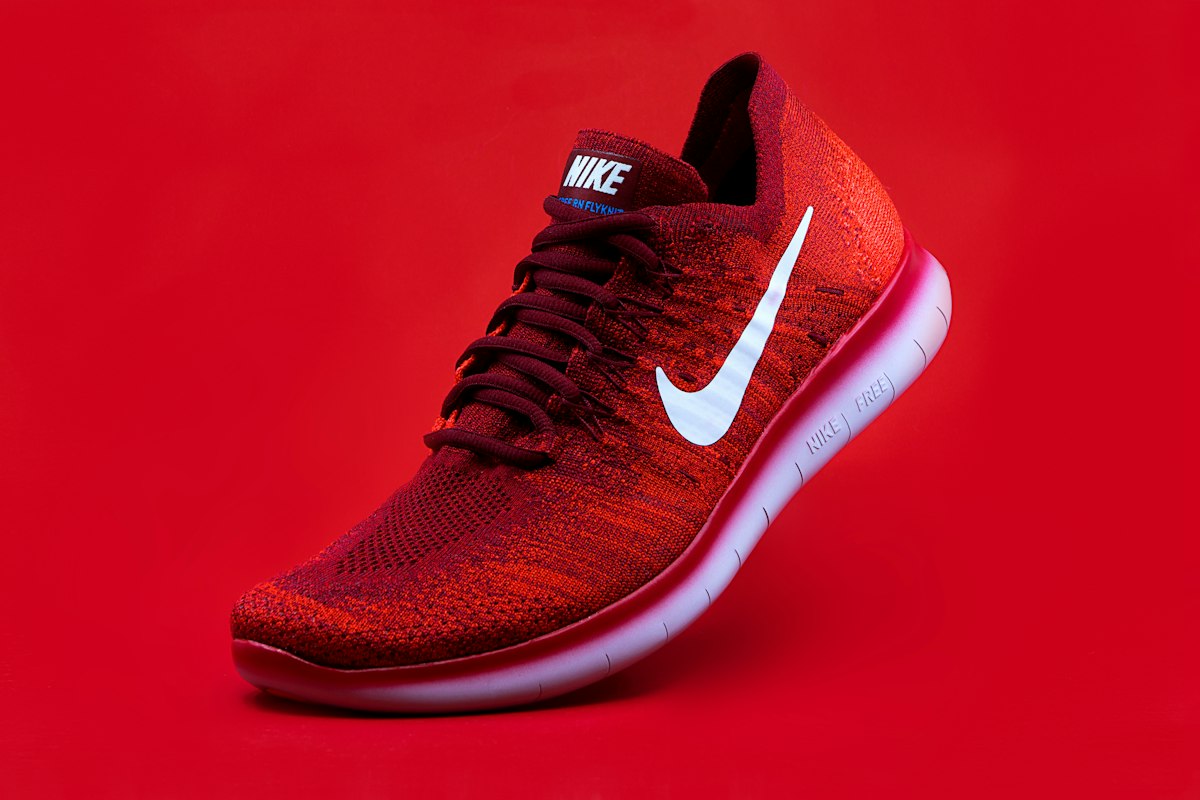
The toe drag patch tells you who made it and why
Real tennis shoes have a reinforced patch over the toe on the inner side of the dominant foot. Players drag that area on serves, and without reinforcement a leather upper wears through in a season.
On fashion versions, that patch is either decorative or missing. Neither is wrong, but it’s a quick way to tell a shoe that borrowed the look from a shoe that was designed for the sport.
- Double-stitched patch, slightly raised: built for play, or a faithful copy of a playing shoe.
- Flat printed panel: styling only. No extra protection, no extra cost.
- No patch at all: a court-inspired shoe rather than a court shoe. Fine for the office.
For everyday wear, none of this matters much. The patch does add a little structure to the toe box, and that helps stop the upper collapsing where it creases. It’s a small thing you’ll notice after six months, not on day one.
What matters more is the lining. A leather lining moulds to your foot and stops the slipping that causes blisters. A synthetic lining feels fine in the shop and turns clammy by July.
Leather in August: an honest conversation about heat
Leather doesn’t breathe the way mesh does. Full stop. If you walk 3km in 32°C heat, your feet will be warmer in leather than in a knit upper. Anyone who tells you otherwise is selling something.
It’s not as bad as it sounds, though. Good leather absorbs moisture and releases it slowly, so your foot feels damp rather than soaked. Cheap corrected-grain leather, coated and sealed, traps everything. That’s the version that makes people give up on leather sneakers entirely.
Two practical workarounds:
- Thin cotton or merino socks. Merino handles sweat better than cotton and doesn’t hold odour the same way.
- Rotation. Wear leather one day, something else the next. A shoe needs 24 hours to dry out inside.
If you know you run hot, a mesh upper with the same court silhouette gives you 80% of the look with none of the heat. That’s a trade worth making, and it’s the reason a mesh sports shoe with a soft sole ends up in a lot of summer wardrobes.
Herringbone, pivot point, and other sole details
Turn the shoe over. The tread pattern tells you more about grip than any product description will.
Herringbone is the classic court pattern: zigzag grooves that let the sole slide and grip on a smooth surface. It works well on tile and pavement, and it clogs with mud on a wet park path.
A pivot point is a small circular pad under the ball of the foot, so you can turn without catching. On a fashion version it’s often just a raised circle, which does nothing except look technical.
Flat or lightly grooved soles are the cheapest option. Slippery on wet stone, fine on dry pavement, and they wear out fastest at the outer heel.
For city wear, herringbone is the best of the three. It grips on smooth floors and ages evenly. Avoid it if you walk through gravel or mud regularly, because those grooves hold onto everything.
Wear shows up at the outer edge of the heel first. Look at a used pair and you’ll see the tread gone in a diagonal patch. That’s normal for most people, and it’s the point where grip starts to drop on wet pavement. If you catch it early, a cobbler can add a thin rubber heel pad for very little money.
There’s a reason this pattern survives: it’s the same principle used in competitive tennis, where a player changes direction dozens of times per set. Traction mattered before styling did.
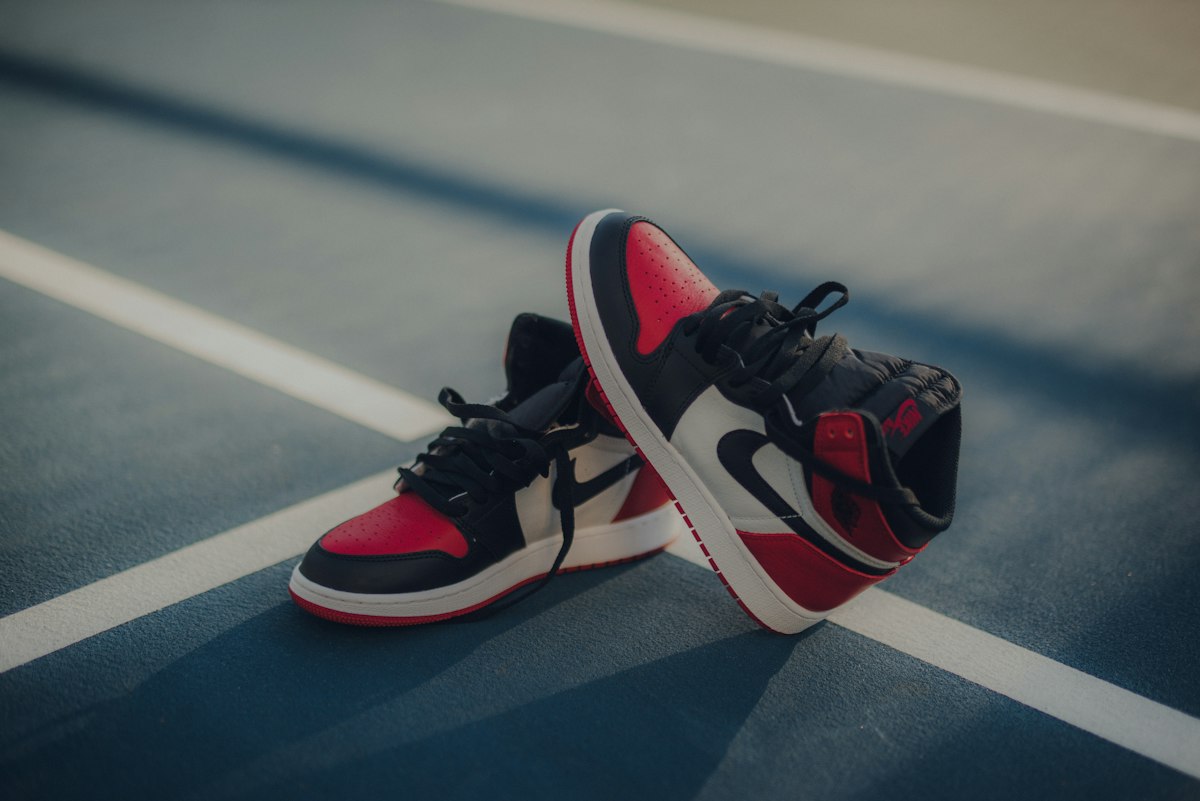
They run narrow, and most people size up too early
Court shoes are built on a narrow last, because they’re designed to hold a foot in place. If your feet are wide, you’ll feel it across the ball of your foot within the first hour.
The instinct is to size up. That usually makes things worse. You end up with extra length at the toe, your foot slides forward, and the heel rubs. A better move: try half a size up first, and if the length is already right, look for a wide fit or a different silhouette.
Length check: you want a thumb’s width at the toe, no more. Width check: press the upper just behind the toe cap. If your toes are touching the leather, the shoe is too narrow, regardless of what the size on the box says.
Break-in is short with leather. About five hours of walking, mostly because the upper softens at the flex point. If a pair is still biting after a week, the shape is wrong for your foot.
The area that catches most people is the top of the foot, right where the laces start. Court shoes have a low instep, so a high instep means pressure there. Loosen the bottom two lace rows and see if it eases. If not, the last is too shallow.
What they work with, and what they ruin
The reason this shoe has lasted fifty years in fashion is that it sits between formal and casual. It’s neat enough for a meeting and flat enough for a Saturday market.
Best combinations, in my experience:
- Straight-leg trousers that finish just above the ankle bone. The clean line of the shoe finishes the outfit.
- Midi skirts with a defined waist. The flat sole keeps the whole thing from looking formal.
- Dark straight jeans, cuffed once. Avoid wide legs, which swallow the shoe entirely.
Worst combination: a long, loose dress with no waist. The shoe disappears and you look like you forgot to change out of gym kit. That’s a proportion problem, not a shoe problem, but it’s the reason people say court shoes don’t suit them.
Colour is simpler than people make it. White and off-white go with nearly everything and show every scuff. Black leather reads sharper and hides wear, but shows dust. Tan sits in the middle and looks best with denim.
Socks decide the hem, in practice. A shoe this low looks better with a no-show sock than with a visible white one, unless the visible sock is part of the point. For trousers, a thin dark sock makes the ankle look longer. For skirts, no sock at all is usually cleanest, and the low collar is what makes that possible.
If you wear tailoring most days, this piece on dress sneakers with tailored trousers covers the hem lengths that actually work. And if you’re leaning tan, read the care rules that keep a tan suede colour before you commit.
The maintenance job is smaller than you’d think
A leather court shoe needs about ten minutes a month. That’s it. The trick is doing it before the dirt sets, not after.
- Wipe the whole shoe with a damp cloth after every wear in wet weather. Thirty seconds.
- Clean the sidewall with a melamine sponge once a fortnight, and go gently near the stitching.
- Condition the upper monthly, and let it dry away from heat.
- Replace the laces when they grey out. A fresh white lace makes an old pair look new.
The bigger risk isn’t dirt, it’s the washing machine. Leather shrinks, stiffens, and loses its finish in a hot cycle. Nobody’s shoe survives that, and yet it’s the first thing people try when a pair starts to smell.
For odour, deal with the cause. Sprinkle bicarbonate of soda inside, leave overnight, shake out in the morning. Rotate the pair so it dries properly, and the smell never gets a foothold.
The collar height nobody mentions
Court shoes sit low around the ankle. That’s part of the look, and it’s also the bit most likely to bother you. On some pairs the top edge lands exactly on your ankle bone, and after two hours it feels like a pebble in your sock.
Two fixes work. A padded collar solves it, but padding changes the silhouette slightly and makes the shoe look more like a trainer. A thin ankle sock does the same job without changing the shape, which is why so many women wear invisible socks with this style.
Check the collar in the shop by pressing it between your fingers. Firm foam with a fabric cover is fine. Hard, thin, glued-down edges will rub. And look at the stitching where the collar meets the heel: if it’s a sharp seam, that’s your blister in three weeks.
Laces matter more than they should. Flat cotton laces hold a knot and look right. Round laces slip and make you retie constantly. Waxed laces stay tied but feel formal, so they suit the trouser days better than the weekend ones.
One more detail worth checking: the insole. Pull it out if it lifts. A removable insole means you can replace it when it flattens, or swap in one with more support. A glued-in insole means the shoe’s comfort has a fixed expiry date, usually about eight months of regular wear.
None of these are deal-breakers individually. Together, they decide whether you reach for the pair every morning or leave it by the door and forget about it.
Skip them if any of this sounds like your week
These shoes are wrong for long shifts. There’s very little cushioning, and standing on a hard floor for eight hours will make itself known in your heels by the end of the week.
They’re also wrong if you need arch support. The flat sole has no shank, so the shoe bends where your foot bends, and an orthotic tends to slide. You can add a thin insole, but it changes the fit and often makes the toe box tighter.
And if you’re between sizes, this is a difficult category. Court lasts don’t stretch much, and half sizes aren’t always made. Better to spend the money on a style with more give: a soft women’s sports and leisure shoe forgives a wider foot, and a cushioned leather sports shoe keeps the leather look with more room inside.
If none of that applies, a white leather court shoe is one of the few pairs that works with almost everything you own. Try it on with the trousers you wear most, walk ten steps on a hard floor, and check the width across the ball of your foot before you decide. That’s the whole test.
Have a look at the white sneaker options for women if you want the cleanest version of the look, or browse the whole sneaker range to compare court shapes against chunky ones side by side.
