

It’s 7:20 in the morning and you’re standing in the hallway with one shoe half on, doing that small sideways wiggle with your foot. The shoe goes on. It just doesn’t feel like it wants you in it. By the time you get to the bus stop, your little toe has gone quiet in that bad way, the way a limb does when it’s being squashed.
If that sounds familiar, the problem is probably not that you need “wide shoes”. It’s that the width you need is in one specific place, and most extra wide women’s walking shoes add volume everywhere else instead.
Here’s the short version: measure your foot at the widest point in millimetres tonight, work out whether your squeeze is at the toes, the midfoot or the heel, and buy for that number. Everything below is how to do it without wasting three returns.
Measure your foot at 7pm, not at 10am
Your feet swell through the day. Most people gain somewhere between 4 and 8 percent in volume by evening, which on a size 38 foot can be 3 to 5mm across the ball. If you measure in the morning, you’re sizing for a foot you don’t actually walk on.
So do this tonight, after dinner. Stand on a sheet of paper with your full weight on that foot, heel against a wall, and have someone trace around it with a pen held vertically. Then measure two things with a ruler:
- Length: heel edge to the tip of your longest toe, in millimetres.
- Width: the widest point across the ball of your foot, which is usually just behind the big toe joint.
Write both numbers in your phone. Not “I’m a 7 wide”. Actual millimetres. Shoe widths are built off a last, and lasts vary so much between brands that a letter on a box tells you less than your own measurement does. The standard shoe sizing systems were never designed to be compared across countries, which is why your EU 38 and your US 7.5 can feel like two different feet.
One more thing while you’re at it. Look at where the pen line bulges. If the widest point sits forward, near the toes, you need toe box room. If it sits back near the arch, you need a wider midfoot. Those are different shoes.
What “extra wide” means at each brand, in millimetres
In US sizing, a woman’s standard width is usually B, wide is D, extra wide is 2E, and some brands go to 4E. Each step up adds roughly 5mm of girth around the ball and about 3 to 4mm across the footprint. That is not a lot. It’s enough to stop numbness, and not enough to fix a shoe that’s the wrong shape entirely.
Where it gets messy is that brands don’t use the same letters for the same last. New Balance is the most generous of the mainstream makers and runs 2E and 4E in several women’s models. ASICS labels many of its women’s walking and running shoes 2E without saying so on the shelf tag. Brooks uses D and 2E. European brands often skip letters altogether and just make a wider last for the Asian market, then sell it in the same box.
So when you’re shopping, ignore the letter on the box and look for a stated width in the product spec, or a “wide fit” version listed as a separate SKU. If a listing only says “comfortable wide fit” with no width code, treat that as marketing until you’ve tried it.
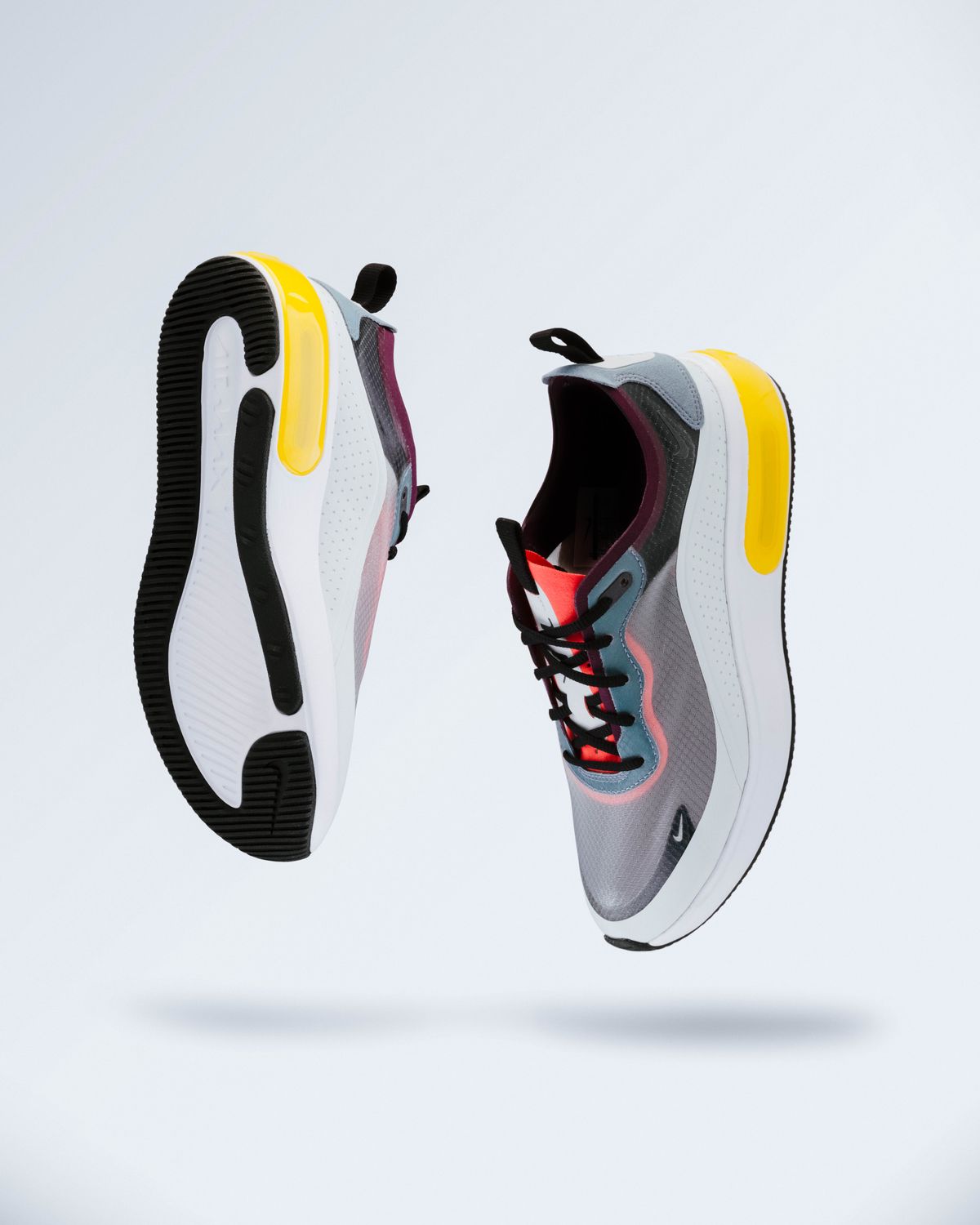
This is also why two pairs labelled extra wide can arrive and only one of them works. The walking shoes section on a site like this one is a decent place to compare shapes side by side, because you can see the toe box in the photos before you commit.
Width is three measurements, and you only need one of them
Every shoe has three widths: the toe box, the midfoot, and the heel. Most women who think they need extra wide are actually fine in the heel and squeezed in the toe. Buy a shoe that’s wide all over and you get a heel that slips, which is its own kind of miserable.
Here’s the quick self-test, done in whatever shoes you’re wearing right now:
- Take the shoe off and stand on the insole. If your foot hangs over the edge at the ball, the toe box is too narrow.
- Press your thumb down the outside of the midfoot. If the upper feels hard against the side of your foot, the midfoot is tight.
- Walk ten steps. If your heel lifts more than about 5mm, the heel is too wide for you.
A shoe with a wide toe box and a snug heel is what you actually want. Some brands call this a “performance last” or an “anatomical toe box”. It’s a shape thing, not a width letter thing.
If your heel slips in every wide shoe you try, stop buying wide. Buy standard width and go up half a size, then lock the laces at the top eyelet. That trick alone fixes more fit problems than any width upgrade.
Materials that hand you a few millimetres for free
Upper material changes the fit more than most people expect. A knit upper stretches the moment you put weight in it and keeps stretching for the first two weeks. Leather gives you maybe 2 to 3mm across the ball over a month of wear, then stops. Mesh doesn’t stretch much at all, but it’s thin, so a mesh shoe in your size often feels roomier than a leather one in the same size.
The catch with knit is that it also sags. After a few months the shoe stops holding your foot and starts sliding around on it, which is fine for a walk to the shops and bad for a 10,000 step day. If you’re buying one pair to do everything, a leather or synthetic leather upper with a mesh tongue is the safer bet. There’s a decent rundown of which white walking shoes survive a year of daily steps if you want to see how uppers age in real use.
And a warning that costs people money: don’t buy a leather shoe that pinches at the widest point and hope it’ll break in. Leather stretches where it’s already flexing, not where it’s crushing your toe joint. If the squeeze is at the ball, it’ll still be there in June.
Re-lace the shoe before you return it
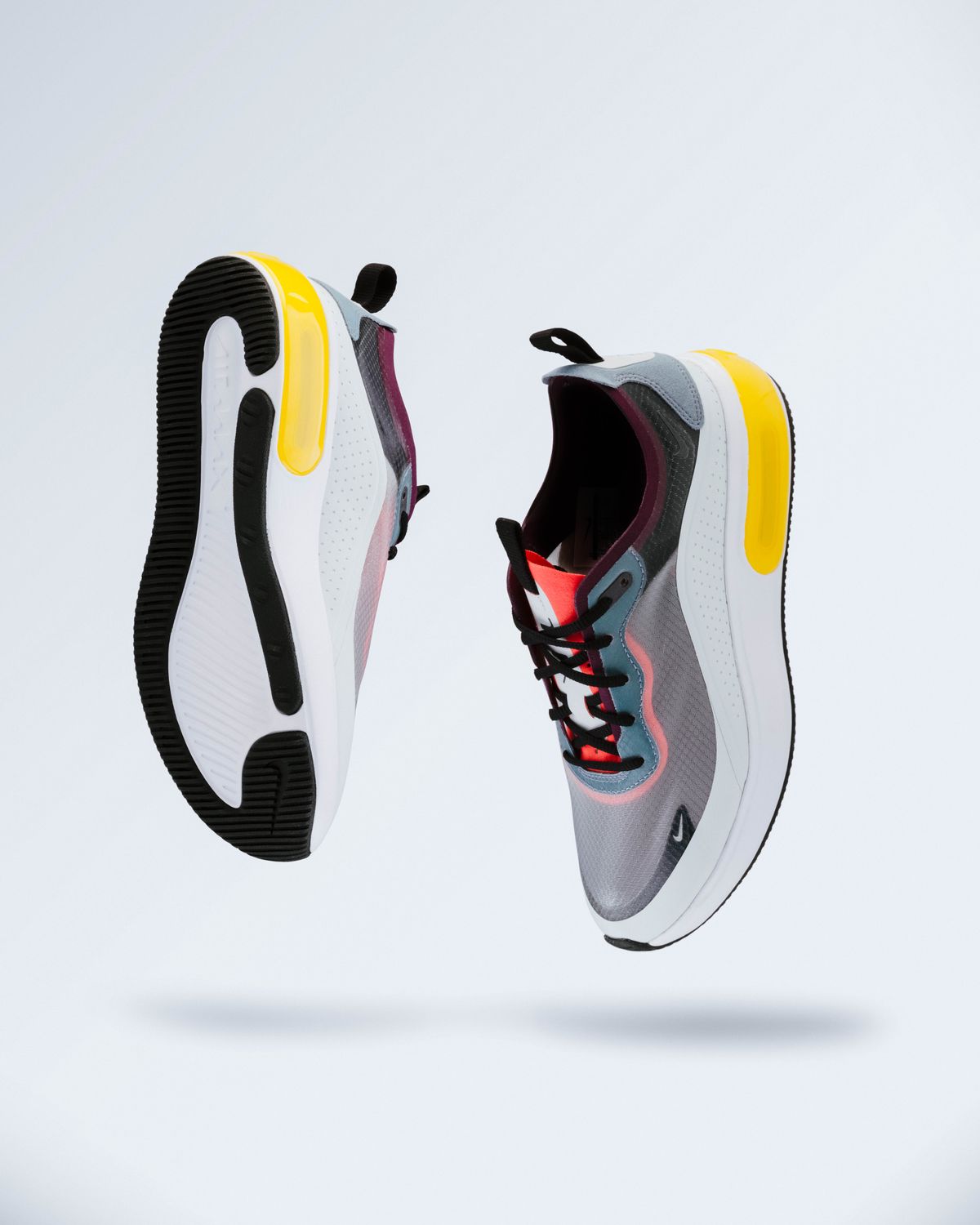
Before you decide a pair doesn’t fit, spend four minutes on the laces. Most shoes come laced in a pattern that pulls the two sides together across the middle of the foot, which is exactly where a wide foot doesn’t want pressure.
Try this sequence:
- Take the lace out of the second-from-bottom eyelet on both sides and re-thread it straight up the side, skipping that crossing.
- Pull the lower section looser than feels natural, then tighten only from the middle eyelets up.
- Finish with a heel lock at the top: thread the lace back into the top eyelet on the same side to make a small loop, then cross and pull.
Skipping one crossing typically buys 4 to 6mm across the instep, which is more than the difference between a D and a 2E. It also stops the tongue from pressing down on the top of your foot, a spot that gets sore fast on long walks.
If you’ve done that and the shoe still pinches at the widest point of your foot, then it’s genuinely the wrong last. Send it back.
Insoles and socks are part of the width
The insole that comes in a walking shoe is usually 4 to 6mm thick. Take it out and you gain that much depth instantly, which helps if the problem is pressure on the top of your toes rather than the sides. Swap in a thin flat insole so you don’t lose the cushioning entirely.
Be careful with this one, though. Removing the stock insole changes the heel-to-toe drop, and on a shoe that already has a 10mm drop it can make your calf work harder. If you wear orthotics, this is the route most people take, and it works. There’s a longer walkthrough of that in this piece on fitting an insole into a dress shoe without it looking clinical.
Socks matter too, and nobody talks about it. A thin cotton sock is about 1.5mm thick. A cushioned merino walking sock is 4 to 5mm. That’s a 3mm difference in every direction, which is most of a width step. If you’re trying shoes on in thin socks at the shop and wearing thick ones on the trail, you’ve been sizing wrong all along.
Try shoes on in the socks you’ll actually walk in. If that’s thick wool, bring them.
There’s a practical angle here too. If you order online, order the same model in two widths at once and return the one that doesn’t work. Yes, it ties up your money for a week. It also saves you from the loop where you order a 2E, find it too tight, order a 4E, find it too loose, and end up keeping neither. Two pairs, one decision, done. Check the return window before you start, because some brands only give you 14 days and walking shoes take a week to feel right.
One last sizing note that saves a return: many brands cut their wide fit from the same last as the standard fit but add material on the outside. That means the shoe looks wider but the inside shape is identical. You can spot it in the photos if the sole looks unchanged and only the upper looks puffy. Skip those.
The try-on test that actually catches a bad fit
Go shopping at the end of the day, when your feet are at their biggest. Then run this, in this order:
- Stand up with both shoes on and press your thumb across the top of the toe box. You want about 10mm of room in front of your longest toe, not the old 15mm thumb rule.
- Wiggle all ten toes. If the little toe can’t move sideways, the toe box is too narrow regardless of what the label says.
- Walk 50 steps on a hard floor, not carpet. Carpet hides heel slip and absorbs the impact that tells you whether the midsole is doing anything.
- Check the heel: no more than 5mm of lift when you walk.
Do it in the afternoon, in your own socks, on a hard floor, and walk more than twenty steps. Four conditions. Most bad purchases fail at least one of them in the shop, and the buyer ignores it because the shoe looks good.
One honest caveat: some walking shoes feel stiff and slightly tight for the first two days and then settle beautifully. Mesh-and-foam models from the big running brands are the usual suspects. Leather shoes generally don’t do this. So if the squeeze is mild and the upper is knit or mesh, give it a week. If it’s leather and it pinches, don’t.
Sometimes extra wide isn’t the answer
If the pain sits at the base of your big toe and there’s a bony bump forming, you’re dealing with a bunion, and width alone won’t solve it. Same if you get burning or numbness between the third and fourth toes, which points to nerve pressure rather than shoe width. The Mayo Clinic’s overview of bunions is a reasonable place to check whether what you’re feeling matches the description.
In those cases, a wide toe box helps manage the discomfort, but it’s not a cure. A podiatrist can tell you in ten minutes whether you need a wider last, a soft orthotic, or a referral. That’s worth the appointment before you spend £120 on a shoe that doesn’t fix it.
For everyone else, the fix is usually boring: measure in millimetres, work out which of the three widths is the problem, and buy for that. If you wear a lot of heels and your feet are already tired by Friday, a low chunky pair like these thick-heeled shoes that don’t wear your feet out can take pressure off the days when you’re not walking far. On the days you are, it’s the walking shoe that has to do the work.
And if you’re shopping for a wedding where you’ll be standing for six hours, the same logic applies to the dressy pair: soft sole, room at the ball, heel locked. Something like these bridal shoes with soft soles and a forgiving toe will treat you better than a pointed pair half a size too small.
Write your width number down. All of it starts there.
