

There is a particular kind of shoe that makes a bare ankle look deliberately styled rather than simply exposed, and it usually has a thin strip of leather running straight down the instep. T strap heels for women do something no plain pump can: they hold the foot in place, break up the line of the instep, and add a graphic detail that reads as vintage without tipping into costume. If you have ever slipped out of a backless heel mid-step or spent an evening curling your toes to keep a pump on, the T strap is the fix you were probably looking for. Below is a practical guide to choosing a pair that fits, holds up, and works with the clothes already hanging in your closet — plus the details most shoppers overlook until the shoe is already home. You can browse the wider range of heels first if you want a sense of what is currently on offer before narrowing down.
Where the T Strap Came From and Why It Keeps Returning
The T strap is older than most people assume. Strappy sandals with a central thong or instep strap appear across Mediterranean, Middle Eastern and South Asian footwear traditions long before they became a Western fashion item, and the basic construction logic — anchor the foot at the toe and again at the ankle — has never really been improved on. What changed in the twentieth century was the heel height and the styling. As heeled footwear moved from court dress into everyday wardrobes, designers borrowed the strap idea to make higher, narrower shoes wearable. The result was a silhouette that could be delicate without being unstable.
You can trace the shape through several revivals. The 1930s and 1940s produced slim, often pointed versions worn with tea dresses; the 1950s pushed them toward a pin-up aesthetic with tighter ankle straps; the 1990s brought back square toes and block heels with a distinctly minimal strap. Each decade adjusted proportions, but the construction stayed constant. The history of high-heeled footwear is largely a history of engineering compromises, and the T strap is one of the few that solved a problem rather than created one.
That is also why the style refuses to date. A plain stiletto can look aggressively of its moment; a T strap heel reads as neutral because the eye reads it as structure, not decoration. When you buy a pair in a mid-tone leather or a simple black, you are effectively buying a shoe that will still look intentional in five years. The trade-off is that cheap versions are extremely obvious — a flimsy strap that buckles or a strap sewn slightly off-centre ruins the whole line — so construction matters more here than in almost any other heel category.
Worth noting for anyone building a capsule: the T strap sits in an unusual middle ground. It is dressier than a mule, less formal than a closed court shoe, and more interesting than a plain sandal. That middle position is what makes it useful for the events that fall between “office” and “party” — the dinners, the gallery openings, the long lunches, the weddings where you are a guest and not the focus. A pair in a soft neutral will cover more of those occasions than most shoes in the same price bracket.
The Anatomy of a Strap Detail That Actually Works
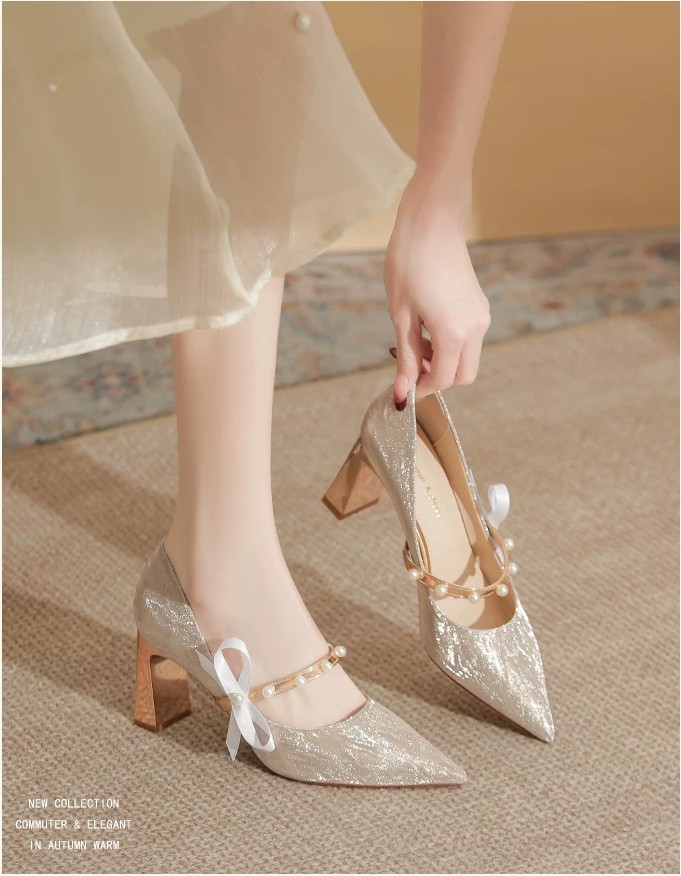
The single most common complaint about this style is that the strap cuts, rubs, or refuses to stay put. Nearly all of those problems come down to three measurements: strap width, strap placement, and how the strap attaches at the vamp. A strap narrower than about 8 mm will dig into the instep under load; one wider than roughly 15 mm starts to look heavy and can shorten the visual line of the foot. The sweet spot for most women sits between 10 and 13 mm — thin enough to look refined, wide enough to distribute pressure.
Placement matters just as much. The strap should land where the instep is flattest, not where it curves most sharply toward the toes. If it sits too far forward, it will press on the metatarsals every time you push off; too far back and it does nothing to hold the heel. Try a pair on and walk ten steps before you decide — the strap should stay centred without you adjusting it, and you should not feel a hard edge against bone.
Then look at the attachment points. Good T strap heels for women have the vertical strap stitched into the vamp seam or anchored under a reinforcing layer, not simply glued onto the surface. Pull gently on the strap where it meets the toe box; if you can see the leather lift or the stitching strain, it will fail within a season. At the ankle, a small buckle with at least three holes gives you real adjustment, while an elastic insert is more forgiving but loses tension over time. Buckles are the better long-term bet for anyone whose feet swell in warm weather.
Heel height is the last variable, and the one most shoppers get wrong in the opposite direction from what you would expect. A 60–75 mm heel with a strap is often more comfortable than a 50 mm heel without one, because the strap stops the foot from sliding forward into the toe box. If you want height for evening wear, 85–95 mm is manageable provided the heel is set slightly back from the edge of the sole and the sole itself has some flex. Anything above 100 mm starts to demand a platform or a very specific kind of occasion.
Matching T Strap Heels for Women to Clothes You Already Own
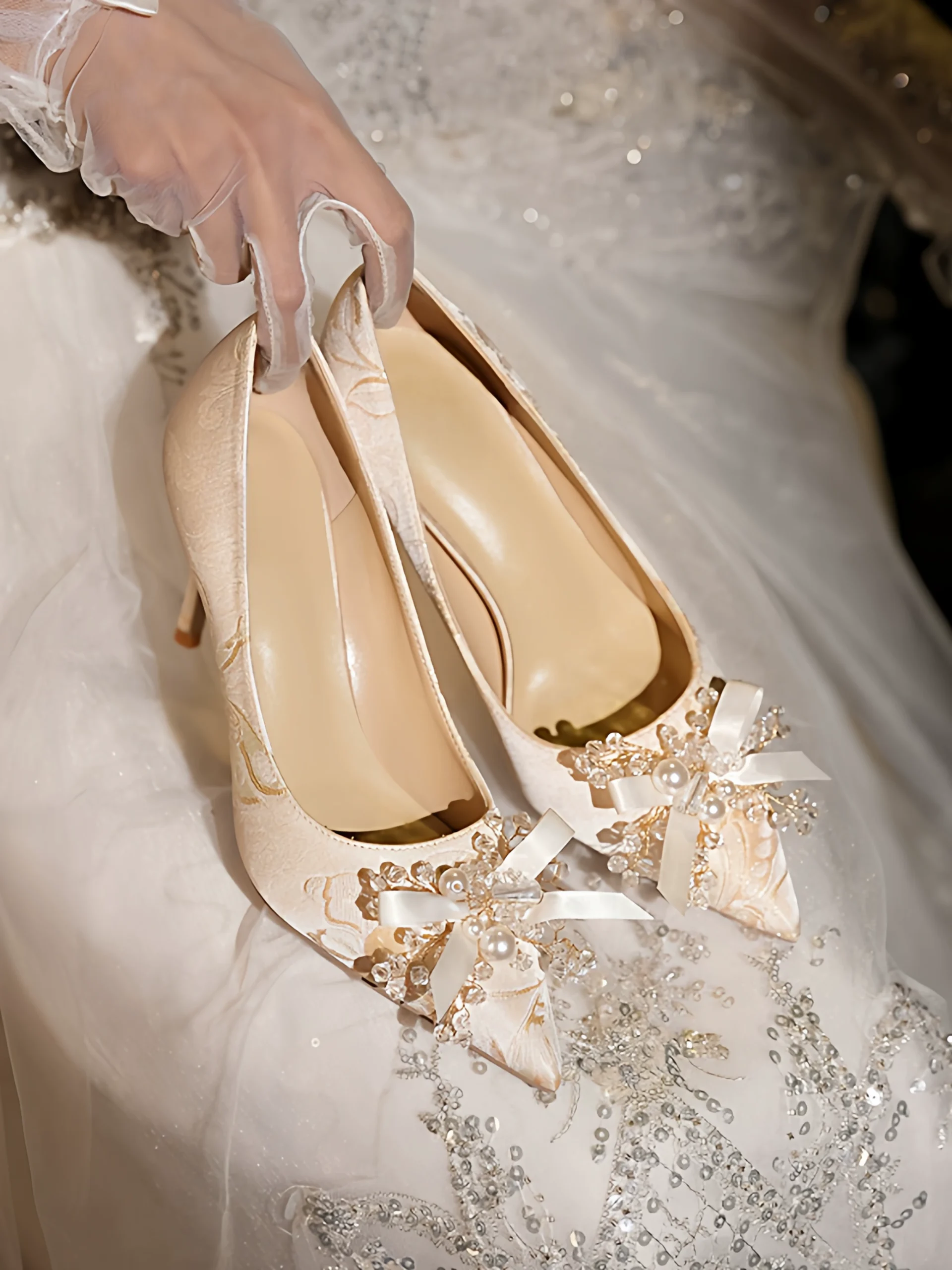
The styling advantage of a T strap is that it creates a vertical line down the foot, which makes the leg look longer than a plain sandal does. That effect is strongest when the strap colour is close to your skin tone or close to the colour of your hem. A nude or blush strap on a midi skirt creates almost no visual break, while a black strap against a pale foot becomes a deliberate accent. Neither is better; they are simply different tools.
For daytime, the easiest pairing is straight-leg denim with a hem that stops just above the ankle bone. Roll the cuff once rather than twice — you want the strap visible, not the whole shoe. Add a knit or a blazer and the outfit reads as considered without looking like you tried. With wide-leg trousers, choose a pointed or almond toe so the shoe does not get lost under the fabric; a round toe plus a wide leg tends to look heavy.
For skirts, the proportion rule is simple: the fuller the skirt, the finer the strap and the higher the heel. A pleated midi wants a slim strap and a 70 mm heel; a bias-cut slip skirt can carry a sharper stiletto and a bolder buckle. If you are wearing a long dress that grazes the floor, the strap is mostly hidden, so put your money into the toe shape instead — a pointed toe will peek out and finish the line.
Tailoring is where this shoe genuinely earns its keep. A straight-leg suit with a T strap heel looks sharper than the same suit with a pump, because the strap adds a detail at the one place the eye rests when you are standing. For office wear, keep the strap and heel in the same tone as the suit, and avoid anything with visible hardware if the dress code is conservative. For evening, invert it: patent or metallic leather, a thinner strap, and a heel you would not wear to a meeting. This is also the point where most T strap heels for women earn back their cost, because the same pair moves from a Monday meeting to a Saturday dinner with nothing more than a change of jewellery.
Weddings and formal events deserve their own note. As a guest, avoid white, ivory and anything that photographs as bridal. A deep navy, forest green, burgundy or bronze strap works with almost every dress code and looks intentional in photographs. If the ceremony is outdoors on grass or gravel, a block heel version will save you — thin stilettos sink, and no amount of strap tension fixes that.
Fit, Foot Shape, and the Honest Comfort Question
No heel is objectively comfortable, but some are considerably less punishing than others, and foot shape determines which camp a given pair falls into. If you have a high arch, the instep strap will sit higher on the foot and may need a slightly longer buckle range; look for a strap with five holes rather than three. If you have a flat arch, the strap can feel loose even when the length is right, because there is less volume for it to wrap — in that case a strap with a small elastic segment gives a better grip.
Wide feet present the most common fit problem. Many brands simply scale a standard last up in length, which leaves the toe box too narrow and pushes the foot forward into the strap. Look for descriptions that mention a wide or rounded toe box, and size up only if the strap still closes comfortably. If the strap is tight but the length is right, a cobbler can often add an extra hole for a few dollars — far cheaper than replacing the shoe.
Bunions need specific attention. A strap that crosses directly over the joint will rub no matter how soft the leather is. Most T strap heels for women are built on a standard last that assumes an average instep, so anyone outside that average needs to check the strap position in person rather than order blind. Look for a strap set slightly further back toward the ankle, or a wider strap that distributes pressure across a larger area. The American Podiatric Medical Association generally recommends limiting time in high heels and alternating with lower, supportive footwear, which is sensible advice for anyone planning a long event.
Break-in expectations should be realistic. Leather straps soften over roughly three to five wears; patent and coated leathers barely soften at all. If you have a narrow window before an event, wear the shoes indoors on carpet for twenty minutes at a time, with thin socks, to encourage the strap to mould without scuffing the sole. Avoid heat-stretching leather yourself — it distorts the shape and weakens the stitching where the strap is anchored.
One practical habit worth adopting: carry a pair of foldable flats in your bag for the walk home. It sounds obvious, but the difference between an evening that ends well and one that ends in bare feet is usually a ten-dollar flat packed in advance.
Leather, Suede, and Patent: What Each Material Does to the Shoe
Material changes the character of a T strap more than it changes any other heel style, because the strap is a narrow band that shows every crease. Smooth calf leather is the safest choice: it holds its shape, takes polish, and softens into the shape of your instep rather than against it. It also photographs well, which matters if the shoe is going to appear in wedding or event pictures.
Suede looks softer and more expensive than it costs, and it grips the foot slightly better than smooth leather, which helps if you have a narrow heel. The downside is maintenance. Suede marks in rain, picks up dust, and the strap — being the most exposed part — takes the most wear. Treat a new pair with a protective spray before the first wear and brush the nap after each outing. Keep them out of the rain entirely; there is no good recovery from a soaked suede strap.
Patent leather gives the sharpest, most formal read and wipes clean with a damp cloth, which makes it a reasonable choice for city wear. The catch is that patent does not stretch. If the strap feels tight in the shop, it will still feel tight in a year, so fit is non-negotiable. Patent also creases permanently at the toe, so avoid it if you plan to wear the shoes daily.
Textured finishes — snake-embossed, woven, or perforated — are worth considering if you want the strap to read as a detail rather than a plain band. Woven leather in particular tends to be more forgiving across the instep because the weave gives slightly. Metallic leathers sit somewhere between patent and smooth calf in terms of care, and they show scuffs more than you would expect, so keep them for occasional wear.
Care is mostly about the strap. Wipe it after each wear, condition smooth leather every few months, and store the shoes with the buckle fastened so the strap keeps its shape. If the strap is stitched rather than glued, a cobbler can usually replace it, which extends the life of the shoe considerably. That repairability is one of the better arguments for spending a little more up front.
What to Check Before You Buy a Pair
Start with the strap, since it is the part that fails. Flex it between your fingers: it should feel firm but not rigid, and it should return to shape immediately. Check that the stitching runs in a straight line and that the thread matches the leather — mismatched thread is usually a sign of rushed production. Then check the join at the vamp, which is where most cheap shoes give way.
Next, look at the heel. A well-made heel is attached with both adhesive and mechanical fixing, and it sits flush with the sole with no visible gap. Tap it lightly on a hard surface; a hollow, rattling sound suggests a thin heel cavity that will not survive repeated impact. Check the heel tip — the small plastic or rubber cap — because replacing those is cheap and skipping them is not.
Try both shoes, not just one, and try them at the end of the day when your feet are at their largest. Walk on a hard floor rather than carpet, since carpet hides instability. Stand on one foot for a few seconds; if the strap shifts or the heel wobbles, the fit is wrong regardless of how good the shoe looks.
On price, the useful dividing line is roughly between budget pairs under about $50 and mid-range pairs from $80 to $200. Below the lower figure you are usually buying glued construction and corrected-grain leather that will crease badly at the strap. Above the upper figure you are paying for design and brand, not necessarily durability. The middle band is where most well-made options sit, and where repairability becomes realistic. If you want a reference point for how a finished pair should look, this black satin high heel shows the kind of clean vamp-to-strap transition worth looking for.
Finally, buy for the shoe you will actually wear, not the one you admire in photographs. A 95 mm stiletto in a colour you love but never have an occasion for is a worse purchase than a 70 mm pair in a neutral you will reach for weekly. T strap heels for women work best as a repeat wear, not a one-night item — the whole point of the strap is that it makes the shoe practical enough to keep putting on.
Get those details right and the style does the rest. A good pair will hold your foot through a long evening, add a line to your ankle that a plain pump cannot, and still look current years after the trend cycle has moved on. Start with fit, choose the material for your climate and your calendar, and treat the strap as the deciding factor rather than an afterthought. That is the difference between a shoe that sits in the box and one that gets worn until the sole needs replacing.
