

The Ultimate Guide to Tennis Shoes for Everyday Walking
Let’s be clear from the start: the notion that any comfortable sneaker is suitable for logging miles on pavement is a misconception that can lead to discomfort and injury. The right footwear transforms walking from a mundane task into a sustained, enjoyable, and healthy activity. This guide posits that specifically engineered tennis shoes for walking offer a superior foundation for daily ambulation compared to generic sneakers or even some dedicated walking shoes, blending athletic performance with everyday resilience. We will dissect the anatomy, science, and practical benefits of this hybrid choice, providing you with the knowledge to make an informed decision that supports your body with every step.
The Unseen Engineering: Why Tennis Shoes Are Uniquely Suited for Pavement
At first glance, a tennis shoe and a walking shoe might seem interchangeable. Both are athletic, both are laced, both promise comfort. However, the design philosophy diverges significantly upon closer inspection. A tennis shoe is built for a multi-directional court sport—it must accommodate rapid lateral cuts, forward sprints, and sudden stops. This demands a unique combination of cushioning, stability, and durability. The midsole, often featuring advanced compounds like Nike’s Zoom Air or Adidas’s Boost, is tuned for impact absorption from various angles, not just heel-to-toe. Dr. Casey Kerrigan, a renowned biomechanist and former professor at Harvard Medical School, has extensively researched footwear. Her work suggests that excessive cushioning in some dedicated walking shoes can actually promote a harder foot strike. A well-designed tennis shoe, by contrast, often provides a more responsive cushioning system that encourages a natural gait cycle. The outsole, typically made of non-marking rubber with a herringbone or modified pattern, offers exceptional grip on hard surfaces—a direct translation to secure footing on concrete, tile, or asphalt. This inherent stability, designed to prevent ankle rolls during side-to-side movement, translates into confident stability for the walker navigating curbs, slopes, and uneven sidewalks. Therefore, repurposing a pair of tennis shoes for walking means you are leveraging a platform engineered for dynamic, multi-planar support, which often surpasses the more singular focus of a traditional walking shoe.
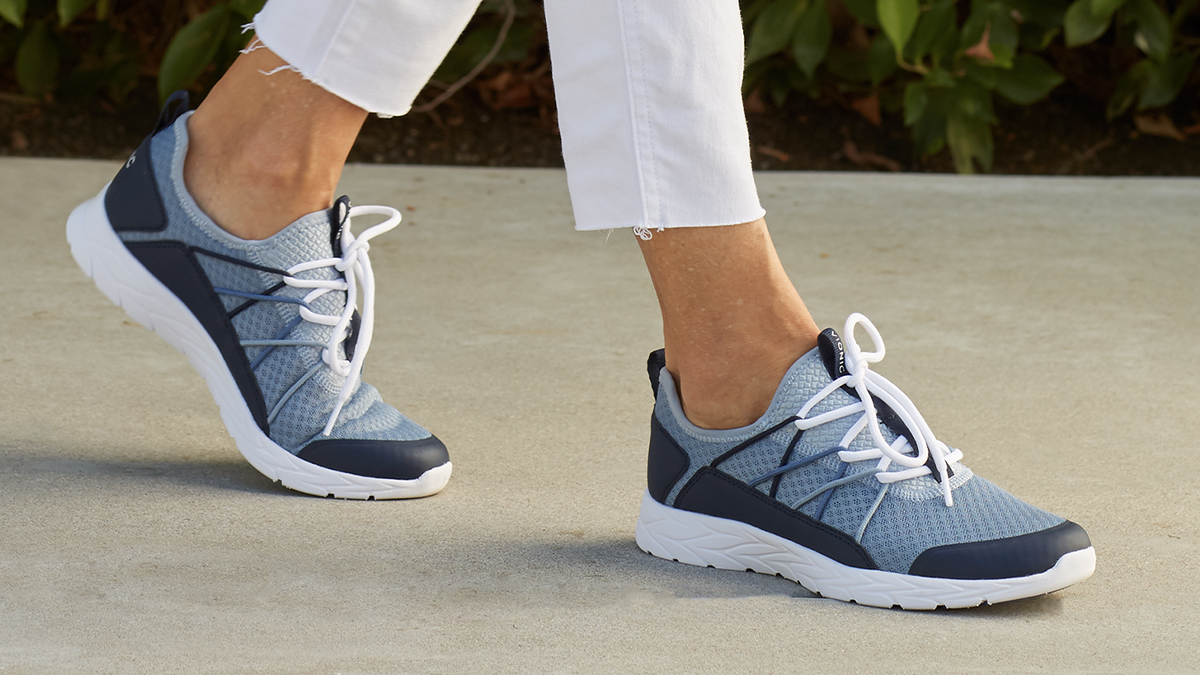
Decoding the Footwear Lexicon: Cushioning, Stability, and Breathability
To understand the value proposition, we must objectively define the key pillars of walking footwear. Cushioning refers to the shoe’s ability to attenuate shock waves from foot strike. According to literature from the University of Calgary’s Human Performance Laboratory, effective cushioning reduces peak loading rates on joints, potentially mitigating long-term wear and tear. Tennis shoes frequently utilize polyurethane, EVA (ethylene-vinyl acetate), or proprietary gel/air units in the heel and forefoot to achieve this. Stability is the shoe’s capacity to control excessive or unnatural foot motion, primarily over-pronation (inward rolling). This is often achieved through medial posts, dual-density midsoles, and structured heel counters. A study cited on the American Podiatric Medical Association’s website emphasizes that proper stability can prevent a chain reaction of alignment issues from the foot up to the knee and hip. Breathability is governed by the upper material. Modern tennis shoes extensively use engineered mesh, a synthetic fabric designed with targeted zones of porosity to allow heat and moisture to escape. As noted on the popular running website Runner’s World, a breathable upper maintains a cooler, drier foot environment, reducing the risk of blisters and fungal infections during prolonged wear. A superior pair of tennis shoes for walking will score highly across all three parameters, whereas a generic fashion sneaker may fail spectacularly in one or more areas, offering style at the expense of substance.
A Personal Journey: From Foot Fatigue to Foundational Support
I recall my own transition. For years, I used generic canvas sneakers for my daily 3-mile urban walks. The result was predictable: aching arches, a dull throb in my knees, and a constant desire to cut the route short. The shift occurred when I retired an old pair of court shoes to walking duty. The difference was not merely incremental; it was transformative. The structured heel cup cradled my foot, eliminating the subtle slip that caused friction. The forefoot flex zone worked in harmony with my push-off, rather than resisting it. This personal anecdote mirrors a broader truth. As noted by celebrity trainer Harley Pasternak on his YouTube channel, when asked about all-day comfort shoes, he often highlights specific cross-trainers and tennis models for their “all-around support profile,” ideal for those who are on their feet for long periods. The experience underscores that the right tool matters. You wouldn’t use a butter knife to chop wood; similarly, using footwear designed for casual wear for a repetitive, impactful activity like sustained walking is a compromise your body eventually invoices you for, with interest.

The Economic and Practical Argument: Versatility Meets Value
Beyond biomechanics, there is a compelling practical case. Investing in a quality pair of tennis shoes designed for walking delivers exceptional versatility. They are perfectly suited for a brisk morning walk, running errands across town, standing for extended periods, or even a light gym session. This multifunctionality negates the need for multiple specialized pairs, offering significant value. Let’s discuss pricing objectively. While premium models from brands like Asics (Gel-Resolution series), New Balance (Fresh Foam Lav), or Nike (Air Zoom Vapor) can retail from $120 to $160, their durability and performance justify the cost. However, intelligent shopping unlocks savings. End-of-season sales, outlet stores, and online retailers frequently offer previous models at 30-50% discounts. For instance, a high-performance model from last year, which retains 90% of its technological utility, can often be found for under $100. This brings professional-grade support within reach of a broader budget. The cost per mile over the shoe’s 300-500 mile typical lifespan makes it a wise investment in your musculoskeletal health compared to the potential cost of addressing issues caused by inadequate footwear.
Selecting Your Pair: A Criteria-Based Framework
Navigating the market requires a strategy. Do not be swayed by aesthetics alone. First, analyze your gait. If you have a neutral stride, you have the widest options. If you overpronate, prioritize models with clear stability features—look for terms like “structured cushioning” or “guidance line” in the product description. Second, prioritize fit. Your walking shoe should have a thumb’s width of space in the toe box to allow for natural swelling and splay. The heel should be locked in without lift. Third, assess the weight. A lighter shoe reduces leg fatigue over distance; many modern tennis shoes utilize lightweight meshes and foams without sacrificing support. Fourth, consider the drop—the height difference between heel and forefoot. A moderate drop (6-10mm) is often ideal for walkers, facilitating a smooth heel-to-toe transition. Renowned author and biomechanics expert Kelly Starrett, in his book Ready to Run, discusses the importance of footwear that allows for natural foot function, a principle that applies directly to choosing tennis shoes for walking. Try on shoes in the afternoon when your feet are naturally slightly larger, and always test them on a hard surface, not just carpet.
:max_bytes(150000):strip_icc()/Web_1500-vwt-primary-best-overall-shoe-tstaples-118-671f4e0048e64d14a1c42e4f8d9e6658.jpg)
Dispelling Myths: The Truth About Tennis Shoes vs. “Walking Shoes”
A common myth is that a shoe labeled a “walking shoe” is inherently better for walking. This is not always true. The category can sometimes include overly soft, unstructured shoes that lack the necessary support for vigorous activity. The term “walking shoe” can also be applied to very rigid, orthopedic-style shoes that may inhibit natural foot motion. The tennis shoe, born from rigorous sport, undergoes testing for durability and lateral support that many walking shoes do not. As a Quora discussion among podiatrists and physical therapists highlighted, the critical factor is not the name on the box but the construction inside. A well-made tennis shoe provides a balanced “middle ground”: it is flexible enough for comfort but structured enough for support, cushioned enough for impact but responsive enough for propulsion. This makes it an exceptionally capable candidate for the dedicated walker. Your goal is not to find a shoe labeled for your activity, but to find a shoe whose engineered characteristics match the biomechanical demands of your activity. Often, that perfect match is found in the tennis section.
The Final Step: Integrating Your Shoes into a Walking Lifestyle
Acquiring the ideal pair is only the beginning. To truly benefit, integrate them into a conscious walking practice. Start by dedicating your tennis shoes for walking solely to that purpose. Using them for other activities like gardening or as casual slip-ons accelerates wear patterns in the outsole and compresses the midsole unevenly, diminishing their performance for walking. Establish a replacement schedule. Even the best shoes lose their protective properties. The general consensus, supported by sources like the American Council on Exercise, is to consider replacement every 300-500 miles. For a daily 3-mile walker, this translates to roughly every 4 to 6 months. Pay attention to physical signs: visible creasing in the midsole, worn-down tread patterns, or a noticeable decrease in comfort are all clear indicators. Pair your footwear with quality moisture-wicking socks to enhance breathability and manage friction. Remember, the shoe is a component of a system aimed at promoting sustainable mobility.

In essence, the pursuit of the perfect walking companion leads us to an unexpected yet logical destination: the tennis court. The architectural principles of a premium tennis shoe—multi-directional support, durable cushioning, and secure traction—directly address the nuanced demands of the everyday walker. This is not about fashion or trend, but about applying purpose-built engineering to a fundamental human movement. By choosing a scientifically sound pair of tennis shoes for walking, you are not just buying footwear; you are investing in the foundation of your daily movement, ensuring that each step is met with protection, stability, and enduring comfort.
