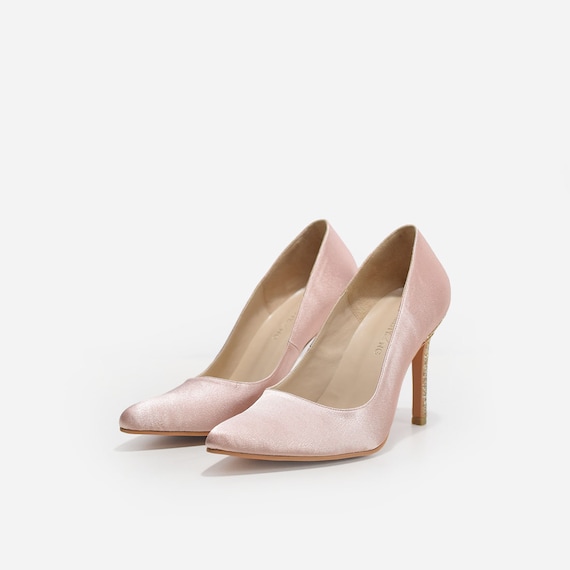
Bridal Heels: Why I’d Pick Nude Over White Every Time
My cousin got married last June in a pair of white satin heels she’d bought eight weeks earlier. By the second reading she was standing on the outside edges of her feet. By the first dance she was barefoot, holding the shoes like a handbag she regretted buying.
I was her bridesmaid, wearing nude heels I’d already broken in for a month. I danced until the band stopped. That difference is the entire reason I’d push any bride toward nude over white, and it has nothing to do with how either pair looked.
Two years later I got married in a pair of nude block heels I’d owned for three seasons. Total spend: zero. I still wear them to work on Mondays, which is either the most practical thing about my wardrobe or the least romantic, depending on who you ask.
Why nude works better than white, and where it fails
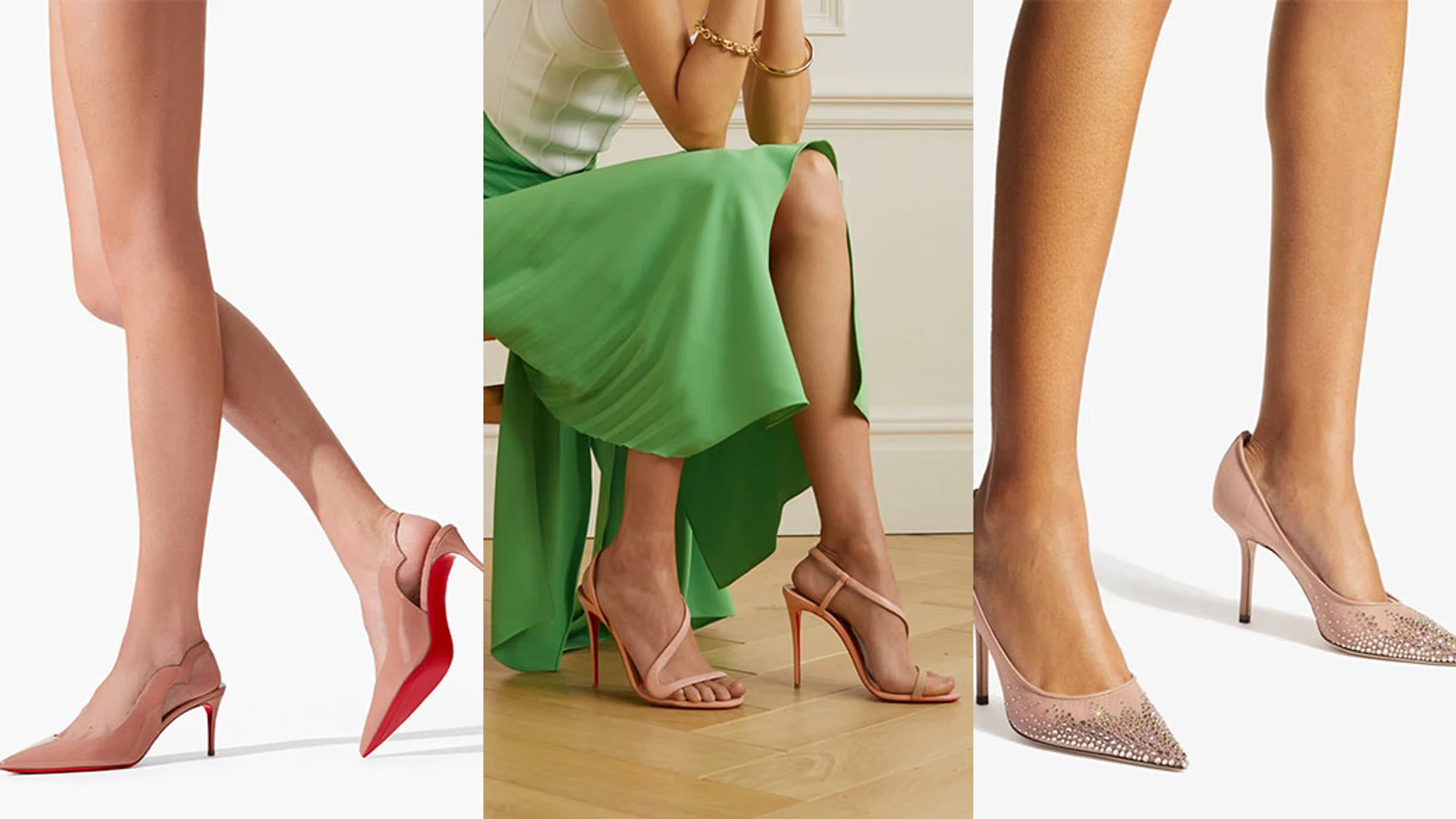
White shoes cut a line across your ankle. Nude doesn’t, because it continues the leg instead of interrupting it. On a floor-length gown nobody sees your feet anyway, so what you actually get is a clean line under the hem and photographs where your legs look longer than they are.
The other practical argument is money. A nude pair gets worn again to other people’s weddings, to work, to a nice dinner. White satin lives in a box for the rest of its life. I’ve worn my nude heels maybe thirty times since that June, and nobody has ever clocked them as wedding shoes.
Where it fails: very pale skin plus a deep tan shade looks like a mistake. So does dark skin with a beige that’s three shades too light. You’re not matching a colour, you’re matching a depth.
The fit stuff nobody mentions at the fitting
Bridal fittings happen in the morning, when your feet are at their smallest. Your wedding is at two in the afternoon, after eight hours of standing, and feet swell by half a size by then. Try shoes on at four in the afternoon if you can.
Heel height matters more than heel shape. Anything over 85mm and you’ll be shifting weight onto your toes by the vows, which is exactly when every camera is pointed at your face. A 70mm heel with a slight platform gets you the height without the lean.
Ask for the shoe in your normal size and the half size up. Walk in both for ten minutes on a hard floor. The bigger one wins about seventy percent of the time, and a heel grip at the back costs two pounds.
One more thing about fittings. Stand in them on carpet, not on the shop’s smooth floor, and stand still for five minutes without shifting. That’s the closest you’ll get to the receiving line, where you’ll be upright and stationary for forty minutes while relatives you haven’t seen since 2014 hug you. If your toes go numb in the shop, they’ll go numb in church.
Matching your dress without matching too hard
If your gown has beading, lace, or a train the size of a small car, your shoes should shut up. Nude is the ideal way to shut up. The dress is the thing people are looking at, and a nude heel keeps it that way.
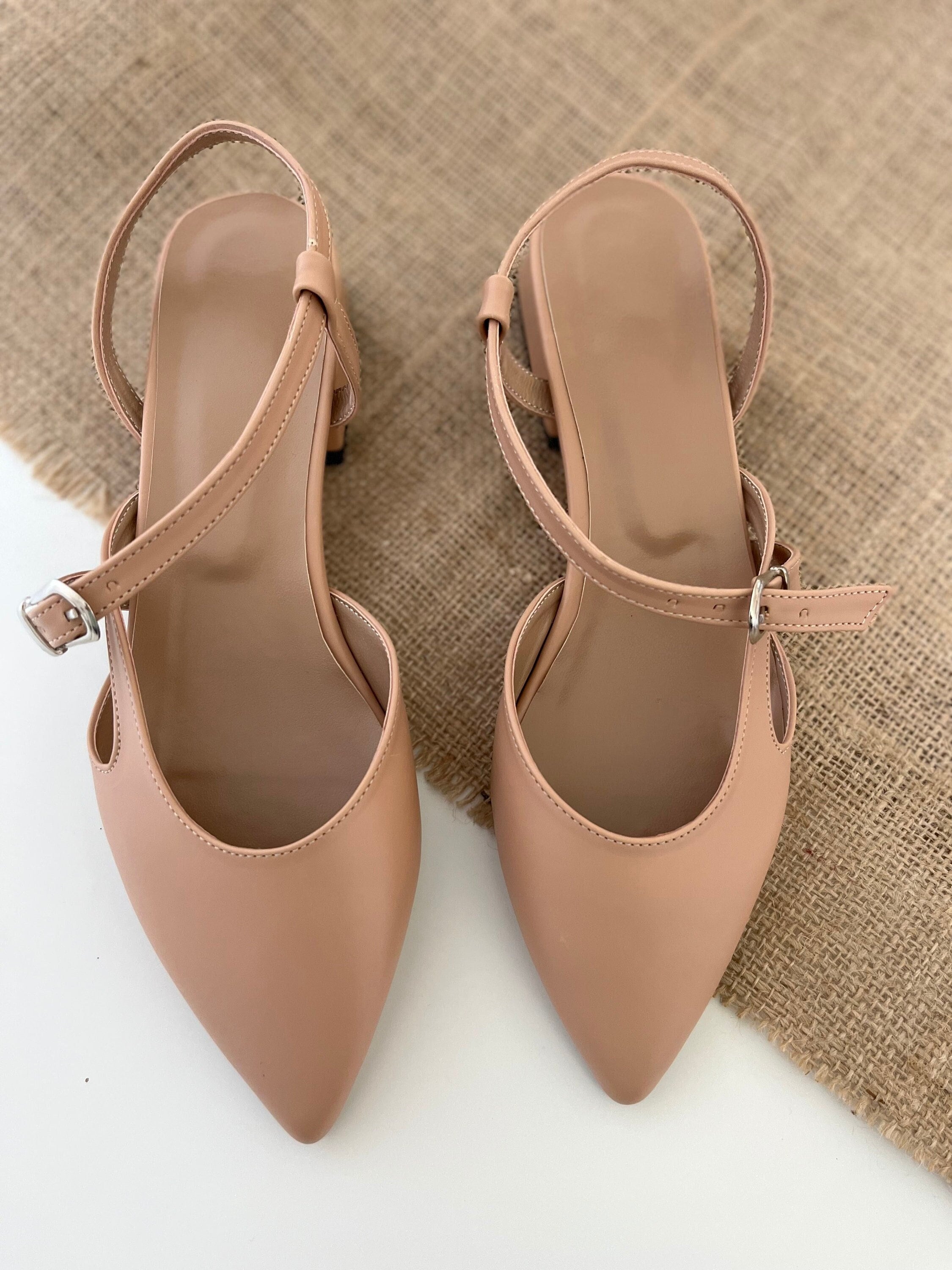
If the dress is plain, the shoes can carry a detail: a thin ankle strap, a small crystal at the heel, a pointed toe instead of round. One detail. Not three.
Check the hem before you decide on the heel height. If your dress was fitted and hemmed for flats, a 90mm heel will pull it up two inches and you’ll be showing ankle in every photo. Take the shoes to the final fitting. It’s a fifteen-minute inconvenience that saves you a whole album of regret.
The confidence thing, minus the TED talk
There’s a lot of writing about how the right shoes change how you carry yourself. Most of it is nonsense dressed up as psychology. But there’s a small true version: if your feet hurt, your face shows it. That’s it. That’s the whole mechanism.
Comfortable shoes mean you stand up straight, which means you stop thinking about your feet, which means you’re actually present when your father gives his speech. The confidence comes free with the lack of pain.
So buy for the eighth hour, not the first. The first hour will be fine in anything.
A small thing that helped me: wear the shoes to the rehearsal, if there is one. You’ll be standing on the same floor, in front of the same people, with less pressure. Whatever rubs, you’ll find out on the Thursday instead of the Saturday, and a blister plaster applied on Thursday is worth more than any amount of advice.
Where to buy, and what I’d skip
You can spend £900 on a designer pair or £80 on a high-street pair. Both will be photographed from four feet away. What matters is the insole, the heel tip, and whether the leather has any give in it. I’ve seen expensive shoes fail on all three.
Skip anything described as dyeable. The finish goes patchy after one clean, and if it rains you’ll be walking on wet cardboard.
Order two sizes if you’re buying online and send one back. Check the return window before the wedding, not after. I’ve watched a bride realise in early June that her shoes had a fourteen-day return policy and she’d bought them in March.
If you’re between two shades, go darker. A nude that’s slightly too deep looks like a deliberate choice. One that’s too pale looks like you borrowed them.
Before you walk out the door
Three things, all of them boring, all of them worth doing.
Scuff the soles with a bit of sandpaper so you don’t slide on the aisle carpet. Wear them around the house for two hours a day for a week before the wedding, with the tights you plan to wear. And pack a pair of flat shoes in the car, not because you’ll need them, but because knowing they’re there makes you braver about the heels.