

Are Burberry Heels Worth It? An Honest Try-On
I spent forty minutes in a fitting room at Bicester Village last spring deciding whether to buy a pair of Burberry pumps. Full price they were 550 pounds. The outlet had them at 290. I bought them, wore them to a wedding two weeks later, and have been forming opinions ever since.
Short version: good shoes, strange pricing, and one design choice that annoys me every time it rains.
What you’re actually paying for
Burberry heels look like the trench coat translated into leather. Clean lines, minimal hardware, and the check pattern hidden somewhere subtle, usually the insole or the lining of the heel counter. Nobody sees it while you’re standing. That’s the point, and honestly it’s the part I like most.
The leather is the real story. My pair is a smooth calf leather that took about three wears to stop feeling stiff across the vamp, then softened into something that molds to the foot. That’s normal for quality leather and it’s the main difference between these and a 70-pound pair, which tends to stay exactly as stiff as the day you bought it.

The heritage thing, briefly
Thomas Burberry invented gabardine in 1879, which is why the brand can sell a raincoat for four figures and get away with it. The heels borrow from that wardrobe: a strap that echoes a trench belt, a buckle shaped like the D-ring, the check reappearing as a whisper rather than a shout.
This matters less than the marketing suggests. A shoe doesn’t walk better because of its backstory. But it does explain why the designs age slowly, and why a pair from 2019 doesn’t look dated next to a pair from last season.
How they fit, in real numbers
My pair is an 85mm pointed pump in EU 39. I’m normally a 39 in most brands, and these fit true to size lengthwise. Width is where it gets interesting. Burberry runs narrow through the toe, and if your feet are on the wide side you’ll want to go up half a size or look at a rounder toe.
Break-in took three wears. The first afternoon I had a red mark across the top of my foot by four o’clock. By the third wear it was gone and hasn’t come back.

Where the money goes, and where it doesn’t
Construction is decent, not exceptional. The sole is stitched, the heel is set straight, the leather is full-grain. What you don’t get is a hand-welted sole that a cobbler can rebuild three times. Mine can be resoled once, maybe twice, before the upper gives out.
What you do get is consistency. Two pairs of the same model feel identical, which isn’t true of cheaper brands where sizing drifts between colours and factories.
The leather sole is my main complaint. It’s gorgeous and it’s useless on wet pavement. I slipped on a painted crossing outside a Tube station in November and only stayed upright because a stranger grabbed my arm. If you live somewhere rainy, ask a cobbler to add rubber half-soles before the first wear. It costs about 30 pounds and saves you a lot of dignity.
Styling them so they don’t look like an office shoe
Mine are black, which is the easy route. They work with a navy suit and they work with straight jeans and a grey jumper, and that range is the reason I don’t regret the purchase. A nude pair does the same job with lighter outfits.
Three things I’ve found that help:
- Wear them with cropped trousers so the ankle shows. Full-length hems swallow the shape.
- Keep the rest of the outfit plain. The shoe has enough detail on its own.
- Skip the matching Burberry bag. Together they look like a uniform.
The one pairing that failed for me was a midi skirt with a bold print. The shoes disappeared into the noise, and I spent the day feeling like I’d wasted them.
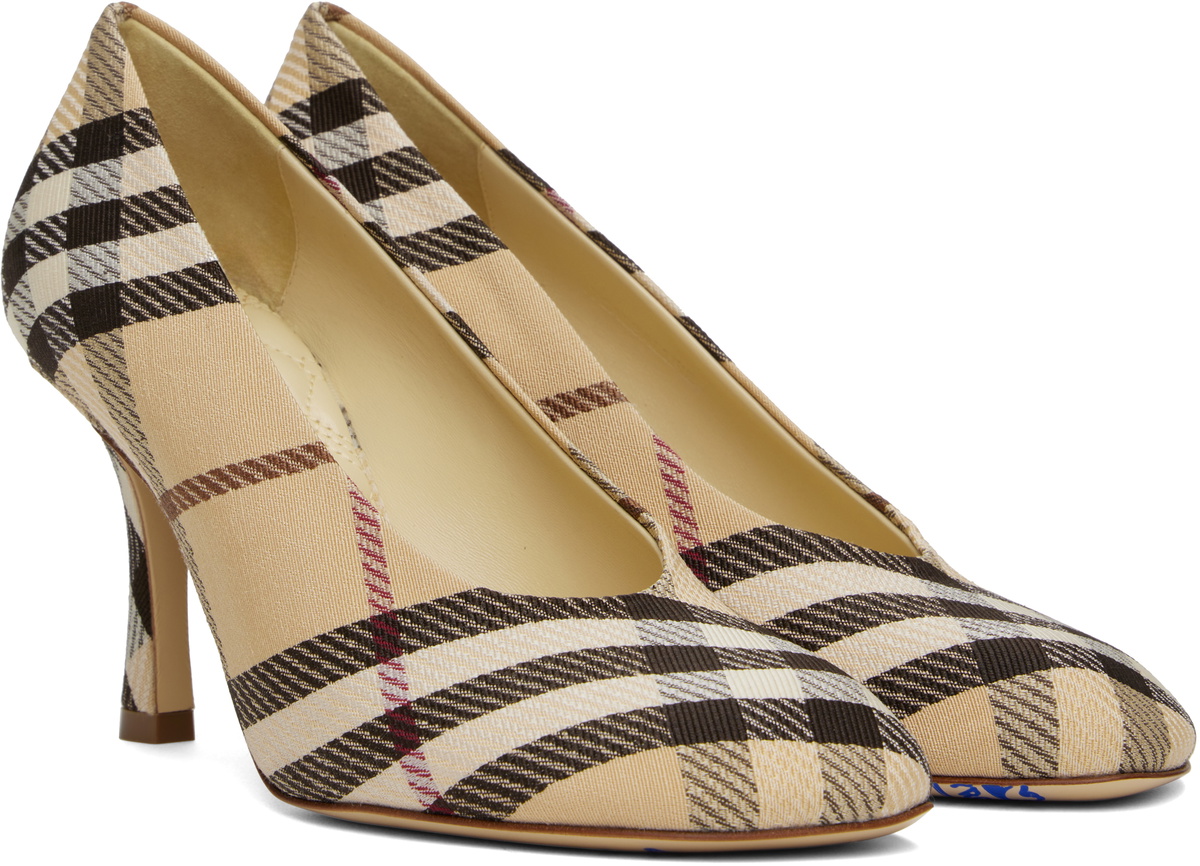
The range runs from a 65mm kitten to a 105mm stiletto, and the shape changes what the shoe is for. The 65mm is a desk shoe, plain and simple. The 85mm is the one most people end up buying, because it looks sharper without demanding a taxi everywhere.
I tried the 105mm in the shop. It looked incredible in the mirror and I could feel my calves complaining within two minutes of standing still. If you wear heels daily, maybe. If you don’t, the 85 will get worn ten times more often, and that math matters more than the mirror.
Heel shape is the other choice. The block is stable on cobblestones and looks a bit sensible. The stiletto is the opposite. I went block for my second pair and use it for anything involving public transport.
Leather this smooth marks easily. Mine has a small scuff on the left toe from a bar stool, and it’s stayed there because I keep forgetting to buy polish. A neutral cream polish every couple of months handles most of it.
Store them with the dust bags on, away from radiators. Leather that dries out cracks at the flex point, and once it cracks there’s no bringing it back. That’s true of any leather shoe, but it stings more when the shoe cost 290 pounds. A cedar shoe tree helps, though a rolled sock does nearly the same job for nothing.
The insole check pattern will fade with wear. That’s normal and it took about a year of regular use for mine to soften noticeably. Nobody sees it but you.
If you buy second-hand, check the inside heel first. That’s where the lining wears through, and a pair with a split lining isn’t worth the discount.
Would I buy them again
At 290 pounds, yes. At 550, probably not, and that’s the honest answer. The gap between these and a well-made 180-pound pair is smaller than the price difference suggests. What you’re paying for above that line is the name, the consistency, and the fact that they hold resale value better than most.
I checked resale prices out of curiosity. Pairs in good condition go for around half of retail, which is far better than the 20 percent you’d get for a mid-market brand. So the real cost of ownership over five years is lower than the sticker price implies.

One last thing worth knowing. The heel tips are soft and they wear fast if you walk on pavement a lot. Mine needed replacing after eight months, which is quicker than I expected for the price. Budget for a cobbler visit once a year and the shoes will keep going for a decade.
If you want a pair, wait for the outlet or a seasonal sale, get the rubber soles added, and buy the size that fits your width rather than the size on the label you usually take. That’s the whole strategy. The rest is just wearing them enough to stop thinking about them.
