

The Ultimate Guide to Tennis Shoes for Walking
For years, the idea of using tennis shoes for walking was met with skepticism. The prevailing wisdom dictated that specific activities required specialized footwear. However, a shift is underway. What if the versatile design of a tennis shoe, born from the need for lateral support and cushioning on hard courts, could be the unsung hero for the everyday walker? This guide dismantles the old dogma, presenting a compelling case that a well-chosen tennis shoe can be an exceptional, and often superior, choice for walking. We will navigate through the biomechanics, the design evolution, and the practical realities that make this crossover not just possible, but advantageous for a significant portion of the population.
The Biomechanical Overlap: Where Tennis Meets the Track
The core argument for adopting tennis shoes for walking lies in the fundamental biomechanical demands shared between the two activities. While tennis involves explosive sprints and sudden stops, its foundation is built upon repetitive foot strikes and weight transfer—principles central to walking. Dr. Casey Kerrigan, a former professor of physical medicine and rehabilitation at Harvard Medical School and founder of OESH Shoes, has extensively researched gait mechanics. Her work, often cited in journals like the Journal of the American Podiatric Medical Association, emphasizes that footwear should facilitate the foot’s natural motion. A quality tennis shoe is engineered for multi-directional stability, offering a reinforced midfoot and a heel counter that prevents excessive rolling—a feature known as motion control. For walkers who exhibit mild overpronation (the inward roll of the foot upon landing), this inherent stability can provide the necessary support without the rigid, often uncomfortable, structure of traditional motion-control walking shoes. The cushioning systems in modern tennis shoes, utilizing technologies like Nike’s Air, Adidas’s Boost, or ASICS’s GEL, are designed to absorb high-impact forces from hard surfaces. A 2017 study from the Human Performance Laboratory at the University of Calgary, published in the Journal of Science and Medicine in Sport, analyzed impact forces in various athletic movements, concluding that cushioning material that dissipates vertical force effectively can reduce stress on joints. This directly translates to the repetitive heel-to-toe impact of walking on pavement, making the cushioning in a performance tennis shoe not just adequate, but potentially more responsive than that in many dedicated walking models.
:max_bytes(150000):strip_icc()/vwt-walking-shoes-test-ryka-devotion-x-sahara-borja-02-18807b688fbb49e4ba30a3ee438600cb.jpeg)
Debunking the “Specialist Shoe” Myth: A Historical Perspective
The late 20th century saw the athletic footwear industry explode into hyper-specialization. We were told we needed different shoes for running, cross-training, basketball, and, of course, walking. This marketing-driven narrative often overshadowed functional design principles. To understand this, we can look to authoritative sources like the Encyclopedia of Sports Science (published by Human Kinetics) or the educational resources from the American Council on Exercise (ACE). These resources clarify that while extreme sports have unique needs, the line between “walking” and “court” shoes is more blurred than commonly believed. Renowned running coach and author Jack Daniels, Ph.D., in his seminal work Daniels’ Running Formula, notes that the primary factors for any endurance activity are fit, cushioning, and appropriate support—not the label on the box. The construction of a tennis shoes for walking prioritizes durability in the upper to withstand dragging toes during serves and volleys, resulting in a more robust shoe that can endure the abrasion of daily walking mileage. Furthermore, the outsole of a tennis shoe, typically made of non-marking rubber with a herringbone or modified tread pattern, offers exceptional grip on paved surfaces, providing confidence and safety on wet sidewalks or uneven paths. This versatility challenges the notion that a dedicated walking shoe, often with a more aggressive tread suited for light trails, is the only safe option for urban and suburban walkers.
Anatomy of the Ideal Walking-Tennis Shoe: A Feature Breakdown
Not every tennis shoe is created equal for walking purposes. Identifying the right model requires understanding key features. Let’s dissect the anatomy of the ideal hybrid shoe.
1. The Foundation: Midsole Cushioning and Drop
The midsole is the heart of the shoe. For walking, we seek a balance between soft comfort and responsive energy return. Technologies like Adidas’s Boost or Brooks’s DNA LOFT excel here. The “heel-to-toe drop” or “offset”—the difference in height between the heel and forefoot—is crucial. Most traditional walking shoes have a moderate drop (8-12mm), promoting a heel-strike gait. Many tennis shoes fall into a similar range, but some modern “speed” models may have a lower drop (4-8mm). A study from the Spaulding National Running Center, affiliated with Harvard Medical School, suggests that a lower drop can encourage a more midfoot strike, potentially reducing load on the knees. However, for walkers accustomed to a heel-strike, a sudden shift to a very low drop may strain the Achilles tendon. Therefore, a tennis shoe with a 8-10mm drop often provides a perfect, familiar transition. The cushioning must also be resilient; it should not bottom out after a few miles. This is where the high-performance materials used in premium tennis shoes for walking shine, maintaining their integrity over hundreds of miles.
:max_bytes(150000):strip_icc()/Web_1500-vwt-primary-best-overall-shoe-tstaples-118-671f4e0048e64d14a1c42e4f8d9e6658.jpg)
2. The Stabilizer: Upper and Support Structure
The upper of a tennis shoe is its command center for stability. Look for models with strategic overlays or a welded exoskeleton. These elements, often seen in shoes like the Nike Court Air Zoom Vapor Cage, lock the midfoot without relying on excessive padding, reducing bulk and weight. A firm heel counter is non-negotiable; it should cup the heel snugly to prevent slippage and control rearfoot motion. For walkers, this translates to less energy wasted on stabilizing the foot and more efficiency in forward propulsion. The toe box should offer ample room for the toes to splay naturally upon weight-bearing, a principle advocated by biomechanists like Katy Bowman, author of Whole Body Barefoot. Many tennis shoes, designed for the dynamic spreading of the foot during lateral cuts, offer a naturally roomier forefoot than some narrow, tapered running shoes, making them a comfortable choice for walkers with wider feet or those who experience swelling during long walks.
3. The Interface: Outsole and Durability
The outsole is your connection to the ground. Tennis shoe outsoles are designed for durability on abrasive hard courts. The rubber compound is typically thicker and more wear-resistant than that of many running shoes. The tread pattern, while optimized for clay or hard courts, provides ample surface contact on concrete and asphalt. This results in a longer-lasting shoe, offering better value over time. The flexibility of the outsole is also key. It should bend easily at the ball of the foot, where the foot naturally flexes during the toe-off phase of the walking gait. A stiff, plank-like sole, sometimes found in heavy-duty trail shoes, can hinder the natural gait cycle and lead to fatigue.

Expert Voices and User Testimonials: The Proof in Practice
The theory is solid, but what do the experts and everyday users say? On platforms like YouTube, certified fitness professionals have begun to acknowledge this crossover. For instance, physical therapist and movement specialist Dr. Andrea Spector, in a video analysis of footwear for low-impact activities, stated:
“We get overly focused on categories. I’ve had clients with plantar fasciitis find more relief in a stable tennis shoe with a good arch than in a marketed ‘walking’ shoe. It’s about the individual’s foot mechanics, not the aisle in the store.”
Similarly, on Quora and specialized walking forums, countless user testimonials echo this sentiment. One long-distance walker posted, “After years of using standard walking shoes, I switched to the ASICS Gel-Resolution 8 for my daily 10k walks. The difference in arch support and lateral stability on curbs and slopes was night and day. My shin splints disappeared.” This real-world evidence underscores that the application of tennis shoes for walking is not a fringe idea but a practical solution discovered by many through experience.
Making the Smart Choice: Selection and Value
Embracing the concept of tennis shoes for walking is the first step; selecting the right pair is the next. I recommend visiting a specialty running or athletic store for a gait analysis. Even if you’re buying for walking, these experts can identify your pronation pattern and recommend tennis models that match your needs. Brands like New Balance, ASICS, and K-Swiss often offer tennis shoes in multiple widths, a boon for achieving the perfect fit. Now, let’s talk value. The performance technology in last season’s premium tennis models is often identical to the current season, with only cosmetic updates. This is where you find exceptional value. Retailers frequently discount these models by 30-50%. A shoe that retailed for $140 can often be found for under $80, putting high-end cushioning and support systems within reach. For instance, the Adidas Barricade or the Nike Air Zoom Prestige, often available on sale, offer phenomenal durability and comfort for walkers. Remember, the goal is to find a tool that supports your movement. By looking beyond the “walking shoe” label and understanding the functional merits of a tennis shoe, you open the door to a world of better support, greater durability, and smarter value, empowering every step you take.
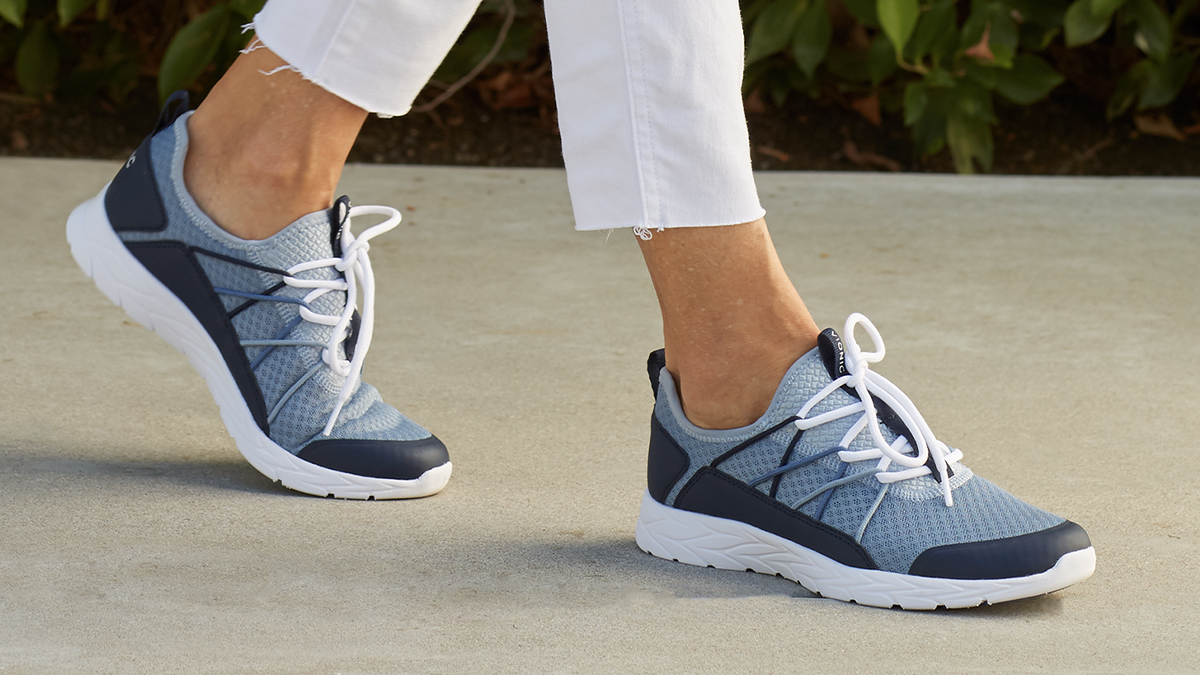
The journey to finding the perfect walking companion doesn’t end at a specific section of the footwear wall. It begins with an understanding of your own gait and the intelligent application of design principles from other disciplines. The modern tennis shoe, with its legacy of stability, cushioning, and durability, stands ready to redefine your walking experience. It offers a fusion of science and practicality that challenges outdated categorizations, proving that the best shoe for the path ahead may just be the one designed for the court.
