

The Walking Shoe: Your Ultimate Guide to Comfort and Style for Everyday Adventures
Let’s be honest: most of us spend more time on our feet than we care to admit. Whether it’s navigating the urban jungle, exploring a new city on vacation, or simply managing the daily marathon of errands, our feet bear the brunt of our ambitions. The wrong footwear can turn a promising day into an ordeal of blisters and aches. This is where the concept of a dedicated walking shoe transcends mere fashion to become a tool for better living. It’s not just a sneaker; it’s a piece of engineered equipment designed for the specific biomechanics of walking. This guide isn’t about following fleeting trends. It’s about understanding how the right foundation underfoot can unlock comfort, enhance style, and empower your everyday journeys, all while weaving in professional insights and value-focused advice.
The Anatomy of Comfort: Deconstructing the Modern Walking Shoe
To appreciate a true walking shoe, one must look beyond its colorway. The science of comfort is built into its very architecture. Unlike running shoes, which are designed for forward propulsion and heel-to-toe impact, walking shoes prioritize stability and a smooth heel-to-toe roll. The key components start with the midsole, often made from advanced materials like EVA (ethylene-vinyl acetate) foam or proprietary compounds like Brooks’ DNA LOFT or ASICS’ GEL. These materials absorb shock not just vertically, but also disperse it laterally, reducing stress on joints. Dr. Casey Kerrigan, a former Harvard Medical School professor and founder of a biomechanics research company, has published studies suggesting that certain shoe designs can actually reduce joint loading in the knees, a critical consideration for long-term foot health. The insole or sockliner is another critical layer, with many premium options offering removable orthotic-friendly designs or memory foam contours that adapt to your foot’s unique topography. Finally, the outsole’s flexibility is paramount. A study from the University of Virginia’s Motion Analysis Laboratory emphasizes the importance of forefoot flexibility in walking shoes, allowing for a natural bending motion at the ball of the foot with each step. This trifecta—cushioning, contouring, and flexibility—forms the holy grail of walking comfort.
Stride Science: Why Your Running Shoes Might Be Betraying Your Walk
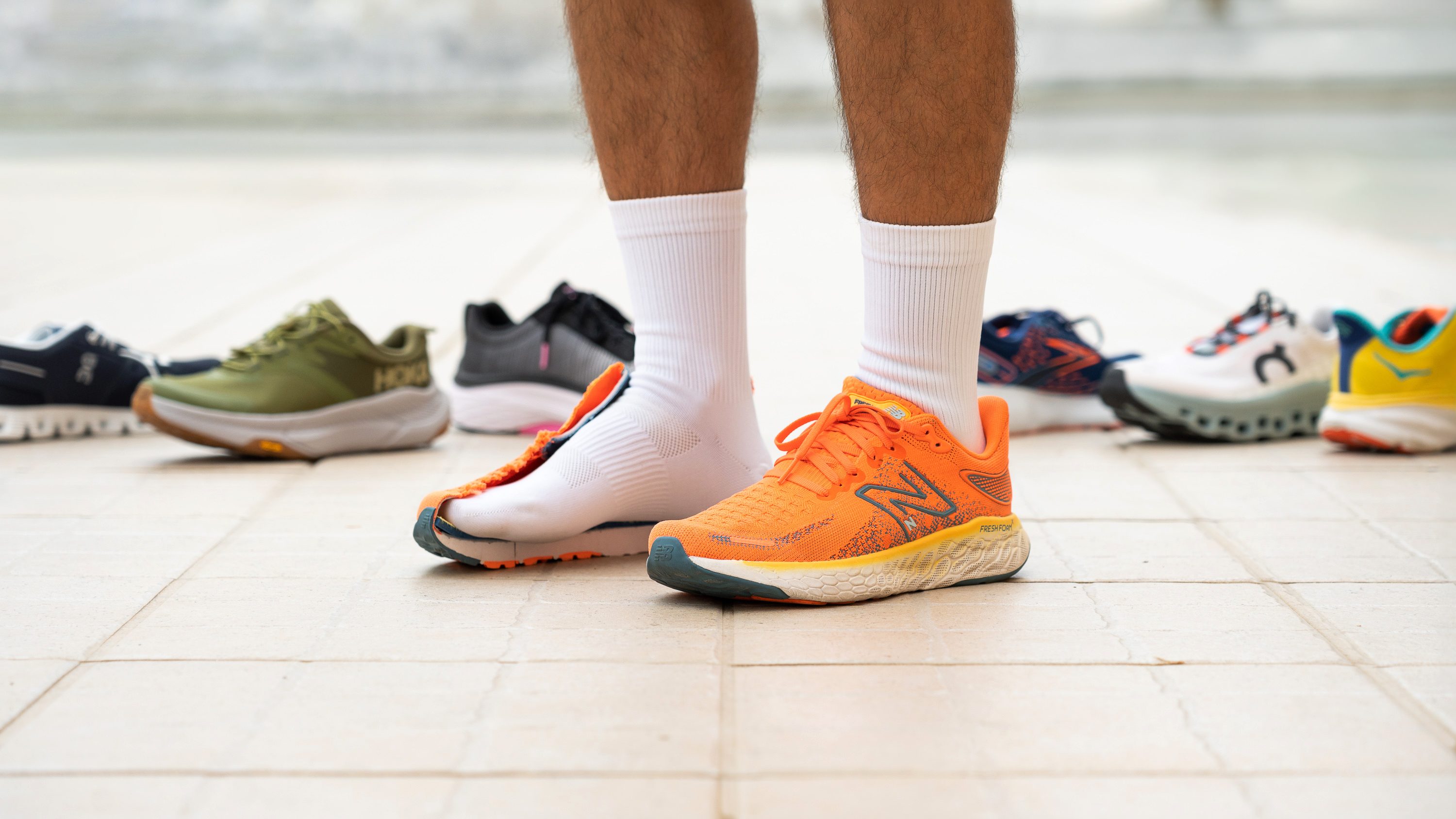
It’s a common misconception: a good running shoe must be a good walking shoe. This logic is flawed due to fundamental biomechanical differences. When you run, there is a phase called “float” where both feet are off the ground. Your gait cycle involves greater impact forces, typically on the midfoot or forefoot for many modern runners. Running shoes are built with heightened cushioning in these areas and often have a pronounced “heel-to-toe drop” to facilitate forward motion. Walking, however, is a continuous contact activity—one foot is always on the ground. The motion is a rolling heel-strike, followed by weight transfer along the outer edge of the foot, and finally a push-off from the toes. A shoe built for this needs a beveled or rounded heel to prevent a jarring strike, robust arch support to control the inward roll (pronation) during weight transfer, and flexible grooves in the forefoot for that final push. Wearing a highly cushioned, unstable running shoe for walking can, as noted by podiatrists on platforms like Quora and in publications like Podiatry Today, lead to instability, muscle fatigue, and even plantar fasciitis because the shoe is fighting your natural walking gait rather than complementing it. The dedicated walking shoe is engineered as a partner to this precise, grounded mechanics.
From Pavement to Trail: Selecting Your Adventure’s Companion
Not all walks are created equal, and neither should your shoes be. The terrain dictates the design. For the urban explorer, logging miles on concrete and asphalt, the primary needs are shock absorption and durability. Look for shoes with dense, durable rubber outsoles (like carbon rubber) that resist abrasion from hard surfaces. Brands like ECCO and Clarks often integrate direct-injected polyurethane units that offer exceptional longevity. Conversely, if your adventures veer onto park paths, light gravel, or uneven trails, a hybrid approach is key. Here, the walking shoe evolves. You’ll need a more aggressive, multi-directional lug pattern on the outsole for grip, akin to the principles seen in trail running shoes. However, the upper should remain more structured and protective than a minimalist trail runner, often incorporating reinforced toe caps and water-resistant materials like Gore-Tex for unexpected puddles. The movie Wild, based on Cheryl Strayed’s memoir, inadvertently became a testament to footwear importance—her ill-fitting boots symbolized a lack of preparation, while proper hiking shoes later represented resilience and adaptation. Choose the tool that matches your most common terrain; it’s the first step in a successful journey.
The Style Equation: Proving Function and Fashion Aren’t Foes
For decades, “comfort shoes” were code for clunky, orthopaedic-looking designs. That era is decisively over. Today’s market is a revelation of aesthetic engineering. Brands like Allbirds, Cole Haan, and even traditional athletic companies have mastered the art of blending performance technology with contemporary silhouettes. The rise of the “athleisure” trend, documented extensively by fashion analysts from Business of Fashion, has democratized technical fabrics and sleek designs for everyday wear. You can find walking shoes with the cushioning of a performance athlete and the minimalist profile of a fashion sneaker. Materials have evolved too—knitted uppers provide breathable, sock-like comfort, while premium leathers and suedes offer a more polished look without sacrificing flexibility. The goal is a shoe that transitions seamlessly from a morning walk to a casual lunch, eliminating the need for a footwear change and truly integrating activity into your lifestyle. Your walking shoe should be a point of pride, not something you hide when you see a colleague approaching.
The Investment and The Cycle: Knowing When to Let Go
A high-quality walking shoe is an investment in your physical well-being. While premium models from brands like HOKA, Brooks, or New Balance may carry a higher initial price tag—often ranging from $120 to $160—their value is measured in miles of support and injury prevention. The good news is that the direct-to-consumer model adopted by brands like Allbirds and certain Amazon lines has introduced exceptional quality at more accessible price points, often between $80 and $110. Furthermore, end-of-season sales, outlet stores, and reputable online retailers frequently offer previous models at discounts of 30-50%. The real cost, however, isn’t just monetary; it’s the cost of wearing a shoe past its prime. The cushioning materials in the midsole compress and lose their resiliency long before the upper shows significant wear. The general consensus from sources like Verywell Fit and the American Podiatric Medical Association is to replace walking shoes every 300 to 500 miles. For the average walker, that’s roughly every six to nine months. A simple test: place your shoes on a flat table and look at them from behind. If they tilt inward or outward noticeably, the support structure has broken down. Holding onto worn-out shoes is a false economy, potentially leading to discomfort or injury that costs far more than a new pair.
:max_bytes(150000):strip_icc()/when-should-i-replace-my-walking-shoes-3436325-0801-7a1840d83573471092e0380f9e230ecc.jpg)
A Step Towards Better Days: Integrating the Walking Shoe Mentality
Ultimately, choosing the right walking shoe is the first step in a broader philosophy: that daily life is an adventure worth being prepared for. It’s a commitment to moving through the world with intention and ease. As the renowned author and walker Geoff Nicholson writes in The Lost Art of Walking, “Walking is not simply transportation; it is exploration, meditation, participation.” The right shoe removes the barrier of discomfort, allowing you to fully engage in that exploration. It empowers you to take the longer, scenic route home, to wander through a weekend market without a time limit dictated by sore feet, or to spontaneously join a friend for an extra lap around the park. It turns “I can’t, my feet hurt” into “Let’s go.”

So, view your next pair not as a mere purchase, but as an upgrade to your daily experience. Seek out the combination of technology that supports your stride and a design that reflects your style. Test them thoroughly, understand their lifecycle, and replace them faithfully. In doing so, you equip yourself not just with footwear, but with a passport to countless everyday adventures, undertaken in comfort and confidence. The world is out there, waiting to be walked—make sure you’re properly shod for the journey.
