

How to Style Booties Heels for Effortless Chic All Season Long
Footwear is more than a practical necessity; it’s a foundational element of personal style, capable of transforming an outfit and, by extension, one’s confidence. Among the vast sartorial arsenal, few pieces offer the versatility, power, and year-round appeal of booties heels. This article isn’t about following fleeting trends but about mastering a wardrobe staple. We’ll deconstruct the art of styling these iconic shoes, providing not just inspiration but objective reasoning, professional insights, and actionable knowledge to help you build looks that are inherently chic, season after season.
The Architectural Foundation: Understanding the Bootie Heel
Before we style, we must understand. The term “booties heels” refers to a short boot that typically ends at or above the ankle but below the calf, coupled with a raised heel. This hybrid design is its genius. From a functional perspective, as noted in design literature from institutions like the Fashion Institute of Technology, the enclosed nature of a bootie offers more structure and support than a classic pump, while the heel introduces a formal, elongating line. Historically, heeled boots have roots in practical equestrian and military wear, evolving through decades into a symbol of feminine power and sophistication. The modern booties heels synthesizes these elements: the resilience of a boot and the elegance of a heel. This duality is key. It allows the shoe to bridge categories—it can be rugged or refined, casual or formal. When you slip on a pair, you’re not just choosing a shoe; you’re selecting a tool that can define the entire architectural silhouette of your outfit, from the ground up.

Seasonal Alchemy: Transitioning Your Booties Heels Through the Year
Spring Renewal: Lightness and Layering
Spring demands a visual shedding of weight. Here, booties heels become the perfect transitional anchor. The objective is to counterbalance the shoe’s inherent substance with airy fabrics and skin exposure. Opt for booties in suede or lighter leathers, perhaps with cut-out details. Scientifically, this plays with visual perception—the solidity of the foot contrasts with the delicacy of the ensemble, creating a balanced, modern look. Pair them with flowing midi dresses or floral skirts. The juxtaposition, a principle often cited by stylists on platforms like Who What Wear, creates dynamic interest. For a more tailored approach, cropped, wide-leg trousers that graze the top of the bootie are impeccable. This precise break in the leg line, a technique documented in menswear tailoring guides from Savile Row, intentionally draws the eye to the narrowest part of your ankle and the shoe itself, creating a clean, polished silhouette that is both professional and fresh.
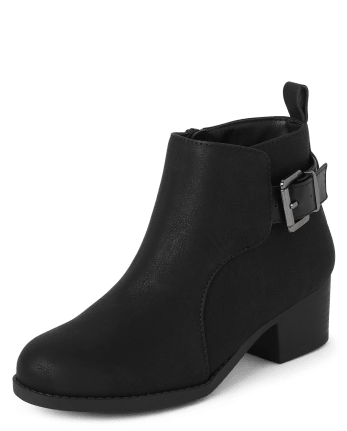
Summer Evenings: Defying Convention
While sandals dominate sunny days, booties heels claim the summer night. The key is material and breathability. Choose booties in woven fabrics, laser-cut leather, or even light-colored metallics. The science of style here involves texture and light reflection. A statement bootie can elevate the simplest summer outfit—imagine a sleek black slip dress paired with ornate, embroidered booties. This follows the “one statement piece” rule advocated by fashion economists, maximizing impact with minimal items. As fashion influencer Aimee Song often notes on her YouTube channel, “A great heel can turn a basic dress into a dinner-ready look in seconds.” It’s about controlled contrast: the casual ease of summer fabrics against the deliberate structure of the bootie creates an effortlessly chic, confident vibe perfect for rooftop bars or evening strolls.
Autumn Atmosphere: Texture and Tone
Autumn is the natural habitat of the bootie. The crisp air calls for rich textures and layered proportions. This is where you can fully embrace the bootie’s robust character. Think about color harmony—deep burgundy, forest green, or classic tan booties complement the seasonal palette. From a color theory perspective, these analogous or complementary schemes (concepts detailed in art and design textbooks) create a cohesive and sophisticated look. Style them with oversized knitwear, leather skirts, or tailored coats. The goal is to build a cohesive textural narrative. As author and style philosopher Victoria Beckham has been quoted, “Fashion is about the right mix. In fall, it’s that mix of soft and hard.” A chunky knit sweater with sleek, pointed-toe booties heels epitomizes this principle, offering both comfort and sharpness.
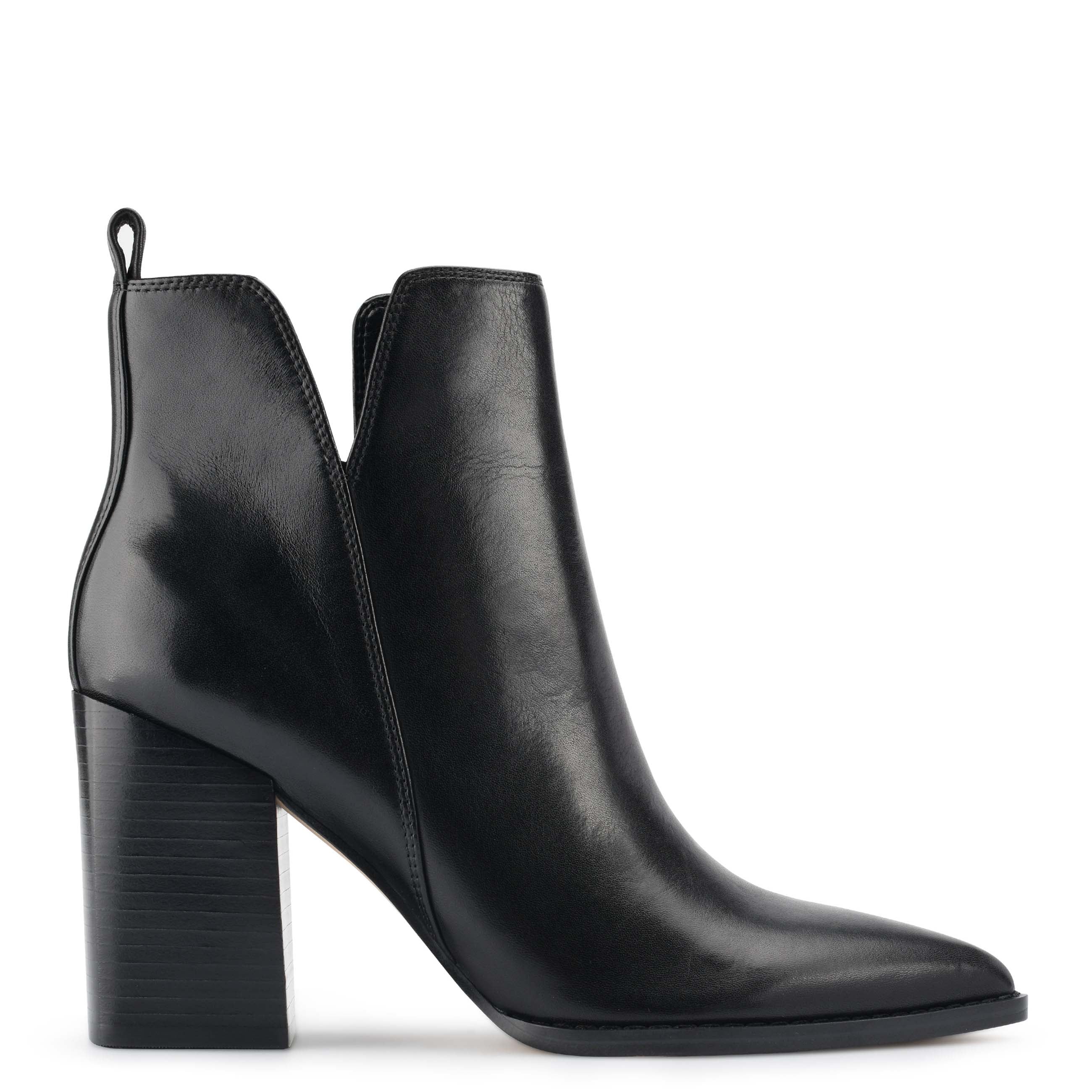
Winter Resilience: Practical Elegance
Winter styling solves the equation of warmth versus style. A block-heel or wedge bootie, often with a weather-resistant treatment, provides stability on slick surfaces—a practical consideration backed by podiatric advice. The styling moves inward, focusing on what peeks out from under your heaviest layers. Skinny jeans or opaque tights tucked into or layered over the bootie create a seamless, insulated line. A midi wool skirt paired with thick socks and booties is a look straight from the streets of Copenhagen, celebrated for its functional chic. The bootie here is your stylish armor. It grounds the volume of a puffer coat or a long wool cape, ensuring the outfit remains structured and intentional rather than swallowed by fabric.
The Professional’s Lens: Silhouette, Proportion, and Psychology
Styling is applied geometry and psychology. The heel height and bootie shape directly manipulate perceived body proportions. A pointed-toe bootie elongates the leg line, a visual trick well-documented in the works of fashion historians like Valerie Steele. A rounded or square toe offers a more grounded, modern feel. The shaft height is critical: a bootie that hits right at the ankle bone is universally flattering, as it highlights this narrow point. Psychologically, the act of wearing a heel has been linked to perceptions of authority and confidence. A study referenced in the Journal of Fashion Marketing and Management suggested that formal footwear, including heels, can influence both the wearer’s and the observer’s perception of assertiveness. Therefore, your booties heels are not just an accessory; they are an instrument of non-verbal communication, shaping how you walk into a room and how that room perceives you.

Investment and Intelligence: Building Your Collection
Building a versatile collection is an exercise in strategic investment. You don’t need a dozen pairs; you need three or four perfect ones. The cornerstone is a sleek, black, leather bootie with a mid-height heel—it’s your wardrobe workhorse. Next, consider a neutral tan or nude pair to create seamless leg lines with lighter outfits. A third could be a trend-led option, like an animal print or bold color, to inject personality. When evaluating quality, check the lining, the stitching, and the sole. A well-made bootie, as any cobbler will attest, can be resoled and cared for over years. This is where knowledge brings real value. While premium brands offer craftsmanship, excellent options exist at accessible price points, especially during seasonal sales. The true discount isn’t a low price tag on a poor product, but a fair price for a durable, versatile piece that costs per wear becomes negligible.
The journey with booties heels is one of continuous discovery. They are a sartorial constant in an ever-changing fashion landscape. By understanding their design logic, respecting seasonal contexts, applying principles of proportion, and choosing quality, you empower yourself to create endless combinations of effortless chic. Let your booties be the confident foundation from which your personal style rises, every single day, all year long.
