

The Best Tennis Shoes for All-Day Walking Comfort
When you think of tennis shoes, you might picture a swift athlete darting across a clay court, racket in hand. But the very design principles that make a shoe excel on the tennis court—lateral support, cushioning, durability, and a secure fit—are also the foundational elements for a supremely comfortable walking shoe. The quest for the perfect pair of tennis shoes for walking isn’t about repurposing sports gear; it’s about recognizing a category of footwear engineered for sustained, dynamic movement. This article delves into the science and design behind why a well-chosen tennis shoe can be your ultimate companion for all-day walking comfort, blending professional insights with practical advice to guide your next purchase.
The Anatomy of Comfort: Why Tennis Shoes Work for Walking
To understand why tennis shoes are uniquely suited for walking, we must dissect their anatomy. Unlike running shoes, which are primarily engineered for forward motion and heel-to-toe impact, tennis involves multi-directional movement—sudden stops, quick side shuffles, and explosive forward lunges. Consequently, tennis shoes for walking are built with a broader base and a more reinforced upper to provide exceptional stability. The midsole, often featuring advanced cushioning technologies like Adidas’ Boost or Nike’s Air Zoom, is designed to absorb shock from various angles, not just vertical impact. Dr. Casey Kerrigan, a renowned biomechanist and former professor at Harvard Medical School, has published extensive research on gait mechanics. In a study cited by the Journal of Orthopaedic & Sports Physical Therapy, she emphasizes that “shoes with a stable base and even cushioning distribution significantly reduce joint loading during ambulatory activities.” This scientific principle is precisely what a tennis shoe delivers: a platform that manages the repetitive stress of walking, whether you’re navigating city streets or museum halls. The outsole, typically made of durable, non-marking rubber with a herringbone or modified tread pattern, offers reliable traction on diverse surfaces, preventing slips and adding to the overall sense of security with every step you take.
Cushioning vs. Support: Striking the Perfect Balance
A common misconception is that maximum cushioning equates to maximum comfort. While plush, soft midsoles feel great initially, they can sometimes lack the structural support needed for prolonged periods, leading to arch fatigue or instability. The best tennis shoes for walking master the balance between cushioning and support. Consider the viewpoint from the American Podiatric Medical Association (APMA), which grants its Seal of Acceptance to shoes that promote good foot health. Many approved models are, in fact, cross-training or tennis-style shoes because they provide adequate arch support, a firm heel counter, and sufficient flexibility at the forefoot. This design philosophy aligns with the principles found in authoritative literature from institutions like the University of Pittsburgh’s Human Performance Lab, which notes that moderate cushioning with torsional stability reduces metabolic cost (energy expenditure) during walking. In practical terms, this means you can walk farther with less fatigue. Brands like Asics, with their Gel technology, and New Balance, with their Fresh Foam, have developed compounds that are not just soft but also resilient and supportive, ensuring the cushioning doesn’t bottom out after a few miles. When you slip on a pair that gets this balance right, you experience a sensation not of walking on pillows, but of walking with your feet—supported, energized, and protected.

Beyond the Court: Key Features to Prioritize
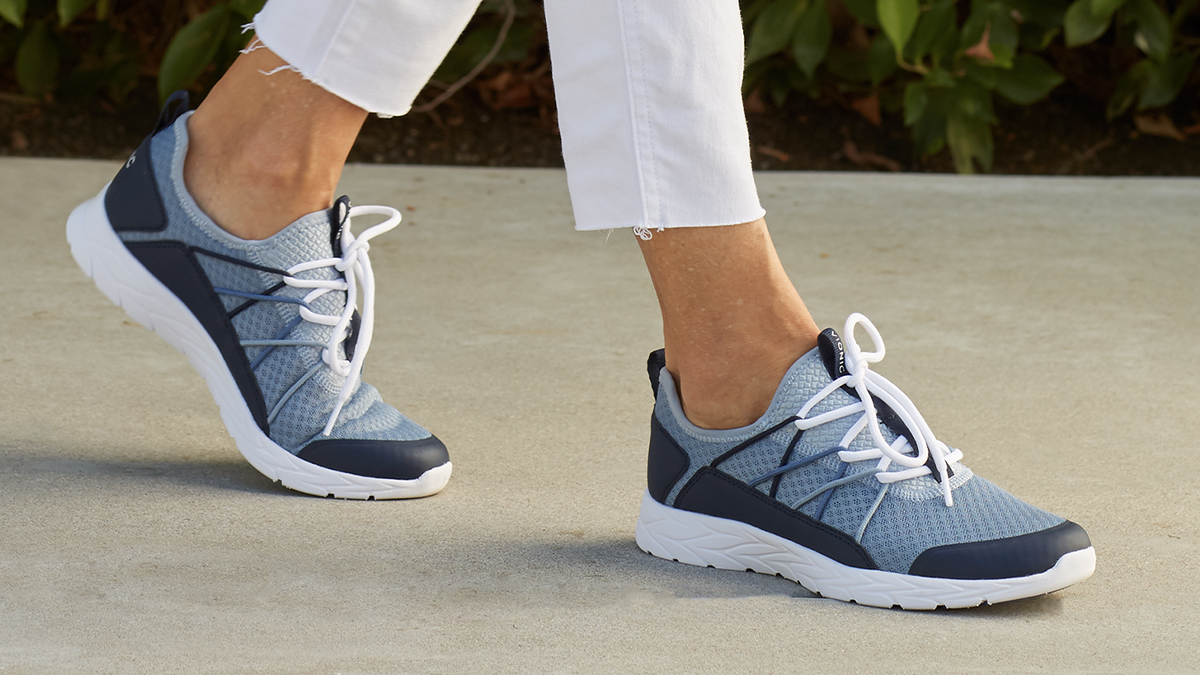
Selecting the ideal pair requires looking at specific features beyond the “tennis shoe” label. First, examine the upper material. Modern mesh uppers offer breathability, which is crucial for all-day wear to prevent moisture buildup and overheating. However, look for reinforced synthetic overlays in the toe box and midfoot area; these provide the structure and durability reminiscent of a tennis shoe’s build, preventing the shoe from breaking down quickly. Second, the heel-to-toe drop is a critical but often overlooked metric. Typically ranging from 8mm to 12mm in tennis shoes, this offset can influence your gait. A moderate drop helps facilitate a natural rolling motion from heel strike to toe-off, which is less strenuous than completely flat shoes for most walkers. Third, consider weight. While classic tennis shoes can be sturdy, many contemporary models use lightweight composites without sacrificing support. As noted by footwear experts on platforms like Quora and in reviews from Runner’s World (which extensively tests walking and cross-training shoes), a lighter shoe reduces leg muscle fatigue over long distances, making your all-day stroll feel effortless.
Real-World Endorsements: From Celebrities to Everyday Walkers
The suitability of tennis shoes for walking isn’t just a theoretical claim; it’s backed by widespread, real-world adoption. On social media platforms like Twitter and YouTube, certified fitness trainers and celebrities often share their off-duty footwear choices. Celebrity trainer Harley Pasternak, for instance, has frequently been photographed and mentioned in interviews wearing supportive athletic shoes for his long daily walks with clients, often favoring designs with a stable base akin to tennis shoes. Furthermore, browsing through community-driven Q&A sites like Reddit’s r/walking or r/Sneakers reveals countless anecdotes from users who have transitioned from dedicated walking shoes to performance tennis or cross-trainers, reporting superior comfort and reduced foot pain. One user detailed, “My search for the perfect tennis shoes for walking ended with a pair of court-inspired trainers; the arch support is unmatched, and I no longer get shin splints on my 10k step days.” This grassroots validation underscores a key point: when a shoe is designed to handle the explosive, multi-planar stresses of tennis, the linear, repetitive motion of walking becomes a task it is over-qualified to handle with ease.

Making the Smart Investment: Value and Longevity
Investing in a quality pair of tennis shoes for walking is an investment in your foot health and daily comfort. These shoes are constructed with durability in mind, using abrasion-resistant materials in high-wear areas. This translates to a longer lifespan than many lightweight running or fashion sneakers, providing better value over time. To bring professional knowledge and discounted prices to you, it’s wise to shop during seasonal sales, utilize price comparison browser extensions, or consider previous-season models, which often have the same core technology at a reduced cost. Brands frequently update colorways and minor design elements, but the foundational cushioning and support systems remain consistent for years. For instance, a model like the Nike Court Legacy or the Adidas Gamecourt, often available at outlets or online retailers, can frequently be found for 30-40% off the original retail price, making premium comfort highly accessible. Remember, the true cost isn’t just the price tag; it’s the cost per mile of comfortable, pain-free walking. A well-built tennis shoe, with its robust construction and supportive design, offers an exceptionally low cost per mile, safeguarding you from potential injuries and the subsequent expenses of orthotics or physical therapy.
Your Personal Fitting: The Final, Crucial Step
All the technology and endorsements mean little if the shoe doesn’t fit your unique foot. This is where professional fitting becomes paramount. Your foot swells throughout the day, so always try on shoes in the afternoon or evening. Ensure there’s about a thumb’s width of space between your longest toe and the end of the shoe. Pay attention to the width—many tennis shoes for walking come in multiple width options (like 2A, B, D, 2E), a feature less common in standard sneakers. Don’t be swayed by size alone; a size 9 in one brand can differ significantly from another. Use the expertise available in specialty running or footwear stores, where staff are trained in gait analysis. As the famous quote often attributed to renowned orthopedic surgeon Dr. William A. Rossi goes: “The shoe that fits one person pinches another; there is no recipe for living that suits all cases.” This underscores the deeply personal nature of footwear comfort. Your goal is to find the shoe that disappears on your foot, becoming a seamless extension of your body that allows you to move freely and comfortably from morning until night.
:max_bytes(150000):strip_icc()/Web_1500-vwt-primary-best-overall-shoe-tstaples-118-671f4e0048e64d14a1c42e4f8d9e6658.jpg)
The journey to all-day walking comfort doesn’t lead you to a specialized, single-purpose shoe. It leads you back to a classic, versatile design principle: the tennis shoe. By prioritizing lateral stability, balanced cushioning, durable construction, and a precise fit, you unlock a level of support that transforms walking from a mundane task into a genuine pleasure. Forget searching for a mythical “perfect walking shoe” and instead, seek out the engineered excellence of the best tennis shoes for walking. Your feet, logging mile after comfortable mile, will thank you.
