

How to Style 80s Sneakers for a Modern Wardrobe
The resurgence of 80s sneakers is more than a fleeting trend; it’s a testament to their enduring design language and functional versatility. These shoes, born from a decade of bold experimentation in music, sport, and street culture, carry a distinct aesthetic that can feel daunting to integrate today. Yet, their very essence—the chunky silhouettes, vibrant color blocking, and technical heritage—provides a powerful foundation for contemporary style. This isn’t about costume or pure nostalgia; it’s about harnessing a specific design energy to create looks that are dynamic, personal, and grounded in fashion history. The key lies in understanding the architectural elements of these sneakers and using modern wardrobe staples to create a dialogue between eras, resulting in an outfit that feels intentional and fresh rather than retro.
Decoding the DNA of 80s Sneaker Design
To style 80s sneakers effectively, one must first appreciate their objective design principles. The 1980s were a pivotal era for athletic footwear, marked by technological leaps and cross-pollination with emerging subcultures. From a design perspective, key characteristics include the chunky midsole, often employing newly developed polyurethane or EVA foam for enhanced cushioning, a direct result of the running boom of the late 70s and early 80s. This created a distinct, volumetric silhouette. Secondly, color blocking was aggressive and graphic, frequently using high-contrast panels of primary colors or neon hues influenced by the Memphis Design Group and the rise of MTV. Thirdly, materials shifted from simple canvas and leather to include mesh, nylon, and synthetic suedes, emphasizing lightweight performance. As the Victoria and Albert Museum notes in its design archives, 80s products often exhibited “a playful defiance of minimalist modernism,” embracing complexity and visual noise. This scientific breakdown explains why a pair of 80s sneakers commands attention: its form is a direct artifact of material innovation and cultural optimism. Understanding this allows us to treat them not as “old shoes,” but as wearable sculpture with a defined set of visual rules.

Architectural Balance: Pairing Volume with Silhouette
The most common hesitation with 80s sneakers is their perceived bulk. The modern solution is architectural balance. Think of the sneaker as the solid, foundational base of your outfit. To counterbalance its volume, the clothing silhouettes should lean towards clean, tailored, or streamlined pieces. For men, this could mean pairing chunky Reebok Classics or Nike Air Max 1s with slim—not skinny—straight-leg trousers in neutral tones like olive, grey, or navy. The taper of the trouser leg creates a visual line that meets the sneaker without competition. For women, wide-leg or straight-leg jeans with a defined high waist create a similar effect, allowing the sneaker to peek out without the outfit becoming bottom-heavy. A pivotal reference point is the minimalist aesthetic of the 90s, which directly reacted against 80s excess. By borrowing that philosophy of cut and simplicity, you create a harmonious tension. As designer Phoebe Philo once articulated in an interview with Vogue, “Proportion is everything. It’s the one thing that can make an ordinary piece extraordinary.” Applying this, a voluminous sneaker becomes extraordinary when juxtaposed with the ordinary—a simple crew-neck sweater, a well-cut trench coat, or a crisp white shirt. The sneaker provides the personality, while the clothing provides the canvas.

Color Theory in Practice: Anchoring the Statement
The vibrant colorways of 80s sneakers are a signature feature. The modern approach is to use them as the singular color statement within a muted palette. This is a direct application of color theory, where a dominant neutral field allows a small area of high saturation to become a focal point. Let your sneakers’ colors—be it the electric blue and yellow of an Air Jordan III or the red and white of a Nike Dunk—be the heroes. Build the rest of your outfit around foundational neutrals: black, white, charcoal, beige, or denim blue. This doesn’t mean your outfit must be boring; texture becomes crucial here. A black cashmere sweater, grey wool trousers, and a cream canvas jacket provide a rich, tactile experience that lets the sneakers pop visually without clashing. This strategy is endorsed by stylists like Allison Bornstein, who champions the “three-word method” for getting dressed, where one word might be “colorful” (fulfilled by the sneakers) and the other two are “tailored” and “minimal.” Furthermore, you can employ an advanced technique: pick one secondary color from the sneaker’s palette and echo it subtly elsewhere—a sock, a hat, or the trim on a bag. This creates cohesion without overwhelming the eye, a principle often seen in the cinematic styling of films like Drive (2011), where a single vibrant element (a scorpion jacket) is starkly highlighted against a somber backdrop.
Contextual Fusion: From Street to Smart-Casual
A thrilling aspect of modern styling is genre-blurring. 80s sneakers, with their athletic origins, can be successfully integrated into smart-casual contexts, dismantling outdated dress codes. The formula relies on elevating every other component. Imagine a pair of pristine, white leather Nike Air Force 1s (a design launched in 1982) paired with a relaxed, single-breasted blazer in a non-traditional fabric like corduroy or washed cotton, a fine-gauge merino roll-neck, and tailored wool trousers. The sneakers here are not a downgrade; they inject a dose of irreverent cool and comfort into a formal framework. This approach is validated by the “sprezzatura” ethos in Italian menswear—studied carelessness. As author Luca Rinaldi discusses in The Style of Milan, it’s about “masterful control that appears effortless.” The sneaker becomes the “effortless” element in a controlled outfit. For women, this could translate to a sleek midi dress or a satin slip skirt paired with an oversized blazer and a chunky sneaker. The contrast between the feminine dress and the utilitarian shoe creates a powerful, contemporary edge championed by fashion platforms like Business of Fashion, which regularly highlights this hybrid as a sign of modern dressing where personal comfort and style trump rigid formality.

Investment and Authenticity: Navigating the Market
Engaging with 80s sneakers presents two primary paths: vintage originals and modern reissues. Each offers a different value proposition. Vintage pairs, found on dedicated platforms or from reputable dealers, carry historical patina and rarity. The leather may be uniquely aged, and the wear tells a story. However, this requires knowledge to authenticate and often comes with a premium price and concerns over deteriorating midsole foam—a common issue known as “midsole rot” in sneaker collecting circles. Modern reissues or “retro” releases from brands like Nike, Adidas, and Reebok provide updated comfort technology, consistent sizing, and immediate wearability, often at accessible price points, especially during seasonal sales. Brands frequently offer discounts on colorways that are less hyped, allowing savvy shoppers to acquire these design icons for 20-30% below retail. From an investment perspective, while some limited editions appreciate, the core value for a modern wardrobe is in wearability. A classic reissue like the Adidas Forum or the New Balance 550 serves as a versatile workhorse. As sneaker historian and author Elizabeth Semmelhack of the Bata Shoe Museum stated in a lecture, “The most significant sneakers are those that transition from professional sport to street style to high fashion.” Choosing a model with that pedigree ensures you’re investing in a piece of design history with enduring stylistic relevance.
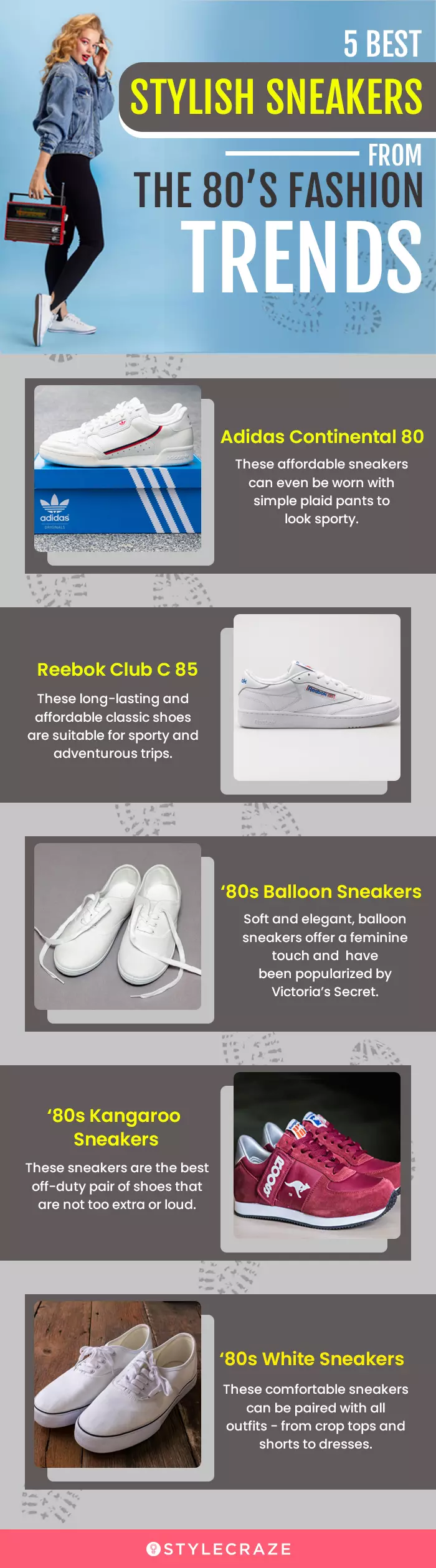
The Final Step: Confidence as the Ultimate Accessory
Ultimately, the most critical element in styling 80s sneakers is neither a garment nor a color theory chart—it is confidence. These shoes are declarative. They do not whisper; they speak. Wearing them with hesitation undermines the look. Embrace the statement they make. This confidence comes from understanding the “why” behind your choices, as outlined above. You are not wearing a costume; you are engaging in a form of stylistic curation, connecting dots between decades. The goal is a synthesis where the sneakers feel inherently “you” and of the moment. Look to cultural figures who have mastered this: filmmaker Spike Lee, who made the Air Jordan a permanent part of his personal uniform, or musician and style icon Tyler, The Creator, who frequently pairs brightly colored, chunky vintage sneakers with sophisticated suiting in a way that feels entirely novel and personal. Their style works because it is an authentic extension of their personality. Your wardrobe should function the same way. Let the 80s sneakers be a catalyst for self-expression, a functional piece of design history that propels your personal narrative forward, one bold, comfortable step at a time.
